




Transporting temperature sensitive multi receptor peptides across international distribution networks without compromising primary sequence integrity requires engineered thermal packaging systems. How to Maintain Retatrutide Sample Quality During Shipping examines the thermodynamic, barometric, and mechanical engineering protocols governing cold chain logistics for research laboratories. During multi day transit across varying climatic zones, passive shipping containers must counteract external conductive, convective, and radiative heat transfer. High performance cold chain shippers replace conventional expanded polystyrene foam with vacuum insulated panels, which exhibit thermal conductivity values fivefold to tenfold lower than standard polymers. Inside the payload cavity, thermal stability is maintained using engineered phase change materials—such as eutectic salt hydrates, organic paraffins, or solid carbon dioxide dry ice—formulated with specific latent heats of fusion or sublimation. When shipping frozen stock aliquots or temperature critical lyophilized lots, phase change bricks preconditioned at minus 20 degrees Celsius or dry ice pellets at minus 78.5 degrees Celsius absorb incoming thermal energy isothermally during phase transition. Qualifying these insulated shippers under International Safe Transit Association 7D thermal profiles ensures that internal payload temperatures remain strictly within validated thresholds for 96 to 120 hours despite extreme external summer or winter ambient excursions.
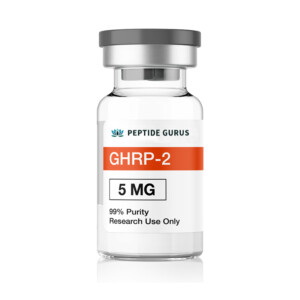
A critical yet frequently overlooked hazard during air freight transit of synthetic peptides is the combination of cargo hold barometric pressure drops and dry ice sublimation gas ingress. During high altitude flight, aircraft cargo compartments experience reduced atmospheric pressure equivalent to altitudes of 8,000 feet, followed by rapid repressurization upon landing. This barometric pressure differential creates a cyclic vacuum pumping effect across the elastomeric stopper of the primary glass vial. If the container closure system lacks sufficient residual seal force—quantified via laser headspace oxygen analysis or helium mass spectrometry leak testing—ambient gas from the shipping box is drawn into the vial interior upon descent. When vials are packed directly in contact with sublimating dry ice, the surrounding payload atmosphere consists of concentrated carbon dioxide gas. Ingress of carbon dioxide into a poorly sealed vial dissolves into trace residual moisture within the lyophilized cake, forming carbonic acid that drops local pH and catalyzes acid labile peptide degradation. To eliminate barometric gas ingress, vials must be sealed with precision torqued aluminum crimp caps over fluoropolymer coated bromobutyl stoppers and enclosed within hermetically heat sealed, gas impermeable aluminum foil laminate pouches prior to placement inside dry ice shippers.
Beyond thermal and barometric stresses, international parcel transit subjects peptide vials to continuous mechanical shock and high frequency vibration across road and air transport vectors. Under International Safe Transit Association 3A vibration testing protocols, unbuffered glass vials experience resonant frequencies between 5 and 200 Hertz. This continuous mechanical agitation causes the fragile, porous lyophilized peptide cake to fracture and abrade against the inner borosilicate glass walls, reducing a uniform cake into a pulverized fine powder. Beyond cosmetic disruption, mechanical abrasion generates triboelectric static charges along the glass surface. Because the 39 amino acid peptide (molecular weight 4731.33 Daltons) contains an amphipathic C20 eicosanedioic acid conjugate, static charge buildup causes pulverized powder particulates to adhere tenaciously to the upper glass neck and rubber stopper underside, leading to incomplete mass recovery during laboratory reconstitution. Engineered shipping configurations mitigate mechanical shock by suspending primary vials within custom die cut, antistatic cross linked polyethylene foam inserts that dampen high frequency vibrational energy and prevent vial to vial glass impact.
Evaluating whether a peptide shipment has maintained chemical integrity upon arrival at a research facility requires mathematical analysis of continuous thermal telemetry rather than a single point arrival temperature check. High integrity shipments include calibrated, National Institute of Standards and Technology traceable USB or radio frequency temperature data loggers positioned directly adjacent to the primary peptide vials. These loggers record internal payload temperatures at fifteen minute intervals throughout the entire transit chain. If a shipment experiences a transient thermal excursion due to customs inspection delays, quality assurance analysts evaluate the temperature log by calculating the Mean Kinetic Temperature in accordance with United States Pharmacopeia General Chapter 1079.2. Unlike a simple arithmetic average, the Mean Kinetic Temperature equation applies the exponential Arrhenius weighting factor to account for the accelerated rate of chemical degradation at higher temperatures. By inputting the activation energy of peptide deamidation and oxidation into the calculation, laboratory directors can objectively determine whether a brief temperature spike has consumed a negligible fraction of the compound stability budget or whether the batch requires quarantine and retesting via high performance liquid chromatography.
Maintaining sample quality extends through the final handoff at the receiving laboratory loading dock. Standard operating procedures at research institutions must classify incoming synthetic peptide shipments as time and temperature critical biological materials requiring immediate processing. Upon package arrival, receiving technicians must first download and inspect the digital temperature logger PDF report before opening the secondary aluminum moisture barrier pouch. If the thermal log confirms continuous maintenance of target storage temperatures (or an acceptable Mean Kinetic Temperature within validated limits), the sealed secondary pouch is transferred directly into a minus 20 degrees Celsius or minus 80 degrees Celsius storage freezer. If the vial must be inspected immediately, technicians must allow the sealed moisture barrier pouch to equilibrate to room temperature inside a dry cabinet before exposing the cold glass vial to humid laboratory air, preventing immediate condensation. Physical receiving logs must document intact crimp seal integrity, absence of glass microcracks, and lyophilization cake appearance, linking the shipping telemetry file directly to the internal laboratory batch registry.
Eliminating international customs delays and prolonged transit durations is the most effective engineering control for preserving peptide quality during shipping. Sourcing synthetic multi receptor peptides from an organization that combines certified manufacturing with localized, regional fulfillment hubs dramatically reduces transit exposure windows. PeptideGurus supports global metabolic and biochemical research laboratories by manufacturing authenticated peptide batches under strict ISO quality management and Good Manufacturing Practice standards—verifying purity at or above 98.0 percent via reversed phase HPLC and confirming the 4731.33 Dalton mass via high resolution mass spectrometry—and pre positioning inventory within climate controlled warehouses across North America and Europe. By dispatching orders from domestic regional hubs using validated thermal packaging and hermetically sealed secondary barriers, PeptideGurus ensures that research teams receive pristine, chemically intact reference materials ready for immediate analytical evaluation.
Technical Overview Note: The preceding content represents a technical overview and synthesis of industry wide knowledge in peptide science and analytical pharmacology for educational and research reference, rather than conclusions drawn from a single dedicated clinical study.
How can dry ice shipping accidentally lower the pH of a peptide sample?
Sublimating dry ice fills the shipping container with concentrated carbon dioxide gas. If a vial is closed with a poorly fitting screw cap or an inadequately crimped rubber stopper, barometric pressure changes during air flight can force carbon dioxide gas into the vial headspace. When the peptide is later reconstituted in water, the trapped carbon dioxide forms carbonic acid, dropping solution pH and potentially causing isoelectric peptide precipitation.
What is the difference between an arithmetic average temperature and Mean Kinetic Temperature (MKT)?
An arithmetic average treats all temperature readings equally, masking the destructive impact of brief high heat spikes. Mean Kinetic Temperature (MKT) is a non linear, isothermal calculation based on the Arrhenius equation that weights higher temperatures exponentially, reflecting the physical reality that chemical degradation rates double or triple with every 10 degrees Celsius rise in temperature.
Does a pulverized or collapsed lyophilized cake always indicate chemical degradation during shipping?
Not necessarily. A pulverized cake turned into loose powder is typically caused by mechanical vibration during transit and remains chemically intact, though static electricity may cause powder to cling to the stopper. Conversely, a shrunken, glassy, or melted cake appearance (cake collapse) indicates that the vial exceeded its glass transition temperature due to thermal excursion or moisture ingress, which requires HPLC purity re verification before use.
PeptideGurus is a leading supplier of American-made research peptides, offering top-quality products at competitive prices. With a focus on excellence and customer service, they ensure a secure and convenient ordering process with global shipping.
© Copyright Peptide Gurus 2024. All rights reserved.Privacy Policy
All products on this site are for Research, Development use only. Products are Not for Human consumption of any kind. The statements made within this website have not been evaluated by the US Food and Drug Administration or HEALTH CANADA. The statements and the products of this company are not intended to diagnose, treat, cure or prevent any disease.
PeptideGurus is a chemical supplier. PeptideGurus is not a compounding pharmacy or chemical compounding facility as defined under 503A of the Federal Food, Drug, and Cosmetic act. Peptide Sciences is not an outsourcing facility as defined under 503B of the Federal Food, Drug, and Cosmetic act.
CONTACT