Core Solubility Traits of Retatrutide
Retatrutide stands as a leading investigational peptide for metabolic and obesity research, and its solubility characteristics form the foundation of its effective use in laboratory settings. PeptideGurus supplies
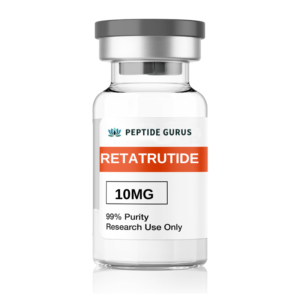
Retatrutide with 99%+ purity in 10MG and 20MG formulations, all third-party tested to meet the strictest research standards. In its pure form, Retatrutide exhibits selective solubility across common laboratory solvents: it is slightly soluble in water and acetonitrile, sparingly soluble in PBS at pH 7.2 with a range of 1-10mg/mL, and shows enhanced solubility in DMSO with levels reaching up to 50mg/mL when assisted by ultrasonic treatment. Adjusting the pH of aqueous solutions, such as raising it to 9 with ammonia water, can further boost its water solubility to 20mg/mL or higher, a key detail for researchers designing in vitro and in vivo metabolic studies. These solubility properties classify Retatrutide as a BCS Class II compound, meaning it has low solubility but high permeability, a critical distinction for aligning research protocols with regulatory guidelines.
FDA 2026 Guidelines for Peptide Solubility in Research
The FDA’s 2026 Product-Specific Guidances (PSG) for GLP1 and multi-target peptide research have set new standards for solubility assessment and formulation development, directly impacting how Retatrutide is used in metabolic studies. The FDA’s latest draft guidelines emphasize simplifying bioequivalence (BE) testing for peptide formulations, with a focus on in vitro solubility and dissolution testing as valid alternatives to some in vivo studies for complex peptide agents. For BCS Class II peptides like Retatrutide, the FDA now requires that solubility measurements reflect physiologically relevant conditions—explicitly mandating testing at ionic strength 0.15M (mimicking human bodily fluids) rather than just pure water solubility. Additionally, the FDA’s 2026 agenda prioritizes GLP1 and multi-receptor agonist peptides, with updated PSG set to release in August 2026 that will further clarify solubility and formulation requirements for obesity and metabolic research. PeptideGurus’ Retatrutide products are developed in alignment with these evolving guidelines, ensuring that all solubility data provided meets FDA’s new physiologically relevant testing criteria.
Practical Solubility Optimization for Metabolic Research
Optimizing Retatrutide solubility is essential for reliable metabolic research results, and there are accessible, FDA-aligned methods to enhance its dissolution in laboratory settings—no specialized equipment is required for basic optimization. For aqueous-based studies, pH adjustment is the most straightforward technique: buffering solutions to a slightly alkaline pH (8-9) with non-toxic agents like ammonia water or phosphate buffers increases Retatrutide’s water solubility from its native 5mg/mL to over 20mg/mL, making it suitable for cell culture and in vivo injection studies. For non-aqueous or in vitro assay use, DMSO serves as an effective solubilizer at concentrations up to 50mg/mL when paired with gentle ultrasonic treatment, and the FDA approves DMSO as a solvent for peptide research formulations when used in appropriate concentrations. For long-term research formulations, combining pH adjustment with mild surfactants (such as Solutol HS-15, an FDA-approved excipient) can maintain Retatrutide solubility and stability over time. PeptideGurus recommends these optimization methods for all metabolic research, as they align with both the FDA’s 2026 GLP1 peptide guidelines and the practical needs of laboratory researchers.
Solubility and Formulation at PeptideGurus
At PeptideGurus, Retatrutide’s solubility is a core consideration in every stage of product development and production, from raw powder synthesis to finished research formulations. All Retatrutide products are sourced from GMP and ISO 9001:2008 certified facilities, with solubility tested under both standard and physiologically relevant conditions (per FDA 2026 guidelines) as part of our third-party quality control process—conducted by independent labs like Janoshik, the same lab that verifies our BPC157 and peptide blend products. Our 10MG and 20MG Retatrutide vials are formulated as a lyophilized powder to preserve solubility characteristics, with detailed solubility data included in every product’s technical datasheet, including pH adjustment protocols and solvent compatibility charts. For researchers requiring custom formulations, PeptideGurus also offers technical support for solubility optimization, ensuring that every formulation meets their specific metabolic research needs while adhering to FDA’s latest peptide research standards. Our global shipping capabilities mean that these high-purity, solubility-optimized Retatrutide products are available to researchers worldwide, with warehousing in the USA, Europe, Canada, and the UK for fast delivery.
Key Considerations for Solubility in Metabolic Studies
When designing metabolic research with Retatrutide, solubility must be paired with study design to ensure accurate, reproducible results—especially for studies focused on obesity, glucose regulation, and energy metabolism, the core applications of this peptide. First, solubility in the chosen solvent must match the delivery method: for intraperitoneal or subcutaneous injection studies, aqueous formulations (optimized via pH adjustment) are preferred, as they mimic in vivo conditions and align with FDA’s physiological relevance guidelines. For in vitro metabolic assays (e.g., cell culture studies of insulin sensitivity or fat oxidation), DMSO-solubilized Retatrutide is suitable, but researchers must dilute the stock solution to minimize DMSO concentration and avoid cell toxicity. Second, solubility stability is critical for long-term metabolic studies: Retatrutide formulations should be prepared fresh or stored at -20°C if pre-made, as prolonged storage at room temperature can reduce solubility and peptide activity. Finally, all solubility measurements should be documented in accordance with FDA 2026 PSG requirements, including ionic strength, pH, and solvent type, to ensure study results are regulatory-compliant and reproducible. PeptideGurus’ technical team provides full documentation for all these considerations, supporting researchers in designing robust, solubility-aligned metabolic studies.
Frequently Asked Questions About Retatrutide Solubility
What is the easiest way to dissolve Retatrutide for in vivo metabolic research?
The simplest method is to adjust the pH of sterile water or PBS to 8-9 using a small amount of ammonia water; this boosts water solubility to 20mg/mL, ideal for injection studies, and is FDA-compliant for research use.
Can I use Retatrutide’s DMSO stock solution directly in cell culture studies?
No, DMSO stock solutions (50mg/mL) must be diluted to a final DMSO concentration of less than 0.1% in cell culture media to avoid toxicity. PeptideGurus recommends preparing a 1mg/mL intermediate stock in PBS (pH 9) for cell culture use.
How does PeptideGurus ensure Retatrutide solubility meets FDA 2026 guidelines?
All our Retatrutide solubility testing is conducted at physiological ionic strength (0.15M) and relevant pH ranges (7.2-9), as required by the FDA’s 2026 GLP1 peptide PSG drafts. Third-party lab reports (Janoshik) verify all solubility data for regulatory compliance.
Does Retatrutide solubility change over time in storage?
Lyophilized
Retatrutide powder (our standard formulation) maintains its solubility characteristics for 3 years when stored at -20°C. Once dissolved, aqueous formulations should be used within 1 month if stored at -20°C, and DMSO stocks within 6 months at -80°C.
What solubility formulation is best for obesity and weight loss research with Retatrutide?
For in vivo obesity studies (e.g., rodent models), pH-adjusted aqueous formulations (PBS pH 9, 20mg/mL) are the best choice, as they ensure consistent peptide delivery and absorption—critical for measuring weight loss and metabolic endpoints accurately.