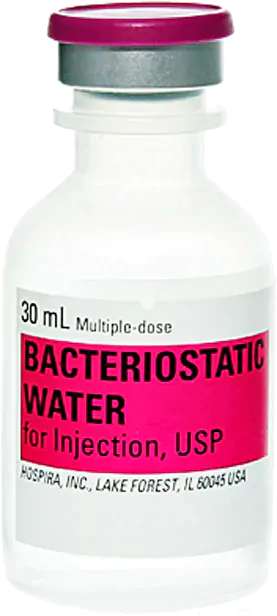
遊離(1)30 mlの細菌性水 with qualified orders over $500 USD.
(excludes capsule products, cosmetic peptides, promo codes and shipping)
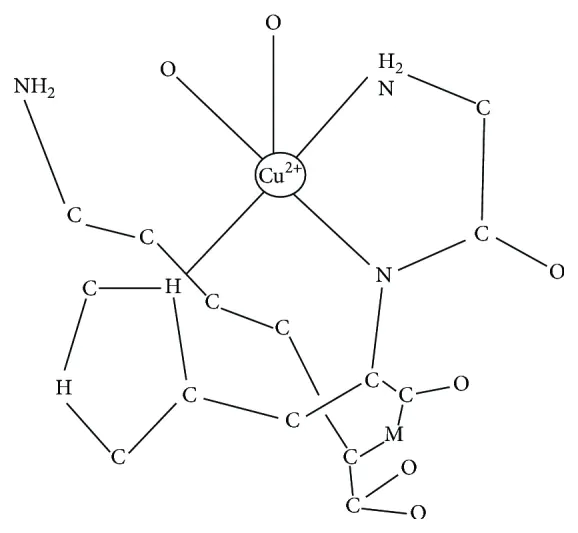
GHK-Cu is a natural peptide in human blood plasma, urine, and saliva. Research in animals reveals that GHK-Cu can improve wound healing, immune function, and skin health by stimulating collagen, fibroblasts and promoting blood vessel growth. There has been evidence that has shown that it acts as a feedback signal that is generated after tissue injury. It also suppresses free-radical damage and thus is a potent antioxidant.
Product Usage: This PRODUCT IS INTENDED AS A RESEARCH CHEMICAL ONLY. This designation allows the use of research chemicals strictly for in vitro testing and laboratory experimentation only. All product information available on this website is for educational purposes only. Bodily introduction of any kind into humans or animals is strictly forbidden by law. This product should only be handled by licensed, qualified professionals. This product is not a drug, food, or cosmetic and may not be misbranded, misused or mislabled as a drug, food or cosmetic.
GHK-CUは人間の血液の自然な部分であり、そのため、皮膚再生経路で不可欠な役割を果たすことがわかっています。皮膚培養の研究により、GHKはコラーゲン、グリコサミノグリカン、およびプロテオグリカンや硫酸コンドロイチンなどの他の細胞外マトリックス成分の合成と分解を刺激することがわかっています。この効果の少なくとも一部は、GHK-CUが線維芽細胞、免疫細胞、および内皮細胞に及ぼす肯定的な補充の利点を通じて媒介されます。ペプチドはこれらの細胞を傷害の部位に引き込み、損傷の修復における彼らの活動を調整するように見えます[1].
GHK-Cu is a common component of skin-care and cosmetic products. It improves elasticity of the skin while tightening and firming. It has also been shown to reduce damage due to sunlight, reduce hyperpigmentation, and reduce the appearance of fine lines and wrinkles[1]。 GHK-CUがコラーゲン合成を調節する能力は、傷跡の外観を減らし、肥大性の治癒が起こらないようにし、粗い皮膚を滑らかにし、老化した皮膚の構造を修復する上で重要です。 GHK-CUのこれらの役割は、成長因子-βの変換レベルを高める能力ですが、部分的に媒介されます[2]。ペプチドはいくつかの異なる生化学経路を介して機能し、遺伝子転写の効果とレベルがある可能性があります[3].
Research in mice shows that GHK-Cu increases the rate of healing following burn by as much as 33%. It appears that besides recruiting immune cells and fibroblasts to the site of injury, GHK-Cu also encourages the growth of blood vessels[4]。皮膚の燃焼は、熱量化効果のために血管を再調整するのが遅いことが多いため、これらの所見は、火傷ユニットの創傷ケアを改善し、治癒を加速するための新しい経路を開きます。
2。GHK-CUおよびバクテリア
外来病原体による組織の浸潤は、傷が治癒するのが遅い、またはまったく治癒しない主な理由の1つです。細菌および真菌の感染症は、火傷患者や免疫系の低下患者(糖尿病、HIVなど)の患者で特に問題があります。 GHK-CUは、特定の脂肪酸と組み合わせると、創傷治癒を複雑にすることが知られている多くの細菌と真菌に対して活性である強力な抗菌化合物を作成します。[5].
Research in diabetic patients has shown that GHK-Cu is superior to standard care regimens alone in the treatment of diabetic ulcers. Patients given both standard care and GHK-Cu showed a ~40% increase in wound closure and a 27% decrease in rates of infection compared to control groups[6]。同様の結果が、虚血性の開いた傷の患者で見られました[7].
3。GHK-CU、認知および神経系機能
アルツハイマー病のような変性疾患によるニューロンの死亡はあまり理解されていません。これにより、治療を開発することが困難になり、利用可能な治療法は一般に有効性が限られています。しかし、研究では、GHK-CUがこれらの疾患の根底にあることが多いニューロン機能の年齢に関連した低下に対抗できることが示唆されています。研究によると、GHK-CUは神経系の血管新生を改善し、神経の伸長を高め、中枢神経系の炎症を軽減できることが示されています。 GHK-CUが病理学的遺伝子発現をリセットし、機能不全のシステムで健康状態を再現するのに役立つという証拠さえあります[8].
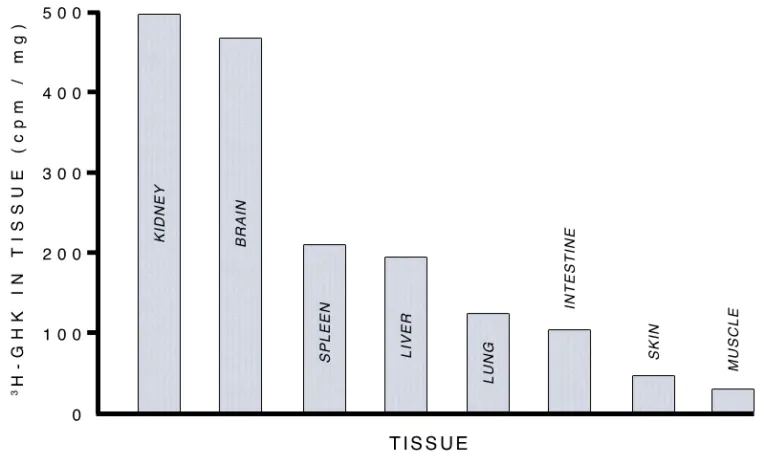
GHK-Cu is found in high concentrations in the brain, though levels of the peptide decline with age. There is a thought, among scientists, that GHK-Cu may protect nervous system tissues against natural insults such as gene dysregulation and that it is the decline in GHK-Cu with age, and not the onset of new disease processes, that actually leads to neurodegeneration.
GHK-Cu Levels in various tissues
Source: PubMed
ラットの研究は、GHK-CUが脳組織を保護する可能性のあるメカニズムがアポトーシスを防ぐことによるものであることを示しています。この作用は、よく知られているmiR-339-59/vegfa経路を介して媒介されるようであり、脳出血と脳卒中に続いて活性です。ラットモデルでは、GHK-CUは脳内の神経学的欠損を改善し、腫れを減らし、miR-339-5pの過剰発現によって一般的に購入されるニューロンの死を阻害しました[9].
4。GHK-CUおよび化学療法の副作用
マウスの研究では、GHK-CUが癌薬物ブレオマイシンによる治療後に発生する線維症から肺を保護できることが示されています。[10]. This could pave the way for using GHK-Cu as a chemotherapy adjuvant that allows doses of these life-saving medications to be increased without risk of increased side effects. The study when a step farther, than usual, by identifying the likely pathway by which GHKC-Cu protects against fibrosis. It appears that the peptide regulations TNF-alpha dn IL-6 levels, both of which act as inflammatory molecules and affect the extracellular matrix and smooth muscle of the lung. By reducing inflammation in the lungs, GHK-Cu prevents fibrotic remodeling from taking place and improves collagen deposition.
Similar benefit of GHK-Cu in protecting lungs was found in mouse models of acute respiratory distress syndrome (ARDS), an inflammatory lung condition that can develop rapidly and be fatal. ARDS is associated with injury, infection, and certain drugs like those used in chemotherapy. Once again, GHK-Cu appeared to mediate its effects through decreased TNF-alpha and IL-6 expression[11].
5。GHK-CUおよび痛みの軽減
ラットモデルでは、GHK-CUの投与は、痛みに誘発される行動に用量依存的な影響を及ぼしました。ペプチドは、自然鎮痛剤L-リジンのレベルの増加によって生成される鎮痛効果を持っているように見えます[12]。同様の研究では、ペプチドが別の鎮痛性アミノ酸であるL-アルギニンのレベルも増加させる可能性があることがわかっています。[13]. These findings open up new avenues for pain control that do not rely on addictive opiate medications or NSAIDs, which have been found to have negative effects on the heart.
GHK-Cu exhibits minimal side effects, low oral and excellent subcutaneous bioavailability in mice. Per kg dosage in mice does not scale to humans. GHK-Cu for sale at
The above literature was researched, edited and organized by Dr. Logan, M.D. Dr. Logan holds a doctorate degree from Case Western Reserve University School of Medicine and a B.S. in molecular biology.
Scientific Journalの著者
ローレンピカート博士 has released 109 publications and is developing patents and analyzing GHK’s effects on human gene expression of 4,192 genes. In addition to GHK’s published potential uses on 肌 inflammation, metastatic cancer and COPD, it appears to have beneficial effects on other tissue systems such as the nervous system, gastrointestinal system, and mitochondrial system. His brief but detailed autobiography dives into the motivations and background behind his dedicating to skin, anti-aging, and life-long training.
ローレンピカート博士 GHK-CUの研究開発に関与する主要な科学者の一人として参照されています。この医師/科学者は、何らかの理由でこの製品の購入、販売、または使用を承認または提唱することは決してありません。関係や関係はありません。
ペプチドグル and this doctor. The purpose of citing the doctor is to acknowledge, recognize, and credit the exhaustive research and development efforts conducted by the scientists studying this peptide. Loren Pickart, Ph.D is listed in [1][3] and [8] under the referenced citations.
参照された引用
L.ピカート、J。M。バスケスソルテロ、およびA.マルゴリーナ、「皮膚再生における複数の細胞経路の天然変調器としてのGHKペプチド」、Biomed Res。 int。、vol。 2015、p。 648108、2015。[BioMed Research International]
A. Gruchlik、E。Chodurek、およびZ. Dzierzewicz、「Gly-his-Lysとその銅複合体が正常なヒト皮膚線維芽細胞におけるTGF-β分泌に対する影響」、Acta Pol。 Pharm。、vol。 71、いいえ。 6、pp。954–958、2014年12月。[PubMed]
L.é。 Sever’yanovaおよびM. E. Dolgintsev、「ラットの痛み誘発性の攻撃防止行動におけるトリペプチドのgly-lysの影響」、Bull。 exp。 Biol。 Med。、vol。 164、いいえ。 2、pp。140–143、2017年12月。[Springer]
L.é。 Sever’yanova and D. V. Plotnikov、「グリプロリンのL-アルギニンへの結合は、鎮痛および抗血圧系の効果を逆転させる」Bull。 exp。 Biol。 Med。、vol。 165、いいえ。 5、pp。621–624、2018年9月。[PubMed]
ALL ARTICLES AND PRODUCT INFORMATION PROVIDED ON THIS WEBSITE ARE FOR INFORMATONAL AND EDUCATIONAL PURPOSES ONLY.
このウェブサイトで提供される製品は、ビトロ内の研究のためにのみ提供されています。 in-vitro研究(ラテン語:ガラス)は体の外側で行われます。これらの製品は薬や薬ではなく、病状、病気、病気を予防、治療、治療するためにFDAによって承認されていません。あらゆる種類の人間や動物への身体導入は、法律によって厳密に禁じられています。