




Preserving the primary sequence fidelity and secondary helical folding of synthetic multi receptor peptides begins with understanding the physical chemistry of the lyophilized cake. How to Store Retatrutide Vials to Maintain Chemical Integrity examines the thermodynamic, material science, and environmental controls required to prevent solid state degradation in research laboratories. Following freeze drying, the 39 amino acid peptide exists within an amorphous, non crystalline solid matrix. Unlike crystalline small molecules that possess rigid lattice energies, amorphous peptide solids remain thermodynamically metastable and exhibit localized molecular mobility even in the dry state. This molecular motion is governed by the glass transition temperature of the lyophilized matrix. Differential scanning calorimetry evaluations demonstrate that when ambient storage temperatures approach or exceed this critical glass transition threshold, the amorphous cake transitions from a rigid glassy state into a viscoelastic rubbery state. Within this rubbery phase, translational and rotational diffusion rates increase exponentially, accelerating intramolecular cyclization and intermolecular covalent aggregation. Maintaining sealed research vials in dedicated ultralow temperature freezers at minus 80 degrees Celsius or minus 20 degrees Celsius keeps the peptide matrix far below its glass transition boundary, immobilizing the C221H342N46O68 backbone and halting solid state relaxation kinetics.
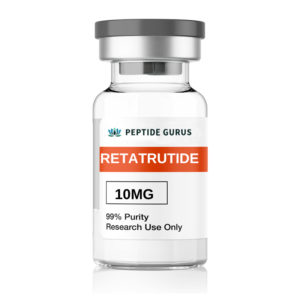
The long term chemical stability of a lyophilized peptide is dictated not only by external freezer temperatures, but also by the physicochemical inertness of its primary container closure system. Standard soda lime glass vials release alkali metal ions and silicate particulates over time, which can elevate surface pH upon reconstitution and catalyze base mediated peptide bond cleavage. Consequently, analytical grade multi receptor peptides must be housed exclusively within Type I borosilicate glass vials treated with internal ammonium sulfate dealkalization or hydrophobic siliconization. Equally critical is the selection of the elastomeric stopper sealing the vial headspace. Conventional unmodified rubber stoppers contain residual vulcanization accelerators, zinc oxide activators, and plasticizers that can volatilize and adsorb onto the hydrophobic C20 eicosanedioic acid side chain of the peptide. Furthermore, standard elastomers exhibit measurable moisture vapor transmission rates over multi month storage intervals. High integrity laboratory storage relies on bromobutyl rubber stoppers laminated with an inert fluoropolymer film, crimped tightly under an anhydrous nitrogen or argon headspace. This fluoropolymer barrier prevents organic extractables and leachables from contaminating the lyophilized cake while blocking atmospheric water ingress during prolonged cryogenic storage.
Synthetic peptides containing hydrophilic amino acid side chains and polar linker units are intrinsically hygroscopic, absorbing atmospheric water vapor rapidly upon exposure to ambient laboratory air. Water molecules absorbed into a lyophilized peptide cake act as potent molecular plasticizers. According to the Gordon Taylor polymer mixing relationship, every one percent increase in residual moisture content depresses the glass transition temperature of the peptide matrix by several degrees Celsius. If a research technician removes a cold vial from a minus 80 degrees Celsius freezer and uncaps it immediately, ambient room moisture condenses instantly onto the subzero glass walls and lyophilized cake. This localized moisture absorption triggers deliquescence and cake collapse, creating concentrated aqueous microenvironments within the solid powder. Within these hydrated pockets, residual acidic counter ions such as trifluoroacetate catalyze rapid amide bond hydrolysis and side chain deamidation at glutamine and asparagine residues. To prevent plasticization induced degradation, sealed vials removed from cryogenic storage must be placed inside an anhydrous desiccator cabinet containing active molecular sieves or phosphorus pentoxide until the glass surface equilibrates completely to ambient room temperature prior to opening.
Quantifying the shelf life and degradation rate of synthetic peptides across different laboratory storage regimes relies on accelerated stability modeling governed by the Arrhenius equation. By exposing sealed peptide lots to elevated thermal stress conditions, such as 25 degrees Celsius and 40 degrees Celsius at controlled relative humidity, analytical chemists measure the rate constant of purity loss via reversed phase high performance liquid chromatography and calculate the activation energy of specific degradation pathways. In solid state multi agonist peptides, the dominant thermal degradation mechanisms include diketopiperazine formation at the amino terminus and beta elimination across disulfide or sterically strained residues. Parallel photostability testing conducted under International Council for Harmonisation Q1B guidelines reveals that ultraviolet and high energy visible light wavelengths between 300 and 450 nanometers induce excited singlet and triplet states within aromatic tyrosine residues. This photoexcitation generates reactive oxygen species that oxidize vulnerable C20 lipid linkers and peptide backbone carbons. Therefore, primary glass vials must be stored within opaque secondary containment boxes or amber light blocking sleeves, completely shielded from laboratory fluorescent and light emitting diode illumination.
Even when utilizing ultralow temperature laboratory freezers, improper spatial placement and frequent door openings can expose sensitive peptide vials to destructive thermal cycling. Frost free laboratory freezers are strictly contraindicated for peptide storage, as their automated defrost heating coils periodically elevate internal cabinet temperatures above zero degrees Celsius, subjecting lyophilized cakes and frozen aliquots to repetitive micro thawing events. Research laboratories must utilize manual defrost ultralow freezers equipped with continuous platinum resistance temperature detectors linked to automated alarm networks. Temperature mapping studies across freezer interiors demonstrate that storage racks positioned near the door gasket experience thermal excursions of 10 to 15 degrees Celsius during routine sample retrieval. Reference peptide vials should be stored within the geometric center of the freezer cavity inside high thermal mass polycarbonate cryoboxes. Once a lyophilized vial is reconstituted into an aqueous stock solution, its thermodynamic stability drops precipitously; solutions must be subdivided immediately into single use low binding fluoropolymer microcentrifuge tubes, snap frozen in liquid nitrogen, and logged into an electronic laboratory inventory system that strictly prohibits refreezing thawed aliquots.
Ensuring that a synthetic research peptide arrives at the laboratory bench with zero prior thermal or hydrolytic degradation requires a verified manufacturing and warehousing infrastructure. In alignment with quality control standards established by the United States Food and Drug Administration for synthetic peptide materials, every production lot must undergo rigorous stability indicating verification before release. Reversed phase high performance liquid chromatography must confirm chromatographic purity at or above 98.0 percent, high resolution mass spectrometry must verify the exact 4731.33 Dalton monoisotopic mass, and Karl Fischer titration must document residual moisture below 8.0 percent. PeptideGurus supports global research laboratories by housing authenticated peptide lots within validated, climate monitored cryogenic warehousing facilities operating under strict ISO quality management and Good Manufacturing Practice guidelines. With strategically positioned fulfillment centers across North America and Europe, research institutions receive pristine, nitrogen purged vials backed by comprehensive Certificates of Analysis, ensuring maximum chemical integrity from synthesis through long term laboratory storage.
Technical Overview Note: The preceding content represents a technical overview and synthesis of industry wide knowledge in peptide science and analytical pharmacology for educational and research reference, rather than conclusions drawn from a single dedicated clinical study.
Why does residual moisture lower the glass transition temperature of lyophilized peptide cakes?
Water has an extremely low glass transition temperature of approximately minus 135 degrees Celsius. When water molecules are absorbed into an amorphous peptide matrix, they insert themselves between peptide chains and disrupt stabilizing intermolecular hydrogen bonds. This plasticization effect increases free volume and chain mobility, significantly lowering the overall glass transition temperature and accelerating solid state chemical degradation even at subzero freezer temperatures.
Why are fluoropolymer coated bromobutyl stoppers superior to standard rubber closures for peptide vials?
Standard rubber closures can leach organic curing agents, sulfur compounds, and trace metals into the vial headspace, while allowing slow moisture vapor permeation over time. Fluoropolymer coated bromobutyl stoppers provide an inert, non stick chemical barrier that blocks extractables and leachables, prevents hydrophobic adsorption of the lipidated peptide onto the stopper surface, and maintains an airtight seal that preserves the anhydrous nitrogen headspace.
Why must frost free laboratory freezers never be used for storing research peptides?
Frost free freezers prevent ice buildup by running periodic automated heating cycles that warm the interior cabinet walls close to or above freezing temperatures. These repeated temperature spikes subject peptide vials to continuous thermal stress and micro freeze thaw cycles, which rapidly induce beta sheet aggregation, deamidation, and loss of biological activity in both lyophilized powders and frozen stock solutions.
PeptideGurus is a leading supplier of American-made research peptides, offering top-quality products at competitive prices. With a focus on excellence and customer service, they ensure a secure and convenient ordering process with global shipping.
© Copyright Peptide Gurus 2024. All rights reserved.Privacy Policy
All products on this site are for Research, Development use only. Products are Not for Human consumption of any kind. The statements made within this website have not been evaluated by the US Food and Drug Administration or HEALTH CANADA. The statements and the products of this company are not intended to diagnose, treat, cure or prevent any disease.
PeptideGurus is a chemical supplier. PeptideGurus is not a compounding pharmacy or chemical compounding facility as defined under 503A of the Federal Food, Drug, and Cosmetic act. Peptide Sciences is not an outsourcing facility as defined under 503B of the Federal Food, Drug, and Cosmetic act.
CONTACT