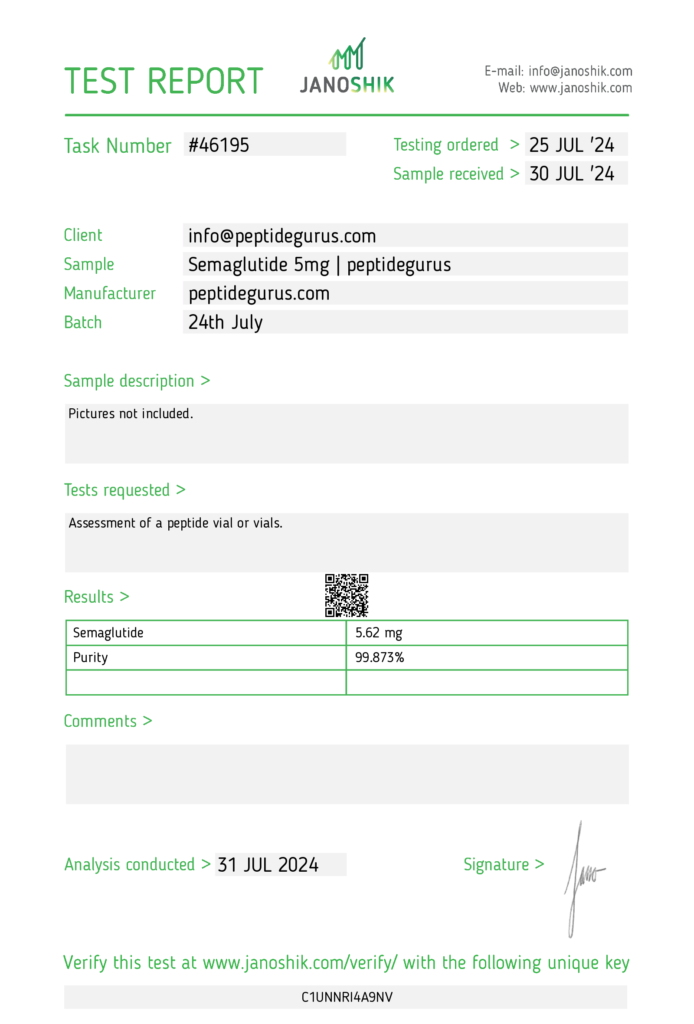
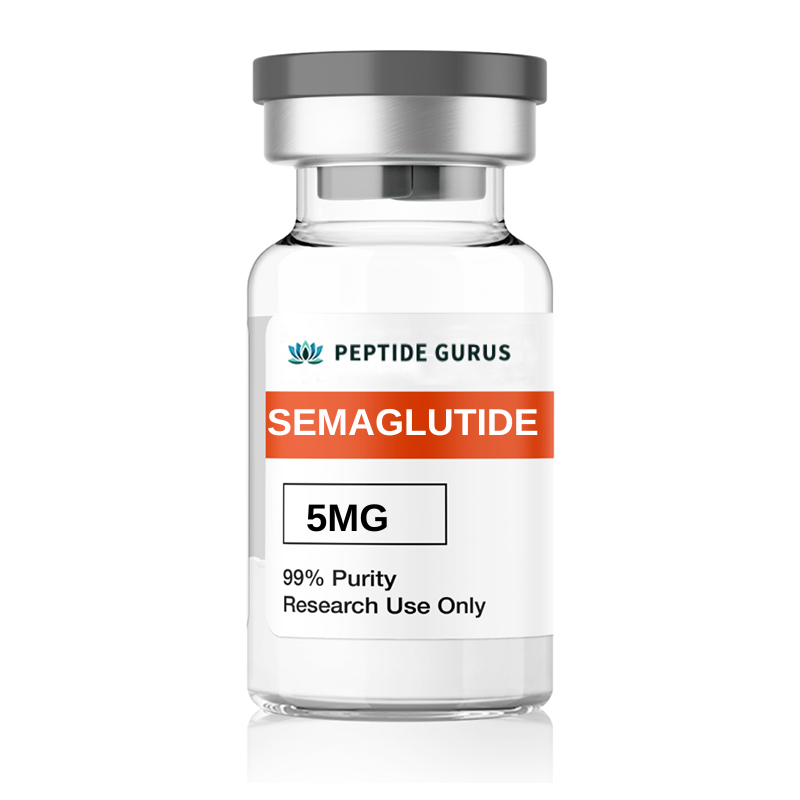
반 글루타이드 is a derivative of the naturally occurring GLP-1, a peptide known to lower blood sugar levels and enhance insulin secretion. Research shows that Semaglutide may also improve heart, liver, and lung function while helping to slow or prevent the effects of Alzheimer’s disease. Semaglutide has been shown to significantly decrease appetite by delaying gastric emptying and reducing intestinal motility. Glucagon-Like Peptide-1 (GLP-1) Analog Shown to Stimulate Insulin and Suppress Glucagon Secretion in a Glucose-Dependent Manner.
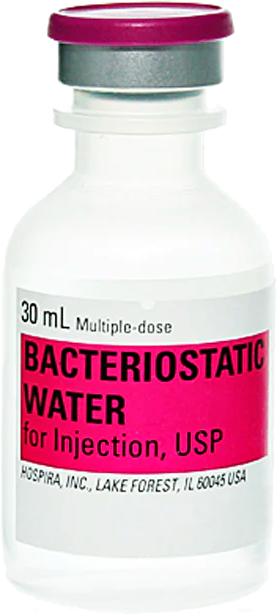
유리 (1) 30 ml 세균성 물 with qualified orders over $500 USD.
(excludes capsule products, cosmetic peptides, promo codes and shipping)
Semaglutide is a derivative of the naturally occurring GLP-1, a peptide known to lower blood sugar levels and enhance insulin secretion. Research shows that Semaglutide may also improve heart, liver, and lung function while helping to slow or prevent the effects of Alzheimer’s disease. Semaglutide has been shown to significantly decrease appetite by delaying gastric emptying and reducing intestinal motility. Glucagon-Like Peptide-1 (GLP-1) Analog Shown to Stimulate Insulin and Suppress Glucagon Secretion in a Glucose-Dependent Manner.
Product Usage: This PRODUCT IS INTENDED AS A RESEARCH CHEMICAL ONLY. This designation allows the use of research chemicals strictly for in vitro testing and laboratory experimentation only. All product information available on this website is for educational purposes only. Bodily introduction of any kind into humans or animals is strictly forbidden by law. This product should only be handled by licensed, qualified professionals. This product is not a drug, food, or cosmetic and may not be misbranded, misused or mislabled as a drug, food or cosmetic.
semaglutide 및 GLP-1 개요
글루카곤과 유사한 펩티드 -1의 짧은 짧은 GLP-1은 길이가 30-31 아미노산에 불과한 짧고 자연적으로 발생하는 펩티드 호르몬이다. 주요 생리 학적 기능은 자연적으로 인슐린 분비를 향상시켜 혈당 수치를 낮추는 것입니다. 또한 인슐린 유전자 전사를 촉진하여 보호 베타 세포 인슐린 저장에서 역할을하며 뇌 및 중추 신경계에서의 신경 영양 효과와 관련이 있습니다. GI 시스템에서, GLP-1은 위 배출을 지연시키고 장 운동성을 감소시킴으로써 식욕을 크게 감소시키는 것으로 나타났다. 예비 연구는 심장, 지방, 근육, 뼈, 간, 폐 및 신장에서도 GLP-1의 영향을 보여주었습니다.
GLP-1 연구의 주요 초점은 식욕 억제뿐만 아니라 당뇨병 치료/예방 영역에있었습니다. 2 차 연구는 펩티드의 잠재적 심혈관 이점에 중점을 둡니다. 보다 최근의 연구는 덜 강력한 연구는 신경 퇴행성 질환을 막는 GLP-1의 능력에 중점을 둡니다. 이 후자의 연구 영역은 최신이지만, 펩티드가 알츠하이머 병의 설정에서 아밀로이드 베타 플라크의 축적을 느리게하거나 방지하는 것으로 밝혀졌다.
Perhaps the most important effect that GLP-1 has, according to Dr. Holst, is referred to as the “incretin effect.” Incretins are a group of metabolic hormones, released by the GI tract, that cause a decrease in blood glucose (sugar) levels. GLP-1 has been shown to be one of the two most important hormones (the other being GIP) to stimulate the incretin effect in rodent models. Though GIP circulates at levels roughly 10 times higher than that of GLP-1, there is evidence that GLP-1 is the more potent of the two molecules, particularly when levels of blood glucose are quite high.
A GLP-1 receptor has been identified on the surface of pancreatic beta cells, making it clear that GLP-1 directly stimulates the exocytosis of insulin from the pancreas. When combined with sulfonylurea drugs, GLP-1 has been shown to boost insulin secretion enough to cause mild hypoglycemia in up to 40% of subjects[1]. 물론, 증가 된 인슐린 분비는 증가 된 단백질 합성, 단백질의 파괴 감소, 골격근에 의한 아미노산의 증가를 포함한 다수의 영양 효과와 관련이있다.
GLP-1 및 베타 셀 보호
동물 모델에 대한 연구에 따르면 GLP-1은 췌장 베타 세포의 성장과 증식을 자극 할 수 있으며 새로운 베타 세포의 분화가 췌장 덕트 상피에서 전구체를 형성 할 수 있음을 시사합니다. 연구에 따르면 GLP-1은 베타 세포 아 pop 토 시스를 억제하는 것으로 나타났습니다.[1]. Taken in sum, these effects tip the usual balance of beta cell growth and death toward growth, suggesting that the peptide may be useful in treating diabetes and in protecting the pancreas against insult that harms beta cells.
In one particularly compelling trial, GLP-1 was shown to inhibit the death of beta cells caused by enhanced levels of inflammatory cytokines. In fact, mouse models of type 1 diabetes have revealed that GLP-1 protects islet cells from destruction and may, in fact, be a useful means of preventing onset of the type 1 diabetes[2].
GLP-1 및 식욕
마우스 모델에 대한 연구에 따르면 GLP-1 및 유사한 사촌 GLP-1의 마우스 뇌에 대한 투여는 음식 섭취량을 먹고 금지하는 구동을 줄일 수 있습니다.[3]. GLP-1은 실제로 포만감을 향상시켜 개인이 더 충만 해지고 기아를 간접적으로 줄이는 데 도움이 될 수 있습니다. 최근의 임상 연구는 생쥐에서 GLP-1 수용체 작용제의 일일 투여가 점진적이고 선형 체중 감량을 유발한다는 것을 보여 주었다. 오랜 기간 동안,이 체중 감소는 심혈관 위험 인자의 현저한 개선 및 헤모글로빈 A1C 수준의 감소와 관련이 있으며, 이들 중 후자는 당뇨병의 중증도 및 치료를 통해 달성 된 혈당 조절의 질에 대한 대리 마커입니다.[4].
GLP-1의 잠재적 심혈관 이점
GLP-1 수용체는 심장에 분포되어 심박수를 높이고 좌심실 말단 이완기 압력을 줄임으로써 특정 환경에서 심장 기능을 향상시키는 작용을 알 수 있습니다.[5]. The latter may not seem like much, but increased LV end-diastolic pressure is associated with LV hypertrophy, cardiac remodeling, and eventual heart failure.
Recent evidence has even suggested that GLP-1 could play role in decreasing the overall damaged caused by a heart attack. It appears that the peptide improves cardiac muscle glucose uptake, thereby helping struggling ischemic heart muscle cells to get the nutrition they need to continue functioning and avoid programmed cell death. The increase in glucose uptake in these cells appears to independent of insulin[6].
Large infusions of GLP-1 into dogs have been shown to improve LV performance and reduce systemic vascular resistance. The latter effect can help to reduce blood pressure and ease strain on the heart as a result[7]. 이는 LV 리모델링, 혈관 두껍게 및 심부전과 같은 고혈압의 장기 결과를 줄이는 데 도움이 될 수 있습니다. Holst 박사에 따르면, 심장 손상 후 GLP-1의 투여는“실험 동물 모델과 환자 모두에서 지속적으로 심근 성능을 증가시켰다”고 말했다.
Size of damage in heart in control mice (A), mice given standard vasopressin therapy (B), and mice give GLP-1 (C).
Source: Diabetes Journal
GLP-1과 뇌
GLP-1이 학습을 향상시키고 알츠하이머 병과 같은 신경 퇴행성 질환으로부터 뉴런을 보호하는 데 도움이 될 수 있다는 증거가 있습니다. 한 연구에서, GLP-1은 마우스에서 연관성 및 공간 학습을 향상시키고 심지어 특정 유전자 결함을 갖는 마우스에서 학습 결핍을 향상시키는 것으로 나타났다. 뇌의 특정 영역에서 GLP-1 수용체를 과발현하는 쥐에서는 학습과 기억이 정상적인 대조군보다 훨씬 우수합니다.[8].
Additional research in mice has shown that GLP-1 can help to protect against excitotoxic neuron damage, completely protecting rat models of neurodegeneration against glutamate-induced apoptosis. The peptide can even stimulate neurite outgrowth in cultured cells. Researchers are hopeful that additional research on GLP-1 will reveal how it might be used to halt or reverse certain neurodegenerative diseases[9].
Interestingly, GLP-1 and its analogue exendin-4 have been shown in mouse models to reduce levels of amyloid-beta in the brain as well as the beta-amyloid precursor protein found in neurons. Amyloid beta is the primary component of the plaques observed in Alzheimer’s disease, plaques which, while not necessarily known to be causative, are associated with the severity of the disease. It remains to be seen if preventing amyloid beta accumulation can protect against the effects of Alzheimer’s disease, but this research is, at the very least, a tantalizing clue as to how scientists my intervene in the progression of mild cognitive impairment to full Alzheimer’s disease[10].
GLP-1 exhibits minimal to moderate side effects, low oral and excellent subcutaneous bioavailability in mice. Per kg dosage in mice does not scale to humans. GLP-1 for sale at
펩티드 전문가 인간 소비가 아닌 교육 및 과학 연구로만 제한됩니다. 면허가있는 연구원 인 경우 GLP-1 만 구매하십시오.
저자에 대해
위의 문헌은 Dr. Logan, M.D. Dr. Logan이 연구, 편집 및 주최했습니다. Dr. Logan은 Case Western Reserve University School of Medicine과 B.S.에서 박사 학위를 취득했습니다. 분자 생물학에서.
과학 저널 저자
In 1986 Professor Jens Juul Holst discovered the GLP-1 hormone in connection with his work on stomach ulcer surgery. Since the discovery, Novo Nordisk have used the research to successfully develop products to treat diabetes and obesity. The hormone GLP-1 can be used to regulate blood sugar levels and satiety. Not only has it made treatment of obesity and diabetes possible, it has also proven useful preventatively through early diagnosis for citizens who are at risk of developing diabetes and obesity. In 2015, Jens Juul Holst received the prestigious international Fernström prize for his research on GLP-1. He is one of the most cited researchers in Europe, with over 1,200 published articles and citations in over 3,500 articles annually.
Professor Jens Juul Holst is being referenced as one of the leading scientists involved in the research and development of GLP-1. In no way is this doctor/scientist endorsing or advocating the purchase, sale, or use of this product for any reason. There is no affiliation or relationship, implied or otherwise, between
펩티드 전문가 그리고이 의사. 의사를 인용하는 목적은이 펩티드를 연구하는 과학자들이 수행 한 철저한 연구 개발 노력을 인정, 인식 및 인정하는 것입니다. Jens Juul Holst 교수는 참조 인용에 따라 [11]에 나열되어 있습니다.
참조 인용
"글루카곤 유사 펩티드의 생리학 1 | 생리 학적 검토." [온라인].
"Lisofylline 및 Exendin-4와의 결합 된 치료는자가 면역 당뇨병을 역전시킵니다.-PubMed-NCBI." [온라인].
"Proglucagon 유래 펩티드 인 글루카곤 유사 펩티드 -2는 음식 섭취 조절에 관여하는 신경 전달 물질입니다.-PubMed-NCBI." [온라인].
"… - PubMed - NCBI를 가진 314 명의 과체중 환자에서 82 주 동안 A1C, 체중 및 심혈관 위험 인자에 대한 엑스나 타이드 치료의 효과에 대한 중간 분석." [온라인].
"글루카곤 유사 펩티드 -1 수용체가없는 마우스의 심장 기능-PubMed-NCBI." [온라인].
"글루카곤 유사 펩티드 1은 허혈/재관류 손상으로부터 심장을 직접 보호 할 수 있습니다 | 당뇨병." [온라인].
"재조합 글루카곤 유사 펩티드 -1은 심근 포도당 흡수를 증가시키고 Pacing-IND…-PubMed-NCBI를 가진 의식적인 개에서 좌심실 성능을 향상시킵니다." [온라인].
"글루카곤 유사 펩티드 -1 수용체는 학습 및 신경 보호에 관여합니다.-PubMed-NCBI." [온라인].
"글루카곤-유사 펩티드 -1 및 exendin-4에 의한 흥분 독성 뉴런 손상의 보호 및 반전.-PubMed-NCBI." [온라인].
"새로운 알츠하이머 병 중재 전략 : GLP-1.-PubMed-NCBI." [온라인].
Holst JJ. From the Incretin Concept and the Discovery of GLP-1 to Today’s Diabetes Therapy. Front Endocrinol (Lausanne). 2019;10:260. Published 2019 Apr 26. doi:10.3389/fendo.2019.00260 https://www.ncbi.nlm.nih.gov/pmc/articles/PMC6497767/
ALL ARTICLES AND PRODUCT INFORMATION PROVIDED ON THIS WEBSITE ARE FOR INFORMATIONAL AND EDUCATIONAL PURPOSES ONLY.
이 웹 사이트에서 제공되는 제품은 투명한 연구를 위해 제공됩니다. 내역 연구 (라틴어 : 유리)는 신체 외부에서 수행됩니다. 이 제품은 의약품이나 약물이 아니며 FDA에 의해 의학적 상태, 질병 또는 질병을 예방, 치료 또는 치료하기 위해 승인되지 않았습니다. 인간이나 동물에 어떤 종류의 신체적으로 소개되는 것은 법에 의해 엄격히 금지되어 있습니다.