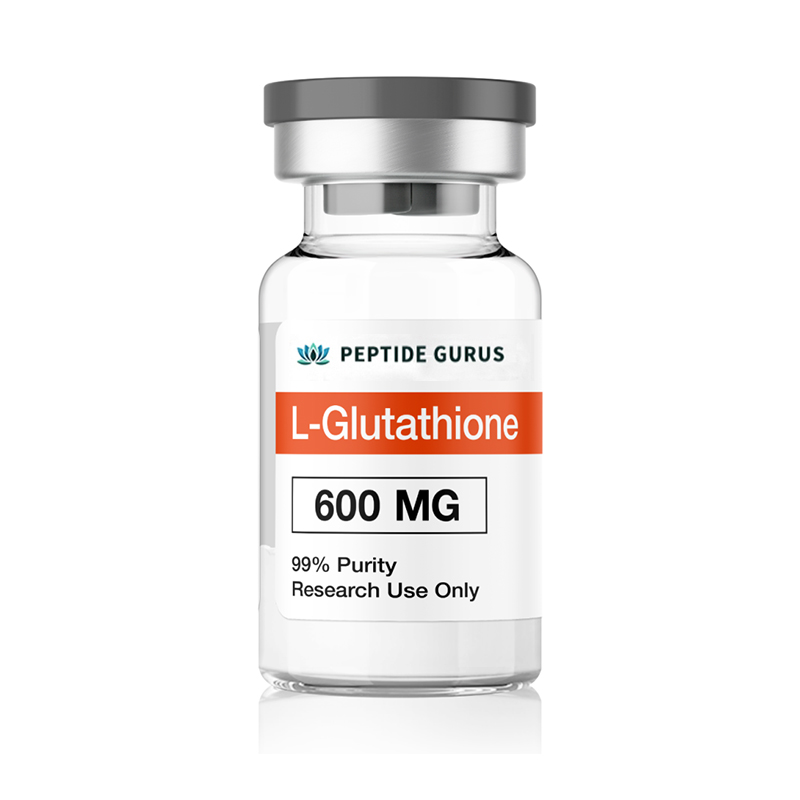
Schreiben Sie uns jetzt eine E-Mail, um Ihre Bestellung mit dem 1-zu-1-Support aufzugeben. Begrenzter Bestand! Wir akzeptieren Zelle, CashApp, Venmo, Banküberweisungen und Krypto.
Availability: Ships today if ordered and paid bis 12 Uhr PST. (Außer samstags und sonntags)
Kostenloser Versandfor orders over $200
Freie (1) 30 ml bakteriostatisches Wasser mit qualifizierten Bestellungen über $500 USD.
(excludes capsule products, cosmetic peptides, promo codes and shipping)
Glutathion ist ein starker Antioxidans und Regulator einer Reihe biochemischer Prozesse. Es ist in menschlichen Geweben reichlich vorhanden, unterliegt jedoch dem Altern. Untersuchungen zeigen, dass Glutathion dazu beitragen kann, neurodegenerative Erkrankungen zu verringern, die Gesundheit der Knorpel zu fördern, altersbedingte Veränderungen im Auge abzuwehren, die Immunfunktion zu verbessern und jugendlichere Haut aufrechtzuerhalten. Insgesamt gibt es robuste Hinweise darauf, dass Glutathion eine starke Anti-Aging-Verbindung mit umfangreichen Immun- und gesundheitlichen Vorteilen ist.
Product Usage: This PRODUCT IS INTENDED AS A RESEARCH CHEMICAL ONLY. Diese Bezeichnung ermöglicht die Verwendung von Forschungschemikalien ausschließlich für In -vitro -Tests und Laborversuche. Alle auf dieser Website verfügbaren Produktinformationen dienen nur zu Bildungszwecken. Die körperliche Einführung jeglicher Art in Menschen oder Tiere ist gesetzlich streng verboten. Dieses Produkt sollte nur von lizenzierten, qualifizierten Fachleuten behandelt werden. Dieses Produkt ist keine Droge, Nahrung oder Kosmetik und darf als Medikament, Nahrung oder Kosmetik nicht missbraucht, missbraucht oder missbräuchlich werden.
L-Glutathion
L-Glutathione is a short peptide composed of just cysteine, glutamate, and glycine. It occurs naturally throughout the body and acts primarily as an antioxidant and as a supportive agent to a number of processes in the central nervous system. Glutathione is especially important in the detoxification processes of the liver and as a free-radical scavenger in the brain. There is ample evidence to suggest that loss of glutathione can contribute to neurodegenerative diseases like Parkinson’s disease as well as diseases of the eye like cataracts and diabetic retinopathy. Reduced glutathione levels are thought to be both a consequence of aging as well as a contributor to the aging process. Chronic disease also reduces glutathione levels.
Oral glutathione supplementation appears to be ineffective due to the breakdown of the peptide in the gastrointestinal system. Though much is made of oral supplementation with glutathione precursors like N-acetyl cysteine (NAC), research shows that glutathione levels tend to decrease with age due to a loss of production capacity (usually starting around middle age). This loss of production capacity, of course, limits the effectiveness of NAC and other precursors to generate glutathione. The best evidence indicates that glutathione is most effective when injected or inhaled via nasal preparations.
L-Glutathion-Struktur
Molecular Formula: C10H17N3Ö6S
Molecular Weight: 307.33 g/mol
PubChem CID: 124886
CAS No: 170-18-8
Alternative Names: Glutathione, Isethion, GSH
Source: PubChem
Glutathion ist ein Antioxidans
L-Glutathione has long been recognized as one of the most important low-molecular weight antioxidants synthesized by cells of the body. By virtue of the sulfur contained in the cysteine component of GSH, it is able to remove potent free radicals, such as peroxides, nitrogen dioxide, HOCl, and a multitude of other toxins, from the body. It does this through a basic redox reaction, thus protecting cells, DNA, and extracellular matrix components from the damage done by free radicals. Glutathione not only neutralizes free radicals directly, but assists other antioxidants, such as vitamins C and E, in their roles as antioxidants[1].
Glutathione is found both inside cells and as a secreted substance in the extracellular matrix. It is found in very high levels in lung tissue, the brain, and the liver. It is synthesized in humans via a simple redox reaction as follows.
Source: PubMed
Glutathion ist im menschlichen Körper so wichtig, dass Mangel mit einer Vielzahl von Krankheiten wie Diabetes, HIV, Krebs und sogar Tuberkulose in Verbindung gebracht wurde. Untersuchungen legen nahe, dass die Glutathionspiegel ein wichtiger Marker für die Schwere und das Fortschreiten der Erkrankung sein können. Die Messung von Glutathion kann Ärzten ein quantitativeres Mittel zur Bewertung der Prognose und zur Bestimmung der Wirksamkeit und des Zeitpunkts verschiedener Interventionen bieten [2]. Trotz des Verständnisses der Rolle von Glutathion bei Alterung und Krankheit wurde kein routinemäßiges Mittel zur Messung und Bewertung der Glutathionspiegel festgelegt. Die Forscher prüfen nun, wie die Messung dieses einfachen Peptids kritische Einblicke in alles liefern kann, von der allgemeinen Gesundheit bis zur Wirksamkeit spezifischer Behandlungen bei Krankheiten. In naher Zukunft kann die Messung der Glutathionspiegel genauso alltäglich und nützlich sein wie die Messung von Dingen wie Blutdruck, Cholesterin und Blutzuckerspiegel.
Die biologischen Rollen von L-Glutathion
While glutathione is best known for its antioxidant functions, the peptide does play other roles in the human body. It is an important, indeed required, molecule in the production of leukotrienes (inflammatory mediators) and prostaglandins. This makes it a potent regulator of certain immune responses as well as the inflammatory cascade. It is also a cofactor in a number of biochemical reactions and enhances the function of citrulline in the nitric oxide cycle. In other words, glutathione is an essential component of cellular metabolism and particularly important in regulating blood pressure and cardiac health.
Glutathione is also critical to proper protein folding in the endoplasmic reticulum. Research shows that glutathione helps proteins to fold into the correct 3D shape to bind to receptors and function normally. It is particularly important in the formation of disulfide bonds. Though it is not the only mechanism that cells harbor to promote proper protein folding, glutathione is an important aspect of this cellular function and thus contributes heavily to the proper functioning of cells[3], [4].
There is currently some debate as to whether glutathione acts a neurotransmitter. It certainly modulates the redox states of things like the NMDA receptor (a function that would make it a neuromodulator). It also appears to activate ionotropic receptors as well as the purinergic P2X7 receptor on Muller cells. Muller cells are found in the retina where they maintain the structure and function of retinal cells. This includes the regulation of neurotransmitter levels. This, again, suggests that even if glutathione is not a neurotransmitter, it plays an important role in the regulation of neurotransmitters[5].
The world’s foremost expert on glutathione is Dr. Nayan Patel. In 2020 he wrote a book entitled Die Glutathionrevolution in which he discusses the benefits and safety of glutathione supplementation. He likens oxidation in the body to rust, an apt analogy if ever there was one. Glutathione is the body’s main rust preventative, warding off all of the negative consequences of oxidation in the body in the same way that proper care of your car wards off rust and the detrimental effects it has on everything. According to Dr. Patel, glutathione levels drop by about 20% after age 40, setting us up for poor performance, increased risk of disease, and accelerated aging. The only way to overcome this deficit is through supplementation.
Eine Notiz zur Glutathionverwaltung
Research shows that glutathione is not well absorbed from dietary sources or as a result of oral intake. It is thought that enzymes in the GI tract may break it apart before it can be absorbed. There is some evidence to suggest that curcumin, N-acetyl cysteine, and certain components of foods like broccoli and spinach may help to boost glutathione levels by providing more precursors for its synthesis or by directly upregulating the process of synthesis itself.
Unfortunately, there is limited evidence to support the above options as being the optimal way to increase glutathione. While they do increase glutathione levels to some extent, the magnitude of their effect appears to be limited primarily because they cannot overcome the decrease in GSH levels that results from the loss of synthetic capacity. Research suggests that the only reliable way to significantly alter glutathione levels is to inject the peptide or to inhale it. Dr. Nayan Patel has developed a transdermal delivery system for glutathione, but it is not yet widely used.
L-Glutathion und Alterung
Oxidative damage to cells is one of the leading components of both the visual signs of aging as well as aging processes like senescence (cellular/tissue aging), hormonal aging, metabolic aging, and DNA damage that led to both disease and dysfunction. Given the importance of glutathione in fighting against oxidative damage, it should come as no surprise that the peptide is critical to reducing the effects of aging.
Of course, glutathione itself, as discussed, is subject to the effects of aging. With age comes a decrease in the capacity of most mammals to synthesize glutathione. Fortunately, supplementation is possible. Research, shows, however, that the best forms of glutathione supplementation are either injecting the peptide or inhaling it through a nasal preparation. Injection provides for the easiest administration of large doses of glutathione is the method most commonly used in research studies.
Source: ResearchGate
The graph above looks at ROS or free radical levels as a result of glutathione levels in standard mice versus mice that have been genetically modified to be prone to Alzheimer’s disease (AD). This reveals two things about glutathione. First, it shows that AD has an oxidative component. That is to say, it appears that at least part of the risk of developing AD comes down to defective eradication of free radicals in the central nervous system.
The second thing that this graph shows is the increase in free radicals that occurs following a reduction in glutathione levels. Note that glutathione reduction occurs at roughly middle age and that the increase in free radicals is delayed but obvious. This same pattern has been shown to hold in humans. Somewhere between the ages of 30 and 40 our glutathione levels begin to drop. This is followed, after a delay of 5-10 years, but an increase in free radical levels. It is thought that this accounts for many of the aspects of aging that seem to accelerate at around age 50.
Glutathion und Krebs
When it comes to cancer, glutathione appears to be both friend and foe. In the treatment of cancer, glutathione actually protects cancer cells from the effects of chemotherapy, scavenging them just as it would any other toxin or free radical. There is ongoing work to determine if it is possible to selectively reduce glutathione in tumor cells, thus making them more susceptible to chemotherapy[6].
Even though it was previously stated that oral glutathione supplementation is not very effective, research does suggest that it works in some settings. One of those settings is in preventing the development of skin cancer as a result of exposure to UV light. Studies in rats show that oral glutathione supplementation significantly reduces the risk of developing skin cancer following exposure to UV light[7]. This would suggest that, in addition to sunscreen, simply taking glutathione by mouth could be useful when out in the sun. The question remains if injection of the peptide would provide even greater protective effects.
The role of glutathione in cancer is complex because, as pointed out, it has both beneficial and pathogenic functions. It is best to think of glutathione as being beneficial in preventing cancer but problematic when treating cancer. For instance, glutathione is critical in the removal and detoxification of carcinogens. Nowhere is this more evident than the lungs of smokers, where glutathione is depleted as it works overtime to remove nitrogen compounds from cigarette smoke. In this setting, glutathione supplementation can help to prevent the development of cancer.
Once cancer develops, however, glutathione can promote tumor progression. In this setting, supplementation actually promotes metastasis but removing toxins that the body produces in an effort to kill cancer cells[8], [9]. In short, glutathione function is complex and context dependent. Scientists are actively working to understand how to best leverage glutathione to provide the best possible outcomes. What is clear, it seems, is that people who make efforts to avoid carcinogens and “live clean” probably benefit from the antioxidant effects of glutathione.
L-Glutathion und das Gehirn
Verringerte Glutathionspiegel sind mit den gemeinsamen Anzeichen von Altern sowie schwerwiegenderen Störungen wie neurodegenerativen Erkrankungen verbunden. Insbesondere die Glutathion -Pathologie spielt eine herausragende und möglicherweise entscheidende Rolle beim Beginn der Parkinson -Krankheit (PD). Neue Untersuchungen zeigen, dass Glutathion ein starker Mediator eines Prozesses ist, der als Eisenabhängiger Zelltod oder Ferroptose bezeichnet wird. Ohne Glutathion läuft diese Art des programmierten Zelltods in Zellen des Zentralnervensystems unkontrolliert, was zu einer vorzeitigen Alterung führt und zur Entwicklung einer neurodegenerativen Erkrankung beiträgt. Eine reichliche Untersuchung zeigt, dass die Supplementierung mit Glutathion oder seinen Vorläufern (z. B. N-Acetylcystein) besonders nützlich ist, um die neurologische Alterung auszugleichen [10].
Source: PubMed
The role of glutathione in the brain is also made obvious by the decline in glutathione levels with age. Research shows that while glutathione levels decline throughout the body with age, a result of a diminished capacity for production, levels decline most dramatically in the brain. This makes the brain more susceptible to both Parkinson’s disease and damage following stroke or other insult[11].
The decline in glutathione levels in the brain is particularly critical in times of stress. Mild stress normally induces an increase in glutathione production to protect against more severe stress, but the decline in synthetic capacity with age erodes this response. Thus, the older we get, the more susceptible we are to stress-induced neuronal damage. Offsetting this with N-acetyl cysteine supplementation is only partially effective because the synthetic machinery itself is compromised with age. Thus, research suggests that directly injecting (or inhaling) glutathione is the best way to boost levels of this antioxidant and prevent stress-related damage to the central nervous system.
L-Glutathion und das Auge
Perhaps the best-known role of glutathione is in the retina of the eye where it acts both as an antioxidant and as a supportive agent to Muller cells. Muller cells are cells within the retina that support the health and function of retinal neurons. Mujller cells, also called Muller glia, mediate acetylcholine and GABA neurotransmitter degradation, help to funnel light to retinal cells, and maintain the nutrient supply and waste removal of retinal cells. They are critical to eyesight and the long-term health of the retina, protecting the eye against everything from viral infection to diabetic retinopathy[12].
Glutathione is also an important component of lens health where it maintains protein thiols in their reduced state and thus maintains the normal light-scattering properties of the eye. A reduction in glutathione levels in the lens has been associated with cataract formation as well as changes in the permeability of the lens that make it harder for nutrient exchange to occur[13], [14].
Research shows that glutathione plays a critical role in protecting visual acuity and supporting retinal health. Combined with other anti-oxidants, research in animal models shows that glutathione supplementation (in this case delivered in the form of eye drops) can reduce oxidative stress in the eye and slow the typical changes that occur with aging such as cataracts and loss of visual acuity[15].
Supplementation with glutathione thus appears to support long-term health of all aspects of the eye including the retina, lens, and cornea. Research suggests that glutathione may help to ward off both ocular diseases as well as the “normal” effects of aging on the eye. Researchers are currently working on a topical (i.e., drop-based) delivery system for direct delivering of the peptide to the eye, but injected and inhaled glutathione likely provide benefit to the eye as well.
L-Glutathion- und Knorpelgesundheit
Eine der zugrunde liegenden Ursachen für Arthrose (die Verschleiß-Arthritis) ist die Unfähigkeit von Zellen, die die Gesundheit der Knorpel aufrechtzuerhalten, um sich an Stress anzupassen. Untersuchungen zeigen, dass Glutathion in diesem Prozess eine wichtige Rolle spielt. Interessanterweise ist die Supplementierung nicht das einzige Mittel zur Maximierung der Glutathionfunktion im Knorpel. In der Tat deuten die Forschung an Kühen darauf hin, dass die Supplementierung nur Teil der Antwort auf einen gesunden Knorpel ist. Der andere Teil der Antwort ist das Entladen des Knorpels. Mit anderen Worten, Ruhegelenke sind entscheidend für die Erhöhung der Glutathionspiegel in ihnen. Die beste Untersuchung zeigt, dass das Induzieren von oxidativem Stress, wie durch sorgfältige Bewegung, gefolgt von ordnungsgemäßer REST -Steigerung der Glutathionspiegel in unseren Gelenken und verzögert den Alterungsprozess im Knorpel [16].
L-Glutathion und Haut
Untersuchungen zeigen, dass die Supplementierung von Glutathion für die Verringerung der äußeren Altersvorschriften, insbesondere in der Haut, von Vorteil ist. Es wurde gezeigt, dass eine mäßige Dosis Glutathion über 12 Wochen das Erscheinungsbild von Falten verringert, die Hautelastizität verbessert und die Foto-Aging verringert. Die Supplementation führt zu weniger Altersflecken und allgemeinen „leichteren“ Haut aufgrund der Reduzierung der Melaninsynthese [17] [18]. Reduzierte Melanin -Synthese wie trägt auch zu einer Verringerung der Inzidenz für Hautkrebs bei.
Glutathion und das Immunsystem
The immune system is exceptionally sensitive to glutathione levels. What is interesting is that there is little evidence to suggest that glutathione supplementation is beneficial in health, but ample evidence to suggest a massive benefit in the setting of disease. For instance, glutathione supplementation (or NAC supplementation) has been shown to significantly boost immune function in individuals with HIV[19].
This odd function of glutathione has prompted some people to suggest that supplementing during times of health is either pointless or even detrimental to the immune system. This is not what the research shows. Rather, it is better to think of it this way. Glutathione supplementation has no apparent effect on the immune system in health, but it does benefit in the setting of disease, even in the setting of simple viral illnesses. Thus, supplementing is of net benefit because we never know when we are going to catch a cold and being “stocked up” on glutathione puts our immune system in the best position to respond to infection.
The reason for this odd behavior likely comes down to the fact that the immune system is relatively quiescent when we are well but ramps up production of disease-fighting cells and antibodies very rapidly in response to disease. Thus, the immune system is doing very little work and thus requires very little antioxidant capacity when it is at rest. When disease presents itself, however, the immune system requires vast amounts of antioxidant capacity and thus benefits substantially from higher levels of glutathione.
In fact, supplementation with glutathione does appear to elevate storage levels and provide a kind of bugger against disease. A pilot study of liposomal glutathione in humans found that supplementation increases stores of glutathione. This, in turn, improves the function of natural killer cells (which are surveillance cells that help to ward off disease) and increases the ability of lymphocytes to proliferate[20]. In other words, glutathione supplementation during good health primes the immune system for a robust response when it is confronted with a challenge.
L-Glutathion-Zusammenfassung
Glutathione is a potent anti-oxidant and regulator of a number of biochemical processes. It is abundant in human tissues, but subject to decline with aging. Research shows that glutathione can help to reduce neurodegenerative disease, promote cartilage health, ward off age-related changes in the eye, improve immune function, and maintain more youthful skin. Overall, there is robust evidence that glutathione is a potent anti-aging compound with extensive immune and health benefits.
Glutathione exhibits minimal side effects, low oral and excellent subcutaneous bioavailability in mice. Per kg dosage in mice does not scale to humans. Glutathione for sale at
Peptid-Gurus ist nur auf Bildungs- und wissenschaftliche Forschung beschränkt, nicht auf den menschlichen Konsum. Kaufen Sie nur Glutathion, wenn Sie ein lizenzierter Forscher sind.
The above literature was researched, edited and organized by Dr. E. Logan, M.D. Dr. E. Logan holds a doctorate degree from Case Western Reserve University School of Medicine and a B.S. in molecular biology.
Autor wissenschaftlicher Zeitschriften
Nayan Patel, Pharm.D is globally regarded as the foremost go-to expert on absorbable forms of glutathione, and holds the only patent on transdermal glutathione. Patel is an internationally renowned educator, consultant, lecturer, and leading expert on the “master antioxidant” glutathione. In addition to many other topics such as cellular function and hormone replacement, Patel is a highly sought after global authority on the critical role in that glutathione, and all other antioxidants and endogenous molecules play in the body. Along with traveling the world educating practitioners on advanced biochemistry and anti-aging science, Dr. Patel also serves as adjunct faculty at the University of Southern California School of Pharmacy where he is also an alumnus. He is also co-inventor of a revolutionary patented technology that delivers glutathione through the water channels of the skin, via a sub-nano molecular delivery mechanism. Until now, the lack of an effective way of delivering glutathione into our bodies has kept glutathione from being accessible to most of the world. This new discovery helped solidify Patel’s standing as a true stand out in the arena of cutting edge knowledge surrounding Glutathione.
Dr. Nayan Patel is being referenced as one of the leading scientists involved in the research and development of Glutathione. In no way is this doctor/scientist endorsing or advocating the purchase, sale, or use of this product for any reason. There is no affiliation or relationship, implied or otherwise, between
Peptid-Gurus und dieser Arzt. Der Zweck des Arztes besteht darin, die erschöpfenden Forschungs- und Entwicklungsbemühungen der Wissenschaftler, die dieses Peptid untersuchen, anerkennen, anzuerkennen und zu verdanken.
ALL ARTICLES AND PRODUCT INFORMATION PROVIDED ON THIS WEBSITE ARE FOR INFORMATIONAL AND EDUCATIONAL PURPOSES ONLY.
Die auf dieser Website angebotenen Produkte sind nur für In-Vitro-Studien bereitgestellt. In-vitro-Studien (lateinisch: in Glas) werden außerhalb des Körpers durchgeführt. Diese Produkte sind keine Arzneimittel oder Medikamente und wurden von der FDA nicht zur Verhinderung, Behandlung oder Heilung von Krankheit oder Krankheit zugelassen. Die körperliche Einführung jeglicher Art in Menschen oder Tiere ist gesetzlich streng verboten.
Peptidegurus ist ein führender Anbieter von amerikanisch gefertigten Forschungspeptiden und bietet höchste Qualitätsprodukte zu wettbewerbsfähigen Preisen. Mit einem Fokus auf Exzellenz und Kundenservice gewährleisten sie einen sicheren und bequemen Bestellprozess mit globaler Versand.