Envoyez-nous un e-mail dès maintenant pour passer votre commande avec un support individuel. Stock limité ! Nous acceptons Zelle, CashApp, Venmo, virements bancaires et cryptomonnaies.
Eau bactériostatique libre (1) 30 ml with qualified orders over $500 USD.
(excludes capsule products, cosmetic peptides, promo codes and shipping)
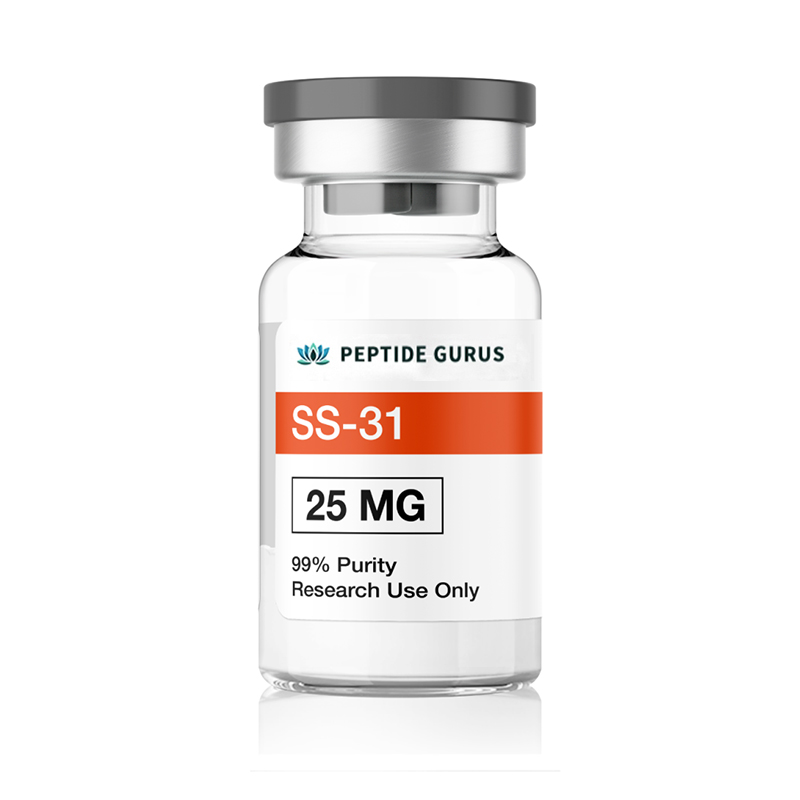
SS-31 aide à améliorer la fonction mitochondriale et la production globale d'énergie via la synthèse de l'ATP. La recherche a montré sa capacité à réduire les cytokines inflammatoires qui provoquent le stress oxydatif et les maladies inflammatoires telles que la maladie d'Alzheimer, la Parkinson, les maladies cardiaques, le diabète, les maladies rénales, etc.
Product Usage: This PRODUCT IS INTENDED AS A RESEARCH CHEMICAL ONLY. This designation allows the use of research chemicals strictly for in vitro testing and laboratory experimentation only. All product information available on this website is for educational purposes only. Bodily introduction of any kind into humans or animals is strictly forbidden by law. This product should only be handled by licensed, qualified professionals. This product is not a drug, food, or cosmetic and may not be misbranded, misused or mislabled as a drug, food or cosmetic.
Qu'est-ce que SS-31?
SS-31 (elamipretide) is a small, aromatic peptide that easily penetrates cell and organelle membranes. It is thought to interfere with the production of reactive oxygen species (ROS or free radicals) and promote energy production in cells by stabilizing the enzyme cardiolipin within mitochondria. Cardiolipin is part of the inner mitochondrial membrane where it acts as a fundamental component of the electron transport chain, the machinery by which most energy need for cellular functioning is produced.
Dysfunction of cardiolipin has been implicated as contributing to the pathology of a number of diseases including Alzheimer’s disease, Parkinson’s disease, nonalcoholic fatty liver disease, diabetes, heart failure, HIV, cancer, chronic fatigue syndrome, and more. Cardiolipin is thought to be a major component of mitochondrial myopathy, which isn’t a single disease but rather is a group of neuromuscular disorders caused by damage to mitochondria. Mitochondrial myopathy is characterized by everything from muscle weakness and exercise intolerance to heart failure, seizures, and dementia. SS-31 is the first peptide to ever undergo clinical trials as a potential treatment for mitochondrial myopathy.
Primary mitochondrial diseases (PMDs) are among the most common inherited conditions in the world. They are caused by dysfunction in the energy-producing apparatus of mitochondria. Symptoms vary greatly between forms of the disease, but the most susceptible organ systems are those with high energy demands (e.g. nervous system, heart, kidney, etc.). Muscle involvement and exercise intolerance are almost universal in mitochondrial disorders. Common symptoms include easy fatigue, exercise intolerance, and seizures.
PMDs, and mitochondrial diseases in general, are primarily characterized by disturbances in the production of ATP. ATP acts as the energy currency of the cell and is necessary to almost every cell function. Stabilizing ATP production in the setting of mitochondrial disease has long been a goal of the medical profession. With the development of SS-31, that goal may final have been realized.
The first evidence that SS-31 could restore energy production in PMDs came from animal studies. In that research, rats who had suffered ischemia-perfusion injury (a non-genetic cause of mitochondrial disease) of the kidney were given SS-31. The peptide protected kidney structure, accelerated recovery of ATP production, and reduced cell death and necrosis within the kidney[1]. Subsequent studies in mice showed that SS-31 interacted with cardiolipin in the inner mitochondria membrane and revealed that the peptide could reduce symptoms of mitochondrial disease regardless of etiology. There is also evidence that it can improve mitochondrial dysfunction that results from age[2]–[4]. From these findings, it was relatively simple to convince the FDA to grant orphan drug status to SS-31 and pave the way to clinical trials.
In phase II trials in humans, SS-31 increased exercise performance after just 5 days of treatment and showed no safety concerns or prominent side effects[5]. Unfortunately, phase III trials failed to produce convincing evidence of SS-31’s clinical utility[6]. That said, there is good reason to believe that the trial endpoints simply weren’t appropriate and that additional work will result in the peptide being approved for the treatment of certain mitochondrial conditions. According to Dr. Bruce Cohen, director of the Neurodevelopment Science Center at Akron Children’s Hospital, the results for prior phase II clinical trials were very encouraging and so it is not time to give up. Rather, he notes, SS-31 should spur interest in this particular area and bring other big pharma research to the table[7]. It appears that that is already happening as the company that first brought SS-31 to clinical trials is planning to move forward with trials of a derivative of SS-31 as well as trials investigating other endpoints for SS-31 treatment[6].
As of right now, SS-31 is being tested in a number of different human diseases and under a number of different trial models. The peptide is considered safe to use in humans, so it can also be prescribed by doctors under compassionate care exceptions to patients who have no other treatment options. The peptide will likely become part of mainstream medical care for a number of conditions in the near future, but even now it is available to people who need it while clinical trial work is ongoing.
Ischémie
Perhaps the most compelling secondary application of SS-31 is in the treatment of heart failure. It has long been known that heart failure causes negative changes to the function of mitochondria and that these changes, in a kind of destructive cycle, cause heart failure to worsen. Research in human heart tissue treated with SS-31 shows significant improvements in mitochondrial oxygen flux and activity of specific components involved in the production of ATP. This particular study was carried out in a manner that precluded cardiolipin restructuring, however, suggesting that SS-31 may have a second mechanism of action on mitochondrial function that needs to be explored[4]. This finding has actually been replicated in a number of research studies, strengthening the idea that SS-31 is not just useful for restoring ATP production via cardiolipin interaction. The peptide is actively being investigated for its ability to alter the production of reactive oxygen species and improve mitochondrial function in both acute and chronic use situations.
Studies in dogs, for instance, show that chronic treatment with SS-31 can improve left ventricular function in the setting of advanced heart failure. Measures of mitochondrial respiration and maximum ATP synthesis correlated well in this study with overall improvement in left ventricular function implying that SS-31 could be an effective long-term treatment for improving energy dynamics and reducing cardiac remodeling in advanced heart failure[8].
Trials exploring the use of SS-31 in ST-segment elevation myocardial infarction (heart attack) found that the peptide can drastically reduce levels of HtrA2. HtrA2 is a measure of cardiomyocyte apoptosis. These results suggest that SS-31 may be useful in the context of acute heart attack to reduce the extent of injury and preserve cardiac tissue[9].
One role of mitochondrial-targeted therapy in heart failure:
Source: Se publier
Diabète
Le diabète, bien que apparemment causé par une simple insuffisance dans la sécrétion ou la fonction d'insuline, est une condition complexe avec de multiples manifestations physiopathologiques. Ces dernières années, il y a eu un intérêt croissant dans le rôle des troubles mitochondriaux dans la pathogenèse de la maladie, en particulier dans le diabète de type 2. Le traitement du dysfonction mitochondrial serait donc un moyen d'améliorer certaines des conséquences à long terme du diabète telles que les dommages oxydatifs aux petits vaisseaux. Dans une étude chez l'homme reçu SS-31, une diminution marquée de la production d'espèces réactives de l'oxygène a été observée. Cela suggère que le SS-31 peut aider à réduire les dommages oxydatifs qui accompagnent généralement le dysfonctionnement mitochondrial et peuvent donc ralentir ou arrêter la progression de la maladie microvasculaire dans le diabète de type 2. Cette hypothèse est confirmée par la constatation, dans la même étude, que SS-31 a augmenté les niveaux de SIRT1. Les niveaux de SIRT1 ont été associés à une amélioration de la sensibilité à l'insuline et à une inflammation réduite dans le diabète de type 2 [10].
Réduit l'inflammation
A theme throughout the sections above is inflammation and the ability of SS-31 to reduce it. In particular, SS-31 appears to be a potent regulator of reactive oxygen species (free radicals) and thus helps to reduce the serious oxidative stress that arises from long-term illness such as diabetes, heart disease, and more. Research in cell cultures suggests that SS-31 reduces inflammation and oxidative stress by reducing expression of FIS1[11]. FIS1 is a mitochondrial protein that is important for mitochondrial growth and division. Elevated levels of FIS1 have been observed in a number of neurodegenerative diseases as well as a variety of cancers and are thought to be evidence of dysfunctional mitochondrial division secondary to dysfunction and inflammation.
There is also good evidence from mouse models to show that SS-31 reduces levels of the inflammatory cytokine CD-36, reduces expression of activated MnSOD, suppresses NADPH oxidase function, and inhibits NF-kappaB p65[12]. All of these are markers of high oxidative stress, so reducing their levels is indicative of reduced free radical production and an improved inflammatory status in the cell. NF-kappaB expression, in particular, is heavily associated with cellular inflammation and is chronically active in a number of inflammatory diseases like rheumatoid arthritis and inflammatory bowel disease. With SS-31, mitochondria do not undergo inflammasome activation, which is to say they don’t convert from the primary production of ATP to primarily producing ROS.
Inflammasome activation is avoided and normal mitochondrial function is preserved in the setting of SS-31 administration:
Source: Researchgate
SS-31 Résumé
Bien que le SS-31 ait été initialement intéressant car il est censé réguler la fonction mitochondriale dans le cadre de la maladie mitochondriale, il existe également de bonnes preuves que le peptide peut réguler l'inflammation induite par les mitochondries. Il y a beaucoup d'intérêt actif à utiliser SS-31 pour améliorer la fonction mitochondriale et donc la production globale d'énergie via la synthèse d'ATP. Bien que les essais initiaux de phase III n'aient pas réussi, on pense que cela peut être davantage le résultat des critères de terminaison mesurés par opposition à une véritable défaillance du peptide à avoir un effet. Actuellement, il existe des essais de phase II en cours et des essais prévus de phase III pour tester le SS-31 dans une variété d'états pathologiques différents et avec une variété de mesures de résultats différentes. Le SS-31 peut très bien fournir la clé pour comprendre le dysfonctionnement mitochondrial dans une variété de maladies et peut donc s'avérer utile dans la conception de traitements avancés pour la maladie d'Alzheimer, la maladie de Parkinson, les maladies cardiaques, le diabète, les maladies rénales, et plus encore.
Article auteur
The above literature was researched, edited and organized by Dr. E. Logan, M.D. Dr. E. Logan holds a doctorate degree from Case Western Reserve University School of Medicine and a B.S. in molecular biology.
Auteur de journal scientifique
In his work to uncover treatments for patients with mitochondrial diseases, Dr. Cohen has become one of the world’s leading experts. Although there are no cures for mitochondrial diseases, Dr. Cohen looks for one every day. As a result of his work and our hospital’s commitment to helping him build an infrastructure for conducting mitochondrial clinical trials, Akron Children’s is one of the country’s leading institutions researching treatments. Before joining Akron Children’s, Dr. Cohen served as chief of pediatric neurology for Cleveland Clinic. He received his medical degree from the Albert Einstein College of Medicine and completed his pediatric residency at Children’s Hospital of Philadelphia, pediatric neurology residency at Columbia Presbyterian Medical Center and his American Cancer Society neuro-oncology fellowship in Philadelphia.
Bruce H. Cohen, M.D. est référencé comme l'un des principaux scientifiques impliqués dans la recherche et le développement de SS-31. Ce médecin / scientifique n'est en aucun cas approuvant ou préconise l'achat, la vente ou l'utilisation de ce produit pour quelque raison que ce soit. Il n'y a aucune affiliation ou relation, implicite ou autrement, entre
Gourous peptidiques and this doctor. The purpose of citing the doctor is to acknowledge, recognize, and credit the exhaustive research and development efforts conducted by the scientists studying this peptide. Dr. Cohen is listed in [5] under the referenced citations.
ALL ARTICLES AND PRODUCT INFORMATION PROVIDED ON THIS WEBSITE ARE FOR INFORMATONAL AND EDUCATIONAL PURPOSES ONLY.
Les produits proposés sur ce site Web sont fournis uniquement pour des études in vitro. Des études in vitro (latin: en verre) sont réalisées en dehors du corps. Ces produits ne sont pas des médicaments ou des médicaments et n'ont pas été approuvés par la FDA pour prévenir, traiter ou guérir une condition médicale, une maladie ou une maladie. L'introduction corporelle de toute nature dans l'homme ou les animaux est strictement interdite par la loi.
Peptidegurus est l'un des principaux fournisseurs de peptides de recherche de fabrication américaine, offrant des produits de qualité supérieure à des prix compétitifs. En mettant l'accent sur l'excellence et le service à la clientèle, ils garantissent un processus de commande sécurisé et pratique avec l'expédition mondiale.