Email kami sekarang untuk melakukan pemesanan Anda dengan dukungan 1-on-1. Stok terbatas! Kami menerima Zelle, CashApp, Venmo, transfer bank, dan kripto.
Bebas (1) 30 mL air bakteriostatik with qualified orders over $500 USD.
(excludes capsule products, cosmetic peptides, promo codes and shipping)
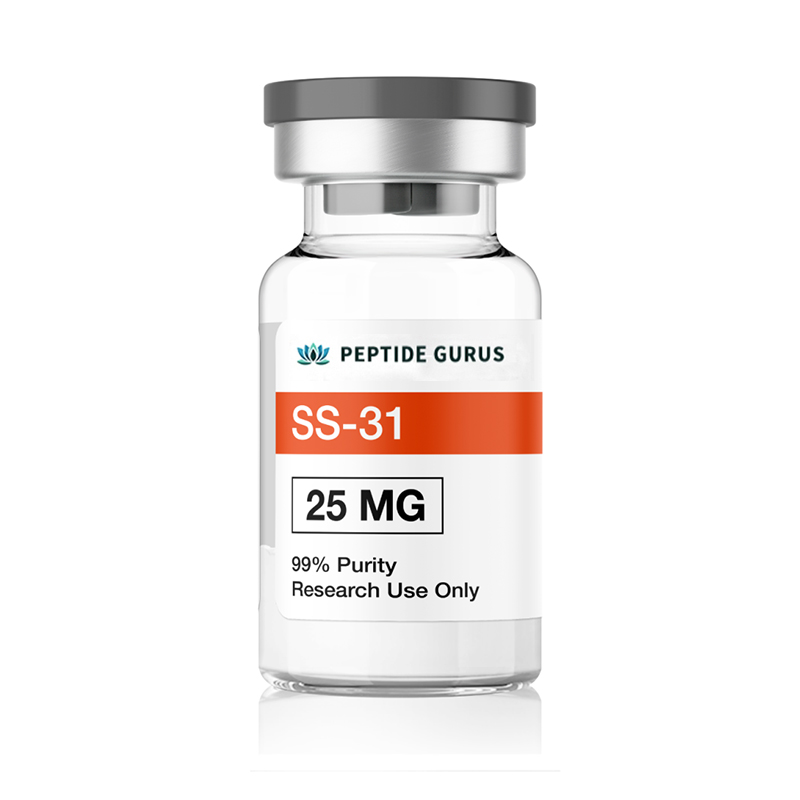
SS-31 membantu meningkatkan fungsi mitokondria dan keseluruhan produksi energi melalui sintesis ATP. Penelitian telah menunjukkan kemampuannya untuk mengurangi sitokin inflamasi yang menyebabkan stres oksidatif dan penyakit radang seperti Alzheimer, Parkinson, penyakit jantung, diabetes, penyakit ginjal, dan banyak lagi.
Product Usage: This PRODUCT IS INTENDED AS A RESEARCH CHEMICAL ONLY. This designation allows the use of research chemicals strictly for in vitro testing and laboratory experimentation only. All product information available on this website is for educational purposes only. Bodily introduction of any kind into humans or animals is strictly forbidden by law. This product should only be handled by licensed, qualified professionals. This product is not a drug, food, or cosmetic and may not be misbranded, misused or mislabled as a drug, food or cosmetic.
Apa itu SS-31?
SS-31 (elamipretide) is a small, aromatic peptide that easily penetrates cell and organelle membranes. It is thought to interfere with the production of reactive oxygen species (ROS or free radicals) and promote energy production in cells by stabilizing the enzyme cardiolipin within mitochondria. Cardiolipin is part of the inner mitochondrial membrane where it acts as a fundamental component of the electron transport chain, the machinery by which most energy need for cellular functioning is produced.
Dysfunction of cardiolipin has been implicated as contributing to the pathology of a number of diseases including Alzheimer’s disease, Parkinson’s disease, nonalcoholic fatty liver disease, diabetes, heart failure, HIV, cancer, chronic fatigue syndrome, and more. Cardiolipin is thought to be a major component of mitochondrial myopathy, which isn’t a single disease but rather is a group of neuromuscular disorders caused by damage to mitochondria. Mitochondrial myopathy is characterized by everything from muscle weakness and exercise intolerance to heart failure, seizures, and dementia. SS-31 is the first peptide to ever undergo clinical trials as a potential treatment for mitochondrial myopathy.
Primary mitochondrial diseases (PMDs) are among the most common inherited conditions in the world. They are caused by dysfunction in the energy-producing apparatus of mitochondria. Symptoms vary greatly between forms of the disease, but the most susceptible organ systems are those with high energy demands (e.g. nervous system, heart, kidney, etc.). Muscle involvement and exercise intolerance are almost universal in mitochondrial disorders. Common symptoms include easy fatigue, exercise intolerance, and seizures.
PMDs, and mitochondrial diseases in general, are primarily characterized by disturbances in the production of ATP. ATP acts as the energy currency of the cell and is necessary to almost every cell function. Stabilizing ATP production in the setting of mitochondrial disease has long been a goal of the medical profession. With the development of SS-31, that goal may final have been realized.
The first evidence that SS-31 could restore energy production in PMDs came from animal studies. In that research, rats who had suffered ischemia-perfusion injury (a non-genetic cause of mitochondrial disease) of the kidney were given SS-31. The peptide protected kidney structure, accelerated recovery of ATP production, and reduced cell death and necrosis within the kidney[1]. Subsequent studies in mice showed that SS-31 interacted with cardiolipin in the inner mitochondria membrane and revealed that the peptide could reduce symptoms of mitochondrial disease regardless of etiology. There is also evidence that it can improve mitochondrial dysfunction that results from age[2]–[4]. From these findings, it was relatively simple to convince the FDA to grant orphan drug status to SS-31 and pave the way to clinical trials.
In phase II trials in humans, SS-31 increased exercise performance after just 5 days of treatment and showed no safety concerns or prominent side effects[5]. Unfortunately, phase III trials failed to produce convincing evidence of SS-31’s clinical utility[6]. That said, there is good reason to believe that the trial endpoints simply weren’t appropriate and that additional work will result in the peptide being approved for the treatment of certain mitochondrial conditions. According to Dr. Bruce Cohen, director of the Neurodevelopment Science Center at Akron Children’s Hospital, the results for prior phase II clinical trials were very encouraging and so it is not time to give up. Rather, he notes, SS-31 should spur interest in this particular area and bring other big pharma research to the table[7]. It appears that that is already happening as the company that first brought SS-31 to clinical trials is planning to move forward with trials of a derivative of SS-31 as well as trials investigating other endpoints for SS-31 treatment[6].
As of right now, SS-31 is being tested in a number of different human diseases and under a number of different trial models. The peptide is considered safe to use in humans, so it can also be prescribed by doctors under compassionate care exceptions to patients who have no other treatment options. The peptide will likely become part of mainstream medical care for a number of conditions in the near future, but even now it is available to people who need it while clinical trial work is ongoing.
Iskemia
Perhaps the most compelling secondary application of SS-31 is in the treatment of heart failure. It has long been known that heart failure causes negative changes to the function of mitochondria and that these changes, in a kind of destructive cycle, cause heart failure to worsen. Research in human heart tissue treated with SS-31 shows significant improvements in mitochondrial oxygen flux and activity of specific components involved in the production of ATP. This particular study was carried out in a manner that precluded cardiolipin restructuring, however, suggesting that SS-31 may have a second mechanism of action on mitochondrial function that needs to be explored[4]. This finding has actually been replicated in a number of research studies, strengthening the idea that SS-31 is not just useful for restoring ATP production via cardiolipin interaction. The peptide is actively being investigated for its ability to alter the production of reactive oxygen species and improve mitochondrial function in both acute and chronic use situations.
Studies in dogs, for instance, show that chronic treatment with SS-31 can improve left ventricular function in the setting of advanced heart failure. Measures of mitochondrial respiration and maximum ATP synthesis correlated well in this study with overall improvement in left ventricular function implying that SS-31 could be an effective long-term treatment for improving energy dynamics and reducing cardiac remodeling in advanced heart failure[8].
Trials exploring the use of SS-31 in ST-segment elevation myocardial infarction (heart attack) found that the peptide can drastically reduce levels of HtrA2. HtrA2 is a measure of cardiomyocyte apoptosis. These results suggest that SS-31 may be useful in the context of acute heart attack to reduce the extent of injury and preserve cardiac tissue[9].
One role of mitochondrial-targeted therapy in heart failure:
Source: Pubch
Diabetes
Diabetes, sementara tampaknya disebabkan oleh ketidakcukupan sederhana dalam sekresi atau fungsi insulin, adalah kondisi kompleks dengan manifestasi patofisiologis berganda. Dalam beberapa tahun terakhir, ada minat yang meningkat dalam peran penurunan mitokondria dalam patogenesis penyakit, terutama pada diabetes tipe 2. Mengobati disfungsi mitokondria dengan demikian akan menjadi cara untuk memperbaiki beberapa konsekuensi jangka panjang dari diabetes seperti kerusakan oksidatif pada pembuluh kecil. Dalam sebuah studi pada manusia yang diberikan SS-31, penurunan nyata dalam produksi spesies oksigen reaktif diamati. Ini menunjukkan bahwa SS-31 dapat membantu mengurangi kerusakan oksidatif yang biasanya menyertai disfungsi mitokondria dan karenanya dapat memperlambat atau menghentikan perkembangan penyakit mikrovaskular pada diabetes tipe 2. Hipotesis ini selanjutnya dikonfirmasi oleh temuan, dalam penelitian yang sama, bahwa SS-31 meningkatkan tingkat SIRT1. Tingkat SIRT1 telah dikaitkan dengan peningkatan sensitivitas insulin dan berkurangnya peradangan pada diabetes tipe 2 [10].
Mengurangi peradangan
A theme throughout the sections above is inflammation and the ability of SS-31 to reduce it. In particular, SS-31 appears to be a potent regulator of reactive oxygen species (free radicals) and thus helps to reduce the serious oxidative stress that arises from long-term illness such as diabetes, heart disease, and more. Research in cell cultures suggests that SS-31 reduces inflammation and oxidative stress by reducing expression of FIS1[11]. FIS1 is a mitochondrial protein that is important for mitochondrial growth and division. Elevated levels of FIS1 have been observed in a number of neurodegenerative diseases as well as a variety of cancers and are thought to be evidence of dysfunctional mitochondrial division secondary to dysfunction and inflammation.
There is also good evidence from mouse models to show that SS-31 reduces levels of the inflammatory cytokine CD-36, reduces expression of activated MnSOD, suppresses NADPH oxidase function, and inhibits NF-kappaB p65[12]. All of these are markers of high oxidative stress, so reducing their levels is indicative of reduced free radical production and an improved inflammatory status in the cell. NF-kappaB expression, in particular, is heavily associated with cellular inflammation and is chronically active in a number of inflammatory diseases like rheumatoid arthritis and inflammatory bowel disease. With SS-31, mitochondria do not undergo inflammasome activation, which is to say they don’t convert from the primary production of ATP to primarily producing ROS.
Inflammasome activation is avoided and normal mitochondrial function is preserved in the setting of SS-31 administration:
Source: ResearchGate
Ringkasan SS-31
Meskipun SS-31 awalnya menarik karena dianggap mengatur fungsi mitokondria dalam pengaturan penyakit mitokondria, ada juga bukti yang baik bahwa peptida dapat mengatur peradangan yang diinduksi mitokondria. Ada banyak minat aktif dalam menggunakan SS-31 untuk meningkatkan fungsi mitokondria dan dengan demikian produksi energi secara keseluruhan melalui sintesis ATP. Meskipun uji coba fase III awal tidak berhasil, diperkirakan bahwa ini mungkin lebih merupakan hasil dari titik akhir yang diukur sebagai lawan dari kegagalan peptida yang sebenarnya memiliki efek apa pun. Saat ini ada uji coba fase II yang sedang berlangsung dan uji coba fase III yang direncanakan untuk menguji SS-31 di berbagai negara penyakit yang berbeda dan dengan berbagai ukuran hasil yang berbeda. SS-31 mungkin sangat memberikan kunci untuk memahami disfungsi mitokondria pada berbagai penyakit dan dengan demikian terbukti berguna dalam merancang perawatan lanjutan untuk penyakit Alzheimer, penyakit Parkinson, penyakit jantung, diabetes, penyakit ginjal, dan banyak lagi.
Penulis artikel
The above literature was researched, edited and organized by Dr. E. Logan, M.D. Dr. E. Logan holds a doctorate degree from Case Western Reserve University School of Medicine and a B.S. in molecular biology.
Penulis Jurnal Ilmiah
In his work to uncover treatments for patients with mitochondrial diseases, Dr. Cohen has become one of the world’s leading experts. Although there are no cures for mitochondrial diseases, Dr. Cohen looks for one every day. As a result of his work and our hospital’s commitment to helping him build an infrastructure for conducting mitochondrial clinical trials, Akron Children’s is one of the country’s leading institutions researching treatments. Before joining Akron Children’s, Dr. Cohen served as chief of pediatric neurology for Cleveland Clinic. He received his medical degree from the Albert Einstein College of Medicine and completed his pediatric residency at Children’s Hospital of Philadelphia, pediatric neurology residency at Columbia Presbyterian Medical Center and his American Cancer Society neuro-oncology fellowship in Philadelphia.
Bruce H. Cohen, M.D. dirujuk sebagai salah satu ilmuwan terkemuka yang terlibat dalam penelitian dan pengembangan SS-31. Ini sama sekali tidak ada dokter/ilmuwan ini mendukung atau mengadvokasi pembelian, penjualan, atau penggunaan produk ini dengan alasan apa pun. Tidak ada afiliasi atau hubungan, tersirat atau sebaliknya, antara
Guru peptida and this doctor. The purpose of citing the doctor is to acknowledge, recognize, and credit the exhaustive research and development efforts conducted by the scientists studying this peptide. Dr. Cohen is listed in [5] under the referenced citations.
ALL ARTICLES AND PRODUCT INFORMATION PROVIDED ON THIS WEBSITE ARE FOR INFORMATONAL AND EDUCATIONAL PURPOSES ONLY.
Produk yang ditawarkan di situs web ini dilengkapi hanya untuk studi in-vitro. Studi in-vitro (Latin: dalam kaca) dilakukan di luar tubuh. Produk -produk ini bukan obat -obatan atau obat -obatan dan belum disetujui oleh FDA untuk mencegah, mengobati atau menyembuhkan kondisi medis, penyakit atau penyakit apa pun. Pengenalan tubuh dalam bentuk apa pun ke dalam manusia atau hewan dilarang secara ketat oleh hukum.
Peptidegurus adalah pemasok terkemuka peptida penelitian buatan Amerika, menawarkan produk berkualitas tinggi dengan harga kompetitif. Dengan fokus pada keunggulan dan layanan pelanggan, mereka memastikan proses pemesanan yang aman dan nyaman dengan pengiriman global.