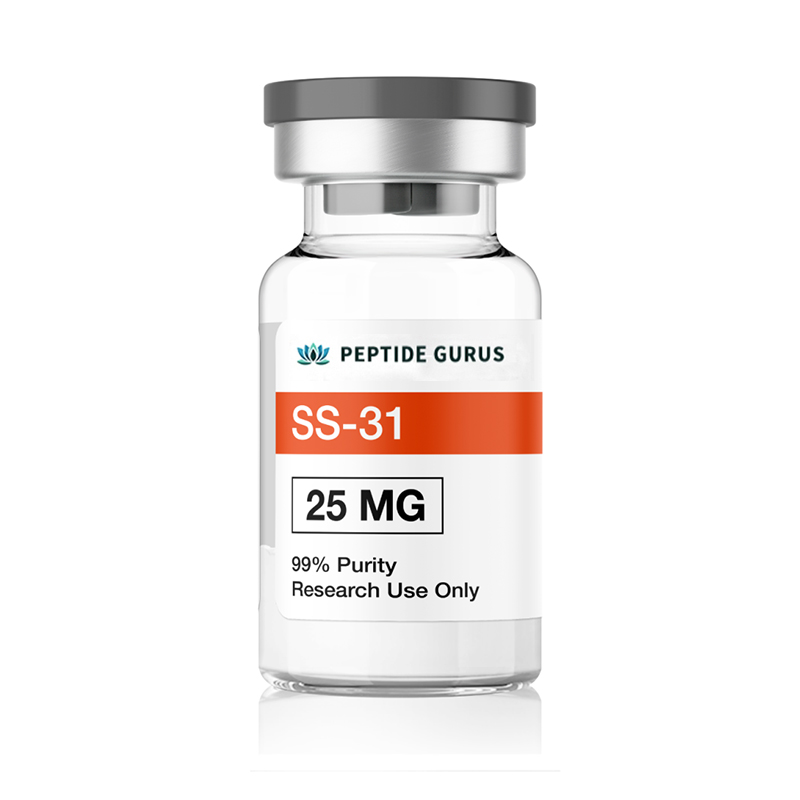
• Yıkama için flakon kompakt çizgi ve endüstriyel temizlik teknikleri
Q
X
Q
Siparişe İletişim
Siparişinizi bire bir destekle vermek için şimdi bize e-posta gönderin. Sınırlı stok! Zelle, CashApp, Venmo, banka transferi ve kripto kabul ediyoruz.
Bakteriyostatik su

Serbest (1) 30 ml bakteriyostatik su
Nitelikli siparişlerle500 $ USD. (Kapsül ürünleri, kozmetik peptitler, promosyon kodları ve nakliye hariç)

SS-31, ATP sentezi yoluyla mitokondriyal fonksiyonu ve genel enerji üretimini geliştirmeye yardımcı olur. Araştırmalar, oksidatif strese ve Alzheimer, Parkinson, kalp hastalığı, diyabet, böbrek hastalığı ve daha fazlası gibi enflamatuar hastalıklara neden olan enflamatuar sitokinleri azaltma yeteneğini göstermiştir.
Ürün Kullanımı:Bu ürün sadece bir araştırma kimyasal olarak tasarlanmıştır.Bu atama, sadece in vitro test ve laboratuvar deneyleri için araştırma kimyasallarının kullanılmasına izin verir. Bu web sitesinde bulunan tüm ürün bilgileri yalnızca eğitim amaçlıdır. İnsanlara veya hayvanlara her türlü bedensel olarak tanıtılması, yasalarca kesinlikle yasaktır. Bu ürün sadece lisanslı, nitelikli profesyoneller tarafından ele alınmalıdır. Bu ürün bir ilaç, gıda veya kozmetik değildir ve bir ilaç, yiyecek veya kozmetik olarak yanlış markalanmış, yanlış kullanılmaz veya yanlış tablo verilmeyebilir.

SS-31 nedir?

SS-31 (elamipretide) is a small, aromatic peptide that easily penetrates cell and organelle membranes.It is thought to interfere with the production of reactive oxygen species (ROS or free radicals) and promote energy production in cells by stabilizing the enzyme cardiolipin within mitochondria. Cardiolipin is part of the inner mitochondrial membrane where it acts as a fundamental component of the electron transport chain, the machinery by which most energy need for cellular functioning is produced. Dysfunction of cardiolipin has been implicated as contributing to the pathology of a number of diseases including Alzheimer’s disease, Parkinson’s disease, nonalcoholic fatty liver disease, diabetes, heart failure, HIV, cancer, chronic fatigue syndrome, and more. Cardiolipin is thought to be a major component of mitochondrial myopathy, which isn’t a single disease but rather is a group of neuromuscular disorders caused by damage to mitochondria. Mitochondrial myopathy is characterized by everything from muscle weakness and exercise intolerance to heart failure, seizures, and dementia. SS-31 is the first peptide to ever undergo clinical trials as a potential treatment for mitochondrial myopathy.

SS-31 peptit yapısı

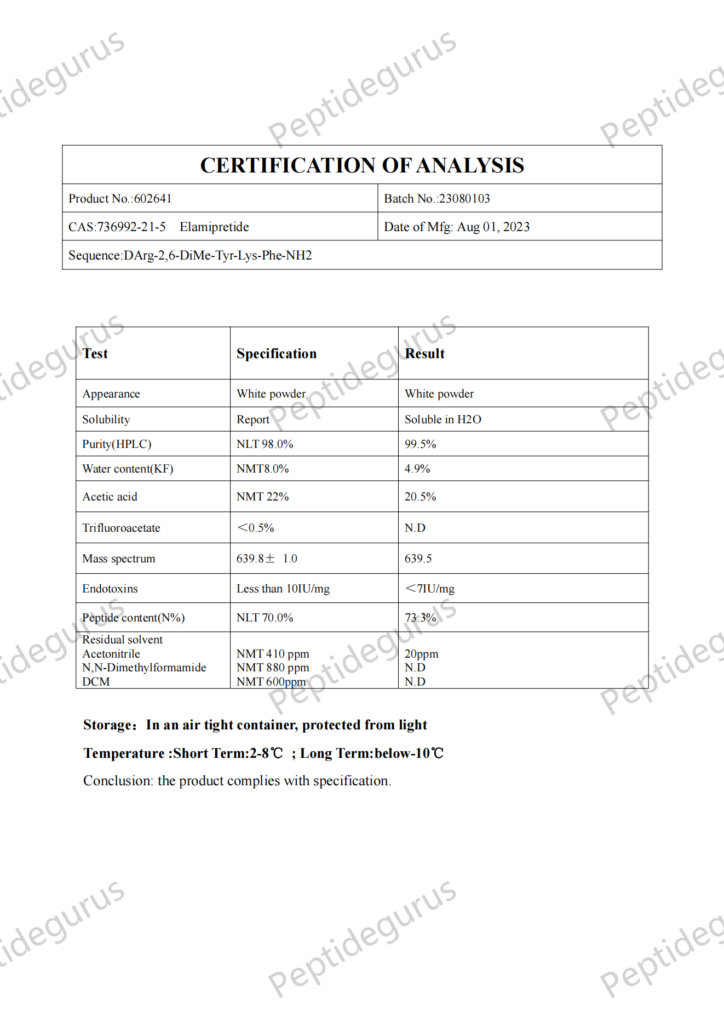
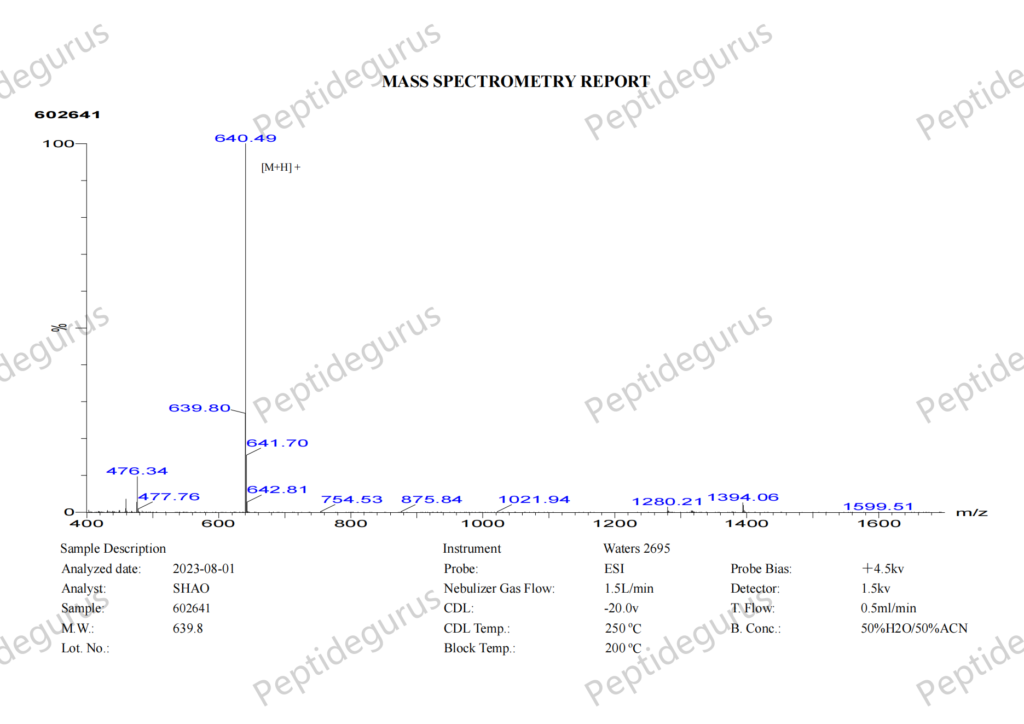
Sekans:T-Lister (2,6-dme) -lys-pheMoleküler Formül:C32H49N9O5 Moleküler ağırlık:639.8 g/molPubchem CID:11764719 CAS Numarası:736992-21-5Eş anlamlılar:Konut, MTP-131, Brewing SS-31Kaynak:Pubch  

SS-31 Araştırma

Mitokondri gelişimi

Primary mitochondrial diseases (PMDs) are among the most common inherited conditions in the world. They are caused by dysfunction in the energy-producing apparatus of mitochondria. Symptoms vary greatly between forms of the disease, but the most susceptible organ systems are those with high energy demands (e.g. nervous system, heart, kidney, etc.). Muscle involvement and exercise intolerance are almost universal in mitochondrial disorders. Common symptoms include easy fatigue, exercise intolerance, and seizures. PMDs, and mitochondrial diseases in general, are primarily characterized by disturbances in the production of ATP. ATP acts as the energy currency of the cell and is necessary to almost every cell function. Stabilizing ATP production in the setting of mitochondrial disease has long been a goal of the medical profession. With the development of SS-31, that goal may final have been realized. The first evidence that SS-31 could restore energy production in PMDs came from animal studies. In that research, rats who had suffered ischemia-perfusion injury (a non-genetic cause of mitochondrial disease) of the kidney were given SS-31. The peptide protected kidney structure, accelerated recovery of ATP production, and reduced cell death and necrosis within the kidney[1]. Subsequent studies in mice showed that SS-31 interacted with cardiolipin in the inner mitochondria membrane and revealed that the peptide could reduce symptoms of mitochondrial disease regardless of etiology. There is also evidence that it can improve mitochondrial dysfunction that results from age[2]–[4]. From these findings, it was relatively simple to convince the FDA to grant orphan drug status to SS-31 and pave the way to clinical trials. In phase II trials in humans, SS-31 increased exercise performance after just 5 days of treatment and showed no safety concerns or prominent side effects[5]. Unfortunately, phase III trials failed to produce convincing evidence of SS-31’s clinical utility[6]. That said, there is good reason to believe that the trial endpoints simply weren’t appropriate and that additional work will result in the peptide being approved for the treatment of certain mitochondrial conditions. According to Dr. Bruce Cohen, director of the Neurodevelopment Science Center at Akron Children’s Hospital, the results for prior phase II clinical trials were very encouraging and so it is not time to give up. Rather, he notes, SS-31 should spur interest in this particular area and bring other big pharma research to the table[7]. It appears that that is already happening as the company that first brought SS-31 to clinical trials is planning to move forward with trials of a derivative of SS-31 as well as trials investigating other endpoints for SS-31 treatment[6]. As of right now, SS-31 is being tested in a number of different human diseases and under a number of different trial models. The peptide is considered safe to use in humans, so it can also be prescribed by doctors under compassionate care exceptions to patients who have no other treatment options. The peptide will likely become part of mainstream medical care for a number of conditions in the near future, but even now it is available to people who need it while clinical trial work is ongoing.

İskemi

Perhaps the most compelling secondary application of SS-31 is in the treatment of heart failure. It has long been known that heart failure causes negative changes to the function of mitochondria and that these changes, in a kind of destructive cycle, cause heart failure to worsen. Research in human heart tissue treated with SS-31 shows significant improvements in mitochondrial oxygen flux and activity of specific components involved in the production of ATP. This particular study was carried out in a manner that precluded cardiolipin restructuring, however, suggesting that SS-31 may have a second mechanism of action on mitochondrial function that needs to be explored[4]. This finding has actually been replicated in a number of research studies, strengthening the idea that SS-31 is not just useful for restoring ATP production via cardiolipin interaction. The peptide is actively being investigated for its ability to alter the production of reactive oxygen species and improve mitochondrial function in both acute and chronic use situations. Studies in dogs, for instance, show that chronic treatment with SS-31 can improve left ventricular function in the setting of advanced heart failure. Measures of mitochondrial respiration and maximum ATP synthesis correlated well in this study with overall improvement in left ventricular function implying that SS-31 could be an effective long-term treatment for improving energy dynamics and reducing cardiac remodeling in advanced heart failure[8]. Trials exploring the use of SS-31 in ST-segment elevation myocardial infarction (heart attack) found that the peptide can drastically reduce levels of HtrA2. HtrA2 is a measure of cardiomyocyte apoptosis. These results suggest that SS-31 may be useful in the context of acute heart attack to reduce the extent of injury and preserve cardiac tissue[9]. One role of mitochondrial-targeted therapy in heart failure:İskemiKaynak:Pubch 

Diyabet

Diyabet, görünüşte insülin sekresyonunda veya fonksiyonunda basit bir yetersizlikten kaynaklanırken, çoklu patofizyolojik belirtilere sahip karmaşık bir durumdur. Son yıllarda, özellikle tip 2 diyabette, hastalığın patogenezinde mitokondriyal bozukluğun rolüne artan ilgi görülmüştür. Bu nedenle mitokondriyal disfonksiyonun tedavisi, küçük damarlara oksidatif hasar gibi diyabetin uzun vadeli sonuçlarını iyileştirmenin bir yolu olacaktır. SS-31 verilen insanlarda yapılan bir çalışmada, reaktif oksijen türlerinin üretiminde belirgin bir azalma gözlendi. Bu, SS-31'in genellikle mitokondriyal disfonksiyona eşlik eden ve bu nedenle tip 2 diyabette mikrovasküler hastalığın ilerlemesini yavaşlatabilecek veya durdurabilecek oksidatif hasarı azaltmaya yardımcı olabileceğini düşündürmektedir. Bu hipotez ayrıca, aynı çalışmada SS-31'in artmış SIRT1 seviyeleri olduğunu bulma ile doğrulanmıştır. SIRT1 seviyeleri, gelişmiş insülin duyarlılığı ve tip 2 diyabette azalmış inflamasyon ile ilişkilendirilmiştir [10].

İltihabı azaltır

A theme throughout the sections above is inflammation and the ability of SS-31 to reduce it. In particular, SS-31 appears to be a potent regulator of reactive oxygen species (free radicals) and thus helps to reduce the serious oxidative stress that arises from long-term illness such as diabetes, heart disease, and more. Research in cell cultures suggests that SS-31 reduces inflammation and oxidative stress by reducing expression of FIS1[11]. FIS1 is a mitochondrial protein that is important for mitochondrial growth and division. Elevated levels of FIS1 have been observed in a number of neurodegenerative diseases as well as a variety of cancers and are thought to be evidence of dysfunctional mitochondrial division secondary to dysfunction and inflammation. There is also good evidence from mouse models to show that SS-31 reduces levels of the inflammatory cytokine CD-36, reduces expression of activated MnSOD, suppresses NADPH oxidase function, and inhibits NF-kappaB p65[12]. All of these are markers of high oxidative stress, so reducing their levels is indicative of reduced free radical production and an improved inflammatory status in the cell. NF-kappaB expression, in particular, is heavily associated with cellular inflammation and is chronically active in a number of inflammatory diseases like rheumatoid arthritis and inflammatory bowel disease. With SS-31, mitochondria do not undergo inflammasome activation, which is to say they don’t convert from the primary production of ATP to primarily producing ROS. Inflammasome activation is avoided and normal mitochondrial function is preserved in the setting of SS-31 administration:InflammationKaynak:Araştırma Gerekçesi

SS-31 özeti

SS-31 orijinal olarak ilgi çekici olsa da, mitokondriyal hastalık ortamında mitokondriyal fonksiyonu düzenlediği düşünülse de, peptidin mitokondri ile indüklenen inflamasyonu düzenleyebileceğine dair iyi kanıtlar da vardır. Mitokondriyal fonksiyonu geliştirmek ve dolayısıyla ATP sentezi yoluyla genel enerji üretimini geliştirmek için SS-31'i kullanmaya çok fazla ilgi vardır. İlk Faz III denemeleri başarılı olmasa da, bunun peptidin herhangi bir etkisi olmamasının aksine ölçülen uç noktaların daha fazla bir sonucu olabileceği düşünülmektedir. Şu anda, çeşitli farklı hastalık durumlarında ve çeşitli farklı sonuç ölçütlerinde SS-31'i test etmek için devam eden Faz II çalışmaları ve planlanan Faz III çalışmalar bulunmaktadır. SS-31, çeşitli hastalıklarda mitokondriyal disfonksiyonun anlaşılmasının anahtarı sağlayabilir ve bu nedenle Alzheimer hastalığı, Parkinson hastalığı, kalp hastalığı, diyabet, böbrek hastalığı ve daha fazlası için ileri tedavilerin tasarlanmasında yararlı olabilir.

Makale yazarı

Yukarıdaki literatür, Dr. E. Logan, M.D. Dr. E. Logan tarafından araştırıldı, düzenlendi ve organize edildi.Case Western Reserve Üniversitesi Tıp Fakültesive bir B.S. Moleküler biyolojide.

Scientific Journal Yazar

Mitokondriyal hastalıkları olan hastalar için tedavileri ortaya çıkarma çalışmalarında Dr. Cohen, dünyanın önde gelen uzmanlarından biri haline geldi. Mitokondriyal hastalıklar için hiçbir tedavi olmamasına rağmen, Dr. Cohen her gün bir tane arar. Çalışmaları ve hastanemizin mitokondriyal klinik araştırmalar yapmak için bir altyapı oluşturmasına yardımcı olma taahhüdünün bir sonucu olarak, Akron Children’ın tedavileri araştıran önde gelen kurumlarından biridir. Akron çocuklarına katılmadan önce Dr. Cohen, Cleveland Clinic için pediyatrik nöroloji şefi olarak görev yaptı. Tıbbi derecesini Albert Einstein Tıp Fakültesi'nden aldı ve pediatrik ikametgahını Philadelphia Çocuk Hastanesi, Columbia Presbiteryen Tıp Merkezi'ndeki pediatrik nöroloji ikametgahında ve Philadelphia'daki Amerikan Kanser Derneği Nöro-Onkoloji Bursu'nda tamamladı.Bruce H. Cohen, M.D.SS-31'in araştırma ve geliştirilmesinde yer alan önde gelen bilim adamlarından biri olarak atıfta bulunmaktadır. Hiçbir şekilde bu doktor/bilim adamı, bu ürünün satın alınmasını, satışını veya kullanımını herhangi bir nedenle desteklemiyor veya savunmuyor. Aralarında ima edilen veya başka türlü bir ilişki veya ilişki yok
Peptit gurularıVe bu doktor. Doktora atıfta bulunmanın amacı, bu peptidi inceleyen bilim adamlarının yürüttüğü kapsamlı araştırma ve geliştirme çabalarını kabul etmek, tanımak ve kredi vermektir. Dr.Cohen, referans alınan alıntılar altında [5] 'de listelenmiştir.


Referans alınan alıntılar

    H. H. Szetoet al., “Mitochondria-Targeted Peptide Accelerates ATP Recovery and Reduces Ischemic Kidney Injury,”J. Am. Soc. Nephrol. JASN, vol. 22, no. 6, pp. 1041–1052, Jun. 2011, doi: 10.1681/ASN.2010080808. M. P. Siegelet al., “Mitochondrial targeted peptide rapidly improves mitochondrial energetics and skeletal muscle performance in aged mice,”Aging Cell, vol. 12, no. 5, pp. 763–771, Oct. 2013, doi: 10.1111/acel.12102. A. V. Birket al., “The Mitochondrial-Targeted Compound SS-31 Re-Energizes Ischemic Mitochondria by Interacting with Cardiolipin,”J. Am. Soc. Nephrol. JASN, vol. 24, no. 8, pp. 1250–1261, Jul. 2013, doi: 10.1681/ASN.2012121216. K. C. Chatfieldet al., “Elamipretide Improves Mitochondrial Function in the Failing Human Heart,”JACC Basic Transl. Sci., vol. 4, no. 2, pp. 147–157, Apr. 2019, doi: 10.1016/j.jacbts.2018.12.005. A. Karaa, R. Haas, A. Goldstein, J. Vockley, W. D. Weaver, and B. H. Cohen, “Randomized dose-escalation trial of elamipretide in adults with primary mitochondrial myopathy,”Neurology, vol. 90, no. 14, pp. e1212–e1221, Apr. 2018, doi: 10.1212/WNL.0000000000005255. A. M. PhD, “Elamipretide Failed to Meet Promise of Earlier Trial Results for…,”Mitochondrial Disease News, Jan. 10, 2020. https://mitochondrialdiseasenews.com/2020/01/10/elamipretide-failed-to-meet-promise-of-earlier-trial-results-for-primary-mitochondrial-myopathy-data-show/ (accessed Apr. 06, 2020). “Could Elamipretide Become the First Treatment Option for Primary Mitochondrial Myopathy?,”Neurology Live. https://www.neurologylive.com/clinical-focus/could-elamipretide-treatment-option-primary-mitochondrial-myopathy (accessed Apr. 06, 2020). H. N. Sabbah, R. C. Gupta, S. Kohli, M. Wang, S. Hachem, and K. Zhang, “Chronic Therapy With Elamipretide (MTP-131), a Novel Mitochondria-Targeting Peptide, Improves Left Ventricular and Mitochondrial Function in Dogs With Advanced Heart Failure,”Circ. Heart Fail., vol. 9, no. 2, p. e002206, Feb. 2016, doi: 10.1161/CIRCHEARTFAILURE.115.002206. M. Hortmannet al., “The mitochondria-targeting peptide elamipretide diminishes circulating HtrA2 in ST-segment elevation myocardial infarction,”Eur. Heart J. Acute Cardiovasc. Care, vol. 8, no. 8, pp. 695–702, Dec. 2019, doi: 10.1177/2048872617710789. I. Escribano-Lopezet al., “The mitochondrial antioxidant SS-31 increases SIRT1 levels and ameliorates inflammation, oxidative stress and leukocyte-endothelium interactions in type 2 diabetes,”Sci. Rep., vol. 8, no. 1, pp. 1–10, Oct. 2018, doi: 10.1038/s41598-018-34251-8. Y. Moet al., “SS-31 reduces inflammation and oxidative stress through the inhibition of Fis1 expression in lipopolysaccharide-stimulated microglia,”Biochem. Biophys. Res. Commun., vol. 520, no. 1, pp. 171–178, Nov. 2019, doi: 10.1016/j.bbrc.2019.09.077. Y. Houet al., “The antioxidant peptide SS31 prevents oxidative stress, downregulates CD36 and improves renal function in diabetic nephropathy,”Nephrol. Dial. Transplant. Off. Publ. Eur. Dial. Transpl. Assoc. – Eur. Ren. Assoc., vol. 33, no. 11, pp. 1908–1918, 01 2018, doi: 10.1093/ndt/gfy021. Y. Houet al., “Mitochondria-targeted peptide SS-31 attenuates renal injury via an antioxidant effect in diabetic nephropathy,”Am. J. Physiol.-Ren. Physiol., vol. 310, no. 6, pp. F547–F559, Dec. 2015, doi: 10.1152/ajprenal.00574.2014.
Bu web sitesinde verilen tüm makaleler ve ürün bilgileri yalnızca bilgilendirme ve eğitim amaçlıdır.Bu web sitesinde sunulan ürünler sadece vitro çalışmalar için döşenmiştir. Vücudun dışında in vitro çalışmalar (Latin: camda) yapılır. Bu ürünler ilaç veya ilaç değildir ve herhangi bir tıbbi durum, rahatsızlık veya hastalığı önlemek, tedavi etmek veya iyileştirmek için FDA tarafından onaylanmamıştır. İnsanlara veya hayvanlara her türlü bedensel olarak tanıtılması, yasalarca kesinlikle yasaktır.

Soruşturma isteyin

Hakkımızda

Peptidegurus, rekabetçi fiyatlarla en kaliteli ürünler sunan Amerikan yapımı araştırma peptitlerinin önde gelen bir tedarikçisidir. Mükemmellik ve müşteri hizmetlerine odaklanarak, küresel nakliye ile güvenli ve kullanışlı bir sipariş süreci sağlarlar.

Teklif isteyin

  • Peptit guruları
  • info@peptidegurus.com
  • Glendale, ABD
  • TEMAS ETMEK

    Soruşturma isteyin