




Thể loại: IGF-1 Proteins
 GF1-LR3 Research
Cell Divison
Like lGF-1, lGF1-LR3 is a potent stimulus for cell division and proliferation. lts primaryeffects are on connective tissues like muscle and bone, but it also promotes cell divisionin liver, kidney, nerve, skin, lung, and blood tissues. lGF-1 is best thought of as amaturation hormone because it not only promotes cell proliferation, but differentiation aswell. lGF-1 causes cells to mature, in other words, so that they can carry out theirspecialized functions.
Unlike lGF-1, IGF1-LR3 remains in the bloodstream for long periods of time. Thisproperty makes lGF1-LR3 a much more potent molecule. A dose of lGF1-LR3 providesapproximately three times as much cell activation as a similar dose of lGF-1. Note thatIGF1-LR3 and all lGF-1 derivatives do not promote cell enlargement (hypertrophy), butrather promote cell division and proliferation (hyperplasia). In the case of muscle, forinstance, IGF1-LR3 does not cause muscle cells to get larger, but it does increase totanumbers of muscle cells.
Fat Metabolism and Diabetes
IGF1-LR3 boosts fat metabolism in an indirect manner by binding to both the IGF-1Rreceptor and the insulin receptor. These actions increase glucose uptake from the bloodby muscle, nerve, and liver cells. This results in an overall decrease in blood sugar levels.which then triggers adipose tissue as well as the liver to begin breaking down glycogenand triglycerides. Overal, this produces a net decrease in adipose tissue and a netenergy consumption (i.e. net catabolism).
Given its role in reducing blood sugar levels, it should come as no surprise that IGF1-LR3reduces insulin levels as well as the need for exogenous insulin in diabetes. In mostcases, this translates into a 10% decrease in insulin requirements to maintain the sameblood sugar levels. This fact may help scientists understand how to decrease insulindoses in individuals who have decreased insulin sensitivity and may even offer insightinto preventing type 2 diabetes in the first place.
Impairs Myostatin
Myostatin (a.k.a. growth differentiation factor 8) is a muscle protein that primarily inhibitsthe growth and differentiation of muscle cells. While this function is important to preventunregulated hypertrophy and ensure proper healing following injury, there are times wheninhibiting myostatin could be of benefit. The ability to stop myostatin from functioningcould be useful in conditions like Duchenne muscle dystrophy (DMD) or in people whosuffer muscle loss during prolonged immobility. In these cases, inhibiting this naturalenzyme could help to slow muscle breakdown, maintain strength, and stave off morbidity
In mouse models of DMD, it has been found that lGF1-LR3 and other lGF-1 derivativesare capable of counteracting the negative effects of myostatin to protect muscle cells andprevent apoptosis. lGF1-LR3, thanks to its long half-life, is highly effective incounteracting myostatin and appears to work by activating a muscle protein called MyoD1, [2]. MyoD is the protein normally activated by exercise (e.g. weight lifting) or tissuedamage and is responsible for muscle hypertrophy.
IGF1-LR3 Longevity Research
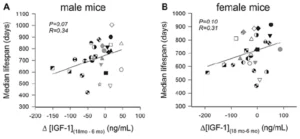
IGF1-LR3 promotes tissue repair and maintenance throughout the body, making it aprotective molecule against cell damage and the effects of aging. Research in cows andpigs indicates that lGF1-LR3 administration may be an effective solution for offsetting theeffects of cellular aging. Ongoing research in mice seeks to determine if lGF1-LR3 mightbe useful in preventing progression of a wide range of conditions such as dementia,muscle atrophy, and kidney disease. This research reveals that lGF-1 administration canprolong life and reduce disability[3],[4],[5].
GF1-LR3 Research
Cell Divison
Like lGF-1, lGF1-LR3 is a potent stimulus for cell division and proliferation. lts primaryeffects are on connective tissues like muscle and bone, but it also promotes cell divisionin liver, kidney, nerve, skin, lung, and blood tissues. lGF-1 is best thought of as amaturation hormone because it not only promotes cell proliferation, but differentiation aswell. lGF-1 causes cells to mature, in other words, so that they can carry out theirspecialized functions.
Unlike lGF-1, IGF1-LR3 remains in the bloodstream for long periods of time. Thisproperty makes lGF1-LR3 a much more potent molecule. A dose of lGF1-LR3 providesapproximately three times as much cell activation as a similar dose of lGF-1. Note thatIGF1-LR3 and all lGF-1 derivatives do not promote cell enlargement (hypertrophy), butrather promote cell division and proliferation (hyperplasia). In the case of muscle, forinstance, IGF1-LR3 does not cause muscle cells to get larger, but it does increase totanumbers of muscle cells.
Fat Metabolism and Diabetes
IGF1-LR3 boosts fat metabolism in an indirect manner by binding to both the IGF-1Rreceptor and the insulin receptor. These actions increase glucose uptake from the bloodby muscle, nerve, and liver cells. This results in an overall decrease in blood sugar levels.which then triggers adipose tissue as well as the liver to begin breaking down glycogenand triglycerides. Overal, this produces a net decrease in adipose tissue and a netenergy consumption (i.e. net catabolism).
Given its role in reducing blood sugar levels, it should come as no surprise that IGF1-LR3reduces insulin levels as well as the need for exogenous insulin in diabetes. In mostcases, this translates into a 10% decrease in insulin requirements to maintain the sameblood sugar levels. This fact may help scientists understand how to decrease insulindoses in individuals who have decreased insulin sensitivity and may even offer insightinto preventing type 2 diabetes in the first place.
Impairs Myostatin
Myostatin (a.k.a. growth differentiation factor 8) is a muscle protein that primarily inhibitsthe growth and differentiation of muscle cells. While this function is important to preventunregulated hypertrophy and ensure proper healing following injury, there are times wheninhibiting myostatin could be of benefit. The ability to stop myostatin from functioningcould be useful in conditions like Duchenne muscle dystrophy (DMD) or in people whosuffer muscle loss during prolonged immobility. In these cases, inhibiting this naturalenzyme could help to slow muscle breakdown, maintain strength, and stave off morbidity
In mouse models of DMD, it has been found that lGF1-LR3 and other lGF-1 derivativesare capable of counteracting the negative effects of myostatin to protect muscle cells andprevent apoptosis. lGF1-LR3, thanks to its long half-life, is highly effective incounteracting myostatin and appears to work by activating a muscle protein called MyoD1, [2]. MyoD is the protein normally activated by exercise (e.g. weight lifting) or tissuedamage and is responsible for muscle hypertrophy.
IGF1-LR3 Longevity Research
IGF1-LR3 promotes tissue repair and maintenance throughout the body, making it aprotective molecule against cell damage and the effects of aging. Research in cows andpigs indicates that lGF1-LR3 administration may be an effective solution for offsetting theeffects of cellular aging. Ongoing research in mice seeks to determine if lGF1-LR3 mightbe useful in preventing progression of a wide range of conditions such as dementia,muscle atrophy, and kidney disease. This research reveals that lGF-1 administration canprolong life and reduce disability[3],[4],[5].
 Glucocorticoid signaling
Glucocorticoids, secreted primarily by the adrenal glands, are important clinical drugsused to control pain and reduce inflammation in autoimmune diseases, neurologicalinjury, cancer, and more. Unfortunately, glucocorticoids have a number of undesirableside effects such as muscle wasting, fat gain, and deterioration of bone density. There issome interest in using lGF1-LR3 to reduce the side effects of glucocorticoids and thusallow for more effective therapy[6].
GF1-LR3 exhibits minimal to moderate side effects, low oral and excellent subcutaneousbioavailability in mice. Per kg dosage in mice does not scale to humans. lGF1-LR3 forsale at PEPTIDE GURUS is limited to educational and scientific research only, not forhuman consumption. Only buy lGF1-LR3 if you are a licensed researcher.
Article Author
Các tài liệu trên đã được nghiên cứu, chỉnh sửa và tổ chức bởi Tiến sĩ E. Logan, M.D. Tiến sĩ Elogan có bằng tiến sĩ của Trường Đại học Case Western Reserve của trường đại học và sinh học phân tử B.S.
Author Scientific Journal
Dr. Anastasios Philippou, Ph.D. focused on Experimental Physiology at the National &Kapodistrian University of Athens Medical School. He is now a National Center Managerand Assistant Professor, however his extensive studying and documented researchpertaining to the effects of muscle regeneration, the role of lGF-1 in skeletal musclephysiology, the expression of lGF-1 isoforms after exercise induced muscle damage inhumans, characterization of the MGF E peptide actions in vitro, and epigenetic requlationon gene expression induced by physical exercise are most impressive.
Dr. Anastasios Philippou, Ph.D. is being referenced as one of the leading scientistsinvolved in the research and development of IGF1-LR3. In no way is this doctor/scientistendorsing or advocating the purchase, sale, or use of this product for any reason. Thereis no affiliation or relationship, implied or otherwise, between PEPTIDE GURUS and thisdoctor. The purpose of citing the doctor is to acknowledge, recognize, and credit theexhaustive research and development efforts conducted by the scientists studying thispeptide. Dr. Anastasios Philippou, Ph.D. is listed in [7] and [8] under the referencedcitations.
Referenced Citations
1.”Adipose Tissue-Derived Stem Cell Secreted lGF-1 Protects Myoblasts from theNegative Effect of Myostatin.” [Online]. Available:https://www.hindawi.com/journals/bmri/2014/129048/.[Accessed: 16-May-2019]
2.N. Li, Q. Yang, R.G. Walker, T. B. Thompson, M. Du, and B. D. Rodgers“Myostatin Attenuation In Vivo Reduces Adiposity, but Activates Adipogenesis,Endocrinology,vol.157,no.1,pp.282-291, Jan.2016
3.E. Corpas, S. M. Harman, and M.R. Blackman, “Human growth hormone andhuman aging,”Endocr. Rev., vol.14,no.1, pp.20-39,Feb. 1993.
4.W.E. Sonntag, A. Csiszar, R. deCabo, L. Ferrucci, and Z. Ungvari, “Diverse rolesof growth hormone and insulin-like growth factor-1 in mammalian aging: progressand controversies,”J.Gerontol.A. Biol.Sci.Med.Sci., vol. 67,no.6, pp.587-598Jun.2012.
5.“IGF-I/IGFBP system: metabolism outline and physical exercise.-PubMedNCBl.” [Online].Available: https://www,ncbi.nlm.nih.gov/pubmed/22714057Accessed:16-May-2019]
6.B. Y. Hanaoka, C.A. Peterson, C. Horbinski, and L. J. Crofford, “lmplications ofglucocorticoid therapy in idiopathic inflammatory myopathies,” Nat. Rev.Rheumatol.,vol.8,no.8, pp.448-457,Aug.2012.
7.A Philippou, A Halapas, M Maridaki, M Koutsilieris -J Musculoskelet NeuronalInteract, 2007 [Semantic Scholar]
8.A Philippou, E Papageorgiou,G Bogdanis, A Halapas… – In vivo, 2009 [liarJournals]
ALL ARTICLES AND PRODUCT INFORMATION PROVIDED ON THIS WEBSITE AREFOR INFORMATONAL AND EDUCATIONAL PURPOSES ONLY.
The products offered on this website are furnished for in-vitro studies only. In-vitro studies(Latin: in glass) are performed outside of the body. These products are not medicines oldrugs and have not been approved by the FDA to prevent, treat or cure any medicalcondition, ailment or disease. Bodily introduction of any kind into humans or animals isstrictly forbidden by law.
Glucocorticoid signaling
Glucocorticoids, secreted primarily by the adrenal glands, are important clinical drugsused to control pain and reduce inflammation in autoimmune diseases, neurologicalinjury, cancer, and more. Unfortunately, glucocorticoids have a number of undesirableside effects such as muscle wasting, fat gain, and deterioration of bone density. There issome interest in using lGF1-LR3 to reduce the side effects of glucocorticoids and thusallow for more effective therapy[6].
GF1-LR3 exhibits minimal to moderate side effects, low oral and excellent subcutaneousbioavailability in mice. Per kg dosage in mice does not scale to humans. lGF1-LR3 forsale at PEPTIDE GURUS is limited to educational and scientific research only, not forhuman consumption. Only buy lGF1-LR3 if you are a licensed researcher.
Article Author
Các tài liệu trên đã được nghiên cứu, chỉnh sửa và tổ chức bởi Tiến sĩ E. Logan, M.D. Tiến sĩ Elogan có bằng tiến sĩ của Trường Đại học Case Western Reserve của trường đại học và sinh học phân tử B.S.
Author Scientific Journal
Dr. Anastasios Philippou, Ph.D. focused on Experimental Physiology at the National &Kapodistrian University of Athens Medical School. He is now a National Center Managerand Assistant Professor, however his extensive studying and documented researchpertaining to the effects of muscle regeneration, the role of lGF-1 in skeletal musclephysiology, the expression of lGF-1 isoforms after exercise induced muscle damage inhumans, characterization of the MGF E peptide actions in vitro, and epigenetic requlationon gene expression induced by physical exercise are most impressive.
Dr. Anastasios Philippou, Ph.D. is being referenced as one of the leading scientistsinvolved in the research and development of IGF1-LR3. In no way is this doctor/scientistendorsing or advocating the purchase, sale, or use of this product for any reason. Thereis no affiliation or relationship, implied or otherwise, between PEPTIDE GURUS and thisdoctor. The purpose of citing the doctor is to acknowledge, recognize, and credit theexhaustive research and development efforts conducted by the scientists studying thispeptide. Dr. Anastasios Philippou, Ph.D. is listed in [7] and [8] under the referencedcitations.
Referenced Citations
1.”Adipose Tissue-Derived Stem Cell Secreted lGF-1 Protects Myoblasts from theNegative Effect of Myostatin.” [Online]. Available:https://www.hindawi.com/journals/bmri/2014/129048/.[Accessed: 16-May-2019]
2.N. Li, Q. Yang, R.G. Walker, T. B. Thompson, M. Du, and B. D. Rodgers“Myostatin Attenuation In Vivo Reduces Adiposity, but Activates Adipogenesis,Endocrinology,vol.157,no.1,pp.282-291, Jan.2016
3.E. Corpas, S. M. Harman, and M.R. Blackman, “Human growth hormone andhuman aging,”Endocr. Rev., vol.14,no.1, pp.20-39,Feb. 1993.
4.W.E. Sonntag, A. Csiszar, R. deCabo, L. Ferrucci, and Z. Ungvari, “Diverse rolesof growth hormone and insulin-like growth factor-1 in mammalian aging: progressand controversies,”J.Gerontol.A. Biol.Sci.Med.Sci., vol. 67,no.6, pp.587-598Jun.2012.
5.“IGF-I/IGFBP system: metabolism outline and physical exercise.-PubMedNCBl.” [Online].Available: https://www,ncbi.nlm.nih.gov/pubmed/22714057Accessed:16-May-2019]
6.B. Y. Hanaoka, C.A. Peterson, C. Horbinski, and L. J. Crofford, “lmplications ofglucocorticoid therapy in idiopathic inflammatory myopathies,” Nat. Rev.Rheumatol.,vol.8,no.8, pp.448-457,Aug.2012.
7.A Philippou, A Halapas, M Maridaki, M Koutsilieris -J Musculoskelet NeuronalInteract, 2007 [Semantic Scholar]
8.A Philippou, E Papageorgiou,G Bogdanis, A Halapas… – In vivo, 2009 [liarJournals]
ALL ARTICLES AND PRODUCT INFORMATION PROVIDED ON THIS WEBSITE AREFOR INFORMATONAL AND EDUCATIONAL PURPOSES ONLY.
The products offered on this website are furnished for in-vitro studies only. In-vitro studies(Latin: in glass) are performed outside of the body. These products are not medicines oldrugs and have not been approved by the FDA to prevent, treat or cure any medicalcondition, ailment or disease. Bodily introduction of any kind into humans or animals isstrictly forbidden by law. Peptidegurus là nhà cung cấp hàng đầu các peptide nghiên cứu do Mỹ sản xuất, cung cấp các sản phẩm chất lượng hàng đầu với giá cả cạnh tranh. Tập trung vào sự xuất sắc và dịch vụ khách hàng, họ đảm bảo một quy trình đặt hàng an toàn và thuận tiện với vận chuyển toàn cầu.
© Bản quyền Peptide Gurus 2024. Tất cả các quyền.Privacy Policy
All products on this site are for Research, Development use only. Products are Not for Human consumption of any kind. The statements made within this website have not been evaluated by the US Food and Drug Administration or HEALTH CANADA. The statements and the products of this company are not intended to diagnose, treat, cure or prevent any disease.
PeptideGurus is a chemical supplier. PeptideGurus is not a compounding pharmacy or chemical compounding facility as defined under 503A of the Federal Food, Drug, and Cosmetic act. Peptide Sciences is not an outsourcing facility as defined under 503B of the Federal Food, Drug, and Cosmetic act.
LIÊN HỆ


