




Miễn phí (1) 30 ml Nước kìm khuẩn
with qualified orders over $500 USD.
(excludes capsule products, cosmetic peptides, promo codes and shipping)
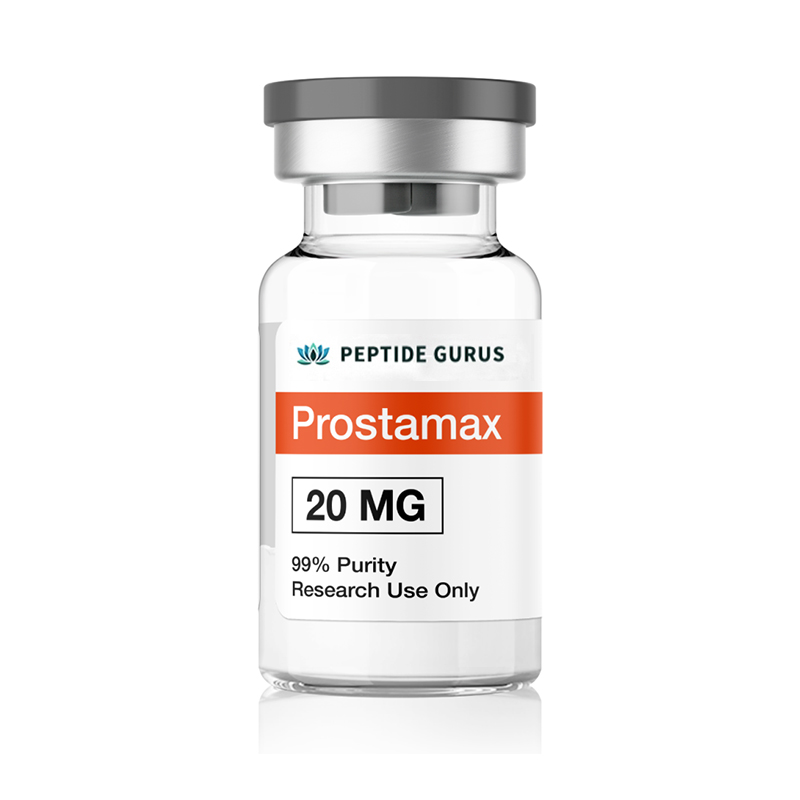
PROSTAMAX 20MG - Peptide cấp nghiên cứu
Prostamax là một peptide điều hòa sinh học chủ yếu được nghiên cứu trong nghiên cứu tuyến tiền liệt và hệ thống tiết niệu sinh dục. Nó đã được sử dụng rộng rãi trong các nghiên cứu liên quan đến điều hòa tế bào, biệt hóa mô và thay đổi chức năng liên quan đến tuổi tác trong các mô tuyến tiền liệt.
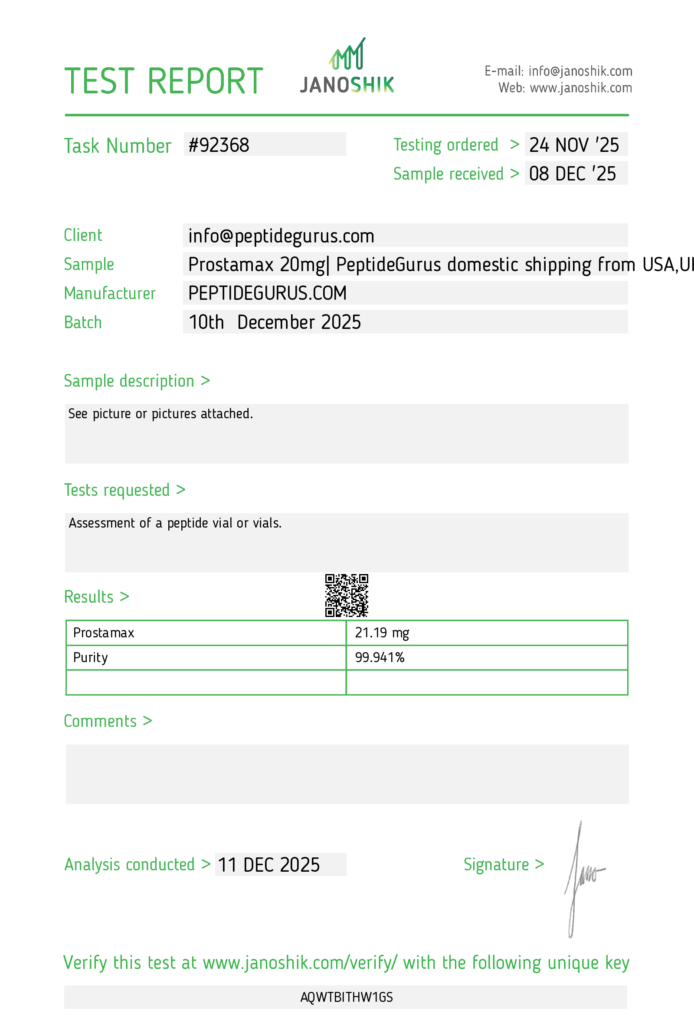
Của chúng tôi Prostamax 20mg được sản xuất theo tiêu chuẩn kiểm soát chất lượng nghiêm ngặt để đảm bảo high purity, structural stability, and consistent batch performance. Bản trình bày đông khô cho phép xử lý dễ dàng, kéo dài thời hạn sử dụng và điều kiện bảo quản đáng tin cậy.
Peptide này phù hợp với các cơ sở nghiên cứu, nhóm phát triển dược phẩm và nhà phân phối peptide chuyên nghiên cứu liên quan đến tiết niệu sinh dục và nội tiết.
Prostamax
Cấu trúc tuyến tiền liệt

Tuyến tiền liệt và tuyến tiền liệt
Prostamax và hệ thống miễn dịch
Though Prostamax is considered to be tissue-specific, there is ample evidence that the bioreulator acts on cells outside of the prostate. The most consequential effects are on the ribosomes and densely packed chromatin found in lymphocytes. In these cells, Prostamax, like Epithalon and Vilon, serves to increase expression of ribosomes which are responsible for the translation of mRNA into proteins. It also opens up densely packed chromatin to make genes more accessible for transcription into mRNA. Thus, Prostamax sets the stage for increased gene expression at every level, allowing for a functional change in the health of lymphocytes[4], [5]. The impact of Prostamax on the immune system is not just theoretical either. Research shows that the peptide helps to reduce signs of chronic prostate inflammation including swelling, hyperemia, and lymphocyte infiltration.[3] This results both from the influence Prostamax has on lymphocytes and their control over the immune response as well as the role the peptide plays in normalizing growth and differentiation of prostate cells.Prostamax và lão hóa
The effects that Prostamax has on lymphocytes and cells of the prostate are part of a larger effect it has one many different types of cells. Research in cell cultures taken from older individuals shows that Prostamax alters DNA structure by decondensing heterochromatin. This, in turn, allows for greater expression of DNA that was inactivated via dense packaging of DNA[6]. What makes this remarkable in terms of aging is that condensation of DNA is a normal, if undesirable, consequence of aging. DNA condensation is a primary driver of both senescence and apoptosis, making it one of the most important mechanisms of aging. By unpacking DNA, Prostamax is literally giving the cells a more youthful genetic profile. The results are increased proliferation of cells, decreased apoptosis (programmed cell death), and improved protein expression and cell function. Interestingly, Prostamax and similar epigenetically active peptides are found naturally in long-lived rodent species like the African mole rat. These same peptides are không found in short-lived species[7]. This indicates that the epigenetic effects that have been observed with peptides like Prostamax are, in fact, directly related to aging and longevity.Tóm tắt tuyến tiền liệt
Prostamax là một peptide Khavinson tổng hợp với các tác động sâu sắc đến sự ngưng tụ DNA trong một số tế bào. Mặc dù nó chủ yếu quan tâm đến tác dụng chống lão hóa và chống viêm trên tuyến tiền liệt, tuyến tiền liệt cũng đã được chứng minh là tối ưu hóa chức năng của một số tế bào trong cơ thể (ví dụ: tế bào lympho) bằng cách thay đổi kiểm soát biểu sinh trên DNA.Tác giả bài báo
Tạp chí khoa học tác giả

Trích dẫn được tham chiếu
- A. N. Zakutskiĭ, N. I. Chalisova, G. A. Ryzhak, A. I. Aniskina, S. V. Filippov, and P. N. Zeziulin, “[The tissue-specific effect of synthetic peptides-biologic regulators in organotypic tissues culture in young and old rats],” Adv. Gerontol. Uspekhi Gerontol., tập. 19, trang 93 Từ96, 2006.
- “Treating chronic prostatitis,” Harvard Health, Ngày 21 tháng 12 năm 2017.
- T. G. Borovskaya et al., “Experimental studying of the drug efficiency Prostamax in the therapy of chronic aseptic prostatitis and its complications,” Mod. Res. Inflamm., tập. 2013, tháng 7 năm 2013, hai: 10,4236/MRI.2013.23007.
- V. K. Khavinson, T. A. Lezhava, and V. V. Malinin, “Effects of short peptides on lymphocyte chromatin in senile subjects,” Bull. Exp. Biol. Med., tập. 137, không. 1, tr.
- T. Meskhi et al., “[The influence of the peptide bioregulator prostamax on heterochromatin of human lymphocytes in situ],” Biofizika, tập. 49, không. 6, trang 1091 Từ1093, tháng 12 năm 2004.
- T. A. Dzhokhadze, T. Z. Buadze, M. N. Gaĭozishvili, N. A. Baratashvili, and T. A. Lezhava, “[Deheterochromatinization of the chromatin in old age induced by oligopeptide bioregulator (Lys-Glu-Asp-Pro)],” Georgian Med. News, đóng. 212, trang. 76-82, tháng 11 năm 2012.
- V. K. Khavinson, D. Y. Kormilets, and A. T. Mar’yanovich, “Peptides (Epigenetic Regulators) in the Structure of Rodents with a Long and Short Lifespan,” Bull. Exp. Biol. Med., tập. 163, không. 5, trang 671 Từ676, tháng 9 năm 2017, doi: 10.1007/s10517-017-3876-x.


