

• Prostamax (Bioregulator) peptide anti - aging mechanism exploration
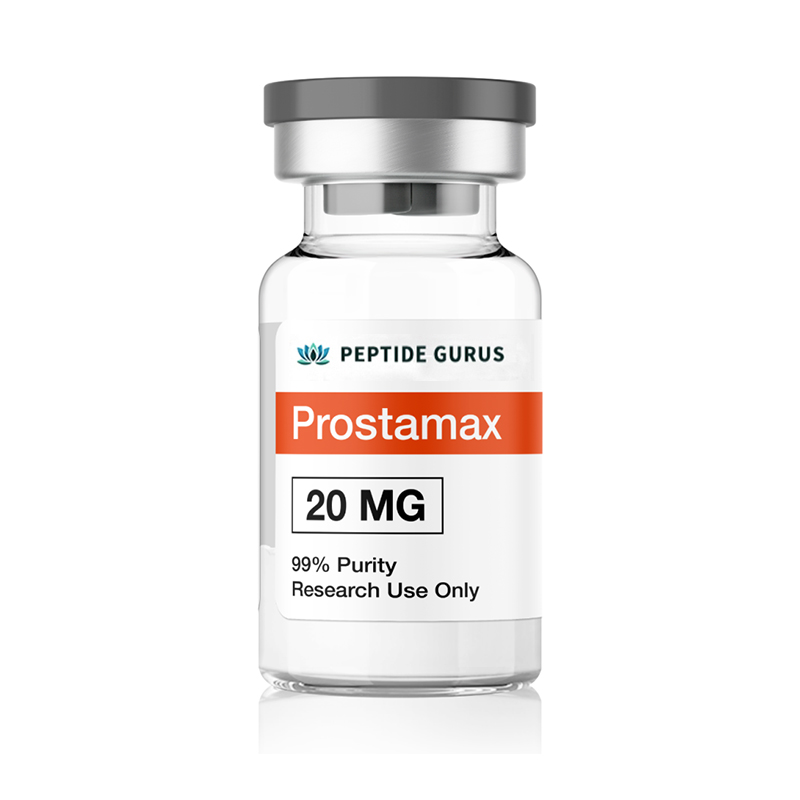
Prostamax 20 mg (bioregulator)
X
Prostamax 20 mg (bioregulator)

Prostamax 20 mg (bioregulator)

Categorieën:, ,

Contact om te bestellen
Mail ons nu om je bestelling te plaatsen met 1-op-1 ondersteuning. Beperkte voorraad! Wij accepteren Zelle, CashApp, Venmo, bankoverschrijving en crypto.
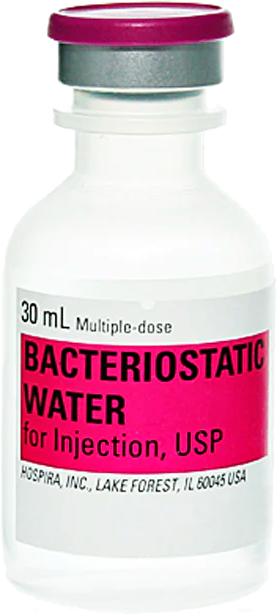
Bacteriostatisch water

Gratis (1) 30 ml bacteriostatisch water
met gekwalificeerde bestellingen over$ 500 USD. (sluit capsuleproducten, cosmetische peptiden, promotiecodes en verzending uit)

Prostamax is een synthetisch Khavinson Bioregulator -peptide met diepgaande effecten op DNA -condensatie in een aantal cellen. Hoewel het in de eerste plaats interessant is voor zijn anti-veroudering en ontstekingsremmende effecten op de prostaat, is ook aangetoond dat prostamax de functie van een aantal cellen in het lichaam (bijvoorbeeld lymfocyten) optimaliseert door epigenetische controles op DNA te veranderen.
Productgebruik:Dit product is alleen bedoeld als een onderzoeks chemisch.Deze aanduiding maakt het gebruik van onderzoekschemicals strikt mogelijk voor alleen in vitro testen en laboratoriumexperimentatie. Alle productinformatie die op deze website beschikbaar is, is alleen voor educatieve doeleinden. Lichamelijke introductie van welke aard dan ook in mensen of dieren is ten strengste wettelijk verboden. Dit product mag alleen worden afgehandeld door erkende, gekwalificeerde professionals. Dit product is geen medicijn, voedsel of cosmetisch en is mogelijk niet verkeerd, misbruikt of misbruikt als medicijn, voedsel of cosmetisch.

PROSTAMAX 20MG – Research Grade Peptide

Prostamax is a bioregulatory peptide primarily studied in prostate and urogenital system research. It has been widely used in studies related to cellular regulation, tissue differentiation, and age-related functional changes within prostate tissues.

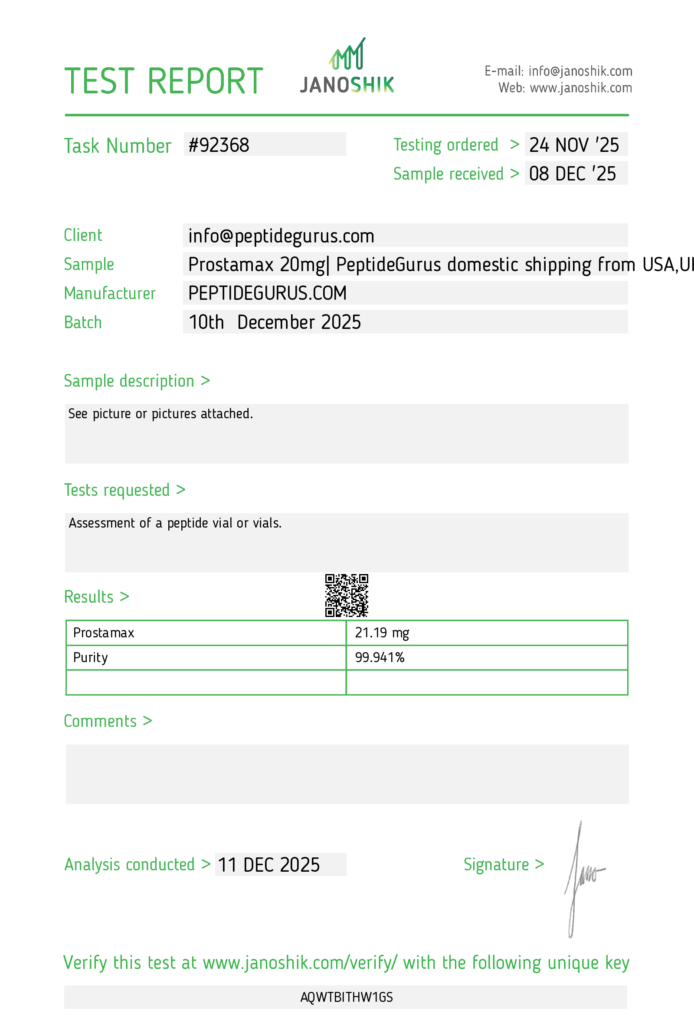
OnsProstamax 20mgis manufactured under strict quality control standards to ensurehigh purity, structural stability, and consistent batch performance. The lyophilized presentation allows for easy handling, extended shelf life, and reliable storage conditions.

This peptide is suitable for research facilities, pharmaceutical development teams, and peptide distributors specializing in urogenital and endocrine-related research.

Prostamax

Prostamax is een synthetisch Khavinson -peptide met primaire reparatie -effecten in de prostaat [1]. Van het peptide is ook aangetoond dat het de lymfocytenfunctie verbetert en DNA -expressiepatronen in andere weefsels verandert. Prostamax wordt beschouwd als een van de breder-spectrum anti-veroudering Khavinson-peptiden omdat het decondenseren van heterochromatine in een grote verscheidenheid aan cellen bevordert. Onderzoek bij ratten geeft aan dat prostamax nuttig kan zijn bij de behandeling van chronische prostatitis. Er is speculatie dat langdurig gebruik kanker kan afweren, hoewel studies van voldoende lengte om aan te tonen dat dit nog niet is uitgevoerd.

Prostamax -structuur

Aminozuursequentie:Lys-Glu-Asp-Pro (KEDP)Moleculaire formule:C20H33N5O9Molecuulgewicht:487,5 g/molPubChem CID: 9848296 Synoniemen:Schembl6660498MoleculeBron:Pubch

Prostamax en de prostaat

Chronic prostate inflammation (called chronic prostatitis) affects as many as 16% of men at some point in their lives. It is a painful condition causing burning with urination, urgency, and trouble voiding. It can even cause difficult or painful ejaculation along with pain in the lower back. It is notoriously difficult to treat, often requiring long-term antibiotic treatment over months. There is also good evidence to suggest that it can lead to cardiovascular disease and even cancer, so treating prostatitis is crucial to long-term health[2]. Research in rat models shows that prostatitis can be treated with Prostamax, which reduces the signs and symptoms of the disease. Rats treated with Prostamax for just 15 days showed reduce swelling of the prostate gland along with less vascular congestion (hyperemia) and less infiltration by cells of the immune system. Interestingly, the rats also showed decreased levels of scarring in the prostate, indicating that the reduction in inflammation was slowing or even stopping pathological remodeling. Though the study was not carried out long enough or on enough rats to assess Prostamax’s effect on the risk for cancer, the results suggest that it would likely diminish the risk by reducing chronic inflammation that leads to pathological hypertrophy and hyperplasia[3]. According to Dr. Angelina Pakhomova, what makes the above study on Prostamax extra exciting is that it was effective in treating a form of prostatitis called chronic abacterial prostatitis (CAP). CAP is the most common form of prostatitis, but it is difficult to treat because it isn’t caused by a bacterial infection. Bacterial infections respond readily to antibiotics. CAP, on the other hand, does not respond as well to antibiotic treatment and sometimes doesn’t respond at all. It is also more likely to recur and has been shown to be exceptionally frustrating to those who suffer from it. Having an alternative treatment that is effective in CAP could improve quality of life for many men and ward off future disease. Finding a treatment for CAP is more important than ever as rates of the condition have increased almost 3-fold since the end of the 20eeeuw.

Prostamax en het immuunsysteem

Though Prostamax is considered to be tissue-specific, there is ample evidence that the bioreulator acts on cells outside of the prostate. The most consequential effects are on the ribosomes and densely packed chromatin found in lymphocytes. In these cells, Prostamax, like Epithalon and Vilon, serves to increase expression of ribosomes which are responsible for the translation of mRNA into proteins. It also opens up densely packed chromatin to make genes more accessible for transcription into mRNA. Thus, Prostamax sets the stage for increased gene expression at every level, allowing for a functional change in the health of lymphocytes[4], [5]. The impact of Prostamax on the immune system is not just theoretical either. Research shows that the peptide helps to reduce signs of chronic prostate inflammation including swelling, hyperemia, and lymphocyte infiltration.[3] This results both from the influence Prostamax has on lymphocytes and their control over the immune response as well as the role the peptide plays in normalizing growth and differentiation of prostate cells.

Prostamax en veroudering

The effects that Prostamax has on lymphocytes and cells of the prostate are part of a larger effect it has one many different types of cells. Research in cell cultures taken from older individuals shows that Prostamax alters DNA structure by decondensing heterochromatin. This, in turn, allows for greater expression of DNA that was inactivated via dense packaging of DNA[6]. What makes this remarkable in terms of aging is that condensation of DNA is a normal, if undesirable, consequence of aging. DNA condensation is a primary driver of both senescence and apoptosis, making it one of the most important mechanisms of aging. By unpacking DNA, Prostamax is literally giving the cells a more youthful genetic profile. The results are increased proliferation of cells, decreased apoptosis (programmed cell death), and improved protein expression and cell function. Interestingly, Prostamax and similar epigenetically active peptides are found naturally in long-lived rodent species like the African mole rat. These same peptides arenietGevonden in kortstondige soorten [7]. Dit geeft aan dat de epigenetische effecten die zijn waargenomen met peptiden zoals Prostamax, in feite direct gerelateerd zijn aan veroudering en levensduur.

Prostamax Samenvatting

Prostamax is een synthetisch Khavinson -peptide met diepgaande effecten op DNA -condensatie in een aantal cellen. Hoewel het in de eerste plaats interessant is voor zijn anti-veroudering en ontstekingsremmende effecten op de prostaat, is ook aangetoond dat prostamax de functie van een aantal cellen in het lichaam (bijvoorbeeld lymfocyten) optimaliseert door epigenetische controles op DNA te veranderen.

Artikelauteur

De bovenstaande literatuur werd onderzocht, bewerkt en georganiseerd door Dr. E. Logan, M.D. Dr. E. Logan behaalde een doctoraat vanCase Western Reserve University School of Medicineen een B.S. in moleculaire biologie.

Wetenschappelijke tijdschrift Auteur

Vladimir Khavinsonis een professor, president van de Europese regio van de International Association of Gerontology and Geriatrics; Lid van deRussische en Oekraïense academies van medische wetenschappen; Hoofd gerontoloog van de gezondheidscommissie van de regering van Saint Petersburg, Rusland; Directeur van het Saint Petersburg Institute of Bioregulation and Gerontology; Vice-president van Gerontological Society of theRussische Academie van Wetenschappen; Hoofd van de voorzitter van Gerontology and Geriatrics van de Thenorth-Western State Medical University, St-Petersburg; Kolonel van de medische dienst (USSR, Rusland), gepensioneerd. Vladimir Khavinson staat bekend om de ontdekking, experimentele en klinische studies van nieuwe klassen vanPeptideBioregulatoren en voor de ontwikkeling van bioregulerende peptidetherapie. Hij is bezig met het bestuderen van de rol van peptiden bij de regulatie van de verouderingsmechanismen. Zijn hoofdveld van acties is ontwerp, pre-klinische en klinische studies van nieuw peptidegeroprotectoren. A 40-year-long investigation resulted in a multitude of methods of application of peptide bioregulators to slow down the process of ageing and increase human life span. Six peptide-based pharmaceuticals and 64 peptide food supplements have been introduced into clinical practice by V. Khavinson. He is an author of 196 patents (Russian and international) as well as of 775 scientific publications.His major achievements are presented in two books: “Peptides and Ageing” (NEL, 2002)and “Gerontological aspects of genome peptide regulation” (Karger AG, 2005).Vladimir Khavinson introduced scientific specialty “Gerontology and Geriatrics” in the Russian Federation on the governmental level. Academic Council headed by V. Khavinson has oversighted over 200 Ph.D. and Doctorate theses from many different countries. Prof. Vladimir Khavinson is being referenced as one of the leading scientists involved in the research and development of Prostamax. In no way is this doctor/scientist endorsing or advocating the purchase, sale, or use of this product for any reason. There is no affiliation or relationship, implied or otherwise, between
Peptidegoeroesen deze dokter. Het doel van het citeren van de arts is om de uitputtende onderzoeks- en ontwikkelingsinspanningen van de wetenschappers die dit peptide bestuderen te erkennen, te erkennen en te crediteren.

Vermeld citaten

    A. N. Zakutskiĭ, N. I. Chalisova, G. A. Ryzhak, A. I. Aniskina, S. V. Filippov, and P. N. Zeziulin, “[The tissue-specific effect of synthetic peptides-biologic regulators in organotypic tissues culture in young and old rats],”Adv. Gerontol. Uspekhi Gerontol., vol. 19, pp. 93–96, 2006. “Treating chronic prostatitis,”Harvard Health, Dec. 21, 2017. https://www.health.harvard.edu/mens-health/treating-chronic-prostatitis (accessed Feb. 22, 2022). T. G. Borovskayaet al., “Experimental studying of the drug efficiency Prostamax in the therapy of chronic aseptic prostatitis and its complications,”Mod. Res. Inflamm., vol. 2013, Jul. 2013, doi: 10.4236/mri.2013.23007. V. K. Khavinson, T. A. Lezhava, and V. V. Malinin, “Effects of short peptides on lymphocyte chromatin in senile subjects,”Bull. Exp. Biol. Med., vol. 137, no. 1, pp. 78–81, Jan. 2004, doi: 10.1023/b:bebm.0000024393.40560.05. T. Meskhiet al., “[The influence of the peptide bioregulator prostamax on heterochromatin of human lymphocytes in situ],”Biofizika, vol. 49, no. 6, pp. 1091–1093, Dec. 2004. T. A. Dzhokhadze, T. Z. Buadze, M. N. Gaĭozishvili, N. A. Baratashvili, and T. A. Lezhava, “[Deheterochromatinization of the chromatin in old age induced by oligopeptide bioregulator (Lys-Glu-Asp-Pro)],”Georgian Med. News, no. 212, pp. 76–82, Nov. 2012. V. K. Khavinson, D. Y. Kormilets, and A. T. Mar’yanovich, “Peptides (Epigenetic Regulators) in the Structure of Rodents with a Long and Short Lifespan,”Bull. Exp. Biol. Med., vol. 163, no. 5, pp. 671–676, Sep. 2017, doi: 10.1007/s10517-017-3876-x.
Alle artikelen en productinformatie op deze website zijn alleen voor informatieve en educatieve doeleinden.De producten die op deze website worden aangeboden, zijn alleen ingericht voor in-vitro-studies. In-vitro-onderzoeken (Latijn: in glas) worden buiten het lichaam uitgevoerd. Deze producten zijn geen medicijnen of medicijnen en zijn niet goedgekeurd door de FDA om een ​​medische aandoening, kwaal of ziekte te voorkomen, te behandelen of te genezen. Lichamelijke introductie van welke aard dan ook in mensen of dieren is ten strengste wettelijk verboden.

Aanvraag aanvragen

Over ons

Peptidegurus is een toonaangevende leverancier van Amerikaanse onderzoekspeptiden en biedt producten van topkwaliteit tegen concurrerende prijzen. Met een focus op excellentie en klantenservice, zorgen ze voor een veilig en handig bestelproces met wereldwijde verzending.

Vraag een citaat aan

  • Peptidegoeroes
  • info@peptidegurus.com
  • Glendale, het is, VS
  • CONTACT

    Aanvraag aanvragen