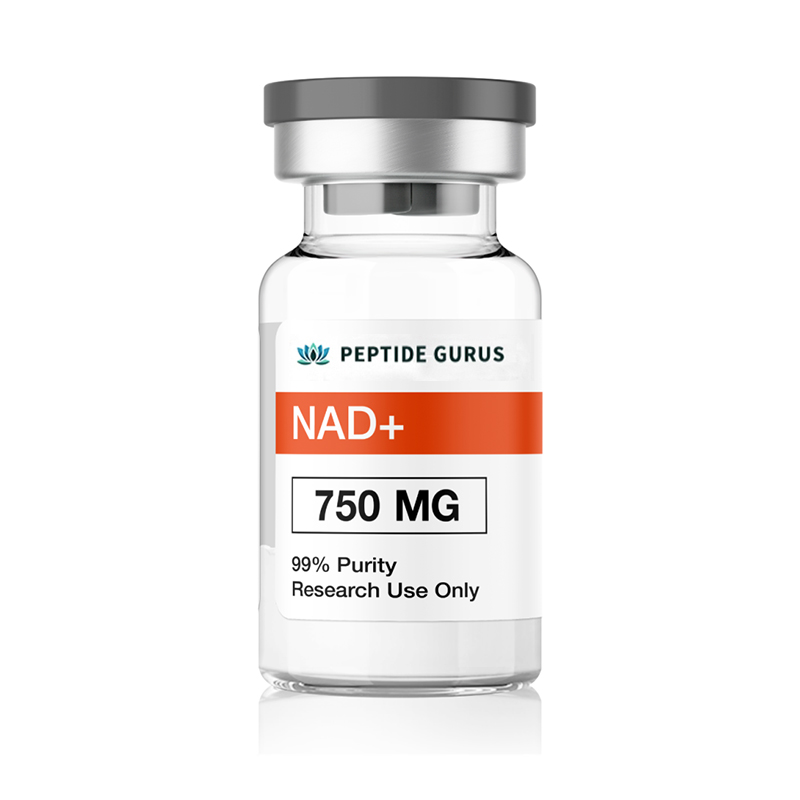
遊離(1)30 mlの細菌性水 with qualified orders over $500 USD.
(excludes capsule products, cosmetic peptides, promo codes and shipping)
NAD+ (Nicotinamide adenine dinucleotide) is the naturally occurring oxidized form of NADH. Studies suggest its potential benefits include enhancing muscle function, protecting nervous system cells, and mitigating the effects of aging.
Product Usage: This PRODUCT IS INTENDED AS A RESEARCH CHEMICAL ONLY. This designation allows the use of research chemicals strictly for in vitro testing and laboratory experimentation only. All product information available on this website is for educational purposes only. Bodily introduction of any kind into humans or animals is strictly forbidden by law. This product should only be handled by licensed, qualified professionals. This product is not a drug, food, or cosmetic and may not be misbranded, misused or mislabled as a drug, food or cosmetic.
標準的な老化プロセスの主な結果の1つは、ミトコンドリアの品質と活動の両方の低下です。ミトコンドリアは体の発電所であり、ニューロンの発射から消化や筋肉機能まで、あらゆるエネルギーを生成します。ミトコンドリア機能の低下は正常な老化に関連していますが、多くの加齢性疾患プロセスの要因でもあります。研究によると、ミトコンドリアの老化は、細胞の老化、炎症、さらには幹細胞活性の変化に寄与し、治癒速度を低下させ、老齢の損傷から体が回復することをより困難にします。[5].
According to ヌオ・サン of the Heart, Lung, and Blood Institute of the National Institutes of Health, mitochondria cannot simply be viewed as bioenergetics factories, but “rather as platforms for intracellular signaling, regulators of innate immunity and modulators of stem cell activity.” He goes on to explain that “mitochondria can be linked to a wide range of processes associated with aging including senescence, inflammation, as well as the more generalized age-dependent decline in tissue and organ function.” In other words, mitochondria are the lynch pin of cellular aging and understanding how to protect their function is a necessary first step in understanding how to slow, stop, or even reverse the aging process.
New research suggests that at least some of the age-related decline seen in mitochondria can be reversed through dietary supplementation with NAD+. This function of NAD+ was uncovered, or at least made popular in research circles, by David Sinclair of Harvard University. Sinclair is the same researcher who uncovered the anti-aging effects of reservatrol (a component of red wine). In 2013, Sinclair revealed that mitochondria in the muscle of mice could be restored to a more youthful state via injection of a precursor to NAD+[6].
Research completed in 2013 showed that declining levels of NAD+ leads to a pseudohypoxic state within cells. This, in turn, interrupts the normal signaling that takes place between the nucleus, where DNA resides, and the mitochondria. By supplementing old mice with NAD+, mitochondrial function is restored and the communication commences again[7].
At least prat of the reason that NAD+ helps to offset the effects of aging is that it activates SIRT 1 function in the nucleus and prevents the normal age-related decline in expression of this particular gene. SIRT 1 is a gene encoding a protein known as sirtuin 1 (short for NAD-dependent deacetylase sirtuin-1). Sirtuin 1 is an enzyme that plays important roles in regulating proteins involved in cellular metabolism and processes linked to stress, longevity, and inflammation[8].
Possible way in which NAD+ decline affects cellular mechanisms of aging.
Source: PubMed
筋肉機能におけるNAD+の役割
老化とNAD+の間の別のリンクは、骨格筋組織で見ることができます。マウスモデルでは、年齢に関連した筋肉の減少が2つのステップで発生します。最初のステップでは、ミトコンドリア遺伝子の発現が低下しているため(ミトコンドリアがエネルギーを生成するために使用するプロセスプロセス)(ミトコンドリアには独自のDNAが含まれています)。 2番目のステップでは、酸化的リン酸化を調節する遺伝子がミトコンドリアと核の両方で誤動作を開始します。フェーズ1は可逆的です。 NAD+が投与された場合、これらの研究のマウスはミトコンドリア機能の改善を示し、ステップ2に進行しません。しかし、マウスが介入なしでステージ2に進行することを許可されている場合、NAD+はそれらを救助できません[9]. This evidence suggests that intervention in mitochondrial aging is possible using NAD+, but that waiting too long results in refractory dysfunction. It is the best argument yet that early supplementation with NAD+ is critical to fighting off aging in the long term.
Research shows that exercise training actually has the same effects on aging mitochondria as NAD+ supplementation does. It appears that, in both cases, intervention helps to prevent changes in peroxisome proliferator-activated receptor gamma co-activator 1-alpha (PGC-1-alpha) signaling that lead to mitochondrial dysfunction[10].
Research in mouse models of skeletal muscle aging suggests that exercise training helps to maintain muscle oxidative capacity over a lifetime. At least part of the reason that this works is that exercise increases PGC-1-alpha levels, which in turn helps to protect mitochondrial DNA, oxidative proteins, and angiogenic (blood vessel stimulating) proteins[11].
神経変性疾患のNAD+
NAD+および老化プロセスについて学んだことの多くは、実際には多くの疾患の状態に適用されます。特に、NAD+の変化は中枢神経系に広範囲にわたる効果があるように見え、アルツハイマー病やハンティントン病などの多くの神経変性疾患に関連しています。 2019年に公開されたレビュー記事は、NAD+と中枢神経系に関連する知識の現在の状態を説明しました。要するに、NAD+は、ハンティントン病などのヒト疾患の多くのマウスモデルで神経保護的です。補因子はミトコンドリア機能の改善に重要であり、それが活性酸素種(ROS)の生産を減少させるように思われます。 ROSは、多くの炎症性および疾患の状態で損傷を引き起こすことが知られています。また、老化プロセスも加速します。 PARP阻害剤として知られる薬物のクラスと組み合わせて、NAD+補給によって得られる相乗効果の可能性に関心があります。 PARPタンパク質は、DNA修復とプログラムされた細胞死に関与しています。活性化されたPARPはDNA修復にとって重要ですが、PARP活動が多すぎると実際に細胞エネルギー貯蔵庫が枯渇し、プログラムされた細胞死を誘発する可能性があります[12].
Research in mouse models of Parkinson’s disease shows that NAD+ supplementation helps to protect against motor deficits and the death of dopaminergic neurons in the substantia nigra. This suggests that NAD+ may not only help ameliorate the symptoms of Parkinson’s disease, but may actually slow or even prevent the development of the disease in the first place[13].
Interesting research into a metabolic process known as the kynurenine pathway (KP) has shown that NAD+ supplementation may help to ward off disease by preventing the breakdown of neurotransmitters and by reducing the need to shunt protein precursors to the production of NAD+. Tryptophan is an essential amino acid and is a building block of a number of neurotransmitters and proteins. This amino acid is broken down, however, via the KP to produce NAD+. Thus, the production of NAD+ directly cannibalizes essential neurotransmitters. Research has linked imbalances in KP activity to Parkinson’s, Alzheimer’s, and Huntington’s diseases as well was psychiatric disorders like schizophrenia and bipolar disorder[14]。 NAD+補給がKPの不均衡を防ぎ、したがって、言及された神経変性条件を改善または防止するかどうかを判断するための継続的な研究があります。
炎症の減少におけるNAD+の役割
NAD+レベルは多くの要因によって規制されており、その1つはNAMPTです。この特定の酵素は炎症に関連していることが知られており、特定の種類の癌によって過剰発現されることがよくあります。実際、研究者は、NAMPTを潜在的な抗癌治療として標的にしています。このレギュレーターは、肥満、2型糖尿病、および非アルコール性脂肪肝疾患の発症にも関連しています。これは炎症の強力な活性化因子であり、NAD+レベルが低下するにつれてそのレベルが劇的に増加します。 NAD+の補給は、NAMPTの活性化を減らし、したがって炎症を調節するのに役立つと考えられています[15].
There is good evidence to suggest that the NAD+/NAMPT dichotomy is a primary driver of the insulin resistance that has been linked to obesity and so often leads to type 2 diabetes as well as heart disease. It appears that obesity leads to inflammation and that leads to an overall reduction in NAD+ levels, which in turn increases free fatty acid levels in the blood as a result of adiponectin down-regulation. This then causes the liver to produce more glucose even as it interferes with the insulin-mediated uptake of glucose by skeletal muscle. The result is insulin resistance, which the pancreas attempts to overcome by producing more insulin. The net result, over time, is high glucose levels and diabetes[16].
There is good evidence from animal models to suggest that NAD+ supplementation can offset some of the effects of mitochondrial aging. Much of this evidence, however, comes from animal models. There has been a strong push to test NAD+ in clinical trials of neurodegenerative disease and chronic type 2 diabetes. In both cases, the simple cofactor holds a great deal of promise for, at the very least, slowing the progression of these devastating diseases. There is even hope that NAD+ can, by itself or in combination with other therapies, reverse certain disease processes or even regulate the aging process itself.
NAD+ exhibits minimal side effects, low oral and excellent subcutaneous bioavailability in mice. Per kg dosage in mice does not scale to humans. NAD+ for sale at
The above literature was researched, edited and organized by Dr. Logan, M.D. Dr. Logan holds a doctorate degree from Case Western Reserve University School of Medicine and a B.S. in molecular biology.
Scientific Journalの著者
Shin-Ichiro Imai's、MD、PhD major interest is to understand the systemic regulation of aging and longevity in mammals and translate that knowledge into an effective anti-aging intervention that makes our later lives as healthy and productive as possible… Three key tissues have been identified as basic elements in mammalian aging and longevity control: the hypothalamus as the control center, skeletal muscle as an effector and adipose tissue as a modulator. These findings are integrated into a comprehensive concept of mammalian aging and longevity control, named the NAD World 2.0 (Imai, npj Systems Biology and Applications, 2016). Through these projects, they aim to understand the importance of these critical inter-tissue communications among the hypothalamus, skeletal muscle and adipose tissue in mammalian aging and longevity control. The anticipated outcome of these studies will allow us to develop effective anti-aging interventions.
Shin-ichiro Imai’s, MD, PhD is being referenced as one of the leading scientists involved in the research and development of NAD+. In no way is this doctor/scientist endorsing or advocating the purchase, sale, or use of this product for any reason. There is no affiliation or relationship, implied or otherwise, between
R. T. Matthews、L。Yang、S。Browne、M。Baik、およびM. F. Beal、「コエンザイムQ10投与は脳ミトコンドリア濃度を増加させ、神経保護効果を発揮します」とProc。 natl。アカデミー。 SCI。 U. S. A.、vol。 95、いいえ。 15、pp。8892–8897、1998年7月。PMC]
A. P. Gomes et al。、「NAD+の減少は、老化中の核ミトコンドリアコミュニケーションを破壊する偽の状態を誘発する」、Cell、vol。 155、いいえ。 7、pp。1624–1638、2013年12月。PMC]
S. ImaiおよびL. Guarente、「老化と病気におけるNad+およびSirtuins」、Trends Cell Biol。、Vol。 24、いいえ。 8、pp。464–471、2014年8月。[PubMed]
A. R. MendelsohnおよびJ. W. Larrick、「通常のNAD+レベルの回復による骨格筋の部分的逆転」、Rejuvenation Res。、vol。 17、いいえ。 1、pp。62–69、2014年2月。PubMed]
C. Kang、E。Chung、G。Diffee、およびL. L. Ji、「運動トレーニングは、ラット骨格筋における老化関連のミトコンドリア機能障害を減衰させる:PGC-1αの役割」、Exp。 Gerontol。、Vol。 48、いいえ。 11、pp。1343–1350、2013年11月。[PubMed]
S. Ringholm et al。、「老化マウスにおける骨格筋酸化能力に対する生涯レスベラトロール補給と運動トレーニングの効果、PGC-1αの影響」、Exp。 Gerontol。、Vol。 48、いいえ。 11、pp。1311–1318、2013年11月。[PubMed]
A. LloretおよびM. F. Beal、「ハンティントン病およびその他の神経変性条件におけるPGC-1α、サーチュインおよびPARP:それらをすべて支配するNAD+」、神経化学。 Res。、2019年5月。[PubMed]
C. Shan et al。、「パーキンソン病のマウスモデルにおける運動障害およびドーパミン作動性ニューロン損傷に対するβ-ニコチンアミドアデニンジヌクレオチドの保護効果」、Prog。神経精神病薬。 Biol。精神医学、Vol。 94、p。 109670、2019年6月。[PubMed]
D. C.マディソンとF.ジョルギニ、「キヌレニン経路と神経変性疾患」、セミン。セル開発。 Biol。、vol。 40、pp。134–141、2015年4月。[PubMed]
A. Garten、S。Schuster、M。Penke、T。Gorski、T。DeGiorgis、およびW. Kiess、「NAMPTおよびNAD代謝の生理学的および病態生理学的役割」、Nat。 Rev. Endocrinol。、Vol。 11、いいえ。 9、pp。535–546、2015年9月。[PubMed]
S. YamaguchiおよびJ. Yoshino、「肥満とインスリン抵抗性における脂肪組織NAD+生物学:メカニズムから治療まで」、Bioessays News Rev. Mol。細胞。開発者。 Biol。、vol。 39、いいえ。 5、2017年5月。[PMC]
ALL ARTICLES AND PRODUCT INFORMATION PROVIDED ON THIS WEBSITE ARE FOR INFORMATIONAL AND EDUCATIONAL PURPOSES ONLY.
このウェブサイトで提供される製品は、ビトロ内の研究のためにのみ提供されています。 in-vitro研究(ラテン語:ガラス)は体の外側で行われます。これらの製品は薬や薬ではなく、病状、病気、病気を予防、治療、治療するためにFDAによって承認されていません。あらゆる種類の人間や動物への身体導入は、法律によって厳密に禁じられています。