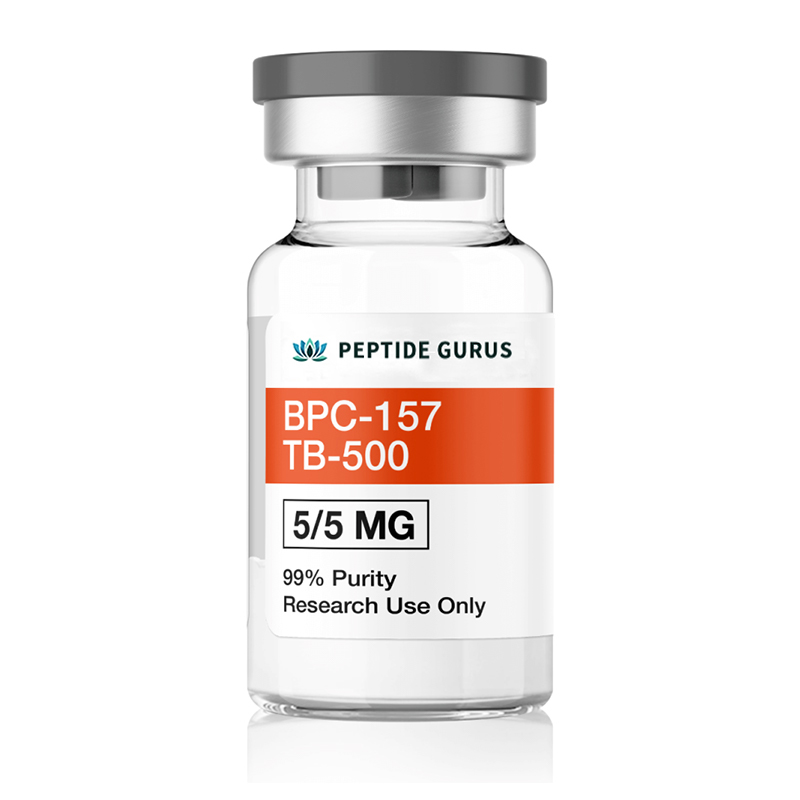
PotentialBPC-157 and TB-500Synergy in WoundRepair
Nghiên cứu tiết lộ rằng BPC-157 và TB-500, cả hai đều giúp kích thích các con đường sinh hóa khác nhau của vết thương, có thể có tác dụng hiệp đồng khi kết hợp với nhau.
Cell Migration
Việc chữa lành vết thương thành công phụ thuộc vào các nguyên bào sợi, điều chỉnh sản xuất ma trận ngoại bào, cũng như các tế bào của hệ thống miễn dịch. Để các tế bào này thực hiện công việc của họ, họ đã di chuyển đến vị trí chấn thương. Chuyển động này, được gọi là di chuyển, phụ thuộc rất nhiều vào protein Actin. Cả BPC-157 và TB-500 đều quan trọng trong quy định của Actin BPC-157 hoạt động ở cấp độ của gen để tăng sản xuất Actin [1] .TB-500, một protein Actinbinding, giúp cô lập Actin ở những khu vực hữu ích nhất để xây dựng các hoạt động từ Actin để cho phép chuyển động tế bào [2]. Cùng với nhau, BPC-157 và TB-500 làm việc một cách nhất định để tăng số lượng và chức năng của Actin và do đó làm tăng tốc độ nguyên bào sợi và tế bào của hệ thống miễn dịch di chuyển đến các khu vực chấn thương.
The Big PictureInvolves GrowthHormone
Cả TB-500 và BPC-157 đều tương tác với hormone tăng trưởng trong quá trình chữa bệnh. BPC-157 tăng cường biểu hiện của các thụ thể hormone tăng trưởng trên các nguyên bào sợi, thúc đẩy sự điều kiện của các tế bào này và do đó khả năng của chúng để thúc đẩy tái tạo mô mềm [3]. WISTB-500 trên tàu, các thụ thể hormone tăng trưởng thêm sẽ không bị lãng phí vì các loại này sẽ có các cửa hàng Actin đầy đủ để sử dụng tuổi thọ kéo dài của họ.
About The Author
Các tài liệu trên đã được nghiên cứu, chỉnh sửa và tổ chức bởi Tiến sĩ E. Logan, M.D. Tiến sĩ Elogan có bằng tiến sĩ của Trường Đại học Case Western Reserve của trường đại học và bằng B.S. Trong sinh học phân tử.
Scientific Journa Author
Allan L. Goldstein, MD, Allan L. Goldstein is professor and Catharine B. & WiliamMcCormick Chair of the department of Biochemistry and Molecular Biology at TheGeorge Washington University School of Medicine and Health Sciences, where he hasserved since 1978. Thymosins were discovered in the mid 1960’s, when Allan Goldsteinfrom the Laboratory of Abraham White at the Albert Einstein College of Medicine in NewYork studied the role of the thymus in development of the vertebrate immune system. Heis a world-renowned authority on the thymus gland and the workings of the immunesystem, and co-discoverer of the thymosins. Dr. Goldstein is the author of over 400 scientific articles in professional journals, the inventor on more than 15 U.S. Patents, andthe editor of several books in the fields of biochemistry, biomedicine, immunology andneuro-science. He is on the editorial boards of numerous scientific and medical journalsand has been a consultant to many re-search organizations in industry and government;,co-founder of The institute for Advanced Studies in Aging and Geriatric Medicine, a non-profit research and educational institute; a member of the Board of Trustees of the AlbertSabin Vaccine Institute, and serves as the Chairman of the Board of Regene Rx Biopharmaceuticals. Dr. Goldstein received his B.S. from Wagner College in 1959 and hisM.S. and Ph.D. from Rutgers University in 1964. He served as a faculty member of theAlbert Einstein College of Medicine from 1964 to 1972, and moved to the University ofTexas Medical Branch in Galveston in 1972 as professor and director of the division of Biochemistry.
Allan L. Goldstein, MD is being referenced as one of the leading scientists involved in theresearch and development of TB-500 and other Thymosins. In no way is thisdoctor/scientist endorsing or advocating the purchase, sale, or use of this product for anyreason. There is no affiliation or relationship, implied or otherwise, between PeptideSciences and this doctor. The purpose of citing the doctor is to acknowledge, recognize.and credit the exhaustive research and development efforts conducted by the scientistsstudying this peptide. Dr. Goldstein is listed in [5]under the referenced citations.
Resources
1.C.-H. Chang, W.-C. Tsai, M.-S. Lin, Y-H. Hsu, and J.-H. S. Pang, “The promotingeffect of pentadecapeptide BPC 157 on tendon healing involves tendon outgrowth,cell survival, and cell migration,”J.Appl. Physiol., vol. 110, no.3, pp.774-780, Oct[Physiology.org]
2.J. Kim and Y. Jung, “Potential Role of Thymosin Beta 4 in Liver Fibrosis,” Int. J.Mol. Sci., vol.16,no.5,pp.10624-10635,May 2015.[NCBI]
3.C.-H. Chang, W.-C. Tsai, Y.-H. Hsu, and J.-H.S.Pang,“Pentadecapeptide BPC157 enhances the growth hormone receptor expression in tendon fibroblasts,” Mol.Basel Switz.,vol.19,no.11,pp.19066-19077, NOV. 2014.[NCBI]
4.Song, Ran & Choi, Hyun & Yang, Hyung-In & Yoo, Myung & Park, Yong-Beom &Kim, Kyoung.(2012).Association between serum thymosin B4 levels of rheumatoidarthritis patients and disease activity and response to therapy. Clinicalrheumatology.31.1253-8.10.1007/s10067-012-2011-7.[Research Gate]
5.Philp, D., et al. “Thymosin β4 Promotes Angiogenesis, Wound Healing, and HairFollicle Development.”Mechanisms ofAgeing and Development, vol. 125, no. 2Feb.2004,pp.113-115,10.1016/i.mad.2003.11.005.[PubMed]
ALL ARTICLES AND PRODUCT INFORMATION PROVIDED ON THIS WEBSITE AREFOR INFORMATIONAL AND EDUCATIONAL PURPOSES ONLY.
The products offered on this website are furnished for in-vitro studies only. in-vitro studies(Latin: in glass) are performed outside of the body. These products are not medicines ordrugs and have not been approved by the FDA to prevent, treat or cure any medicalcondition, ailment or disease. Bodily introduction of any kind into humans or animals isstrictly forbidden by law.