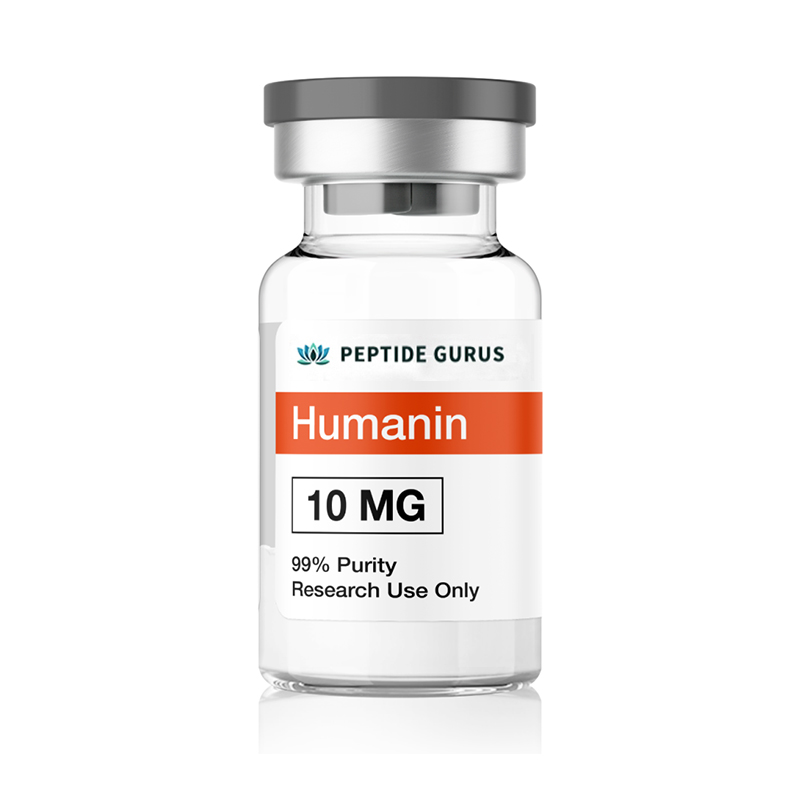
Email kami sekarang untuk melakukan pemesanan Anda dengan dukungan 1-on-1. Stok terbatas! Kami menerima Zelle, CashApp, Venmo, transfer bank, dan kripto.
Bebas (1) 30 mL air bakteriostatik with qualified orders over $500 USD.
(excludes capsule products, cosmetic peptides, promo codes and shipping)
Product Usage: This PRODUCT IS INTENDED AS A RESEARCH CHEMICAL ONLY. This designation allows the use of research chemicals strictly for in vitro testing and laboratory experimentation only. All product information available on this website is for educational purposes only. Bodily introduction of any kind into humans or animals is strictly forbidden by law. This product should only be handled by licensed, qualified professionals. This product is not a drug, food, or cosmetic and may not be misbranded, misused or mislabled as a drug, food or cosmetic.
Tinjauan Humanin
Humanin adalah mikro-peptida yang terjadi secara alami yang unik karena fakta bahwa ia dikodekan dalam DNA mitokondria (mitokondria mengandung sejumlah kecil DNA yang hanya eksklusif untuk mereka). Ini berfungsi sebagai protein sitoprotektif, melindungi sel-sel dari proses apoptosis (kematian sel terprogram) melalui gangguan dengan operasi normal protein X terkait BCL2 (Bax). Variasi manusia telah ditemukan di sejumlah mamalia dari manusia ke tikus dan sangat dilestarikan di seluruh spesies [1]. Penelitian menunjukkan bahwa humanin penting dalam melindungi neuron, jaringan jantung, sel otot, retina mata, dan lapisan pembuluh darah.
Unlike standard peptides and proteins, which are produced through posttranslational modification of larger peptides, micro-peptides are produced by short, open reading frames (sORFs) and do not undergo modification once they are produced. Ranging in size from 100-150 amino acids in length, sORFs were originally overlooked by researchers convinced that all peptides were produced by the same process of DNA to RNA to protein to modified protein. No one considered that the last step, modification, could be disregarded entirely.
In humans, a number of sORFs have been identified. Their functions range from enhancing mRNA processing to helping to repair DNA damage and interacting with other proteins to create complex macro-proteins. Humanin, one of the smallest micro-peptides known to date, is just 24 amino acids in length. It interacts with the Bcl2-associated X protein (Bax) to regulate apoptosis, blocking the function of Bax when necessary to preserve cells that would otherwise be destroyed.
Perlindungan saraf
Research in rats indicates that humanin protects not just against apoptosis, but against programmed cell death in specific situations. In particular, the micro-peptide has been shown to protect neurons in the setting of Alzheimer’s disease, preventing the cell death that is induced by beta-amyloid plaque build-up[3]. Research shows that the peptide protects against excitotoxic neuron death in experiments using NMDA pulses[1].
Similar results to the above experiments were obtained when investigating neuron death occurring secondary to prion disease[4]. There is hope that this function of humanin can be exploited to slow or even halt neurodegenerative diseases like Alzheimer’s disease and other forms of dementia. Though it does not strike at the heart of the conditions (e.g. the formation of amyloid plaques in Alzheimer’s disease) humanin could be critical in tipping the delicate physiologic balance that plays out in these conditions, favoring the suspension of apoptosis[5].
Humanin appears to protect neurons through two different mechanisms, both of which have the ultimate function of preventing mitochondria from activating the apoptosis pathway. Under normal circumstances, the Bcl-2 family of proteins signal the release of proteins from the mitochondrial membrane, which in turn activate caspases that coordinate the orderly destruction and recycling of a cell[6]. This process is actually useful in many settings, such as during viral invasion, when the destruction of a handful of cells can prevent widespread tissue damage. Unfortunately, the process may become dysregulated in certain disease conditions with the result being unrestrained, widespread cell death. Humanin binds to Bcl-2 stimulating proteins Bid and tBid and blocks their function, thereby shutting down the apoptosis pathway at its origin[7].
Cutting edge research out of Argentina has found that humanin is actually released by astrocytes to protect synapses in hippocampal neurons[8]. As with many natural regulatory processes, there is some thought that humanin function may decline with age, thereby allowing for age-related memory loss and the increased prevalence of neurodegenerative disease. Some researchers speculate that there may be a role for humanin supplementation in older adults and a means of offsetting normal age-related declines in the production of this critical micro-peptide.
Humanin levels in relation to age. A significant decline in humanin levels is seen in older individuals.
Source: PubMed
Humanin Interfaces dengan IGF-1
Penelitian terbaru dari University of Southern California telah mengungkapkan bahwa Humanin berinteraksi dengan faktor pertumbuhan seperti insulin 1 (IGF-1). Faktanya, kedua peptida berinteraksi satu sama lain, dengan humanin mengurangi tingkat sirkulasi IGF-1 dan IGF-1 yang mempengaruhi kadar manusia. Meskipun mekanisme interaksi ini belum sepenuhnya dijelaskan, para ilmuwan menemukan bukti yang menarik bahwa Humanin adalah pemain baru dan berpotensi penting dalam pensinyalan IGF-1. Peptida memiliki efek sinergis dalam sejumlah cara dan bekerja bersama untuk menghambat apoptosis, meningkatkan sensitivitas insulin, mengurangi peradangan, dan melindungi terhadap bentuk -bentuk tertentu dari penyakit jantung. Dalam kasus lain, peptida memainkan peran antagonis. Diperlukan lebih banyak penelitian untuk menjelaskan cara-cara yang tepat di mana IGF-1 dan humanin saling mempengaruhi, tetapi mereka melakukannya adalah fakta yang mapan [9].
Penyakit jantung
Research out of the Mayo Clinic, America’s premiere healthcare institution, reveals that humanin is expressed in the walls of human vasculature and helps to protect blood vessels from the effects of oxidized LDL (bad) cholesterol. In particular, humanin interferes with the production of reactive oxygen species (free radicals) in response to LDL oxidation. In so doing, it reduces reactive oxygen species in the vasculature by 50% and reduces apoptosis by 50% as well[10].
It has already been established that humanin levels decline with age, but new research suggests that the micro-peptide may also be affected by certain disease states. Researchers in cardiology have long sought to find blood markers that can be used to quantify how effectively mitochondria are functioning in the setting of cardiovascular disease. This is a critical measure of health in patients with heart disease because it gives a good estimate of how ischemic the tissue is and how advanced the disease is and may be useful in deciding when intervention is necessary. Research out of Russia shows that humanin levels may be a good marker in this setting as the decline in proportion to the severity of cardiovascular disease[11]. In this cause, humanin may serve as both a diagnostic marker and as a potential treatment for the same condition as supplementation with humanin is likely to protect the already stressed mitochondria.
Penelitian manusia dan penyakit retina
Epitel pigmen retina (RPE) adalah lapisan retina overlies dan memelihara sel -sel yang bertanggung jawab atas penglihatan. Ini memainkan peran dalam menyerap dan hamburan cahaya, menyaring komponen darah yang mencapai retina dalam, dan menetapkan sifat kekebalan mata dari mata bagian dalam di antara hal-hal lain. Kerusakan pada RPE terlihat dalam degenerasi makula terkait usia serta retinopati diabetik dan beberapa penyakit umum yang serius dan serius. Penelitian sekarang menunjukkan bahwa humanin adalah komponen penting dalam RPE dan bahwa itu mengurangi stres oksidatif dalam jaringan ini. Suplementasi dengan humanin, dalam kultur sel, meningkatkan fungsi RPE dan meningkatkan resistensi jaringan terhadap apoptosis [12]. Ada harapan bahwa ini dapat membantu para ilmuwan untuk membangun pengobatan yang lebih efektif dan strategi pencegahan untuk penyakit retina seperti degenerasi makula.
Kesehatan tulang
Bone loss is a serious condition that affects may people, particularly women, as they age. It is also a consequence of a number of disease states and is even caused by certain medical interventions. In the latter category, glucocorticoids used to treat severe inflammation (e.g. autoimmune inflammation) are the most notorious player and are known to cause extreme bone loss when used in high doses or for prolonged periods of time. Researchers in Sweden and Korea have discovered that humanin may be beneficial to bones in two different ways. First, the micro-peptide has been found to prevent the death of chondrocytes (the cells that produce the collagen matrix on which bone is built) without interfering with the anti-inflammatory effects of glucocorticoids like dexamethasone[13]. This effect helps to boost rates of bone and cartilage growth, offsetting some of the accelerated bone loss caused by glucocorticoids. At the same time that humanin promotes chondrocyte development, it appears to reduce osteoclast formation. Osteoclasts are the cells responsible for bone breakdown and remodeling. While useful and important in normal physiologic function, over-activation of these cells in pathologic states leads to severe bone loss. By preventing osteoclast formation, humanin helps to reduce excessive bone remodeling and loss[14].
Humanin exhibits minimal side effects, low oral and excellent subcutaneous bioavailability in mice. Per kilogram dosage in mice does not scale to humans. Humanin for sale at
Guru peptida terbatas hanya pada penelitian pendidikan dan ilmiah, bukan untuk konsumsi manusia. Hanya beli manusia jika Anda seorang peneliti berlisensi.
Penulis artikel
The above literature was researched, edited and organized by Dr. Logan, M.D. Dr. Logan holds a doctorate degree from Case Western Reserve University School of Medicine and a B.S. in molecular biology.
Penulis Jurnal Ilmiah
Cohen Pinches, MD, is the dean of the USC Leonard Davis School of Gerontology, executive director of the Ethel Percy Andrus Gerontology Center, and holder of the William and Sylvia Kugel Dean’s Chair in Gerontology. He is an expert in the study of mitochondrial peptides and their possible therapeutic benefits for diabetes, Alzheimer’s, and other diseases related to aging. Cohen’s current research focus is on the emerging science of mitochondria-derived peptides, which he discovered. These peptides include humanin, a 24-amino acid peptide encoded from the mt-16S-rRNA. It is a novel, centrally acting insulin sensitizer and metaboloprotective factor representing a new therapeutic and diagnostic target in diabetes and related disease. Other mitochondrial peptides of interest include MOTS-c, a second peptide encoded from a small ORF in the 12S region of the mitochondrial chromosome that has potent anti-diabetes and anti-obesity effect and acts as an exercise-mimetic, and SHLP2, a peptide encoded from the light strand of the mt-16S-rRNA region whose levels correlate with prostate cancer.
Alfonso Dr. Eyr has received his MD in 2004 from the University of the Republic in Montevideo Uruguay. Currently, he is working as a senior research fellow in the Division of Nephrology and Hypertension at Mayo Clinic, Rochester, MN. Dr. Eirin’s research is focused on understanding the pathogenesis of renal and cardiac injury due to atherosclerotic renovascular disease (ARVD) and the developing of treatment strategies to improve blood pressure and renal outcomes after revascularization in these patients.
Dr. Pinchas Cohen and Dr. Alfonso Eirin are being referenced as leading scientists involved in the research and development of Humanin. In no way are these doctors/scientists endorsing or advocating the purchase, sale, or use of this product for any reason. There is no affiliation or relationship, implied or otherwise, between
Guru peptida dan dokter -dokter ini. Tujuan dari mengutip para dokter adalah untuk mengakui, mengakui, dan menghargai upaya penelitian dan pengembangan yang dilakukan oleh para ilmuwan yang mempelajari peptida ini. Pinchas Cohen terdaftar dalam [9] dan Dr. Alfonso Eirin terdaftar di [10] di bawah kutipan yang dirujuk.
Kutipan yang direferensikan
A. Caricasole, V. Bruno, I. Cappuccio, D. Melchiorri, A. Corani, dan F. Nicoletti, “Gen tikus baru yang mengkode peptida seperti manusia yang diberkahi dengan aktivitas neuroprotektif yang luas,” Faseb J. Off. Publ. Fed. Pagi. Soc. Exp. Biol., Vol. 16, no. 10, hlm. 1331–1333, Agustus 2002.
M. Matsuoka, “Humanin; seorang bek melawan penyakit Alzheimer?,” Paten Terbaru CNS Discov., Vol. 4, tidak. 1, hlm. 37–42, Januari 2009.
I. Sponne, A. Fifre, V. Koziel, B. Kriem, T. Oster, dan T. Pillot, “Humanin menyelamatkan neuron kortikal dari apoptosis yang diinduksi prion-peptida,” Mol. Sel. Neurosci., Vol. 25, tidak. 1, hlm. 95–102, Januari 2004.
A. R. White et al., “Konsentrasi sublethal prion peptida PRP106-126 atau peptida beta amiloid dari penyakit Alzheimer mengaktifkan ekspresi penanda proapoptotik pada neuron kortikal primer,” neurobiol. Dis., Vol. 8, tidak. 2, hlm. 299–316, April 2001.
C. Wang dan R. J. Youle, “Peran mitokondria dalam apoptosis,” Annu. Pdt. Genet., Vol. 43, hlm. 95–118, 2009.
D. Zhai, F. Luciano, X. Zhu, B. Guo, A. C. Satterthwait, dan J. C. Reed, "Humanin mengikat dan membatalkan aktivitas penawaran dengan memblokir aktivasi Bax dan Bak," J. Biol. Chem., Vol. 280, no. 16, hlm. 15815–15824, April 2005.
S. C. Zárate, M. E. Traetta, M. G. Codagnone, A. Seilicovich, dan A. G. Reinés, “Humanin, peptida turunan mitokondria yang dilepaskan oleh astrosit, mencegah hilangnya sinaps pada neuron hippocampal,” depan. Penuaan Neurosci., Vol. 11, hlm. 123, 2019.
A. A. Zhloba, T. F. Subbotina, N. S. Molchan, dan Y. S. Polushin, “[Tingkat sirkulasi manusia pada pasien dengan penyakit jantung iskemik.],” Klin. Laboratorium. Diagn., Vol. 63, no. 8, hlm. 466–470, 2018.
B. Celvin, F. Zaman, C. Aulin, dan L. Sävdaahl, “Humanin mencegah apoptosis kondrosit yang tidak diinginkan tanpa mengganggu efek anti-inflamasi deksametason pada arthritis yang diinduksi kolagen,” Clin. Exp. Rheumatol., Juni 2019.
N. Kang, K. W. Kim, dan D. M. Shin, “Humanin menekan aktivator reseptor dari diferensiasi osteoklas yang diinduksi ligan-ligan yang diinduksi melalui aktivasi protein kinase yang diaktifkan AMP,” Korea J. Physiol. Farmakol. Mati. J. Fisiol Korea. Soc. Soc Korea. Pharmacol., Vol. 23, tidak. 5, hlm. 411–417, September 2019.
Semua artikel dan informasi produk yang disediakan di situs web ini hanya untuk tujuan informatonal dan pendidikan.
Produk yang ditawarkan di situs web ini dilengkapi hanya untuk studi in-vitro. Studi in-vitro (Latin: dalam kaca) dilakukan di luar tubuh. Produk -produk ini bukan obat -obatan atau obat -obatan dan belum disetujui oleh FDA untuk mencegah, mengobati atau menyembuhkan kondisi medis, penyakit atau penyakit apa pun. Pengenalan tubuh dalam bentuk apa pun ke dalam manusia atau hewan dilarang secara ketat oleh hukum.
Peptidegurus adalah pemasok terkemuka peptida penelitian buatan Amerika, menawarkan produk berkualitas tinggi dengan harga kompetitif. Dengan fokus pada keunggulan dan layanan pelanggan, mereka memastikan proses pemesanan yang aman dan nyaman dengan pengiriman global.