Melhoria das mitocôndrias
Primary mitochondrial diseases (PMDs) are among the most common inherited conditions in the world. They are caused by dysfunction in the energy-producing apparatus of mitochondria. Symptoms vary greatly between forms of the disease, but the most susceptible organ systems are those with high energy demands (e.g. nervous system, heart, kidney, etc.). Muscle involvement and exercise intolerance are almost universal in mitochondrial disorders. Common symptoms include easy fatigue, exercise intolerance, and seizures.
PMDs, and mitochondrial diseases in general, are primarily characterized by disturbances in the production of ATP. ATP acts as the energy currency of the cell and is necessary to almost every cell function. Stabilizing ATP production in the setting of mitochondrial disease has long been a goal of the medical profession. With the development of SS-31, that goal may final have been realized.
The first evidence that SS-31 could restore energy production in PMDs came from animal studies. In that research, rats who had suffered ischemia-perfusion injury (a non-genetic cause of mitochondrial disease) of the kidney were given SS-31. The peptide protected kidney structure, accelerated recovery of ATP production, and reduced cell death and necrosis within the kidney[1]. Subsequent studies in mice showed that SS-31 interacted with cardiolipin in the inner mitochondria membrane and revealed that the peptide could reduce symptoms of mitochondrial disease regardless of etiology. There is also evidence that it can improve mitochondrial dysfunction that results from age[2]–[4]. From these findings, it was relatively simple to convince the FDA to grant orphan drug status to SS-31 and pave the way to clinical trials.
In phase II trials in humans, SS-31 increased exercise performance after just 5 days of treatment and showed no safety concerns or prominent side effects[5]. Unfortunately, phase III trials failed to produce convincing evidence of SS-31’s clinical utility[6]. That said, there is good reason to believe that the trial endpoints simply weren’t appropriate and that additional work will result in the peptide being approved for the treatment of certain mitochondrial conditions. According to Dr. Bruce Cohen, director of the Neurodevelopment Science Center at Akron Children’s Hospital, the results for prior phase II clinical trials were very encouraging and so it is not time to give up. Rather, he notes, SS-31 should spur interest in this particular area and bring other big pharma research to the table[7]. It appears that that is already happening as the company that first brought SS-31 to clinical trials is planning to move forward with trials of a derivative of SS-31 as well as trials investigating other endpoints for SS-31 treatment[6].
As of right now, SS-31 is being tested in a number of different human diseases and under a number of different trial models. The peptide is considered safe to use in humans, so it can also be prescribed by doctors under compassionate care exceptions to patients who have no other treatment options. The peptide will likely become part of mainstream medical care for a number of conditions in the near future, but even now it is available to people who need it while clinical trial work is ongoing.
Isquemia
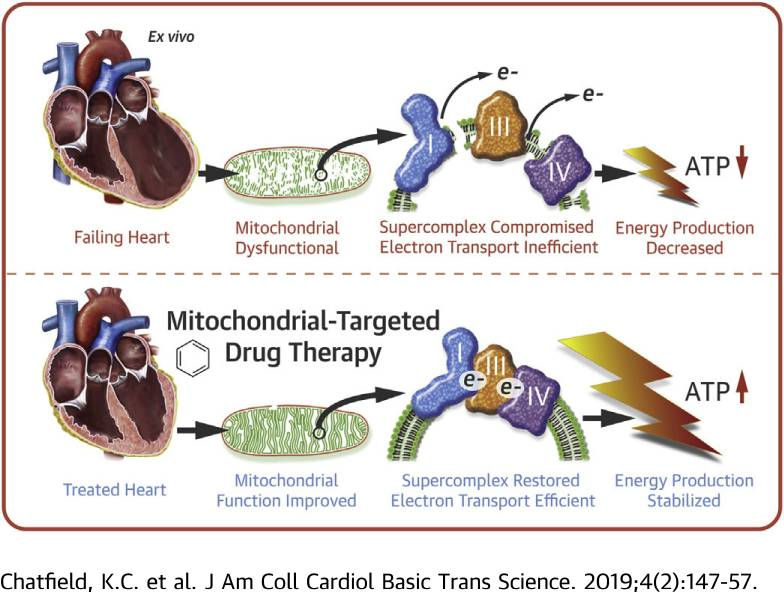
Perhaps the most compelling secondary application of SS-31 is in the treatment of heart failure. It has long been known that heart failure causes negative changes to the function of mitochondria and that these changes, in a kind of destructive cycle, cause heart failure to worsen. Research in human heart tissue treated with SS-31 shows significant improvements in mitochondrial oxygen flux and activity of specific components involved in the production of ATP. This particular study was carried out in a manner that precluded cardiolipin restructuring, however, suggesting that SS-31 may have a second mechanism of action on mitochondrial function that needs to be explored[4]. This finding has actually been replicated in a number of research studies, strengthening the idea that SS-31 is not just useful for restoring ATP production via cardiolipin interaction. The peptide is actively being investigated for its ability to alter the production of reactive oxygen species and improve mitochondrial function in both acute and chronic use situations.
Studies in dogs, for instance, show that chronic treatment with SS-31 can improve left ventricular function in the setting of advanced heart failure. Measures of mitochondrial respiration and maximum ATP synthesis correlated well in this study with overall improvement in left ventricular function implying that SS-31 could be an effective long-term treatment for improving energy dynamics and reducing cardiac remodeling in advanced heart failure[8].
Trials exploring the use of SS-31 in ST-segment elevation myocardial infarction (heart attack) found that the peptide can drastically reduce levels of HtrA2. HtrA2 is a measure of cardiomyocyte apoptosis. These results suggest that SS-31 may be useful in the context of acute heart attack to reduce the extent of injury and preserve cardiac tissue[9].
One role of mitochondrial-targeted therapy in heart failure:
Source:
PubCh
Diabetes
O diabetes, embora aparentemente causado por uma simples inadequação na secreção ou função da insulina, é uma condição complexa com múltiplas manifestações fisiopatológicas. Nos últimos anos, tem havido interesse crescente no papel da comprometimento mitocondrial na patogênese da doença, particularmente no diabetes tipo 2. O tratamento da disfunção mitocondrial seria, portanto, uma maneira de melhorar algumas das consequências a longo prazo do diabetes, como danos oxidativos a pequenos vasos. Em um estudo em seres humanos, com SS-31, foi observada uma diminuição acentuada na produção de espécies reativas de oxigênio. Isso sugere que o SS-31 pode ajudar a reduzir os danos oxidativos que geralmente acompanham a disfunção mitocondrial e, portanto, podem retardar ou interromper a progressão da doença microvascular no diabetes tipo 2. Essa hipótese é confirmada ainda mais pela descoberta, no mesmo estudo, de que o SS-31 aumentou os níveis de SIRT1. Os níveis de SIRT1 foram associados a melhor sensibilidade à insulina e inflamação reduzida no diabetes tipo 2 [10].
Reduz a inflamação
A theme throughout the sections above is inflammation and the ability of SS-31 to reduce it. In particular, SS-31 appears to be a potent regulator of reactive oxygen species (free radicals) and thus helps to reduce the serious oxidative stress that arises from long-term illness such as diabetes, heart disease, and more. Research in cell cultures suggests that SS-31 reduces inflammation and oxidative stress by reducing expression of FIS1[11]. FIS1 is a mitochondrial protein that is important for mitochondrial growth and division. Elevated levels of FIS1 have been observed in a number of neurodegenerative diseases as well as a variety of cancers and are thought to be evidence of dysfunctional mitochondrial division secondary to dysfunction and inflammation.
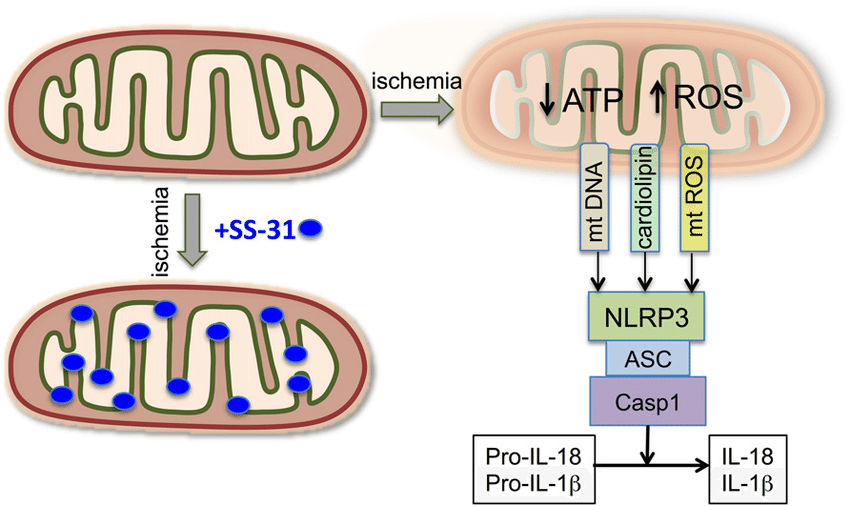
There is also good evidence from mouse models to show that SS-31 reduces levels of the inflammatory cytokine CD-36, reduces expression of activated MnSOD, suppresses NADPH oxidase function, and inhibits NF-kappaB p65[12]. All of these are markers of high oxidative stress, so reducing their levels is indicative of reduced free radical production and an improved inflammatory status in the cell. NF-kappaB expression, in particular, is heavily associated with cellular inflammation and is chronically active in a number of inflammatory diseases like rheumatoid arthritis and inflammatory bowel disease. With SS-31, mitochondria do not undergo inflammasome activation, which is to say they don’t convert from the primary production of ATP to primarily producing ROS.
Inflammasome activation is avoided and normal mitochondrial function is preserved in the setting of SS-31 administration:
Source:
Pesquisa
Resumo SS-31
Embora o SS-31 tenha sido originalmente de interesse, porque se pensa que regular a função mitocondrial no cenário da doença mitocondrial, também há boas evidências de que o peptídeo pode regular a inflamação induzida por mitocondria. Há muito interesse ativo em usar o SS-31 para melhorar a função mitocondrial e, portanto, a produção geral de energia via síntese de ATP. Embora os ensaios iniciais da Fase III não tenham sido bem -sucedidos, acredita -se que isso possa ser mais o resultado dos pontos de extremidade medidos em oposição a uma verdadeira falha do peptídeo em ter algum efeito. Atualmente, existem ensaios em andamento na Fase II e ensaios de fase III planejados para testar o SS-31 em uma variedade de diferentes estados de doenças e com uma variedade de medidas de resultados diferentes. O SS-31 pode muito bem fornecer a chave para entender a disfunção mitocondrial em uma variedade de doenças e, portanto, pode ser útil no projeto de tratamentos avançados para a doença de Alzheimer, doença de Parkinson, doença cardíaca, diabetes, doença renal e muito mais.
Autor do artigo
The above literature was researched, edited and organized by Dr. E. Logan, M.D. Dr. E. Logan holds a doctorate degree from
Case Western Reserve University School of Medicine and a B.S. in molecular biology.
Autor da revista científica
In his work to uncover treatments for patients with mitochondrial diseases, Dr. Cohen has become one of the world’s leading experts. Although there are no cures for mitochondrial diseases, Dr. Cohen looks for one every day. As a result of his work and our hospital’s commitment to helping him build an infrastructure for conducting mitochondrial clinical trials, Akron Children’s is one of the country’s leading institutions researching treatments. Before joining Akron Children’s, Dr. Cohen served as chief of pediatric neurology for Cleveland Clinic. He received his medical degree from the Albert Einstein College of Medicine and completed his pediatric residency at Children’s Hospital of Philadelphia, pediatric neurology residency at Columbia Presbyterian Medical Center and his American Cancer Society neuro-oncology fellowship in Philadelphia.
Bruce H. Cohen, M.D. está sendo referenciado como um dos principais cientistas envolvidos na pesquisa e desenvolvimento da SS-31. De maneira alguma, este médico/cientista está endossando ou defendendo a compra, venda ou uso deste produto por qualquer motivo. Não há afiliação ou relacionamento, implícito ou não, entre
Gurus peptídico and this doctor. The purpose of citing the doctor is to acknowledge, recognize, and credit the exhaustive research and development efforts conducted by the scientists studying this peptide. Dr. Cohen is listed in [5] under the referenced citations.