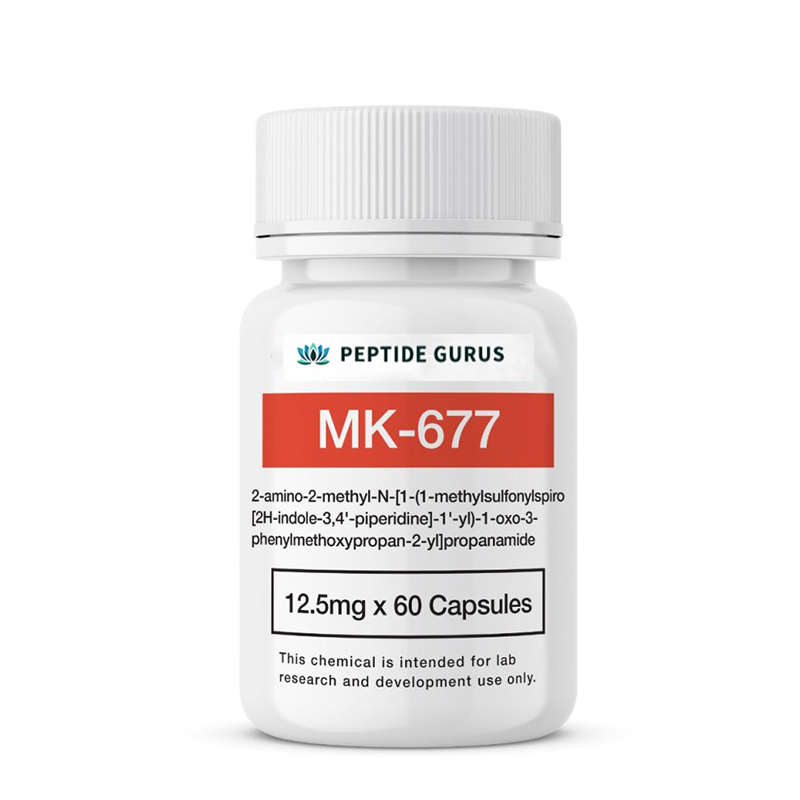
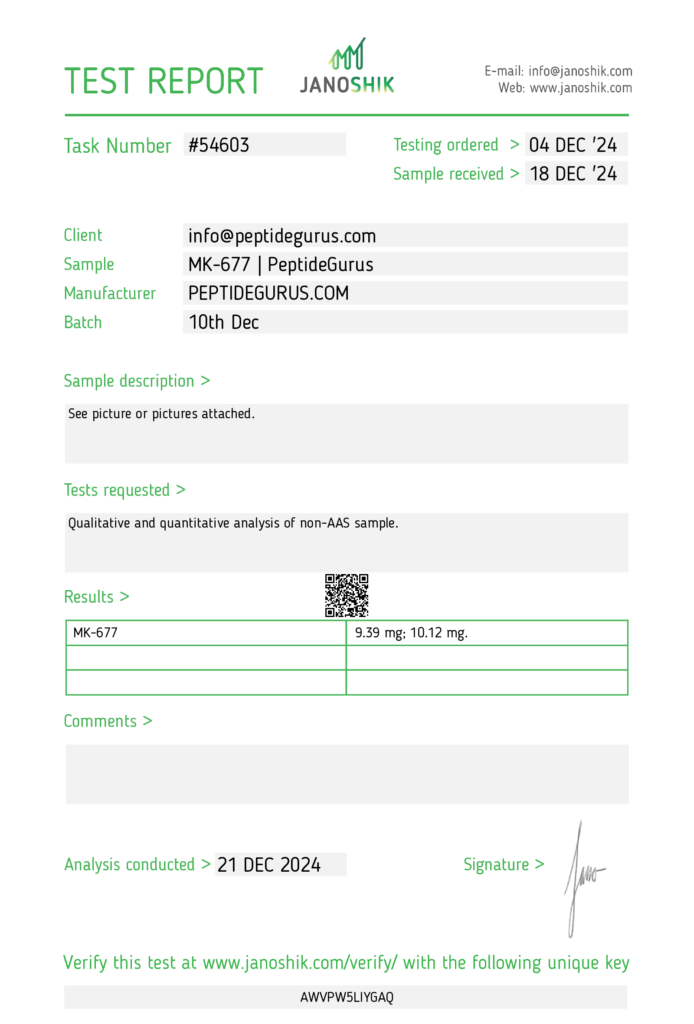
Scrivici subito per effettuare il tuo ordine con supporto individuale. Scorte limitate! Accettiamo Zelle, CashApp, Venmo, bonifici bancari e criptovalute.
MK-677, noto anche come Ibutamoro e Oratrope, è un agonista selettivo e per via orale del recettore della grelina. La ricerca mostra che MK-677 aumenta la secrezione naturale dell'ormone della crescita (GH) e del fattore di crescita simile all'insulina 1 (IGF-1), ma non influisce sui livelli di cortisolo. Viene studiato come possibile trattamento per la carenza di ormoni della crescita, la perdita di muscoli e ossei, la stimolazione dell'appetito e la malattia di Alzheimer. La ricerca MK-677 nei topi, sembrava impedire l'insorgenza dell'AD, anche nei topi geneticamente predisposti, a condizione che fosse iniziata prima di un significativo accumulo beta amiloide. La ricerca MK-677 ha anche mostrato benefici eccezionalmente promettenti nel migliorare la qualità del sonno.
Product Usage: This PRODUCT IS INTENDED AS A RESEARCH CHEMICAL ONLY. This designation allows the use of research chemicals strictly for in vitro testing and laboratory experimentation only. All product information available on this website is for educational purposes only. Bodily introduction of any kind into humans or animals is strictly forbidden by law. This product should only be handled by licensed, qualified professionals. This product is not a drug, food, or cosmetic and may not be misbranded, misused or mislabled as a drug, food or cosmetic.
Panoramica MK-677 (Ibutamoran)
MK-677, also known as Ibutamoren and Oratrope, is a potent, orally active, selective agonist of the ghrelin receptor. This makes it a growth hormone secretagogue and ghrelin mimetic. It is not a ghrelin analogue, however, as it is not a peptide and therefore shares no structural similarities to ghrelin. Research shows that MK-677 increases the secretion of growth hormone (GH) and insulin-like growth factor 1 (IGF-1), but does not affect cortisol levels. This means that MK-677 activates the GH axis and therefore promotes an increase in lean body mass. It is under investigation as a treatment for growth hormone deficiency, muscle and bone wasting, and appetite stimulation. MK-677 is valued for its long half-life and excellent oral bioavailability. Research in humans shows that IGF-1 levels remain elevated for up to 24 hours after a single dose of MK-677.
MK-677 e Sarms
MK-677 is often grouped with the selective androgen receptor modulators (SARMs) because it doesn’t fit neatly into any other category. MK-677 is not a SARM, however. It also isn’t a peptide. It is best described as a complex, synthetic chemical propanamide derivative that acts as a ghrelin receptor agonist[1]. Though it is not a peptide, MK-677 best fits into the growth hormone secretagogue family of peptides if considering effects. Like GHRP-2, GHRP-6, hexarelin, and ipamorelin, MK-677 binds to the ghrelin/growth hormone secretagogue receptor and boosts GH release while maintaining normal physiologic, pulsatile patterns of GH fluctuation.
One of the benefits of MK-677 is actually the fact that it is not a SARM. SARMs tend to impact natural androgen production and thus can lower testosterone levels. This means that their administration must be carefully controlled and that the compounds should be cycled on and off to avoid suppression of natural androgen production. MK-677 does not require these precautions.
It has been shown that without intervention, growth hormone secretion and muscle mass decline starting at mid-puberty. This ultimately leads to the frailty and loss of muscle function we see in the elderly. The progressive decline of GH and IGF-1 with age is referred to as somatopause. On average, a male at 70 years of age will produce about 60% of the growth hormone he produced at age 18. This can lead to changes in body composition, loss of bone density, and more. Interestingly, estrogen and progesterone appear to increase GH and IGF-1 levels, thereby reducing the effects of somatopause in women as they age.
Compounds like MK-677 may offer a way of slowing or even halting the progression of somatopause. This could lead to improved muscle and bone strength in older age and may affect everything from cardiac function to brain health. Research is in its early stages, but a number of animal and human trials are showing early promise.
MK-677 e composizione corporea
If somatopause is such a substantial contributor to the frailty of aging, then reversing, preventing, or slowing it could help to stave off age-related declines in bone density, muscle strength, and more. In a 2-year randomized controlled trial complete with placebo, blinding, and crossover, researchers demonstrated that once daily oral administration of MK-677 (just 25 mg) significantly increased growth hormone levels and IGF-1 levels without serious adverse effects. This resulted in an increase in body weight of approximately 2 kg compared to placebo, increased bone mineral density, no changes in strength, and no changes in fat mass. Subjects also experienced a decrease in LDL cholesterol (bad cholesterol) and modest increases in cortisol levels. Appetite increased initially, but reverted to normal after several months[2].
One potentially interesting application of MK-677 may be in the setting of diet induced negative nitrogen balance, which is a complicated clinical way of saying low-protein consumption. Low protein consumption can be the result of a number of things, but is most often seen in the healthcare setting as a result of disease or disability. It is particularly problematic for bed-ridden patients, such as those who have suffered trauma. The ability of MK-677 to counteract negative nitrogen balance is not just about nutrition, however[3]. Protecting protein stores in the body from depletion can lead to better clinical outcomes in everything from stroke to infection. It can even help to prolong lifespan and healthspan by protecting against the disability associated with sarcopenia (muscle loss).
Previous research has shown that simultaneously boosting GH and IGF-1 can improve nitrogen retention in the setting of parenteral nutrition[3]. This is precisely what MK-677 does with a single orally administered dose. This function alone may make MK-677 a staple of intensive care units in the near future.
Research in elderly patients has shown that daily ibutamoren can boost the GH/IGF-1 axis to levels similar to those found in healthy young adults. This occurs without serious adverse effects and results in a significant increase in lean body mass, decreases in LDL cholesterol, and no change in HDL cholesterol[5]. There is some interest then in using ibutamoren as a long-term supplement to ward off the muscle loss and body composition changes associated with aging.
Overall, MK-677 administration appears to have limited effects on body composition. Combined with exercise, however, it’s ability to increase GH and IGF-1 levels may help to improve muscle strength and density, reduce fat mass, and boost bone density. Bone density is discussed in detail in the next section.
MK-677 e densità ossea
Research in young, obese males shows that MK-677 significantly alters bone function by increasing both bone deposition and resorption[6]. Similar results are seen in elderly test subjects[7]. These findings are a classic indication of increased bone remodeling and can be either good or bad depending on the setting. Increased bone remodeling can lead to improved bone strength and resistance to fracture when paired with weight/resistance training, for instance.
In a multi-center study of elderly patients with hip fracture, research shows that MK-677 can improve gait speed and reduced numbers of falls[8]. These is thus reason to believe that the compound does, in fact, improve bone density and function, but more research is needed.
In one trial, 9 weeks of MK-677 resulted in a nearly 30% increase in serum ostocalcin and a 10% increase in bone-specific alkaline phosphatase. Both of these markers suggest increased bone deposition[5]. Individuals in these studies showed a trend toward more independent living following hip fracture. A great deal more research needs to be done, particularly as there is reason to believe that MK-677 may be synergistic with some of the growth hormone releasing hormone (GHRH) analogues and growth hormone releasing peptides (GHRPs) like sermorelin and tesamorelin.
MK-677 e funzione neurologica
Research in animals has demonstrated that IGF-1 is an important component in the clearance of amyloid beta from the central nervous system. Amyloid beta plaques that result from a build-up of amyloid beta are a hallmark of Alzheimer’s disease (AD) and are indicative of disease severity. It is interesting that AD is a disease of the elderly because IGF-1 levels in the brain have been shown to decrease with age and are even lower in patients suffering from AD. The ability to raise IGF-1 levels could, therefore, provide an effective treatment or preventative for AD.
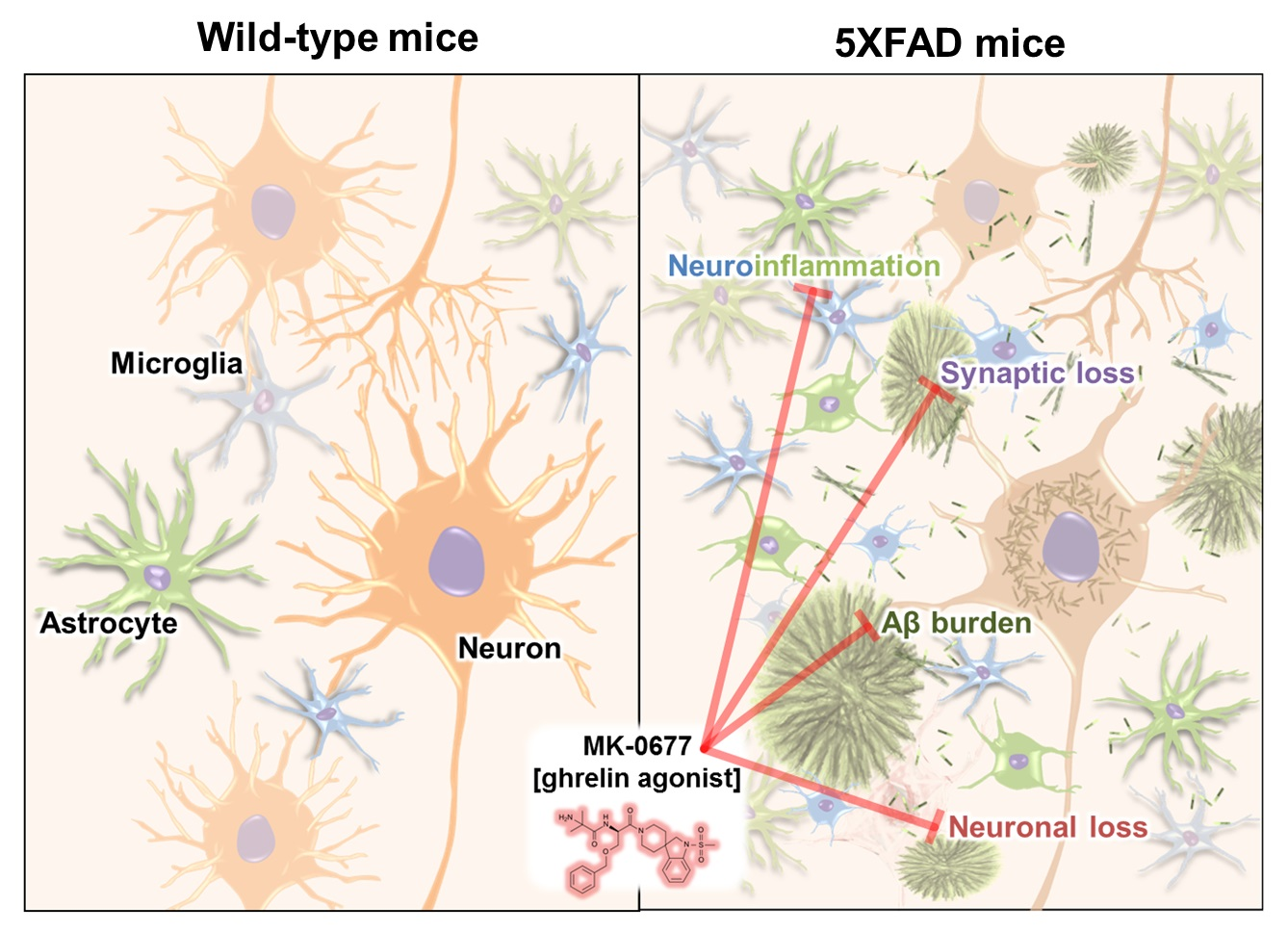
Research in elderly patients has found that MK-677 increases IGF-1 levels substantially, but does not alter the progression of AD once it has been diagnosed[9]. There is interest, however, in attempting to understand whether it can prevent AD. Unfortunately, such trials take extensive amounts of time and money. Research into the ability of MK-677 to prevent AD-like neurodegeneration in animal models actually contradicts the human study just discussed. This animal research is actually much newer and suggests that MK-677, more than a curative agent, is an excellent preventative. In this research, Mice that were genetically predisposed to developed AD but that were treated with MK-677 starting at three months of age showed reduced amyloid beta deposition and resulting decreases in neuron and synapse loss. In other words, MK-677 appeared to prevent the onset of AD, even in genetically predisposed mice, as long as it was started before significant amyloid beta accumulation[10].
Source: Mdpi
Naturalmente, i risultati di cui sopra sono ulteriormente supportati dalla ricerca sull'obesità e l'AD. La ricerca nei topi in sovrappeso mostra che la clearance periferica della beta amiloide è compromessa e che l'aumento dei livelli di IGF-1 aiuta a migliorare questa disfunzione. Sfortunatamente, ciò non ha quasi alcun effetto sui livelli di beta amiloide nel cervello, suggerendo che l'IGF-1 non sta attraversando molto bene la barriera emato-encefalica (BBB).
MK-677 e sonno
MK-677 has more robust effects on sleep than any of the GHRPs. Research in young adults shows that MK-677 increases stage 4 sleep duration by 50% and increase REM sleep by 20%. In older adults, the results are even more profound, with REM sleep increasing by as much as 50% and REM latency decreasing substantially[11].
Stage 4 sleep is generally considered to be the most restful stage of sleep and critical to preserving waking brain function. Stage 4 is also when most serious tissue repair and wound healing takes place. In children, it may be associated with growth and development. Prolonging this stage of sleep could be beneficial to muscle recovery, brain function, and development.
REM sleep isn’t clearly understood, but we know that babies spend half their sleep time in REM and that this number declines with age. REM may be critical in the consolidation and reinforcement of memories, but no one really knows. The ability to prolong REM in animal models could make MK-677 a important tool for understanding the functions of sleep better than we ever have before.
MK-677 e Heart Health
It has long been known that aging leads to impairment of stem cell function. Endothelial progenitor cells (EPCs) are stem cells important in the regeneration of blood vessels. A decline in EPCs has been thought to be a risk factor for the development of atherosclerosis, which can lead to high blood pressure and heart attack among other problems. Research in mice shows that increased GH levels can help to reverse the age-related decline in EPCs and may therefore be useful in preventing heart disease[12], [13].
Further supporting the importance of GH in cardiac health is that fact the nitric oxide levels decline with age. Nitric oxide (NO) is an important regulator of blood vessel health and is critical in controlling blood pressure. GH treatment has been shown to increase NO synthase expression and thus NO levels in mice.[14] This could ultimately be an effective way to regulate blood pressure and reduce risk of a number of cardiac diseases, kidney disease, and even stroke.
Riepilogo MK-677
MK-677 is a non-peptide ghrelin/growth hormone secretagogue agonist that has been shown to raise GH and IGF-1 levels in both animal and human testing. The compound has gone through several human clinical trials and is generally considered to be safe and relatively free of side effects, though it has not yet been approved for human use outside of clinical trials.
Research in both animals and humans shows that MK-677 may have important benefits for appetite, body composition, muscle strength, cardiac health, and neurologic function. Studies have shown that MK-677 may have particular benefit in promoting vascular health and helping to stave off some of the most prevalent diseases in industrial societies (e.g. atherosclerosis, Alzheimer’s disease, etc.).
MK-677 also appears to have profound and beneficial effects on sleep quality. It may not only provide an effect means of improving sleep quality and probing the finer details of the sleep cycle, but it’s ability to improve sleep may help to explain some of its neurological benefits. More research needs to take place in this arena, but MK-677 shows exceptionally promising benefits in improving sleep quality.
Interestingly, research seems to suggest that the greatest benefits of MK-667 are derived when it is taken for long periods of time as a preventative. Research may help to shed light on this particular phenomenon and set the stage for MK-677 and similar developments to act as preventatives for some of the most devastating diseases associated with age.
Autore dell'articolo
The above literature was researched, edited and organized by Dr. E. Logan, M.D. Dr. E. Logan holds a doctorate degree from Case Western Reserve University School of Medicine and a B.S. in molecular biology.
Autore della rivista scientifica
Ralf M Nass, MD attended medical school at University of Bochum, Germany, and completed my residency and fellowship at University of Munich, Germany and University of Virginia (neuroendocrinology). He specialized in Endocrinology with focus on diabetes mellitus (inpatient and outpatient), thyroid disease, pituitary disease, and PCOS. In my life outside of work, I enjoy the outdoors, hiking and sports.
Ralf M NASS, MD è indicato come uno dei principali scienziati coinvolti nella ricerca e nello sviluppo di VIP. Questo medico/scienziato che approva o sostiene l'acquisto, la vendita o l'uso di questo prodotto per qualsiasi motivo. Non c'è affiliazione o relazione, implicita o altro, tra
Guru peptidici e questo dottore. Lo scopo di citare il medico è di riconoscere, riconoscere e accreditare gli sforzi esaustivi di ricerca e sviluppo condotti dagli scienziati che studiano questo peptide. Barbara B. Kahn è elencata in [2] e [6] sotto le citazioni di riferimento.
ALL ARTICLES AND PRODUCT INFORMATION PROVIDED ON THIS WEBSITE ARE FOR INFORMATONAL AND EDUCATIONAL PURPOSES ONLY.
I prodotti offerti su questo sito Web sono forniti solo per studi in vitro. Studi in vitro (latino: in vetro) vengono eseguiti al di fuori del corpo. Questi prodotti non sono medicinali o farmaci e non sono stati approvati dalla FDA per prevenire, trattare o curare qualsiasi condizione medica, disturbo o malattia. L'introduzione corporea di qualsiasi tipo nell'uomo o negli animali è severamente vietata dalla legge.
Peptidegurus è un fornitore leader di peptidi di ricerca di fabbricazione americana, che offre prodotti di alta qualità a prezzi competitivi. Con un focus sull'eccellenza e il servizio clienti, assicurano un processo di ordinazione sicuro e conveniente con la spedizione globale.