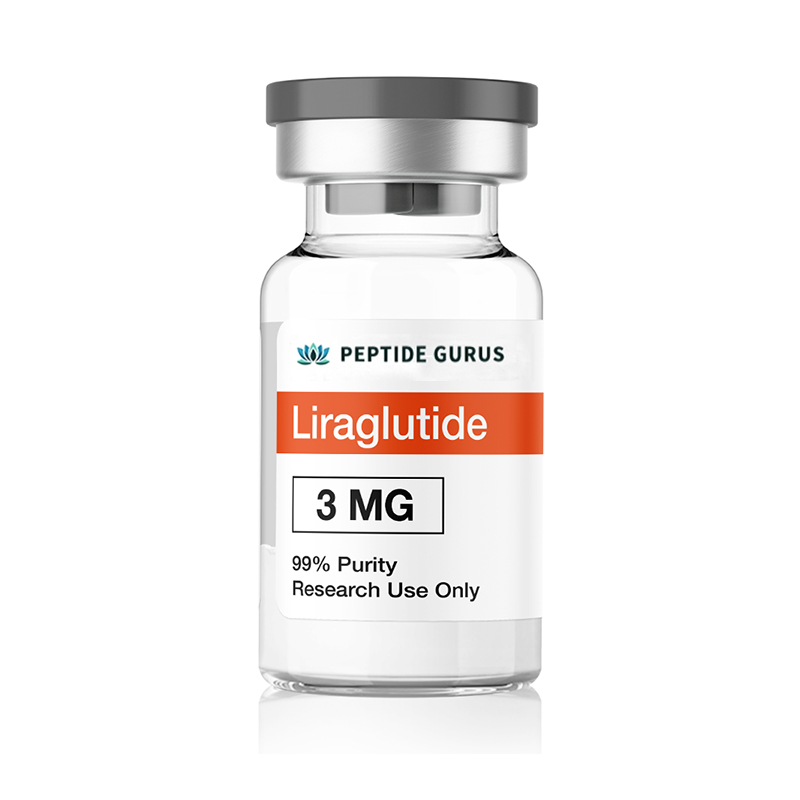
Envie um e-mail para nós agora para fazer seu pedido com suporte individual. Estoque limitado! Aceitamos Zelle, CashApp, Venmo, transferência bancária e cripto.
Grátis (1) 30 ml de água bacteriostática with qualified orders over $500 USD.
(excludes capsule products, cosmetic peptides, promo codes and shipping)
O liraglutídeo é um derivado do GLP-1, um peptídeo que ocorre naturalmente conhecido por reduzir os níveis de açúcar no sangue e aumentar a secreção de insulina. Pesquisas mostram que o liraglutídeo (análogo do GLP-1) também pode melhorar a função cardíaca, fígado e pulmonar, ajudando a retardar ou impedir os efeitos da doença de Alzheimer. Foi demonstrado que o liraglutídeo diminui significativamente o apetite, atrasando o esvaziamento gástrico e reduzindo a motilidade intestinal. O liraglutide foi modificado para ter uma meia-vida mais longa e farmacocinética mais favorável.
Product Usage: This PRODUCT IS INTENDED AS A RESEARCH CHEMICAL ONLY. This designation allows the use of research chemicals strictly for in vitro testing and laboratory experimentation only. All product information available on this website is for educational purposes only. Bodily introduction of any kind into humans or animals is strictly forbidden by law. This product should only be handled by licensed, qualified professionals. This product is not a drug, food, or cosmetic and may not be misbranded, misused or mislabled as a drug, food or cosmetic.
Visão geral do peptídeo 1 do tipo liraglutídeo e glucagon
GLP-1, short for glucagon-like peptide-1 is a short, naturally occurring peptide hormone just 30-31 amino acids in length. Its primary physiologic function is to lower blood sugar levels by naturally enhancing insulin secretion. It also plays roles in protection beta cell insulin stores by promoting insulin gene transcription and has been linked with neurotrophic effects in the brain and central nervous system. In the GI system, GLP-1 has been shown to significantly decrease appetite by delaying gastric emptying and reducing intestinal motility. Preliminary research has shown impacts of GLP-1 in the heart, fat, muscles, bones, liver, lungs, and kidneys as well.
The primary focus of GLP-1 research has been in the realm of diabetes treatment/prevention as well as appetite suppression. Secondary research focuses on the potential cardiovascular benefits of the peptide. More recent, and thus less robust, research focuses on the ability of GLP-1 to stave off neurodegenerative disease. Though this latter area of research is newest, it is also the fast-growing area of GLP-1 study now that the peptide has been revealed to slow or prevent the accumulation of amyloid beta plaques in the setting of Alzheimer’s disease.
Perhaps the most important effect that GLP-1 has, according to Dr. Holst, is referred to as the “incretin effect.” Incretins are a group of metabolic hormones, released by the GI tract, that cause a decrease in blood glucose (sugar) levels. GLP-1 has been shown to be one of the two most important hormones (the other being GIP) to stimulate the incretin effect in rodent models. Though GIP circulates at levels roughly 10 times higher than that of GLP-1, there is evidence that GLP-1 is the more potent of the two molecules, particularly when levels of blood glucose are quite high.
A GLP-1 receptor has been identified on the surface of pancreatic beta cells, making it clear that GLP-1 directly stimulates the exocytosis of insulin from the pancreas. When combined with sulfonylurea drugs, GLP-1 has been shown to boost insulin secretion enough to cause mild hypoglycemia in up to 40% of subjects[1]. Obviamente, o aumento da secreção de insulina está associado a vários efeitos tróficos, incluindo aumento da síntese proteica, redução na quebra da proteína e aumento da captação de aminoácidos pelo músculo esquelético.
Proteção de células GLP-1 e beta
Pesquisas em modelos animais sugerem que o GLP-1 pode estimular o crescimento e a proliferação de células beta pancreáticas e que pode estimular a diferenciação de novas células beta formam progenitores no epitélio do duto pancreático. A pesquisa também mostrou que o GLP-1 inibe a apoptose de células beta[1]. Taken in sum, these effects tip the usual balance of beta cell growth and death toward growth, suggesting that the peptide may be useful in treating diabetes and in protecting the pancreas against insult that harms beta cells.
In one particularly compelling trial, GLP-1 was shown to inhibit the death of beta cells caused by enhanced levels of inflammatory cytokines. In fact, mouse models of type 1 diabetes have revealed that GLP-1 protects islet cells from destruction and may, in fact, be a useful means of preventing onset of the type 1 diabetes[2].
GLP-1 e apetite
Pesquisas em modelos de mouse sugerem que a administração de GLP-1 e seu primo semelhante GLP-1, no cérebro de ratos, podem reduzir a unidade para comer e inibir a ingestão de alimentos[3]. Parece que o GLP-1 pode realmente melhorar os sentimentos de saciedade, ajudando os indivíduos a se sentirem mais cheios e reduzindo a fome indiretamente. Estudos clínicos recentes demonstraram em camundongos que a administração duas vezes ao dia dos agonistas do receptor GLP-1 causam perda gradual de peso linear. Durante um longo período, essa perda de peso está associada a uma melhora significativa nos fatores de risco cardiovascular e uma redução nos níveis de hemoglobina A1C, sendo este último um marcador de proxy para a gravidade do diabetes e a qualidade do controle de açúcar no sangue atingido por tratamento[4].
Potenciais benefícios cardiovasculares do GLP-1
Agora sabe-se que os receptores GLP-1 são distribuídos por todo o coração e agem para melhorar a função cardíaca em certas configurações, aumentando a freqüência cardíaca e reduzindo a pressão diastólica final do ventrículo esquerdo[5]. The latter may not seem like much, but increased LV end-diastolic pressure is associated with LV hypertrophy, cardiac remodeling, and eventual heart failure.
Recent evidence has even suggested that GLP-1 could play role in decreasing the overall damaged caused by a heart attack. It appears that the peptide improves cardiac muscle glucose uptake, thereby helping struggling ischemic heart muscle cells to get the nutrition they need to continue functioning and avoid programmed cell death. The increase in glucose uptake in these cells appears to independent of insulin[6].
Large infusions of GLP-1 into dogs have been shown to improve LV performance and reduce systemic vascular resistance. The latter effect can help to reduce blood pressure and ease strain on the heart as a result[7]. Isso, por sua vez, pode ajudar a reduzir as consequências a longo prazo da pressão alta, como remodelação do VE, espessamento vascular e insuficiência cardíaca. De acordo com o Dr. Holst, a administração do GLP-1 após lesão cardíaca "aumentou constantemente o desempenho do miocárdio, tanto em modelos animais experimentais quanto em pacientes".
Size of damage in heart in control mice (A), mice given standard vasopressin therapy (B), and mice give GLP-1 (C).
Source: Diabetes Journal
GLP-1 e o cérebro
Há algumas evidências que sugerem que o GLP-1 pode melhorar o aprendizado e ajudar a proteger os neurônios contra doenças neurodegenerativas, como a doença de Alzheimer. Em um estudo, o GLP-1 demonstrou melhorar a aprendizagem associativa e espacial em camundongos e até melhorar os déficits de aprendizado em camundongos com defeitos gênicos específicos. Em ratos que expressam demais o receptor GLP-1 em certas regiões do cérebro, o aprendizado e a memória são significativamente melhores do que em seus controles normais[8].
Additional research in mice has shown that GLP-1 can help to protect against excitotoxic neuron damage, completely protecting rat models of neurodegeneration against glutamate-induced apoptosis. The peptide can even stimulate neurite outgrowth in cultured cells. Researchers are hopeful that additional research on GLP-1 will reveal how it might be used to halt or reverse certain neurodegenerative diseases[9].
Interestingly, GLP-1 and its analogue exendin-4 have been shown in mouse models to reduce levels of amyloid-beta in the brain as well as the beta-amyloid precursor protein found in neurons. Amyloid beta is the primary component of the plaques observed in Alzheimer’s disease, plaques which, while not necessarily known to be causative, are associated with the severity of the disease. It remains to be seen if preventing amyloid beta accumulation can protect against the effects of Alzheimer’s disease, but this research is, at the very least, a tantalizing clue as to how scientists my intervene in the progression of mild cognitive impairment to full Alzheimer’s disease[10].
GLP-1 exhibits minimal to moderate side effects, low oral and excellent subcutaneous bioavailability in mice. Per kg dosage in mice does not scale to humans. GLP-1 for sale at
Gurus peptídico é limitado apenas a pesquisas educacionais e científicas, não para consumo humano. Compre apenas o GLP-1 se você for um pesquisador licenciado.
Sobre o autor
The above literature was researched, edited and organized by Dr. Logan, M.D. Dr. Logan holds a doctorate degree from Case Western Reserve University School of Medicine and a B.S. in molecular biology.
Autor da revista científica
In 1986 Professor Jens Juul Holst discovered the GLP-1 hormone in connection with his work on stomach ulcer surgery. Since the discovery, Novo Nordisk have used the pesquisar to successfully develop products to treat diabetes and obesity. The hormone GLP-1 can be used to regulate blood sugar levels and satiety. Not only has it made treatment of obesity and diabetes possible, it has also proven useful preventatively through early diagnosis for citizens who are at risk of developing diabetes and obesity. In 2015, Jens Juul Holst received the prestigious international Fernström prize for his research on GLP-1. He is one of the most cited researchers in Europe, with over 1,200 published articles and citations in over 3,500 articles annually.
Professor Jens Juul Holst is being referenced as one of the leading scientists involved in the research and development of GLP-1. In no way is this doctor/scientist endorsing or advocating the purchase, sale, or use of this product for any reason. There is no affiliation or relationship, implied or otherwise, between
Gurus peptídico e este médico. O objetivo de citar o médico é reconhecer, reconhecer e creditar os esforços exaustivos de pesquisa e desenvolvimento conduzidos pelos cientistas que estudam esse peptídeo. O professor Jens Juul Holst está listado em [11] sob as citações referenciadas.
Citações referenciadas
"A fisiologia do peptídeo 1 do tipo glucagon, revisões fisiológicas". [On-line].
"O tratamento combinado com lisofilina e exendina-4 reverte o diabetes auto-imune.-PubMed-NCBI." [On-line].
"O peptídeo derivado de proglucagon, peptídeo-2 do tipo glucagon, é um neurotransmissor envolvido na regulação da ingestão de alimentos.-PubMed-NCBI". [On-line].
"Análise provisória dos efeitos do tratamento com exenatido no A1C, peso e fatores de risco cardiovascular em 82 semanas em 314 pacientes com excesso de peso com… - PubMed - NCBI." [On-line].
"Função cardíaca em camundongos sem o receptor peptídeo 1 do tipo glucagon.-PubMed-NCBI." [On-line].
"O peptídeo 1 do tipo glucagon pode proteger diretamente o coração contra a isquemia/lesão de reperfusão | diabetes." [On-line].
"O peptídeo-1 do tipo glucagon recombinante aumenta a captação de glicose miocárdica e melhora o desempenho do ventrículo esquerdo em cães conscientes com o ritmo…-PubMed-NCBI." [On-line].
"O receptor peptídeo 1 do tipo glucagon está envolvido na aprendizagem e na neuroproteção.-PubMed-NCBI." [On-line].
“Proteção e reversão de danos neuronais excitotóxicos pelo peptídeo 1 do tipo glucagon e exendina-4.-PubMed-NCBI.” [On-line].
"Uma nova estratégia de intervenção de doença de Alzheimer: GLP-1.-PubMed-NCBI." [On-line].
Holst JJ. From the Incretin Concept and the Discovery of GLP-1 to Today’s Diabetes Therapy. Front Endocrinol (Lausanne). 2019;10:260. Published 2019 Apr 26. doi:10.3389/fendo.2019.00260 https://www.ncbi.nlm.nih.gov/pmc/articles/PMC6497767/
ALL ARTICLES AND PRODUCT INFORMATION PROVIDED ON THIS WEBSITE ARE FOR INFORMATIONAL AND EDUCATIONAL PURPOSES ONLY.
Os produtos oferecidos neste site são fornecidos apenas para estudos in vitro. Estudos in vitro (latim: em vidro) são realizados fora do corpo. Esses produtos não são medicamentos ou medicamentos e não foram aprovados pelo FDA para prevenir, tratar ou curar qualquer condição médica, doença ou doença. A introdução corporal de qualquer tipo em seres humanos ou animais é estritamente proibida por lei.
A Peptidegurus é um fornecedor líder de peptídeos de pesquisa fabricados americanos, oferecendo produtos de alta qualidade a preços competitivos. Com foco na excelência e no atendimento ao cliente, eles garantem um processo de pedido seguro e conveniente com o envio global.