

• PE-22-28 peptide potential in treating neurodegenerative diseases
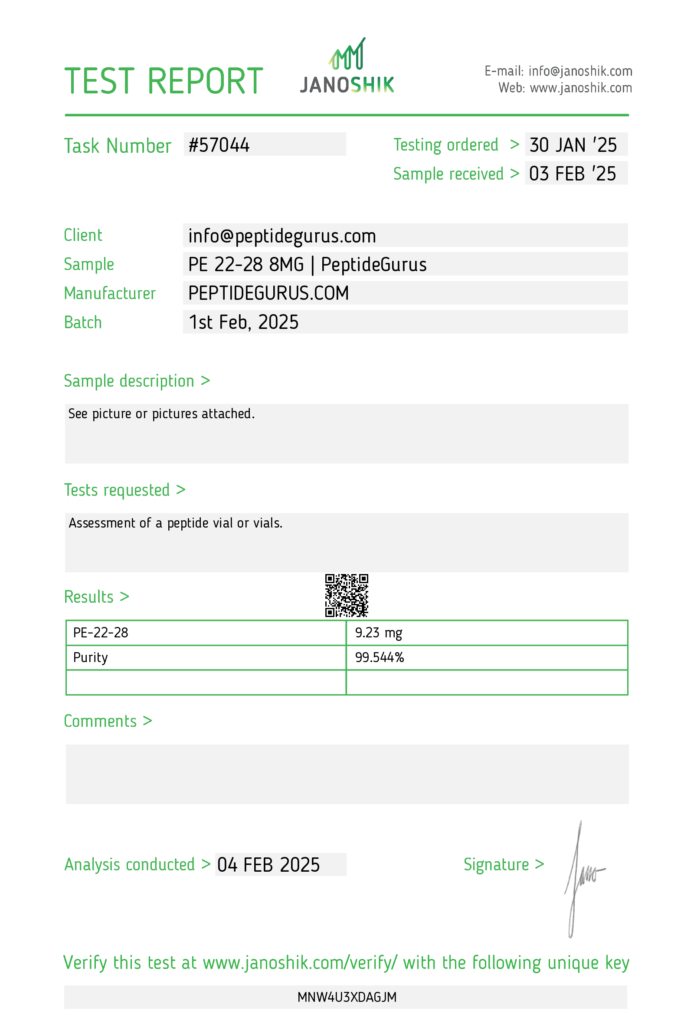
Test Raporu PE 22-28 8mg
X
Test Raporu PE 22-28 8mg
Siparişe İletişim
Siparişinizi bire bir destekle vermek için şimdi bize e-posta gönderin. Sınırlı stok! Zelle, CashApp, Venmo, banka transferi ve kripto kabul ediyoruz.
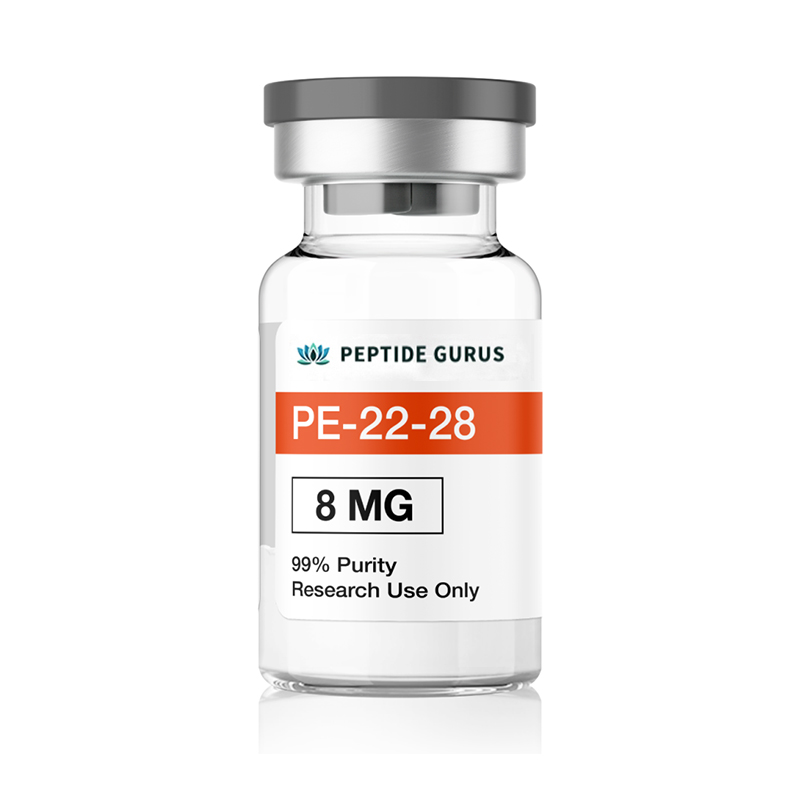
22-28 8 mg'ı arayınözellikle bağışıklık sistemi modülasyonu ve doku rejenerasyonu ile ilişkili çeşitli biyolojik süreçleri teşvik etmek için tasarlanmış sentetik bir peptittir. PE 22-28, doğal olarak doku onarım, iyileşme ve bağışıklık fonksiyonunda rol oynayan timozin beta-4 adı verilen daha büyük bir proteinin bir parçasıdır. Bu spesifik fragmanın (PE 22-28), özellikle kas ve bağ dokularında güçlü rejeneratif ve iyileştirici özelliklere sahip olduğu gösterilmiştir.

PE 22-28 8 mg'ın temel özellikleri ve kullanımları:

  1. Tissue Regeneration:
    • PE 22-28, özellikle kas, cilt ve bağ dokularında doku rejenerasyonu ve onarımında önemli bir rol oynar. Genellikle yaraların iyileşmesini teşvik etmek ve yaralanmalardan veya ameliyatlardan iyileşmeyi hızlandırmak için kullanılır.
  2. Anti-inflammatory Effects:
    • Bu peptide, yaralanmaların veya enflamatuar durumlardan kaynaklanan şişlik ve rahatsızlığı azaltmada yararlı hale getiren güçlü anti-enflamatuar özelliklere sahiptir. Enflamasyonu düşürerek PE 22-28, daha hızlı iyileşmeyi ve iyileşmeyi destekler.
  3. Muscle Repair and Growth:
    • PE 22-28, sporcular ve vücut geliştiriciler tarafından yoğun egzersizden sonra kas iyileşmesini hızlandırmak ve kas hasarını azaltmak için yaygın olarak kullanılır. Kas liflerinin onarılmasına, vücudun genel iyileşme süresini ve performansını artırmaya yardımcı olabilir.
  4. Cell Migration and Regeneration:
    • PE 22-28'in en önemli işlevlerinden biri, doku onarımı için gerekli olan hücre göçünü ve rejenerasyonunu teşvik etme yeteneğidir. Hasarlı doku alanlarında yeni hücrelerin üretimini teşvik ederek iyileşme sürecini hızlandırır.
  5. Wound Healing:
    • PE 22-28, kronik yaraların, cerrahi yaraların ve yanıkların iyileşmesini desteklemek için klinik ortamlarda sıklıkla kullanılır. Yeni doku oluşumunu teşvik eder ve yaraları daha hızlı ve verimli bir şekilde kapatmaya yardımcı olur.
  6. Immune System Support:
    • Timozin beta-4 ailesinin bir parçası olarak PE 22-28, bağışıklık sistemi fonksiyonunu desteklemede rol oynar. Bağışıklık tepkilerini modüle etmeye yardımcı olabilir, vücudun enfeksiyonlarla savaşma ve genel sağlığı teşvik etme yeteneğini geliştirebilir.

Yönetim ve dozaj:

  • Yönetim: PE 22-28 tipik olarak subkutan veya kas içi enjeksiyon yoluyla uygulanır. Bu, doku onarımının ve rejenerasyonunun gerekli olduğu alanı hedefleyen kan dolaşımına doğrudan emilim sağlar.
  • Dozaj: PE 22-28'in tipik dozu enjeksiyon başına 8 mg'dır, ancak enjeksiyonların kesin dozu ve sıklığı bireysel hedeflere ve tedavi edilen özel duruma göre değişebilir. Tedavi döngüleri genellikle yaralanma veya durumun şiddetine bağlı olarak birkaç haftadan birkaç aya kadar sürer.

Hususlar ve uyarılar:

  • Yan etkiler: PE 22-28 genellikle iyi tolere edilir, ancak bazı bireyler enjeksiyon bölgesinde kızarıklık veya tahriş gibi hafif yan etkiler yaşayabilir. Daha az yaygın olarak, baş dönmesi veya bulantı gibi sistemik etkiler olabilir, ancak bunlar nadirdir.
  • Tıbbi denetim: PE 22-28'in güçlü biyolojik etkileri nedeniyle, özellikle altta yatan sağlık koşulları olan veya hamile veya emziren kişiler için bir sağlık uzmanının gözetiminde kullanılmalıdır.
  • Düzenleyici statü: PE 22-28 genellikle bir araştırma peptidi olarak satılır ve tüm bölgelerde klinik kullanım için yaygın olarak onaylanmayabilir. Peptitlerin kullanımı ile ilgili yerel yasalara ve düzenlemelere uyum sağlayın.

Özet:

PE 22-28 8mg, doku rejenerasyonunu teşvik etmek, iltihabı azaltmak ve kas onarımını ve iyileşmesini desteklemek için kullanılan güçlü bir peptittir. İyileşmeyi hızlandırmak ve genel doku sağlığını iyileştirmek için tıbbi, spor ve sağlıklı yaşam bağlamlarında yaygın olarak kullanılır. Güçlü etkileri nedeniyle, güvenlik ve etkinliği sağlamak için tıbbi denetim altında uygulanmalıdır.Serbest (1) 30 ml bakteriyostatik suNitelikli siparişlerle500 $ USD. (excludes capsule products, cosmetic peptides, promo codes and shipping) Product Usage:Bu ürün sadece bir araştırma kimyasal olarak tasarlanmıştır.Bu atama, sadece in vitro test ve laboratuvar deneyleri için araştırma kimyasallarının kullanılmasına izin verir. Bu web sitesinde bulunan tüm ürün bilgileri yalnızca eğitim amaçlıdır. İnsanlara veya hayvanlara her türlü bedensel olarak tanıtılması, yasalarca kesinlikle yasaktır. Bu ürün sadece lisanslı, nitelikli profesyoneller tarafından ele alınmalıdır. Bu ürün bir ilaç, gıda veya kozmetik değildir ve bir ilaç, yiyecek veya kozmetik olarak yanlış markalanmış, yanlış kullanılmaz veya yanlış tablo verilmeyebilir.

PE-22-28 nedir?

PE-22-28 is a synthetic derivative of the naturally occurring peptide spadin. Spadin is a secreted peptide derived from sortilin. It is an antagonist of the TREK-1 (TWIK-related-potassium channel) receptor, a two-pore potassium channel identified as a potential target in the treatment of depression and as a possible neurogenic regulator. Early studies in mice have shown that a deletion of the TREK-1 receptor makes them resistant to depression. Similarly, treatment with sortilin leads to resistance to depression boosts the growth of both neurons and the synaptic interconnections between neurons[1]. Interestingly, shortened analogs of spadin actually show better TREK-1 inhibition than spadin itself. PE-22-28 is the representative peptide for this group of synthetic spadin analogs. PE-22-28 has been shown to be more stable and have improved antidepressant activity and neurogenic properties over the naturally occurring spadin. It is important to note that one of the long-term consequences of taking anti-depressant medications (e.g. SSRIs) is neurogenesis. In fact, the growth of new neurons is considered to be one indication that depression is being adequately treated and that antidepressants are working. PE-22-28 has been shown to induce neurogenesis after just 4 days, which is substantially faster than any known antidepressant. This also suggests that PE-22-28 might be useful in other applications such as learning, stroke recovery, and perhaps even the battle against neurodegenerative diseases[2]. TREK-1, which is primarily found in the brain, is also found in the heart, smooth muscle cells, lung tissue, the prostate, and in specific areas of the pancreas. Though it has been primarily studied as a target for antidepressant activity, TREK-1 plays important roles in pain perception, anesthesia, and neuroprotection. These properties have made TREK-1 a major research target in academia and industry.

Yapılar

Spadin Dizisi:YaplprwsgpigvswglrMoleküler Formül:C96H142N26O22 Moleküler ağırlık:2012.3492 g/molPE-22-28 Sırası:GVSWGLRMoleküler Formül:C35H55N11O9 Moleküler ağırlık:773.8947 g/mol

PE-22-28 Araştırma

Trek-1 nedir?

Spadin ve dolayısıyla PE-22-28'in öncelikle bağlandığı reseptör Trek-1'dir. Trek-1, bir dizi farklı molekül tarafından düzenlenen iki gözenekli bir potasyum kanalıdır. Nöronların uyarılabilirliğini düzenlemede önemli olan iki gözenekli potasyum kanallarından oluşan büyük bir aileye aittir. Özellikle Trek-1, beynin ruh halini, hafızayı ve öğrenmeyi kontrol eden bölgelerinde bulunur. Bu alanlar prefrontal korteks, amigdala ve hipokampus içerir. Trek-1 aktivitesinin uyarılması nöronun uyarılabilirliğini azaltırken Trek-1 fonksiyonunu azaltır, uyarılabilirliği arttırır ve bir depolarizasyon olayı olasılığını arttırır [3]. Nöronun uyarılabilirliğini azaltarak Trek-1, eksitotoksisiteye karşı korunmaya yardımcı olabilir.

Depresyon

Research in mouse models of depression indicates that PE-22-28 is more effective in reversing the symptoms of depression than any currently used treatment and that it does so with fewer side effects. In fact, PE-22-28 has been shown to relieve depression in just 4 days without producing any side effects on other functions that are controlled by the TREK-1 channel. There is strong evidence to show that the hippocampus is smaller (of reduced volume) in patients suffering from depressive disorder and other affect disorders. Additionally, research has shown that long-term administration of classic antidepressants (5-HT or norepinephrine selective reuptake inhibitors) boosts neurogenesis in the adult rodent hippocampus and leads to increased hippocampus volume[4]. The ability of PE-22-28 to reverse this loss of volume by stimulating neurogenesis indicates that it is fighting depression at its source and that it may help to uncover some of the underlying physiologic pathways that are deficient in the setting of depression[5]. The lack of side effects caused by spadin and PE-22-28 is just as important as the effects of these peptides. Current treatments for depression have a host of known side effects ranging from suicidality to changes in libido and problems with cognition. In fact, side effects are the number one reason that people stop using their antidepressants and are reluctant to return to them even after their depression worsens. Even ketamine, which has been newly touted as a potential rapid-onset treatment for depression has a host of side effects including delirium, hallucinations, muscle tremors, high blood pressure, and increased heart rate. So, despite its rapid onset of action, doctors have been reluctant to use ketamine in the treatment of depression because of the range and severity of its side effects[6]. There was initial concern that spadin would also cause a host of side effects because the TREK-1 receptor has been implicated in pain sensitivity, seizure activity, and cardiac ischemia. There was also concern that spadin and PE-22-28 may inhibit currents in TREK-2, TRAAK, TASK, and TRESK channels leading additional side effects. Research in mice, however, shows that none of these side effects are observed and, in fact, PE-22-28 has one of the smallest side effect profiles of any existing or experimental treatment for depression[7].

İnme sonrası depresyon

İnme sonrası depresyon (PSD), beyin iskemisini takiben yaygın bir durumdur ve özellikle standart tedaviye refrakterdir. Son araştırmalar, Trek-1 aşırı ekspresyonunun muhtemelen bu durumda nedensel bir rol oynadığını göstermiştir. Deneysel fare modellerinde, bu yukarı regülasyon hem SSRI antidepresanlar hem de Spadin gibi Trek-1 blokerleri kullanılarak bastırılabilir veya tersine çevrilebilir [3]. Tabii ki, SSRI'ların harekete geçmesi ve bir dizi yan etkisi daha uzun sürer. Bu, PE-22-28'in PSD tedavisini araştıran gelecekteki çalışmalarda etkili olabileceğini düşündürmektedir.

Nörogenez

The ability of antidepressant drugs to upregulate neurogenesis in the hippocampus has been well-established. Research with PE-22-28 shows that this peptide can perform the same function, but in a shorter duration of time. Studies in mice show that PE-22-28 increases both neurogenesis and synaptogenesis after just four days. Preliminary results indicate that PE-22-28 roughly doubles the amount of BrdU (an exogenous marker that is incorporated into DNA and used to detect replication) positive cells in the hippocampus. In the case of synaptogenesis, PE-22-28 appears to double the rate of synapse formation[2], [8]. Another clue that PE-22-28 is boosting cell division in the brain is the increase in CREB seen after its administration. CREB (cAMP response element-binding protein) is a transcription factor associated with neuronal plasticity, memory formation, and the development of spatial memory. CREB appears to be a necessary component in not just the growth of neurons, but in their protection as well. Research in Alzheimer’s disease has shown a down-regulation of CREB and scientists have long sought a drug capable of boosting CREB as a means of treating Alzheimer’s[9], [10]. PE-22-28 is being actively investigated for its ability to both prevent and reverse the symptoms of Alzheimer’s disease. The hippocampus, while playing an important role in depression, is also a critical structure for learning and memory. It is a very plastic structure that research has revealed to be vulnerable to damage by a variety of insults. The hippocampus has been implicated in diseases ranging from depression to anxiety to Alzheimer’s disease. Improving its ability to regenerate following injury could help to treat a number of diseases. Notably, the role of the hippocampus in learning, memory, and spatial navigation suggests that PE-22-28 or a similar TREK-1 antagonist may prove to be an effective nootropic. Now, it has generally been demonstrated in animal models that removing the TREK-1 channel is a recipe for disaster. In previous mouse models, knockout of TREK-1 increased significantly the likelihood of seizure activity and reduced the normal ability of this two-pore potassium channel to protect neurons from excitotoxicity. It came as a bit of surprise then that neither spadin nor PE-22-28 enhanced seizure activity. Even more interesting is the fact that mice treated with spadin are more resistant to developing generalized seizures[3]. PE-22-28 has even more profound protective effects than spadin. Top: Number of cells in the hippocampus of mice treated with saline, fluoxetine(Prozac), and spadin for four days. Middle: Quantification of CREB activity in the brain of mice treated with saline andspadin. Bottom: Effect of spadin on the firing rate of 5-HT neurons (neurons implicated indepression) at baseline (WT), in TREK-1 knockout mice (KO), and afteradministration of spadin and saline. Note that spadin boosts firing in neurons almostas much as removing TREK-1 entirely.

Kas işlevi

Trek-1'in kasın mekanik stimülasyona yanıt verme yeteneğinde önemli bir rol oynadığını öne süren bazı araştırmalar var. Özellikle, Trek-1 blokajı kas dokusunda kontraktiliteyi arttırırken, kanalın aktivasyonu kas gevşemesini teşvik ediyor gibi görünmektedir. Trek-1 kanalının bu özel yönü hala araştırmanın ilk aşamalarında olsa da, giderek daha önemli hale geliyor. Kas kasılması ve gevşemede PE-22-28 gibi moleküllerin rolünü anlamanın sadece miyojenik mesane disfonksiyonu gibi durumlar için yeni tedavi yöntemleri sağlamakla kalmayacak, aynı zamanda kas performansı fizyolojisini anlamak için yeni yollar açabileceği umudu [11].

Özet

According to Dr. Jean Mazella, one of the lead researchers in the development of PE-22-28, the peptide was specifically designed to move forward the use of spadin analogs in clinics. PE-22-28 appears to be an effective treatment for depression and a potent stimulator of neurogenesis and synaptogenesis in the hippocampus. It has far fewer side effects than existing antidepressant medications and appears to retain much of its ability to antagonize TREK-1 even after modifications that boost half-life or alter the route of administration. In short, PE-22-28 appears to offer a strong target for guiding the development of a new generation of antidepressants and is helping to shed light on the burgeoning field of nootropics. It is also helping to expand the arsenal of drugs used to treat neurodegenerative diseases like Alzheimer’s disease. The products offered on this website are furnished for in-vitro studies only. In-vitro studies (Latin: in glass) are performed outside of the body. These products are not medicines or drugs and have not been approved by the FDA to prevent, treat or cure any medical condition, ailment or disease. Bodily introduction of any kind into humans or animals is strictly forbidden by law.

Soruşturma isteyin

Hakkımızda

Peptidegurus, rekabetçi fiyatlarla en kaliteli ürünler sunan Amerikan yapımı araştırma peptitlerinin önde gelen bir tedarikçisidir. Mükemmellik ve müşteri hizmetlerine odaklanarak, küresel nakliye ile güvenli ve kullanışlı bir sipariş süreci sağlarlar.

Teklif isteyin

  • Peptit guruları
  • info@peptidegurus.com
  • Glendale, ABD
  • TEMAS ETMEK

    Soruşturma isteyin