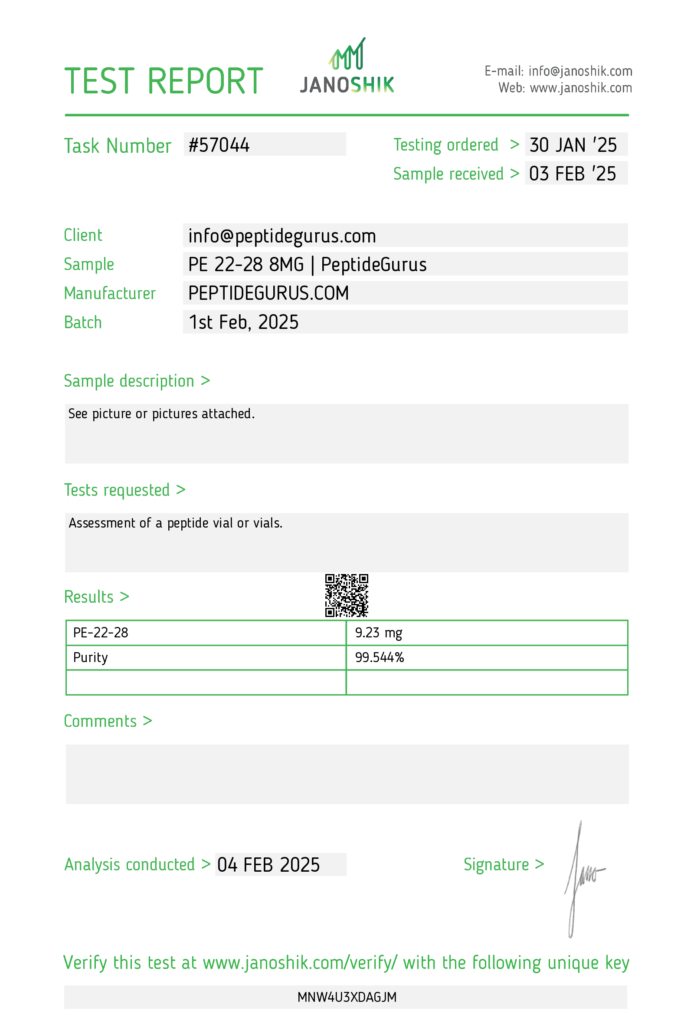
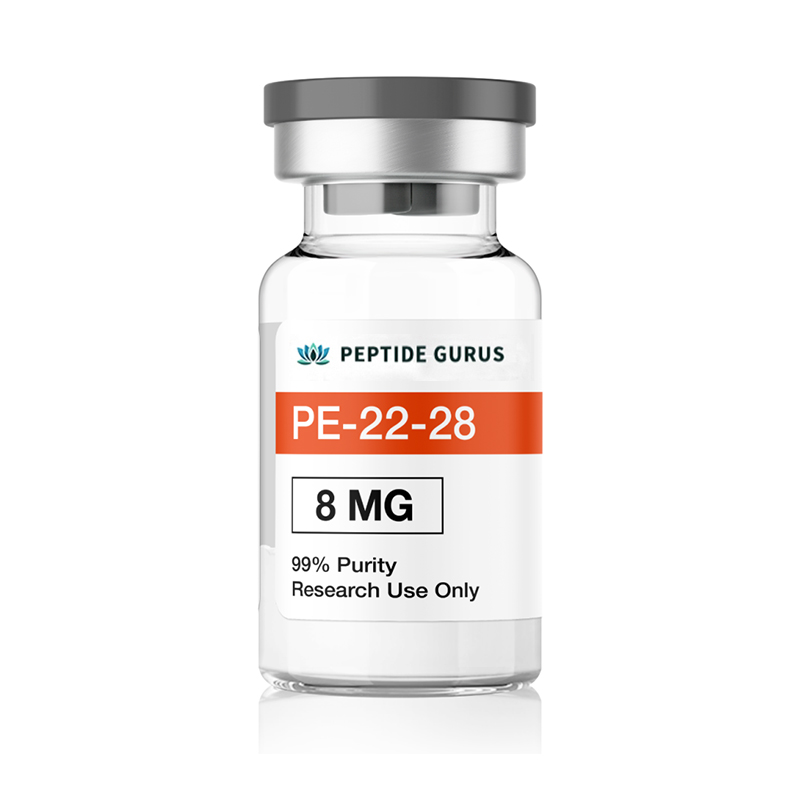
Gọi 22-28 8mg là một peptide tổng hợp được thiết kế để thúc đẩy các quá trình sinh học khác nhau, đặc biệt liên quan đến điều chế hệ thống miễn dịch và tái tạo mô. PE 22-28 là một đoạn của một protein lớn hơn gọi là thymosin beta-4, có liên quan tự nhiên vào việc sửa chữa mô, chữa bệnh và chức năng miễn dịch. Đoạn cụ thể này (PE 22-28) đã được chứng minh là có đặc tính tái tạo và chữa bệnh mạnh mẽ, đặc biệt là trong các mô cơ và liên kết.
Các thuộc tính chính và việc sử dụng của PE 22-28 8mg:
-
Tissue Regeneration:
- PE 22-28 đóng một vai trò quan trọng trong tái tạo và sửa chữa mô, đặc biệt là trong các mô cơ, da và các mô liên kết. Nó thường được sử dụng để thúc đẩy việc chữa lành vết thương và tăng tốc độ phục hồi sau chấn thương hoặc phẫu thuật.
-
Anti-inflammatory Effects:
- Peptide này có đặc tính chống viêm mạnh, làm cho nó hữu ích trong việc giảm sưng và khó chịu do chấn thương hoặc tình trạng viêm. Bằng cách giảm viêm, PE 22-28 hỗ trợ chữa lành và phục hồi nhanh hơn.
-
Muscle Repair and Growth:
- PE 22-28 thường được sử dụng bởi các vận động viên và người tập thể hình để tăng tốc phục hồi cơ bắp và giảm tổn thương cơ sau khi tập thể dục mạnh. Nó có thể hỗ trợ trong việc sửa chữa các sợi cơ, cải thiện thời gian và hiệu suất phục hồi tổng thể của cơ thể.
-
Cell Migration and Regeneration:
- Một trong những chức năng quan trọng nhất của PE 22-28 là khả năng thúc đẩy di chuyển và tái tạo tế bào, điều này rất cần thiết cho việc sửa chữa mô. Nó giúp kích thích việc sản xuất các tế bào mới trong các vùng mô bị hư hỏng, đẩy nhanh quá trình chữa bệnh.
-
Wound Healing:
- PE 22-28 thường được sử dụng trong các môi trường lâm sàng để hỗ trợ chữa lành vết thương mãn tính, vết thương phẫu thuật và bỏng. Nó khuyến khích sự hình thành mô mới và giúp đóng vết thương gần và hiệu quả hơn.
-
Immune System Support:
- Là một phần của họ thymosin beta-4, PE 22-28 đóng vai trò trong việc hỗ trợ chức năng hệ thống miễn dịch. Nó có thể giúp điều chỉnh các phản ứng miễn dịch, cải thiện khả năng của cơ thể để chống lại nhiễm trùng và thúc đẩy sức khỏe tổng thể.
Quản lý và Liều lượng:
-
Administration: PE 22-28 thường được tiêm thông qua tiêm dưới da hoặc tiêm bắp. Điều này cho phép hấp thụ trực tiếp vào máu, nhắm mục tiêu vào khu vực cần sửa chữa và tái tạo mô.
-
Dosage: Liều lượng điển hình của PE 22-28 là 8mg mỗi lần tiêm, mặc dù liều lượng chính xác và tần suất tiêm có thể thay đổi dựa trên các mục tiêu riêng lẻ và tình trạng cụ thể được điều trị. Chu kỳ điều trị thường kéo dài từ một vài tuần đến vài tháng, tùy thuộc vào mức độ nghiêm trọng của chấn thương hoặc tình trạng.
Cân nhắc và cảnh báo:
-
Side Effects: PE 22-28 thường được dung nạp tốt, nhưng một số cá nhân có thể gặp các tác dụng phụ nhẹ như đỏ hoặc kích ứng tại vị trí tiêm. Ít phổ biến hơn, có thể có các tác động hệ thống như chóng mặt hoặc buồn nôn, mặc dù những điều này rất hiếm.
-
Medical Supervision: Do các tác động sinh học mạnh mẽ của PE 22-28, nó nên được sử dụng dưới sự giám sát của một chuyên gia chăm sóc sức khỏe, đặc biệt đối với những người có tình trạng sức khỏe tiềm ẩn hoặc những người đang mang thai hoặc cho con bú.
-
Regulatory Status: PE 22-28 thường được bán dưới dạng peptide nghiên cứu và có thể không được phê duyệt rộng rãi cho sử dụng lâm sàng ở tất cả các khu vực. Đảm bảo tuân thủ luật pháp và quy định địa phương liên quan đến việc sử dụng peptide.
Bản tóm tắt:
PE 22-28 8mg là một peptide mạnh được sử dụng để thúc đẩy tái tạo mô, giảm viêm và hỗ trợ sửa chữa và phục hồi cơ bắp. Nó thường được sử dụng trong bối cảnh y tế, thể thao và chăm sóc sức khỏe để tăng tốc độ chữa lành và cải thiện sức khỏe mô tổng thể. Do tác dụng mạnh mẽ của nó, nó nên được quản lý dưới sự giám sát y tế để đảm bảo an toàn và hiệu quả.
Miễn phí (1) 30 ml Nước kìm khuẩn
with qualified orders over
$ 500 USD.
(excludes capsule products, cosmetic peptides, promo codes and shipping)
Product Usage:
Sản phẩm này chỉ nhằm mục đích hóa chất nghiên cứu. This designation allows the use of research chemicals strictly for in vitro testing and laboratory experimentation only. All product information available on this website is for educational purposes only. Bodily introduction of any kind into humans or animals is strictly forbidden by law. This product should only be handled by licensed, qualified professionals. This product is not a drug, food, or cosmetic and may not be misbranded, misused or mislabled as a drug, food or cosmetic.
PE-22-28 là gì?
PE-22-28 is a synthetic derivative of the naturally occurring peptide spadin. Spadin is a secreted peptide derived from sortilin. It is an antagonist of the TREK-1 (TWIK-related-potassium channel) receptor, a two-pore potassium channel identified as a potential target in the treatment of depression and as a possible neurogenic regulator. Early studies in mice have shown that a deletion of the TREK-1 receptor makes them resistant to depression. Similarly, treatment with sortilin leads to resistance to depression boosts the growth of both neurons and the synaptic interconnections between neurons[1].
Interestingly, shortened analogs of spadin actually show better TREK-1 inhibition than spadin itself. PE-22-28 is the representative peptide for this group of synthetic spadin analogs. PE-22-28 has been shown to be more stable and have improved antidepressant activity and neurogenic properties over the naturally occurring spadin.
It is important to note that one of the long-term consequences of taking anti-depressant medications (e.g. SSRIs) is neurogenesis. In fact, the growth of new neurons is considered to be one indication that depression is being adequately treated and that antidepressants are working. PE-22-28 has been shown to induce neurogenesis after just 4 days, which is substantially faster than any known antidepressant. This also suggests that PE-22-28 might be useful in other applications such as learning, stroke recovery, and perhaps even the battle against neurodegenerative diseases[2].
TREK-1, which is primarily found in the brain, is also found in the heart, smooth muscle cells, lung tissue, the prostate, and in specific areas of the pancreas. Though it has been primarily studied as a target for antidepressant activity, TREK-1 plays important roles in pain perception, anesthesia, and neuroprotection. These properties have made TREK-1 a major research target in academia and industry.
Cấu trúc
Chuỗi Spadin: YAPLPRWSGPIGVSWGLR
Công thức phân tử: C
96H
142N
26O
22
Trọng lượng phân tử: 2012.3492 g/mol
Trình tự PE-22-28: GVSWGLR
Công thức phân tử: C
35H
55N
11O
9
Trọng lượng phân tử: 773.8947 g/mol
Nghiên cứu PE-22-28
Trek-1 là gì?
The receptor that spadin and thus PE-22-28 primarily bind to is TREK-1. TREK-1 is a two-pore potassium channel regulated by a number of different molecules. It belongs to a large family of two-pore potassium channels that are important in regulating the excitability of neurons. TREK-1, in particular, is found in regions of the brain controlling mood, memory, and learning. These areas include the prefrontal cortex, the amygdala, and the hippocampus. Stimulating TREK-1 activity reduces excitability of the neuron while reducing TREK-1 function increases excitability and increases the likelihood of a depolarization event[3]. By reducing excitability of the neuron, TREK-1 can help to protect against excitotoxicity.
Trầm cảm
Research in mouse models of depression indicates that PE-22-28 is more effective in reversing the symptoms of depression than any currently used treatment and that it does so with fewer side effects. In fact, PE-22-28 has been shown to relieve depression in just 4 days without producing any side effects on other functions that are controlled by the TREK-1 channel.
There is strong evidence to show that the hippocampus is smaller (of reduced volume) in patients suffering from depressive disorder and other affect disorders. Additionally, research has shown that long-term administration of classic antidepressants (5-HT or norepinephrine selective reuptake inhibitors) boosts neurogenesis in the adult rodent hippocampus and leads to increased hippocampus volume[4]. The ability of PE-22-28 to reverse this loss of volume by stimulating neurogenesis indicates that it is fighting depression at its source and that it may help to uncover some of the underlying physiologic pathways that are deficient in the setting of depression[5].
The lack of side effects caused by spadin and PE-22-28 is just as important as the effects of these peptides. Current treatments for depression have a host of known side effects ranging from suicidality to changes in libido and problems with cognition. In fact, side effects are the number one reason that people stop using their antidepressants and are reluctant to return to them even after their depression worsens. Even ketamine, which has been newly touted as a potential rapid-onset treatment for depression has a host of side effects including delirium, hallucinations, muscle tremors, high blood pressure, and increased heart rate. So, despite its rapid onset of action, doctors have been reluctant to use ketamine in the treatment of depression because of the range and severity of its side effects[6].
There was initial concern that spadin would also cause a host of side effects because the TREK-1 receptor has been implicated in pain sensitivity, seizure activity, and cardiac ischemia. There was also concern that spadin and PE-22-28 may inhibit currents in TREK-2, TRAAK, TASK, and TRESK channels leading additional side effects. Research in mice, however, shows that none of these side effects are observed and, in fact, PE-22-28 has one of the smallest side effect profiles of any existing or experimental treatment for depression[7].
Trầm cảm sau đột quỵ
Trầm cảm sau đột quỵ (PSD) là một tình trạng phổ biến sau thiếu máu cục bộ não và đặc biệt chịu lửa đối với điều trị tiêu chuẩn. Nghiên cứu gần đây đã chỉ ra rằng biểu hiện quá mức của Trek-1 có thể đóng vai trò nguyên nhân trong tình trạng này. Trong các mô hình chuột thử nghiệm, sự điều hòa này có thể bị triệt tiêu hoặc đảo ngược bằng cách sử dụng cả thuốc chống trầm cảm SSRI cũng như các chất ức chế Trek-1 như Spadin [3]. Tất nhiên, SSRI mất nhiều thời gian hơn để hành động và có một loạt các tác dụng phụ. Điều này cho thấy rằng PE-22-28 có thể chứng minh hiệu quả trong các thử nghiệm trong tương lai khám phá việc điều trị PSD.
Phát sinh thần kinh
The ability of antidepressant drugs to upregulate neurogenesis in the hippocampus has been well-established. Research with PE-22-28 shows that this peptide can perform the same function, but in a shorter duration of time. Studies in mice show that PE-22-28 increases both neurogenesis and synaptogenesis after just four days. Preliminary results indicate that PE-22-28 roughly doubles the amount of BrdU (an exogenous marker that is incorporated into DNA and used to detect replication) positive cells in the hippocampus. In the case of synaptogenesis, PE-22-28 appears to double the rate of synapse formation[2], [8].
Another clue that PE-22-28 is boosting cell division in the brain is the increase in CREB seen after its administration. CREB (cAMP response element-binding protein) is a transcription factor associated with neuronal plasticity, memory formation, and the development of spatial memory. CREB appears to be a necessary component in not just the growth of neurons, but in their protection as well. Research in Alzheimer’s disease has shown a down-regulation of CREB and scientists have long sought a drug capable of boosting CREB as a means of treating Alzheimer’s[9], [10]. PE-22-28 is being actively investigated for its ability to both prevent and reverse the symptoms of Alzheimer’s disease.
The hippocampus, while playing an important role in depression, is also a critical structure for learning and memory. It is a very plastic structure that research has revealed to be vulnerable to damage by a variety of insults. The hippocampus has been implicated in diseases ranging from depression to anxiety to Alzheimer’s disease. Improving its ability to regenerate following injury could help to treat a number of diseases. Notably, the role of the hippocampus in learning, memory, and spatial navigation suggests that PE-22-28 or a similar TREK-1 antagonist may prove to be an effective nootropic.
Now, it has generally been demonstrated in animal models that removing the TREK-1 channel is a recipe for disaster. In previous mouse models, knockout of TREK-1 increased significantly the likelihood of seizure activity and reduced the normal ability of this two-pore potassium channel to protect neurons from excitotoxicity. It came as a bit of surprise then that neither spadin nor PE-22-28 enhanced seizure activity. Even more interesting is the fact that mice treated with spadin are more resistant to developing generalized seizures[3]. PE-22-28 has even more profound protective effects than spadin.
Top: Number of cells in the hippocampus of mice treated with saline, fluoxetine (Prozac), and spadin for four days.
Middle: Quantification of CREB activity in the brain of mice treated with saline and spadin.
Bottom: Effect of spadin on the firing rate of 5-HT neurons (neurons implicated in depression) at baseline (WT), in TREK-1 knockout mice (KO), and after administration of spadin and saline. Note that spadin boosts firing in neurons almost as much as removing TREK-1 entirely.
Chức năng cơ bắp
Có một số nghiên cứu cho thấy Trek-1 đóng vai trò quan trọng trong khả năng của cơ bắp để đáp ứng với kích thích cơ học. Cụ thể, phong tỏa Trek-1 dường như tăng khả năng co bóp trong mô cơ trong khi kích hoạt kênh dường như thúc đẩy thư giãn cơ. Mặc dù khía cạnh đặc biệt này của kênh Trek-1 vẫn đang trong giai đoạn đầu của cuộc điều tra, nhưng nó ngày càng trở nên quan trọng. Có hy vọng rằng hiểu được vai trò của các phân tử như PE-22-28 trong co thắt cơ và thư giãn có thể không chỉ cung cấp các phương thức điều trị mới cho các điều kiện như rối loạn chức năng bàng quang myogen, mà còn có thể mở ra các con đường mới để hiểu về sinh lý của hiệu suất cơ bắp [11].
Bản tóm tắt
According to Dr. Jean Mazella, one of the lead researchers in the development of PE-22-28, the peptide was specifically designed to move forward the use of spadin analogs in clinics. PE-22-28 appears to be an effective treatment for depression and a potent stimulator of neurogenesis and synaptogenesis in the hippocampus. It has far fewer side effects than existing antidepressant medications and appears to retain much of its ability to antagonize TREK-1 even after modifications that boost half-life or alter the route of administration. In short, PE-22-28 appears to offer a strong target for guiding the development of a new generation of antidepressants and is helping to shed light on the burgeoning field of nootropics. It is also helping to expand the arsenal of drugs used to treat neurodegenerative diseases like Alzheimer’s disease.
The products offered on this website are furnished for in-vitro studies only. In-vitro studies (Latin: in glass) are performed outside of the body. These products are not medicines or drugs and have not been approved by the FDA to prevent, treat or cure any medical condition, ailment or disease. Bodily introduction of any kind into humans or animals is strictly forbidden by law.