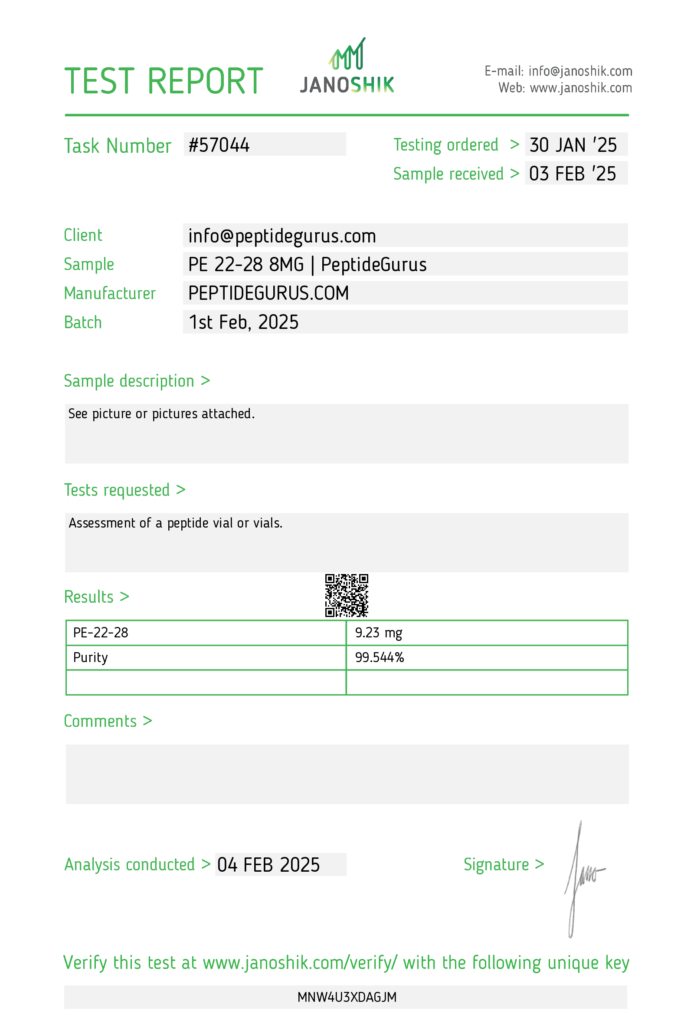
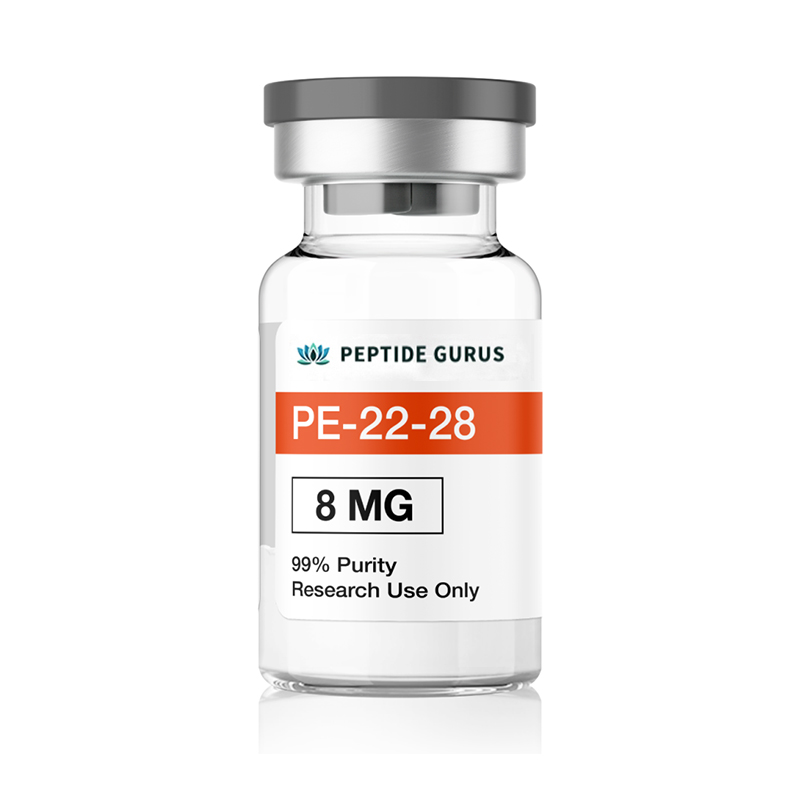
استدعاء 22-28 8mg هو الببتيد الاصطناعي مصمم لتعزيز العمليات البيولوجية المختلفة ، وخاصة فيما يتعلق بتعديل الجهاز المناعي وتجديد الأنسجة. PE 22-28 هو جزء من بروتين أكبر يسمى ثيموسين بيتا -4 ، والذي يشارك بشكل طبيعي في إصلاح الأنسجة ، الشفاء ، وظائف المناعة. وقد تبين أن هذه الشظية المحددة (PE 22-28) لها خصائص تجديدية وشفاء قوية ، وخاصة في الأنسجة العضلية والضامة.
الخصائص الرئيسية واستخدامات PE 22-28 8mg:
-
Tissue Regeneration:
- يلعب PE 22-28 دورًا رئيسيًا في تجديد الأنسجة وإصلاحها ، وخاصة في الأنسجة العضلية والجلد والأنسجة الضامة. غالبًا ما يتم استخدامه لتعزيز شفاء الجروح وتسريع الانتعاش من الإصابات أو العمليات الجراحية.
-
Anti-inflammatory Effects:
- يحتوي هذا الببتيد على خصائص قوية مضادة للالتهابات ، مما يجعله مفيدًا في تقليل التورم والانزعاج الناجم عن الإصابات أو الالتهابات. عن طريق خفض الالتهاب ، يدعم PE 22-28 الشفاء والتعافي بشكل أسرع.
-
Muscle Repair and Growth:
- يشيع استخدام PE 22-28 من قبل الرياضيين وكمال الأجسام لتسريع الانتعاش العضلي وتقليل تلف العضلات بعد ممارسة شديدة. يمكن أن يساعد في إصلاح ألياف العضلات ، مما يحسن وقت الشفاء الشامل للجسم وأداءه.
-
Cell Migration and Regeneration:
- واحدة من أهم وظائف PE 22-28 هي قدرتها على تعزيز هجرة الخلايا وتجديدها ، وهو أمر ضروري لإصلاح الأنسجة. يساعد في تحفيز إنتاج خلايا جديدة في مناطق الأنسجة التالفة ، مما يؤدي إلى تسريع عملية الشفاء.
-
Wound Healing:
- غالبًا ما يتم استخدام PE 22-28 في البيئات السريرية لدعم التئام الجروح المزمنة والجروح الجراحية والحروق. إنه يشجع تكوين الأنسجة الجديدة ويساعد على إغلاق الجروح بسرعة أكبر وكفاءة.
-
Immune System Support:
- كجزء من عائلة Thymosin Beta-4 ، يلعب PE 22-28 دورًا في دعم وظيفة الجهاز المناعي. يمكن أن يساعد في تعديل الاستجابات المناعية ، وتحسين قدرة الجسم على مكافحة الالتهابات وتعزيز العافية بشكل عام.
الإدارة والجرعة:
-
Administration: يتم إعطاء PE 22-28 عادة من خلال الحقن تحت الجلد أو العضل. هذا يسمح بالامتصاص المباشر في مجرى الدم ، واستهداف المنطقة التي يلزم إصلاحها للأنسجة وتجديدها.
-
Dosage: الجرعة النموذجية لـ PE 22-28 هي 8 ملغ لكل حقن ، على الرغم من أن الجرعة الدقيقة وتواتر الحقن يمكن أن تختلف بناءً على الأهداف الفردية والشرط المحدد التي يتم علاجها. تدوم دورات العلاج عمومًا من بضعة أسابيع إلى عدة أشهر ، اعتمادًا على شدة الإصابة أو الحالة.
الاعتبارات والتحذيرات:
-
Side Effects: PE 22-28 عمومًا يتم تحمله جيدًا ، لكن بعض الأفراد قد يعانون من آثار جانبية خفيفة مثل الاحمرار أو التهيج في موقع الحقن. أقل شيوعًا ، قد تكون هناك تأثيرات منهجية مثل الدوار أو الغثيان ، على الرغم من أنها نادرة.
-
Medical Supervision: نظرًا للتأثيرات البيولوجية القوية لـ PE 22-28 ، يجب استخدامها تحت إشراف أخصائي الرعاية الصحية ، وخاصة للأفراد الذين يعانون من الحالات الصحية الأساسية أو أولئك الحوامل أو الرضاعة الطبيعية.
-
Regulatory Status: غالبًا ما يتم بيع PE 22-28 كببتيد بحثي وقد لا تتم الموافقة عليه على نطاق واسع للاستخدام السريري في جميع المناطق. ضمان الامتثال للقوانين واللوائح المحلية المتعلقة باستخدام الببتيدات.
ملخص:
PE 22-28 8mg هو ببتيد قوي يستخدم لتعزيز تجديد الأنسجة ، وتقليل الالتهاب ، ودعم إصلاح العضلات واستعادةها. يتم استخدامه بشكل شائع في سياقات الطبية والرياضية والعافية لتسريع الشفاء وتحسين صحة الأنسجة بشكل عام. بسبب آثاره القوية ، يجب أن تدار تحت إشراف طبي لضمان السلامة والفعالية.
مجاني (1) 30 مل من الماء البكتيري
مع أوامر مؤهلة أكثر
500 دولار أمريكي.
(excludes capsule products, cosmetic peptides, promo codes and shipping)
Product Usage:
يهدف هذا المنتج إلى مادة كيميائية بحثية فقط. This designation allows the use of research chemicals strictly for in vitro testing and laboratory experimentation only. All product information available on this website is for educational purposes only. Bodily introduction of any kind into humans or animals is strictly forbidden by law. This product should only be handled by licensed, qualified professionals. This product is not a drug, food, or cosmetic and may not be misbranded, misused or mislabled as a drug, food or cosmetic.
ما هو PE-22-28؟
PE-22-28 is a synthetic derivative of the naturally occurring peptide spadin. Spadin is a secreted peptide derived from sortilin. It is an antagonist of the TREK-1 (TWIK-related-potassium channel) receptor, a two-pore potassium channel identified as a potential target in the treatment of depression and as a possible neurogenic regulator. Early studies in mice have shown that a deletion of the TREK-1 receptor makes them resistant to depression. Similarly, treatment with sortilin leads to resistance to depression boosts the growth of both neurons and the synaptic interconnections between neurons[1].
Interestingly, shortened analogs of spadin actually show better TREK-1 inhibition than spadin itself. PE-22-28 is the representative peptide for this group of synthetic spadin analogs. PE-22-28 has been shown to be more stable and have improved antidepressant activity and neurogenic properties over the naturally occurring spadin.
It is important to note that one of the long-term consequences of taking anti-depressant medications (e.g. SSRIs) is neurogenesis. In fact, the growth of new neurons is considered to be one indication that depression is being adequately treated and that antidepressants are working. PE-22-28 has been shown to induce neurogenesis after just 4 days, which is substantially faster than any known antidepressant. This also suggests that PE-22-28 might be useful in other applications such as learning, stroke recovery, and perhaps even the battle against neurodegenerative diseases[2].
TREK-1, which is primarily found in the brain, is also found in the heart, smooth muscle cells, lung tissue, the prostate, and in specific areas of the pancreas. Though it has been primarily studied as a target for antidepressant activity, TREK-1 plays important roles in pain perception, anesthesia, and neuroprotection. These properties have made TREK-1 a major research target in academia and industry.
الهياكل
تسلسل سبادين: YAPLPRWSGPIGVSWGLR
الصيغة الجزيئية: ج
96ح
142ن
26يا
22
الوزن الجزيئي: 2012.3492 g/mol
تسلسل PE-22-28: GVSWGLR
الصيغة الجزيئية: ج
35ح
55ن
11يا
9
الوزن الجزيئي: 773.8947 g/mol
PE-22-28 البحث
ما هو Trek-1؟
The receptor that spadin and thus PE-22-28 primarily bind to is TREK-1. TREK-1 is a two-pore potassium channel regulated by a number of different molecules. It belongs to a large family of two-pore potassium channels that are important in regulating the excitability of neurons. TREK-1, in particular, is found in regions of the brain controlling mood, memory, and learning. These areas include the prefrontal cortex, the amygdala, and the hippocampus. Stimulating TREK-1 activity reduces excitability of the neuron while reducing TREK-1 function increases excitability and increases the likelihood of a depolarization event[3]. By reducing excitability of the neuron, TREK-1 can help to protect against excitotoxicity.
اكتئاب
Research in mouse models of depression indicates that PE-22-28 is more effective in reversing the symptoms of depression than any currently used treatment and that it does so with fewer side effects. In fact, PE-22-28 has been shown to relieve depression in just 4 days without producing any side effects on other functions that are controlled by the TREK-1 channel.
There is strong evidence to show that the hippocampus is smaller (of reduced volume) in patients suffering from depressive disorder and other affect disorders. Additionally, research has shown that long-term administration of classic antidepressants (5-HT or norepinephrine selective reuptake inhibitors) boosts neurogenesis in the adult rodent hippocampus and leads to increased hippocampus volume[4]. The ability of PE-22-28 to reverse this loss of volume by stimulating neurogenesis indicates that it is fighting depression at its source and that it may help to uncover some of the underlying physiologic pathways that are deficient in the setting of depression[5].
The lack of side effects caused by spadin and PE-22-28 is just as important as the effects of these peptides. Current treatments for depression have a host of known side effects ranging from suicidality to changes in libido and problems with cognition. In fact, side effects are the number one reason that people stop using their antidepressants and are reluctant to return to them even after their depression worsens. Even ketamine, which has been newly touted as a potential rapid-onset treatment for depression has a host of side effects including delirium, hallucinations, muscle tremors, high blood pressure, and increased heart rate. So, despite its rapid onset of action, doctors have been reluctant to use ketamine in the treatment of depression because of the range and severity of its side effects[6].
There was initial concern that spadin would also cause a host of side effects because the TREK-1 receptor has been implicated in pain sensitivity, seizure activity, and cardiac ischemia. There was also concern that spadin and PE-22-28 may inhibit currents in TREK-2, TRAAK, TASK, and TRESK channels leading additional side effects. Research in mice, however, shows that none of these side effects are observed and, in fact, PE-22-28 has one of the smallest side effect profiles of any existing or experimental treatment for depression[7].
الاكتئاب بعد السكتة الدماغية
يعد الاكتئاب بعد السكتة الدماغية (PSD) حالة شائعة بعد نقص تروية الدماغ وهي حراري بشكل خاص للعلاج القياسي. أظهرت الأبحاث الحديثة أن الإفراط في التعبير عن Trek-1 يلعب دورًا مسببًا في هذه الحالة. في نماذج الماوس التجريبية ، يمكن قمع هذا التنظيم أو عكسه باستخدام كل من مضادات الاكتئاب SSRI وكذلك حاصرات TREK-1 مثل Spadin [3]. بالطبع ، يستغرق SSRIs وقتًا أطول بكثير للعمل والحصول على مجموعة من الآثار الجانبية. هذا يشير إلى أن PE-22-28 قد يثبت فعاليته في التجارب المستقبلية لاستكشاف علاج PSD.
تكوين الأعصاب
The ability of antidepressant drugs to upregulate neurogenesis in the hippocampus has been well-established. Research with PE-22-28 shows that this peptide can perform the same function, but in a shorter duration of time. Studies in mice show that PE-22-28 increases both neurogenesis and synaptogenesis after just four days. Preliminary results indicate that PE-22-28 roughly doubles the amount of BrdU (an exogenous marker that is incorporated into DNA and used to detect replication) positive cells in the hippocampus. In the case of synaptogenesis, PE-22-28 appears to double the rate of synapse formation[2], [8].
Another clue that PE-22-28 is boosting cell division in the brain is the increase in CREB seen after its administration. CREB (cAMP response element-binding protein) is a transcription factor associated with neuronal plasticity, memory formation, and the development of spatial memory. CREB appears to be a necessary component in not just the growth of neurons, but in their protection as well. Research in Alzheimer’s disease has shown a down-regulation of CREB and scientists have long sought a drug capable of boosting CREB as a means of treating Alzheimer’s[9], [10]. PE-22-28 is being actively investigated for its ability to both prevent and reverse the symptoms of Alzheimer’s disease.
The hippocampus, while playing an important role in depression, is also a critical structure for learning and memory. It is a very plastic structure that research has revealed to be vulnerable to damage by a variety of insults. The hippocampus has been implicated in diseases ranging from depression to anxiety to Alzheimer’s disease. Improving its ability to regenerate following injury could help to treat a number of diseases. Notably, the role of the hippocampus in learning, memory, and spatial navigation suggests that PE-22-28 or a similar TREK-1 antagonist may prove to be an effective nootropic.
Now, it has generally been demonstrated in animal models that removing the TREK-1 channel is a recipe for disaster. In previous mouse models, knockout of TREK-1 increased significantly the likelihood of seizure activity and reduced the normal ability of this two-pore potassium channel to protect neurons from excitotoxicity. It came as a bit of surprise then that neither spadin nor PE-22-28 enhanced seizure activity. Even more interesting is the fact that mice treated with spadin are more resistant to developing generalized seizures[3]. PE-22-28 has even more profound protective effects than spadin.
Top: Number of cells in the hippocampus of mice treated with saline, fluoxetine (Prozac), and spadin for four days.
Middle: Quantification of CREB activity in the brain of mice treated with saline and spadin.
Bottom: Effect of spadin on the firing rate of 5-HT neurons (neurons implicated in depression) at baseline (WT), in TREK-1 knockout mice (KO), and after administration of spadin and saline. Note that spadin boosts firing in neurons almost as much as removing TREK-1 entirely.
وظيفة العضلات
هناك بعض الأبحاث التي تشير إلى أن Trek-1 تلعب دورًا مهمًا في قدرة العضلات على الاستجابة للتحفيز الميكانيكي. على وجه الخصوص ، يبدو أن حصار Trek-1 يزيد من الانقباض في أنسجة العضلات بينما يبدو أن تنشيط القناة يعزز استرخاء العضلات. في حين أن هذا الجانب الخاص من قناة Trek-1 لا يزال في المراحل المبكرة من التحقيق ، إلا أنه أصبح مهمًا بشكل متزايد. هناك أمل في أن فهم دور الجزيئات مثل PE-22-28 في تقلص العضلات والاسترخاء قد لا يوفر فقط طرائق علاجية جديدة لظروف مثل ضعف المثانة العضلية ، ولكن قد يفتح أيضًا مسارات جديدة لفهم فسيولوجيا أداء العضلات [11].
ملخص
According to Dr. Jean Mazella, one of the lead researchers in the development of PE-22-28, the peptide was specifically designed to move forward the use of spadin analogs in clinics. PE-22-28 appears to be an effective treatment for depression and a potent stimulator of neurogenesis and synaptogenesis in the hippocampus. It has far fewer side effects than existing antidepressant medications and appears to retain much of its ability to antagonize TREK-1 even after modifications that boost half-life or alter the route of administration. In short, PE-22-28 appears to offer a strong target for guiding the development of a new generation of antidepressants and is helping to shed light on the burgeoning field of nootropics. It is also helping to expand the arsenal of drugs used to treat neurodegenerative diseases like Alzheimer’s disease.
The products offered on this website are furnished for in-vitro studies only. In-vitro studies (Latin: in glass) are performed outside of the body. These products are not medicines or drugs and have not been approved by the FDA to prevent, treat or cure any medical condition, ailment or disease. Bodily introduction of any kind into humans or animals is strictly forbidden by law.