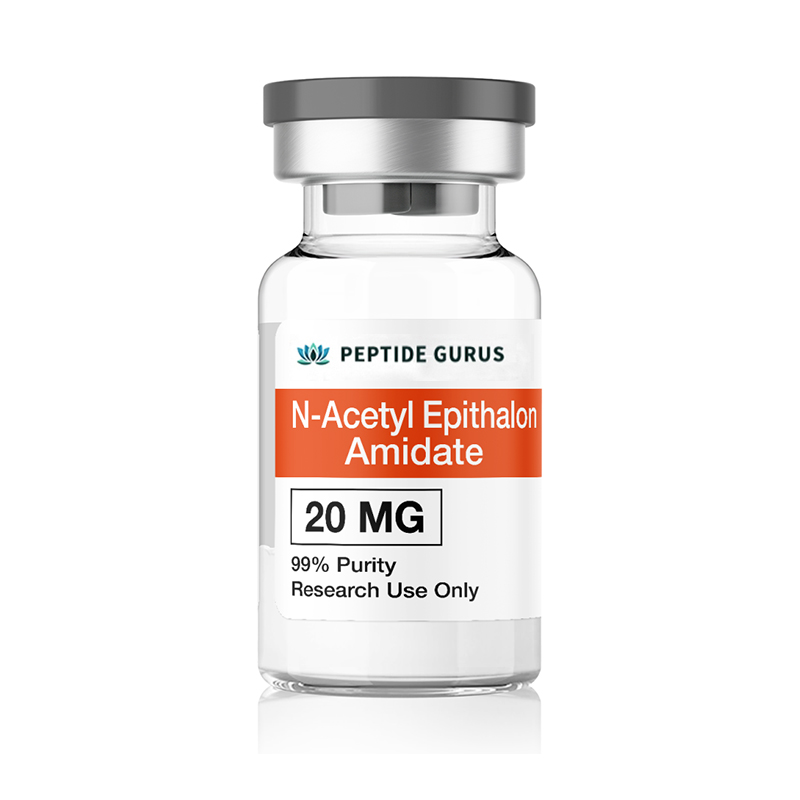
The modifications to Epithalon do not alter the peptide’s overall function, but they do alter the half-life, stability, and efficacy of Epithalon. Only two modifications are made to the native peptide: N-acetylation and amidation. Each has specific benefits that make Epithalon more potent and allow for lower dosing of the peptide.
Acetylation is a common, natural process that occurs to many proteins in the body. It is also a process used by the pharmaceutical industry to help a compound to reach the central nervous system. Acetylated molecules are much more capable of crossing the blood-brain barrier (BBB). Acetylation has been shown to increase the rate at which a compound crosses the BBB, thereby increasing the intensity of the compound’s effects and helping reduce the dosage of a compound required to achieve a specific outcome. Aspirin, for instance is the acetylated form of salicylic acid. Research shows that acetylation of salicylic acid increases the anti-inflammatory effects of the molecule.
Amidation is another natural protein modification that has been coopted by the pharmaceutical industry to improve the half-life of compounds. Amidated proteins are less sensitive to proteolytic degradation in the blood stream. They also tend to bind more strongly to their receptors, making amidation an excellent means of increasing potency and efficacy of a compound.
By altering Epithalon via acetylation and amidation, it is possible to increase the penetration of the peptide into the central nervous and protect it from degradation during the process. The result is increased potency of a given dose of Epithalon as well as increased efficacy of the compound due to improved receptor binding
N-Acetyl-Epithalon Amid und das Gehirn
Research in cell culture shows that Epithalon influences gene expression in neurogenetic differentiation as well as protein synthesis. Molecular modeling suggests that occurs through epigenetic modulation of a handful of genes coding for the proteins Nestin, GAP43, β Tubulin III, and Doublecortin. Epithalon increases expression of these peptides by as much as 1.8 times via binding with specific histone proteins and allowing the genes to be accessed more easily[1]. The result of easier access to the DNA in those regions is increased expression of the genes and thus increased protein production.
The proteins being affected by Epithalon are important in the growth and development of neurons as follows.
- Nestin - Dieses intermediäre Filamentprotein wird in Nervenzellen exprimiert und spielt eine wichtige Rolle beim radialen Wachstum von Axonen. Es hilft auch Stammzellen, sich in Nervenzellen zu unterscheiden und so das Wachstum von Gewebe im Zentralnervensystem (CNS) zu stimulieren.
- GAP43 - GAP43 wird oft als „Plastizitätsprotein“ bezeichnet, da sie während der Entwicklung und der axonalen Regeneration eine wichtige Rolle bei neuronalen Wachstumskegeln spielt. Es spielt eine kritische Rolle beim Lernen. Das Löschen eines Allels des Gap43 -Gens führt zu einer geistigen Behinderung.
- β -Tubulin III - Dieses Mikrotubulielement findet sich in Neuronen und Hodenzellen, in denen es an der Bildung von Mikrotubuli und oxidativen Stressreaktionen beteiligt ist. Untersuchungen legen nahe, dass es für die Anpassung der Zellanpassung an molekulare Stress wichtig ist und dass Mängel in diesem Protein eine Schlüsselrolle bei der Tumoraggressivität spielen können.
- Doublecortin-Doublecortin ist ein Mikrotubuli-assoziiertes Protein, das in unreifen Neuronen vorkommt. Es ist entscheidend für die Entwicklung komplexer Gehirnstrukturen. Mängel im Doppelkortin wurden mit dem Doppel -Kortex -Syndrom in Verbindung gebracht, bei dem ein Mangel an Migration unreifen Neuronen bei Männern und fehlgeleitete Neuronen bei Frauen zu einem glatten Gehirn führt. Das Ergebnis eines Mangels ist eine tiefgreifende geistige Behinderung.
Durch Verbesserung des Zugangs zu den DNA-Regionen, die die Gene, die die obigen Proteine kontrollieren, enthielten, wurde Epithalon mit einem verbesserten Lernen, einer verbesserten Erholung von ZNS-Verletzungen und möglicherweise mit einer Verringerung der langfristigen Auswirkungen des Alterns auf das Gehirn in Verbindung gebracht. Dieses letztere Merkmal ist nur eine der vielen Möglichkeiten, wie Epithalon den Alterungsprozess positiv beeinflusst. Insbesondere wurde gezeigt, dass Epithalon die Differenzierung der neuronalen Stammzellen beeinflusst, indem das Wachstum und die Entwicklung von Neuronen aus Stammzellvorläufern fördert [2]. Mit einer längeren Halbwertszeit und einer verbesserten Penetration im ZNS werden die Potenz und die Auswirkungen des N-Acetylpithalon-Amids im Vergleich zu Standard-Epithalon verbessert.
N-Acetylepithalon Amid und Hautgesundheit
The ability of Epithalon to regulate gene expression patterns is hardly limited to the CNS. Research in skin stem cell cultures shows that Epithalon, even at very low concentrations increases proliferation of stems cells in rats regardless of age. In particular, fibroblast proliferation rates increase by as much as 45%[3].
It isn’t just the growth of fibroblasts that is affected, however. Research shows that Epithalon (and other short polyfunctional peptides) decrease rates of apoptosis and increase functional activity of fibroblasts[4]. This leads to “normalization” of the intracellular matrix. In other words, Epithalon restores homeostasis (biological balance) to the skin and helps to shift the balance in aging skin toward more youthful production of things like collage, elastin, and other proteins[4]. The net result is improved skin health. In fact, Epithalon has opened up a new field in research, referred to as gerontocosmetology, focused on skin health in age.
It is important to note that while cosmetology has a definite component focused on appearance, the field is much deeper than that. The visual effects of cosmetology overlay the deeper components of skin health. Aging skin appears wrinkled, for instance, because of a loss of extracellular matrix proteins like collagen and elastin. Replacement of these proteins, among others, reduces the appearance of wrinkles but also improves the strength and integrity of skin. Skin is the first line of defense against infection and is often referred to as the large organ of the immune system. Healthy skin means less infection, faster wound healing, better insulation against cold, improved response to heat, and much more. Thus, the field of gerontocosmetology is focused not just on the surface, but on the holistic health of the skin and thus the human body[3].
N-Acetylepithalon Amid und Immungesundheit
Ein weiterer Bereich, in dem Epithalon eine aktive Rolle bei der Genregulation spielt, ist das Immunsystem. Die Zellkulturforschung zeigt, dass Epithalon die Expression von Immunsignalmolekülen wie CD5, IL-2, Arylalkylamin-N-Acetyltransferase, Interferon Gamma und Tram1 verändert. Jedes dieser Proteine beeinflusst das Immunsystem wie folgt.
- CD5 - CD5 beeinflusst die Differenzierung von Zellen des Immunsystems und hilft Stammzellen, in funktionelle Zellen umzugehen, die in der Infektion kämpfen und Entzündungen bekämpfen.
- IL-2-IL-2 ist ein starker Regulator der weißen Blutkörperchenproduktion.
- Arylalkylamin-N-Acetyltransferase-Dieses Enzym ist für die Produktion von Melatonin von entscheidender Bedeutung, was nicht nur im Schlaf wichtig ist, sondern auch eine entscheidende Rolle bei der Regulierung des Immunsystems spielt.
- Interferon Gamma - Die Forschung an Ratten zeigt, dass Interferon Gamma für die Aktivierung der Infektion durch Aktivierung von Makrophagen, natürlichen Killerzellen und T -Zellen wichtig ist. Es spielt insbesondere eine entscheidende Rolle bei der Reaktion des Körpers auf Virusinfektionen [5].
Die Verschlechterung der Immunantwort ist einer der Hauptmarker und Treiber des Alterns. Die dysregulierte Immunfunktion führt zu chronischer Entzündung und spielt eine Rolle bei der Entwicklung von Herz -Kreislauf -Erkrankungen und Demenz. Die Fähigkeit von Epithalon, das Immunsystem zu regulieren, ist eine der Möglichkeiten, wie es die Auswirkungen des Alterns vereitelt. Wieder einmal trägt die Fähigkeit des N-Acetylpithalon-Amides, in das ZNS einzudringen, sicherzustellen, dass seine immunverstärkenden Effekte im Gehirn auftreten, wobei die Regulierung der Entzündung dazu beitragen kann, die zu Demenz führen.
N-Acetylpithhalon Amid und Krebs
Untersuchungen in Rattenmodellen verschiedener Tumoren haben gezeigt, dass die tägliche Verabreichung von Epithalon das Tumorwachstum verringert [6]. Das Peptid wird derzeit als potenzielles Adjuvant für die Behandlung von HER-2/neu-positiven (hormon positiven) Brustkrebs sowie Leukämie und Hodenkrebs untersucht. Interessanterweise scheint eine der primären Wirkungen von Epithalon bei Krebs durch die Regulierung des Per1 -Gens zu bestehen. Per1, das im Hypothalamus zu finden ist, reguliert den zirkadianen Rhythmus und wurde bei Krebspatienten als unterexprimiert [7].
N-Acetylpithhalon Amid und Schlaf
As noted above, Epithalon regulates the production of the protein PER1, which plays an important role in circadian rhythm. This should come as no surprise given that Epithalon was first isolated from the pineal gland of cows and the primary role of the pineal gland is to regulate the sleep-wake cycle and the response of many animals to light. Research in rats shows that Epithalon also regulates the production and release of melatonin, which is a potent regulator of sleep.
Via action at the genes for arylalkylamine-N-acetyltransferase and pCREM, Epithalon increases melatonin production and can restore normal sleep-wake cycles[8]. Melatonin and sleep patterns often become dysregulated because of age, a phenomenon that is more than likely a result of changes in DNA expression patterns. By restoring DNA expression to a more youthful state, Epithalon helps to offset age-related changes in sleep. This, in turn, as a tremendous impact on everything from cognitive function to wound healing, the immune response, growth hormone secretion, weight gain, bone structure, and cardiovascular health.
N-Acetylpithalon Amid und Alterung
Each of the above sections has dealt with a specific feature of Epithalon function, but each has also made note of the fact that Epithalon helps to restore DNA expression patterns in aging animals to those seen in younger animals. Indeed, restoration of youthful DNA expression patterns is the overarching theme associated with Epithalon. Production of this peptide by the pineal gland appears to decline with age, resulting in many of the age-related changes that impact health and longevity. Supplementation with Epithalon in insects and rodents has shown that Epithalon can decrease mortality by more than half and prolong life by as much as 27%[9].
The above changes in DNA expression patterns, possibly through epigenetic changes that result of histone protein binding, is at least part of the reason that Epithalon has such profound effects on aging. It is not the whole story though. Research shows that Epithalon also impacts antioxidant activity and telomere health.
In rat models. Injection of Epithalon has been shown to decrease LPO production and reduce oxidative modification of proteins[10]. LPO production (lipid peroxidation products) result from lipid peroxidation, which is a normal biological process known to production free radicals. LPO is necessary for several normal biological functions, such as the destruction of invading pathogens and the recycling of damaged proteins. The production of potentially dangerous free radicals is offset by the equal production of antioxidants. With aging, however, antioxidant production wanes thus cellular and protein damage from free radical production increases. Epithalon offsets the decline in antioxidant production and thus helps to maintain the homeostatic balance that prevents damage from free radicals.
Research in human somatic cells shows that Epithalon activates an enzyme called telomerase[11]. Telomerase is important for maintain the end caps of DNA called telomeres. Telomeres are regions of the DNA that don not contain genes, but instead protect DNA during the process of replication. Replication slowly erodes DNA so having telomeres helps to prevent functional DNA from being damaged. Unfortunately, telomeres themselves degrade over time and when they get too short, cells stop functioning and eventually die. Telomerase helps to repair telomeres and thus helps to extend the lifespan of cells. By increasing activity of telomerase, Epithalon is directly impacting the health of DNA and thus how long cells live[12], [13].
Aging, in general, can be divided into several categories, but they are all interlinked. In general, DNA damage leads to protein malfunction. This, combined with direct protein damage, leads to cellular dysfunction. As cellular dysfunction accumulates, cells are either killed or become non-functional in a process known as senescence. Over time, both processes lead to tissue and organ dysfunction that eventually produces signs of aging like changes in sleep patterns, weight gain, wrinkling, greying of the hair, and increased incidence of chronic disease. The accumulation of this “macro-damage” is what eventually leads to death as the body becomes unable to sustain normal biological function. Epithalon helps to offset much of this dysfunction by regulating DNA and protein damage at a fundamental level.
N-Acetylpithhalon Amid: Zusammenfassung
Während Epithalon nicht die einzige Antwort auf den Stillstand des Alterungsprozesses ist, bietet es Einblick in die Begegnung mit einigen der grundlegenden Prozesse, die zu DNA führen, und Proteinschäden können dazu beitragen, den Gesamtalterungsprozess zu vereiteln. Laut Dr. Wladimir Khavison, dem Paten der Epithalonentwicklung, als Forschung zum Epithalon weitergeht, erhält die Wissenschaft ein tieferes, differenzierteres Verständnis dafür, was Säugetiere im Allgemeinen und Menschen zu altern und schließlich sterben. Epithalon ist ein wichtiger Schlüssel zum Verständnis, wie biochemische Prozesse verändert werden können, um einige der grundlegenden Ursachen des Alterns zu verlangsamen oder sogar zu stoppen. Die Entwicklung des N-Acetyl-Epithalon-Amides ist ein wichtiger Bestandteil der Epithalonforschung, da die Fähigkeit, in das ZNS einzudringen, den Forschern erleichtert, die Auswirkungen von Epithalon auf das Altern im Gehirn zu untersuchen. Dies wird wahrscheinlich einen Einblick geben, wie biochemische Prozesse wie Schlaf und Neuronenwachstum das Lernen, das Gedächtnis, die kognitive Belastbarkeit und vieles mehr beeinflussen.