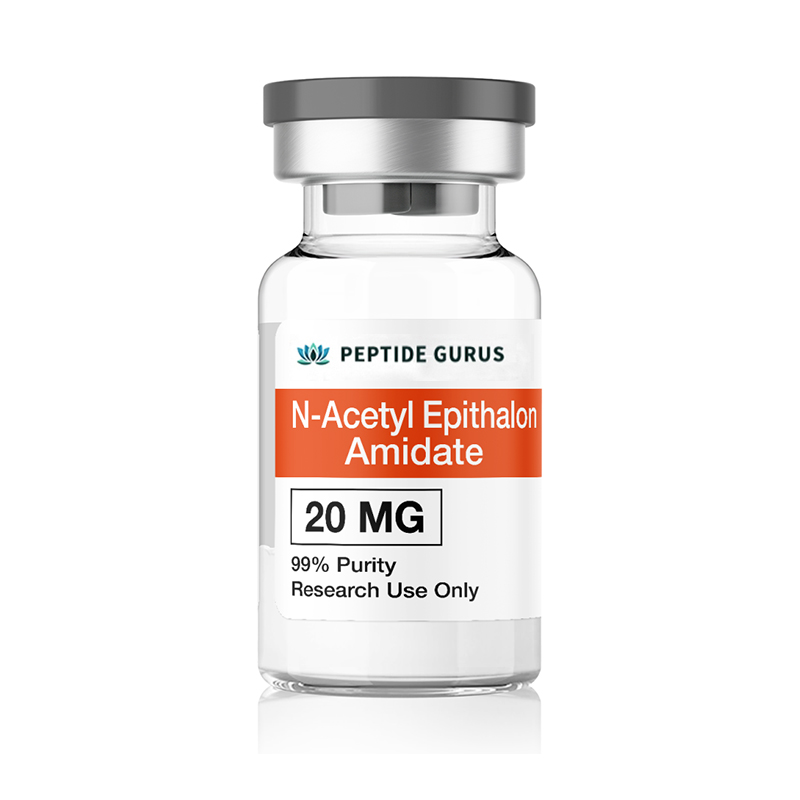
The modifications to Epithalon do not alter the peptide’s overall function, but they do alter the half-life, stability, and efficacy of Epithalon. Only two modifications are made to the native peptide: N-acetylation and amidation. Each has specific benefits that make Epithalon more potent and allow for lower dosing of the peptide.
Acetylation is a common, natural process that occurs to many proteins in the body. It is also a process used by the pharmaceutical industry to help a compound to reach the central nervous system. Acetylated molecules are much more capable of crossing the blood-brain barrier (BBB). Acetylation has been shown to increase the rate at which a compound crosses the BBB, thereby increasing the intensity of the compound’s effects and helping reduce the dosage of a compound required to achieve a specific outcome. Aspirin, for instance is the acetylated form of salicylic acid. Research shows that acetylation of salicylic acid increases the anti-inflammatory effects of the molecule.
Amidation is another natural protein modification that has been coopted by the pharmaceutical industry to improve the half-life of compounds. Amidated proteins are less sensitive to proteolytic degradation in the blood stream. They also tend to bind more strongly to their receptors, making amidation an excellent means of increasing potency and efficacy of a compound.
By altering Epithalon via acetylation and amidation, it is possible to increase the penetration of the peptide into the central nervous and protect it from degradation during the process. The result is increased potency of a given dose of Epithalon as well as increased efficacy of the compound due to improved receptor binding
N-Acetyl Epithalon Amidate และสมอง
Research in cell culture shows that Epithalon influences gene expression in neurogenetic differentiation as well as protein synthesis. Molecular modeling suggests that occurs through epigenetic modulation of a handful of genes coding for the proteins Nestin, GAP43, β Tubulin III, and Doublecortin. Epithalon increases expression of these peptides by as much as 1.8 times via binding with specific histone proteins and allowing the genes to be accessed more easily[1]. The result of easier access to the DNA in those regions is increased expression of the genes and thus increased protein production.
The proteins being affected by Epithalon are important in the growth and development of neurons as follows.
- เนสติน – โปรตีนเส้นใยระดับกลางนี้แสดงออกในเซลล์ประสาทและมีบทบาทสําคัญในการเจริญเติบโตในแนวรัศมีของแอกซอน นอกจากนี้ยังช่วยให้สเต็มเซลล์แยกตัวเป็นเซลล์ประสาท ซึ่งจะช่วยกระตุ้นการเจริญเติบโตของเนื้อเยื่อในระบบประสาทส่วนกลาง (CNS)
- GAP43 – GAP43 มักเรียกว่าโปรตีน "ความเป็นพลาสติก" เนื่องจากมีบทบาทสําคัญในกรวยการเจริญเติบโตของเซลล์ประสาทในระหว่างการพัฒนาและการงอกใหม่ของแอกซอน มีบทบาทสําคัญในการเรียนรู้ การลบอัลลีลของยีน GAP43 แม้แต่อัลลีลเดียวนําไปสู่ความพิการทางสติปัญญา
- β Tubulin III – องค์ประกอบไมโครทูบูลนี้พบได้ในเซลล์ประสาทและเซลล์อัณฑะซึ่งเกี่ยวข้องกับการสร้างไมโครทูบูลและการตอบสนองต่อความเครียดจากปฏิกิริยาออกซิเดชัน การวิจัยชี้ให้เห็นว่ามีความสําคัญในการปรับตัวของเซลล์ต่อความเครียดระดับโมเลกุล และการขาดโปรตีนนี้อาจมีบทบาทสําคัญในการก้าวร้าวของเนื้องอก
- ดับเบิ้ลคอร์ติน – ดับเบิ้ลคอร์ตินเป็นโปรตีนที่เกี่ยวข้องกับไมโครทูบูลที่พบในเซลล์ประสาทที่ยังไม่บรรลุนิติภาวะ มีความสําคัญต่อการพัฒนาโครงสร้างสมองที่ซับซ้อน ข้อบกพร่องใน Doublecortin เชื่อมโยงกับกลุ่มอาการเปลือกสมองคู่ซึ่งการขาดการย้ายถิ่นของเซลล์ประสาทที่ยังไม่บรรลุนิติภาวะนําไปสู่สมองที่ราบรื่นในเพศชายและเซลล์ประสาทที่วางผิดที่ในเพศหญิง ผลของความบกพร่องคือความบกพร่องทางสติปัญญาอย่างลึกซึ้ง
ด้วยการปรับปรุงการเข้าถึงบริเวณ DNA ที่มียีนที่ควบคุมโปรตีนข้างต้น Epithalon เชื่อมโยงกับการเรียนรู้ที่ดีขึ้นการฟื้นตัวที่เพิ่มขึ้นจากการบาดเจ็บของระบบประสาทส่วนกลางและอาจช่วยลดผลกระทบระยะยาวของความชราต่อสมอง คุณลักษณะหลังนี้เป็นเพียงหนึ่งในหลาย ๆ วิธีที่พบว่า Epithalon ส่งผลดีต่อกระบวนการชรา โดยเฉพาะอย่างยิ่ง Epithalon ได้รับการแสดงให้เห็นว่ามีผลต่อความแตกต่างของเซลล์ต้นกําเนิดของเซลล์ประสาทโดยการส่งเสริมการเจริญเติบโตและพัฒนาการของเซลล์ประสาทจากบรรพบุรุษของเซลล์ต้นกําเนิด[2] ด้วยครึ่งชีวิตที่ยาวนานขึ้นและการเจาะที่ดีขึ้นในระบบประสาทส่วนกลาง ความแรงและผลกระทบของ N-Acetyl Epithalon Amidate จะเพิ่มขึ้นเมื่อเทียบกับ Epithalon มาตรฐาน
N-Acetyl Epithalon Amidate และสุขภาพผิว
The ability of Epithalon to regulate gene expression patterns is hardly limited to the CNS. Research in skin stem cell cultures shows that Epithalon, even at very low concentrations increases proliferation of stems cells in rats regardless of age. In particular, fibroblast proliferation rates increase by as much as 45%[3].
It isn’t just the growth of fibroblasts that is affected, however. Research shows that Epithalon (and other short polyfunctional peptides) decrease rates of apoptosis and increase functional activity of fibroblasts[4]. This leads to “normalization” of the intracellular matrix. In other words, Epithalon restores homeostasis (biological balance) to the skin and helps to shift the balance in aging skin toward more youthful production of things like collage, elastin, and other proteins[4]. The net result is improved skin health. In fact, Epithalon has opened up a new field in research, referred to as gerontocosmetology, focused on skin health in age.
It is important to note that while cosmetology has a definite component focused on appearance, the field is much deeper than that. The visual effects of cosmetology overlay the deeper components of skin health. Aging skin appears wrinkled, for instance, because of a loss of extracellular matrix proteins like collagen and elastin. Replacement of these proteins, among others, reduces the appearance of wrinkles but also improves the strength and integrity of skin. Skin is the first line of defense against infection and is often referred to as the large organ of the immune system. Healthy skin means less infection, faster wound healing, better insulation against cold, improved response to heat, and much more. Thus, the field of gerontocosmetology is focused not just on the surface, but on the holistic health of the skin and thus the human body[3].
N-Acetyl Epithalon Amidate และสุขภาพภูมิคุ้มกัน
อีกด้านหนึ่งที่ Epithalon มีบทบาทอย่างแข็งขันในการควบคุมยีนคือระบบภูมิคุ้มกัน การวิจัยการเพาะเลี้ยงเซลล์แสดงให้เห็นว่า Epithalon เปลี่ยนการแสดงออกของโมเลกุลส่งสัญญาณภูมิคุ้มกัน เช่น CD5, IL-2, Arylalkylamine-N-acetyltransferase, interferon gamma และ Tram1 โปรตีนแต่ละชนิดมีผลต่อระบบภูมิคุ้มกันดังนี้
- CD5 – CD5 มีอิทธิพลต่อความแตกต่างของเซลล์ของระบบภูมิคุ้มกัน ช่วยให้สเต็มเซลล์เปลี่ยนเป็นเซลล์ที่ใช้งานได้ซึ่งต่อสู้กับการติดเชื้อและต่อสู้กับการอักเสบ
- IL-2 – IL-2 เป็นตัวควบคุมการผลิตเซลล์เม็ดเลือดขาวที่มีศักยภาพ
- Arylalkylamine-N-acetyltransferase – เอนไซม์นี้มีความสําคัญต่อการผลิตเมลาโทนิน ซึ่งไม่เพียงแต่มีความสําคัญในการนอนหลับ แต่ยังมีบทบาทสําคัญในการควบคุมระบบภูมิคุ้มกันอีกด้วย
- อินเตอร์เฟอรอนแกมมา – การวิจัยในหนูแสดงให้เห็นว่าอินเตอร์เฟอรอนแกมมามีความสําคัญในการต่อสู้กับการติดเชื้อผ่านการกระตุ้นมาโครฟาจเซลล์นักฆ่าตามธรรมชาติและทีเซลล์ มันมีบทบาทสําคัญในการตอบสนองของร่างกายต่อการติดเชื้อไวรัสโดยเฉพาะ[5]
การเสื่อมสภาพของการตอบสนองของภูมิคุ้มกันเป็นหนึ่งในตัวบ่งชี้หลักและตัวขับเคลื่อนความชรา การทํางานของภูมิคุ้มกันที่ผิดปกตินําไปสู่การอักเสบเรื้อรังและมีบทบาทในการพัฒนาโรคหัวใจและหลอดเลือดและภาวะสมองเสื่อม ความสามารถของ Epithalon ในการควบคุมระบบภูมิคุ้มกันเป็นวิธีหนึ่งที่ขัดขวางผลกระทบของความชรา อีกครั้งความสามารถของ N-Acetyl Epithalon Amidate ในการแทรกซึมเข้าไปในระบบประสาทส่วนกลางช่วยให้มั่นใจได้ว่าผลการเสริมสร้างภูมิคุ้มกันจะเกิดขึ้นในสมอง ซึ่งการควบคุมการอักเสบสามารถช่วยบรรเทากระบวนการที่นําไปสู่ภาวะสมองเสื่อมได้
N-Acetyl Epithalon Amidate และมะเร็ง
การวิจัยในแบบจําลองหนูของเนื้องอกต่างๆ แสดงให้เห็นว่าการให้ยา Epithalon ทุกวันช่วยลดการเจริญเติบโตของเนื้องอก[6] ปัจจุบันเปปไทด์อยู่ระหว่างการตรวจสอบว่าเป็นสารเสริมที่มีศักยภาพในการรักษามะเร็งเต้านม Her-2/neu ที่เป็นบวก (ฮอร์โมนบวก) ตลอดจนมะเร็งเม็ดเลือดขาวและมะเร็งอัณฑะ ที่น่าสนใจคือการกระทําหลักอย่างหนึ่งของ Epithalon ในมะเร็งดูเหมือนจะผ่านการควบคุมยีน PER1 PER1 ซึ่งพบในไฮโปทาลามัสควบคุมจังหวะชีวิตและพบว่าแสดงออกน้อยในผู้ป่วยมะเร็ง[7]
N-Acetyl Epithalon Amidate และ Sleep
As noted above, Epithalon regulates the production of the protein PER1, which plays an important role in circadian rhythm. This should come as no surprise given that Epithalon was first isolated from the pineal gland of cows and the primary role of the pineal gland is to regulate the sleep-wake cycle and the response of many animals to light. Research in rats shows that Epithalon also regulates the production and release of melatonin, which is a potent regulator of sleep.
Via action at the genes for arylalkylamine-N-acetyltransferase and pCREM, Epithalon increases melatonin production and can restore normal sleep-wake cycles[8]. Melatonin and sleep patterns often become dysregulated because of age, a phenomenon that is more than likely a result of changes in DNA expression patterns. By restoring DNA expression to a more youthful state, Epithalon helps to offset age-related changes in sleep. This, in turn, as a tremendous impact on everything from cognitive function to wound healing, the immune response, growth hormone secretion, weight gain, bone structure, and cardiovascular health.
N-Acetyl Epithalon Amidate และริ้วรอย
Each of the above sections has dealt with a specific feature of Epithalon function, but each has also made note of the fact that Epithalon helps to restore DNA expression patterns in aging animals to those seen in younger animals. Indeed, restoration of youthful DNA expression patterns is the overarching theme associated with Epithalon. Production of this peptide by the pineal gland appears to decline with age, resulting in many of the age-related changes that impact health and longevity. Supplementation with Epithalon in insects and rodents has shown that Epithalon can decrease mortality by more than half and prolong life by as much as 27%[9].
The above changes in DNA expression patterns, possibly through epigenetic changes that result of histone protein binding, is at least part of the reason that Epithalon has such profound effects on aging. It is not the whole story though. Research shows that Epithalon also impacts antioxidant activity and telomere health.
In rat models. Injection of Epithalon has been shown to decrease LPO production and reduce oxidative modification of proteins[10]. LPO production (lipid peroxidation products) result from lipid peroxidation, which is a normal biological process known to production free radicals. LPO is necessary for several normal biological functions, such as the destruction of invading pathogens and the recycling of damaged proteins. The production of potentially dangerous free radicals is offset by the equal production of antioxidants. With aging, however, antioxidant production wanes thus cellular and protein damage from free radical production increases. Epithalon offsets the decline in antioxidant production and thus helps to maintain the homeostatic balance that prevents damage from free radicals.
Research in human somatic cells shows that Epithalon activates an enzyme called telomerase[11]. Telomerase is important for maintain the end caps of DNA called telomeres. Telomeres are regions of the DNA that don not contain genes, but instead protect DNA during the process of replication. Replication slowly erodes DNA so having telomeres helps to prevent functional DNA from being damaged. Unfortunately, telomeres themselves degrade over time and when they get too short, cells stop functioning and eventually die. Telomerase helps to repair telomeres and thus helps to extend the lifespan of cells. By increasing activity of telomerase, Epithalon is directly impacting the health of DNA and thus how long cells live[12], [13].
Aging, in general, can be divided into several categories, but they are all interlinked. In general, DNA damage leads to protein malfunction. This, combined with direct protein damage, leads to cellular dysfunction. As cellular dysfunction accumulates, cells are either killed or become non-functional in a process known as senescence. Over time, both processes lead to tissue and organ dysfunction that eventually produces signs of aging like changes in sleep patterns, weight gain, wrinkling, greying of the hair, and increased incidence of chronic disease. The accumulation of this “macro-damage” is what eventually leads to death as the body becomes unable to sustain normal biological function. Epithalon helps to offset much of this dysfunction by regulating DNA and protein damage at a fundamental level.
N-Acetyl Epithalon Amidate: สรุป
แม้ว่า Epithalon จะไม่ใช่คําตอบเดียวในการหยุดกระบวนการชรา แต่ก็ให้ข้อมูลเชิงลึกเกี่ยวกับวิธีต่อต้านกระบวนการพื้นฐานบางอย่างที่นําไปสู่ความเสียหายของ DNA และโปรตีนสามารถช่วยขัดขวางกระบวนการชราโดยรวมได้ ดร. วลาดิเมียร์ คาวิสัน เจ้าพ่อแห่งการพัฒนา Epithalon กล่าวว่า ในขณะที่การวิจัยเกี่ยวกับ Epithalon ยังคงดําเนินต่อไป วิทยาศาสตร์ได้รับความเข้าใจที่ลึกซึ้งและละเอียดยิ่งขึ้นเกี่ยวกับสาเหตุของสัตว์เลี้ยงลูกด้วยนมโดยทั่วไปและมนุษย์แก่และตายในที่สุด Epithalon เป็นกุญแจสําคัญในการทําความเข้าใจว่ากระบวนการทางชีวเคมีสามารถเปลี่ยนแปลงเพื่อชะลอหรือหยุดสาเหตุพื้นฐานบางประการของความชราได้อย่างไร การพัฒนา N-Acetyl Epithalon Amidate เป็นส่วนสําคัญของการวิจัย Epithalon เนื่องจากความสามารถในการเจาะระบบประสาทส่วนกลางจะช่วยให้นักวิจัยสํารวจผลกระทบของ Epithalon ต่ออายุในสมองได้ง่ายขึ้น สิ่งนี้น่าจะให้ข้อมูลเชิงลึกว่ากระบวนการทางชีวเคมี เช่น การนอนหลับและการเจริญเติบโตของเซลล์ประสาทส่งผลต่อการเรียนรู้ ความจํา ความยืดหยุ่นทางปัญญา และอื่นๆ อีกมากมาย