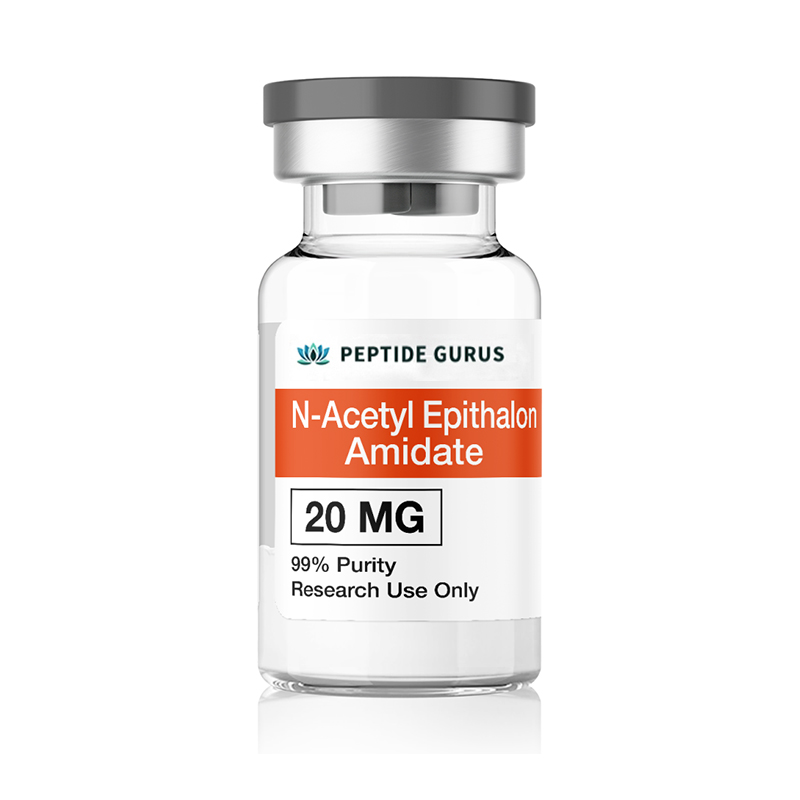
The modifications to Epithalon do not alter the peptide’s overall function, but they do alter the half-life, stability, and efficacy of Epithalon. Only two modifications are made to the native peptide: N-acetylation and amidation. Each has specific benefits that make Epithalon more potent and allow for lower dosing of the peptide.
Acetylation is a common, natural process that occurs to many proteins in the body. It is also a process used by the pharmaceutical industry to help a compound to reach the central nervous system. Acetylated molecules are much more capable of crossing the blood-brain barrier (BBB). Acetylation has been shown to increase the rate at which a compound crosses the BBB, thereby increasing the intensity of the compound’s effects and helping reduce the dosage of a compound required to achieve a specific outcome. Aspirin, for instance is the acetylated form of salicylic acid. Research shows that acetylation of salicylic acid increases the anti-inflammatory effects of the molecule.
Amidation is another natural protein modification that has been coopted by the pharmaceutical industry to improve the half-life of compounds. Amidated proteins are less sensitive to proteolytic degradation in the blood stream. They also tend to bind more strongly to their receptors, making amidation an excellent means of increasing potency and efficacy of a compound.
By altering Epithalon via acetylation and amidation, it is possible to increase the penetration of the peptide into the central nervous and protect it from degradation during the process. The result is increased potency of a given dose of Epithalon as well as increased efficacy of the compound due to improved receptor binding
N-asetil epitalon amidat ve beyin
Research in cell culture shows that Epithalon influences gene expression in neurogenetic differentiation as well as protein synthesis. Molecular modeling suggests that occurs through epigenetic modulation of a handful of genes coding for the proteins Nestin, GAP43, β Tubulin III, and Doublecortin. Epithalon increases expression of these peptides by as much as 1.8 times via binding with specific histone proteins and allowing the genes to be accessed more easily[1]. The result of easier access to the DNA in those regions is increased expression of the genes and thus increased protein production.
The proteins being affected by Epithalon are important in the growth and development of neurons as follows.
- Nestin - Bu ara filament proteini sinir hücrelerinde eksprese edilir ve aksonların radyal büyümesinde önemli bir rol oynar. Ayrıca kök hücrelerin sinir hücrelerine farklılaşmasına yardımcı olur, böylece merkezi sinir sistemindeki (CNS) dokunun büyümesini uyarır.
- GAP43 - GAP43'e genellikle “plastisite” proteini denir, çünkü gelişim ve aksonal rejenerasyon sırasında nöronal büyüme konilerinde önemli roller oynar. Öğrenmede kritik roller oynar. GAP43 geninin bir alelinin bile silinmesi zihinsel engelliliğe yol açar.
- β Tubulin III - Bu mikrotübül elemanı, mikrotübül oluşumu ve oksidatif stres tepkilerinde yer aldığı nöronlarda ve testis hücrelerinde bulunur. Araştırmalar, moleküler strese hücresel adaptasyonda önemli olduğunu ve bu proteindeki eksikliklerin tümör agresifliğinde önemli bir rol oynayabileceğini düşündürmektedir.
- Doublecortin-Doublecortin, olgunlaşmamış nöronlarda bulunan mikrotübülle ilişkili bir proteindir. Karmaşık beyin yapılarının gelişimi için kritik öneme sahiptir. Doublecortin'deki eksiklikler, olgunlaşmamış nöronların göçü eksikliğinin erkeklerde pürüzsüz bir beyne ve kadınlarda yanlış yerleştirilmiş nöronlara yol açtığı çift korteks sendromuna bağlanmıştır. Eksikliğin sonucu derin zihinsel engeldir.
Yukarıdaki proteinleri kontrol eden genleri içeren DNA bölgelerine erişimi geliştirerek epitalon, gelişmiş öğrenme, CNS yaralanmasından artan iyileşme ve potansiyel olarak yaşlanmanın beyin üzerindeki uzun vadeli etkilerindeki azalmaya bağlanmıştır. Bu ikinci özellik, epitalonun yaşlanma sürecini olumlu yönde etkilediği birçok yoldan sadece bir tanesidir. Özellikle, epitalonun kök hücre progenitörlerinden nöronların büyümesini ve gelişmesini teşvik ederek nöronal kök hücre farklılaşmasını etkilediği gösterilmiştir [2]. CNS'de daha uzun bir yarı ömür ve gelişmiş penetrasyon ile N-asetil epitalon amidatının gücü ve etkileri standart epitalona kıyasla arttırılacaktır.
N-asetil epitalon amidat ve cilt sağlığı
The ability of Epithalon to regulate gene expression patterns is hardly limited to the CNS. Research in skin stem cell cultures shows that Epithalon, even at very low concentrations increases proliferation of stems cells in rats regardless of age. In particular, fibroblast proliferation rates increase by as much as 45%[3].
It isn’t just the growth of fibroblasts that is affected, however. Research shows that Epithalon (and other short polyfunctional peptides) decrease rates of apoptosis and increase functional activity of fibroblasts[4]. This leads to “normalization” of the intracellular matrix. In other words, Epithalon restores homeostasis (biological balance) to the skin and helps to shift the balance in aging skin toward more youthful production of things like collage, elastin, and other proteins[4]. The net result is improved skin health. In fact, Epithalon has opened up a new field in research, referred to as gerontocosmetology, focused on skin health in age.
It is important to note that while cosmetology has a definite component focused on appearance, the field is much deeper than that. The visual effects of cosmetology overlay the deeper components of skin health. Aging skin appears wrinkled, for instance, because of a loss of extracellular matrix proteins like collagen and elastin. Replacement of these proteins, among others, reduces the appearance of wrinkles but also improves the strength and integrity of skin. Skin is the first line of defense against infection and is often referred to as the large organ of the immune system. Healthy skin means less infection, faster wound healing, better insulation against cold, improved response to heat, and much more. Thus, the field of gerontocosmetology is focused not just on the surface, but on the holistic health of the skin and thus the human body[3].
N-asetil epitalon amidat ve bağışıklık sağlığı
Epitalonun gen regülasyonunda aktif bir rol oynadığı bir başka alan da bağışıklık sistemidir. Hücre kültürü araştırması, epitalonun CD5, IL-2, arilalkilamin-N-asetiltransferaz, interferon gama ve tram1 gibi immün sinyal moleküllerinin ekspresyonunu değiştirdiğini göstermektedir. Bu proteinlerin her biri bağışıklık sistemini aşağıdaki gibi etkiler.
- CD5 - CD5, bağışıklık sisteminin hücrelerinin farklılaşmasını etkiler ve kök hücrelerin enfeksiyonla mücadele ve iltihaplanma ile mücadele eden fonksiyonel hücrelere geçmesine yardımcı olur.
- IL-2-IL-2, beyaz kan hücresi üretiminin güçlü bir regülatörüdür.
- Arilalkilamin-N-asetiltransferaz-Bu enzim, sadece uykuda önemli değil, aynı zamanda bağışıklık sisteminin düzenlenmesinde de kritik bir rol oynayan melatonin üretimi için kritiktir.
- İnterferon Gamma - Sıçanlarda yapılan araştırmalar, interferon gamasının makrofajların, doğal katil hücrelerin ve T hücrelerinin aktivasyonu yoluyla enfeksiyonla mücadelede önemli olduğunu göstermektedir. Vücudun özellikle viral enfeksiyona verdiği yanıtta kritik bir rol oynar [5].
Bağışıklık tepkisinin bozulması, yaşlanmanın birincil belirteçlerinden ve itici güçlerinden biridir. Düzensiz bağışıklık fonksiyonu kronik inflamasyona yol açar ve kardiyovasküler hastalık ve demans gelişiminde rol oynar. Epithalon'un bağışıklık sistemini düzenleme yeteneği, yaşlanmanın etkilerini engellediği yollardan biridir. Bir kez daha, N-asetil epitalon amidesinin CNS'ye nüfuz etme yeteneği, iltihaplanma düzenlemesinin demansa yol açan süreçlerin temperlenmesine yardımcı olabileceği beyinde bağışıklık arttırıcı etkilerinin yaşanmasını sağlamaya yardımcı olur.
N-asetil epitalon amidat ve kanser
Çeşitli tümörlerin sıçan modellerinde yapılan araştırmalar, günlük epitalon uygulamasının tümör büyümesini azalttığını göstermiştir [6]. Peptit şu anda HER-2/NEU pozitif (hormon pozitif) meme kanserlerinin yanı sıra lösemi ve testis kanserinin tedavisine potansiyel bir adjuvan olarak araştırılmaktadır. İlginç bir şekilde, epitalonun kanserdeki birincil eylemlerinden biri, Per1 geninin düzenlenmesi yoluyla görünmektedir. Hipotalamusta bulunan PER1, sirkadiyen ritmi düzenler ve kanser hastalarında yetersiz ifade edildiği bulunmuştur [7].
N-asetil epitalon amidat ve uyku
As noted above, Epithalon regulates the production of the protein PER1, which plays an important role in circadian rhythm. This should come as no surprise given that Epithalon was first isolated from the pineal gland of cows and the primary role of the pineal gland is to regulate the sleep-wake cycle and the response of many animals to light. Research in rats shows that Epithalon also regulates the production and release of melatonin, which is a potent regulator of sleep.
Via action at the genes for arylalkylamine-N-acetyltransferase and pCREM, Epithalon increases melatonin production and can restore normal sleep-wake cycles[8]. Melatonin and sleep patterns often become dysregulated because of age, a phenomenon that is more than likely a result of changes in DNA expression patterns. By restoring DNA expression to a more youthful state, Epithalon helps to offset age-related changes in sleep. This, in turn, as a tremendous impact on everything from cognitive function to wound healing, the immune response, growth hormone secretion, weight gain, bone structure, and cardiovascular health.
N-asetil epitalon amidat ve yaşlanma
Each of the above sections has dealt with a specific feature of Epithalon function, but each has also made note of the fact that Epithalon helps to restore DNA expression patterns in aging animals to those seen in younger animals. Indeed, restoration of youthful DNA expression patterns is the overarching theme associated with Epithalon. Production of this peptide by the pineal gland appears to decline with age, resulting in many of the age-related changes that impact health and longevity. Supplementation with Epithalon in insects and rodents has shown that Epithalon can decrease mortality by more than half and prolong life by as much as 27%[9].
The above changes in DNA expression patterns, possibly through epigenetic changes that result of histone protein binding, is at least part of the reason that Epithalon has such profound effects on aging. It is not the whole story though. Research shows that Epithalon also impacts antioxidant activity and telomere health.
In rat models. Injection of Epithalon has been shown to decrease LPO production and reduce oxidative modification of proteins[10]. LPO production (lipid peroxidation products) result from lipid peroxidation, which is a normal biological process known to production free radicals. LPO is necessary for several normal biological functions, such as the destruction of invading pathogens and the recycling of damaged proteins. The production of potentially dangerous free radicals is offset by the equal production of antioxidants. With aging, however, antioxidant production wanes thus cellular and protein damage from free radical production increases. Epithalon offsets the decline in antioxidant production and thus helps to maintain the homeostatic balance that prevents damage from free radicals.
Research in human somatic cells shows that Epithalon activates an enzyme called telomerase[11]. Telomerase is important for maintain the end caps of DNA called telomeres. Telomeres are regions of the DNA that don not contain genes, but instead protect DNA during the process of replication. Replication slowly erodes DNA so having telomeres helps to prevent functional DNA from being damaged. Unfortunately, telomeres themselves degrade over time and when they get too short, cells stop functioning and eventually die. Telomerase helps to repair telomeres and thus helps to extend the lifespan of cells. By increasing activity of telomerase, Epithalon is directly impacting the health of DNA and thus how long cells live[12], [13].
Aging, in general, can be divided into several categories, but they are all interlinked. In general, DNA damage leads to protein malfunction. This, combined with direct protein damage, leads to cellular dysfunction. As cellular dysfunction accumulates, cells are either killed or become non-functional in a process known as senescence. Over time, both processes lead to tissue and organ dysfunction that eventually produces signs of aging like changes in sleep patterns, weight gain, wrinkling, greying of the hair, and increased incidence of chronic disease. The accumulation of this “macro-damage” is what eventually leads to death as the body becomes unable to sustain normal biological function. Epithalon helps to offset much of this dysfunction by regulating DNA and protein damage at a fundamental level.
N-asetil epitalon amidate: özet
Epithalon, yaşlanma sürecini durdurmanın tek bir cevabı olmasa da, DNA ve protein hasarına yol açan bazı temel süreçlerin nasıl karşı koyulacağı konusunda fikir verir. Epitalon gelişiminin vaftiz babası Dr. Vladimir Khavison'a göre, epitalon araştırması devam ettikçe, bilim, genel olarak memelilere ve insanların yaşlanmasına ve sonunda ölmesine neden olan daha derin, daha nüanslı bir anlayış kazanıyor. Epithalon, biyokimyasal süreçlerin yaşlanmanın temel nedenlerini yavaşlatmak veya hatta durdurmak için nasıl değiştirilebileceğini anlamanın önemli bir anahtarıdır. N-asetil epitalon amidatının gelişimi, Epitalon araştırmasının önemli bir parçasıdır, çünkü CNS'ye nüfuz etme yeteneği, araştırmacıların epitalonun beyindeki yaşlanma üzerindeki etkilerini keşfetmelerini kolaylaştıracaktır. Bu muhtemelen uyku ve nöron büyümesi gibi biyokimyasal süreçlerin öğrenmeyi, hafızayı, bilişsel esnekliği ve çok daha fazlasını nasıl etkilediğine dair bir fikir verecektir.