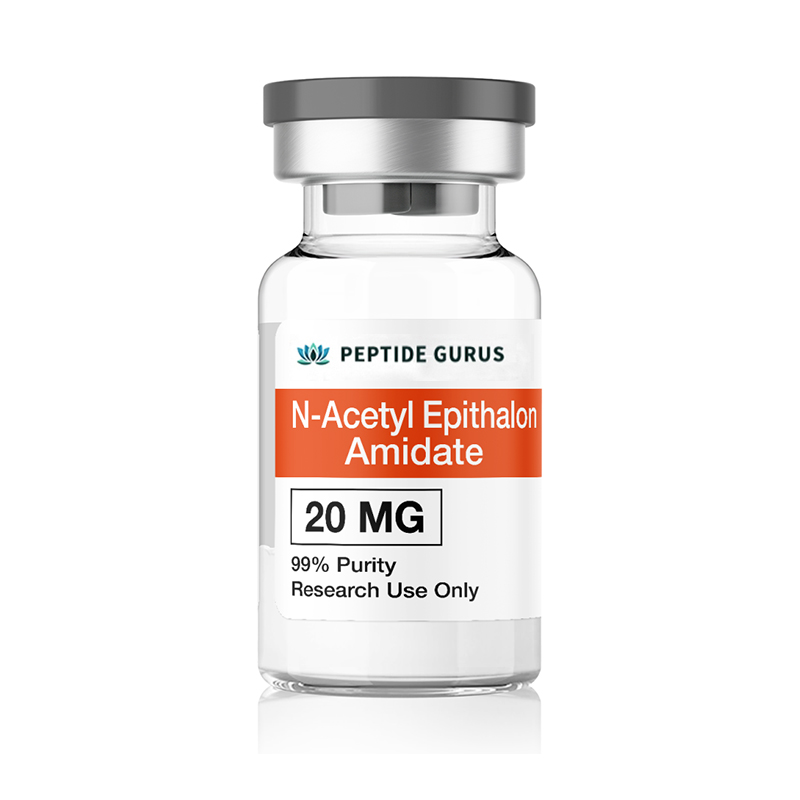
The modifications to Epithalon do not alter the peptide’s overall function, but they do alter the half-life, stability, and efficacy of Epithalon. Only two modifications are made to the native peptide: N-acetylation and amidation. Each has specific benefits that make Epithalon more potent and allow for lower dosing of the peptide.
Acetylation is a common, natural process that occurs to many proteins in the body. It is also a process used by the pharmaceutical industry to help a compound to reach the central nervous system. Acetylated molecules are much more capable of crossing the blood-brain barrier (BBB). Acetylation has been shown to increase the rate at which a compound crosses the BBB, thereby increasing the intensity of the compound’s effects and helping reduce the dosage of a compound required to achieve a specific outcome. Aspirin, for instance is the acetylated form of salicylic acid. Research shows that acetylation of salicylic acid increases the anti-inflammatory effects of the molecule.
Amidation is another natural protein modification that has been coopted by the pharmaceutical industry to improve the half-life of compounds. Amidated proteins are less sensitive to proteolytic degradation in the blood stream. They also tend to bind more strongly to their receptors, making amidation an excellent means of increasing potency and efficacy of a compound.
By altering Epithalon via acetylation and amidation, it is possible to increase the penetration of the peptide into the central nervous and protect it from degradation during the process. The result is increased potency of a given dose of Epithalon as well as increased efficacy of the compound due to improved receptor binding
N-acetil epithalon amidata e il cervello
Research in cell culture shows that Epithalon influences gene expression in neurogenetic differentiation as well as protein synthesis. Molecular modeling suggests that occurs through epigenetic modulation of a handful of genes coding for the proteins Nestin, GAP43, β Tubulin III, and Doublecortin. Epithalon increases expression of these peptides by as much as 1.8 times via binding with specific histone proteins and allowing the genes to be accessed more easily[1]. The result of easier access to the DNA in those regions is increased expression of the genes and thus increased protein production.
The proteins being affected by Epithalon are important in the growth and development of neurons as follows.
- NESTIN - Questa proteina di filamento intermedio è espressa nelle cellule nervose e svolge un ruolo importante nella crescita radiale degli assoni. Aiuta anche le cellule staminali a differenziarsi nelle cellule nervose, stimolando così la crescita del tessuto nel sistema nervoso centrale (SNC).
- GAP43 - GAP43 è spesso chiamato proteina "plasticità" perché svolge ruoli importanti nei coni di crescita neuronale durante lo sviluppo e la rigenerazione assonale. Ha ruoli critici nell'apprendimento. La delezione di un allele anche di un allele del gene GAP43 porta alla disabilità intellettuale.
- β tubulina III - Questo elemento di microtubulo si trova nei neuroni e nelle cellule del testicolo in cui è coinvolto nella formazione di microtubuli e nelle risposte allo stress ossidativo. La ricerca suggerisce che è importante nell'adattamento cellulare allo stress molecolare e che le carenze in questa proteina possono svolgere un ruolo chiave nell'aggressività del tumore.
- Doublecortina-Doublecortina è una proteina associata ai microtubuli che si trova nei neuroni immaturi. È fondamentale per lo sviluppo di strutture cerebrali complesse. Le carenze nella doublecortina sono state collegate alla sindrome della doppia corteccia in cui una mancanza di migrazione dei neuroni immaturi porta a un cervello liscio nei maschi e nei neuroni fuori posto nelle femmine. Il risultato della carenza è una profonda disabilità intellettuale.
Migliorando l'accesso alle regioni del DNA contenenti i geni che controllano le proteine di cui sopra, l'epithalon è stata collegata a un miglioramento dell'apprendimento, un miglioramento del recupero dalla lesione del SNC e potenzialmente alle riduzioni degli effetti a lungo termine dell'invecchiamento sul cervello. Quest'ultima caratteristica è solo uno dei molti modi in cui è stato scoperto che Epithalon influisce positivamente sul processo di invecchiamento. In particolare, l'epithalon ha dimostrato di influenzare la differenziazione delle cellule staminali neuronali promuovendo la crescita e lo sviluppo dei neuroni dai progenitori delle cellule staminali [2]. Con un'emivita più lunga e una penetrazione migliorata nel sistema nervoso centrale, la potenza e gli effetti dell'epithalon N-acetilico saranno migliorati rispetto all'epithalon standard.
N-acetil epithalon Amidate e salute della pelle
The ability of Epithalon to regulate gene expression patterns is hardly limited to the CNS. Research in skin stem cell cultures shows that Epithalon, even at very low concentrations increases proliferation of stems cells in rats regardless of age. In particular, fibroblast proliferation rates increase by as much as 45%[3].
It isn’t just the growth of fibroblasts that is affected, however. Research shows that Epithalon (and other short polyfunctional peptides) decrease rates of apoptosis and increase functional activity of fibroblasts[4]. This leads to “normalization” of the intracellular matrix. In other words, Epithalon restores homeostasis (biological balance) to the skin and helps to shift the balance in aging skin toward more youthful production of things like collage, elastin, and other proteins[4]. The net result is improved skin health. In fact, Epithalon has opened up a new field in research, referred to as gerontocosmetology, focused on skin health in age.
It is important to note that while cosmetology has a definite component focused on appearance, the field is much deeper than that. The visual effects of cosmetology overlay the deeper components of skin health. Aging skin appears wrinkled, for instance, because of a loss of extracellular matrix proteins like collagen and elastin. Replacement of these proteins, among others, reduces the appearance of wrinkles but also improves the strength and integrity of skin. Skin is the first line of defense against infection and is often referred to as the large organ of the immune system. Healthy skin means less infection, faster wound healing, better insulation against cold, improved response to heat, and much more. Thus, the field of gerontocosmetology is focused not just on the surface, but on the holistic health of the skin and thus the human body[3].
N-acetil epithalon amidata e salute immunitaria
Un'altra area in cui l'epithalon svolge un ruolo attivo nella regolazione genica è il sistema immunitario. La ricerca sulla coltura cellulare mostra che l'epithalon altera l'espressione di molecole di segnalazione immunitaria come CD5, IL-2, arilalchilammina-N-acetiltransferasi, gamma di interferone e tram1. Ognuna di queste proteine colpisce il sistema immunitario come segue.
- CD5 - CD5 influenza la differenziazione delle cellule del sistema immunitario, aiutando le cellule staminali a passare a cellule funzionali che combattono l'infezione e il combattimento dell'infiammazione.
- IL-2-IL-2 è un potente regolatore della produzione di globuli bianchi.
- Arilalchilammina-N-acetiltransferasi-Questo enzima è fondamentale per la produzione di melatonina, che non è solo importante nel sonno ma svolge anche un ruolo fondamentale nella regolazione del sistema immunitario.
- Gamma di interferone - La ricerca sui ratti mostra che l'interferone gamma è importante per combattere l'infezione attraverso l'attivazione di macrofagi, cellule killer naturali e cellule T. È come svolgere un ruolo critico nella risposta del corpo all'infezione virale in particolare [5].
Il deterioramento della risposta immunitaria è uno dei marcatori primari e i driver dell'invecchiamento. La funzione immunitaria disregolata porta all'infiammazione cronica e svolge un ruolo nello sviluppo di malattie cardiovascolari e demenza. La capacità dell'epithalon di regolare il sistema immunitario è uno dei modi in cui contrasta gli effetti dell'invecchiamento. Ancora una volta, la capacità di N-acetil epithalon amidati di penetrare nel sistema nervoso centrale aiuta a garantire che i suoi effetti di miglioramento immunitario siano sperimentati nel cervello, in cui la regolazione dell'infiammazione può aiutare a temperare i processi che portano alla demenza.
N-acetil epithalon amidato e cancro
La ricerca su modelli di ratto di vari tumori ha dimostrato che la somministrazione quotidiana di epithalon riduce la crescita del tumore [6]. Il peptide è attualmente sotto inchiesta come potenziale adiuvante al trattamento dei tumori del seno HER-2/Neu positivi (ormoni positivi), nonché la leucemia e il carcinoma testicolare. È interessante notare che una delle azioni primarie dell'epithalon nel cancro sembra essere attraverso la regolazione del gene PER1. Per1, che si trova nell'ipotalamo, regola il ritmo circadiano ed è stato scoperto che è poco espresso nei pazienti con cancro [7].
N-acetil epithalon amidata e sonno
As noted above, Epithalon regulates the production of the protein PER1, which plays an important role in circadian rhythm. This should come as no surprise given that Epithalon was first isolated from the pineal gland of cows and the primary role of the pineal gland is to regulate the sleep-wake cycle and the response of many animals to light. Research in rats shows that Epithalon also regulates the production and release of melatonin, which is a potent regulator of sleep.
Via action at the genes for arylalkylamine-N-acetyltransferase and pCREM, Epithalon increases melatonin production and can restore normal sleep-wake cycles[8]. Melatonin and sleep patterns often become dysregulated because of age, a phenomenon that is more than likely a result of changes in DNA expression patterns. By restoring DNA expression to a more youthful state, Epithalon helps to offset age-related changes in sleep. This, in turn, as a tremendous impact on everything from cognitive function to wound healing, the immune response, growth hormone secretion, weight gain, bone structure, and cardiovascular health.
N-acetil epithalon amidata e invecchiamento
Each of the above sections has dealt with a specific feature of Epithalon function, but each has also made note of the fact that Epithalon helps to restore DNA expression patterns in aging animals to those seen in younger animals. Indeed, restoration of youthful DNA expression patterns is the overarching theme associated with Epithalon. Production of this peptide by the pineal gland appears to decline with age, resulting in many of the age-related changes that impact health and longevity. Supplementation with Epithalon in insects and rodents has shown that Epithalon can decrease mortality by more than half and prolong life by as much as 27%[9].
The above changes in DNA expression patterns, possibly through epigenetic changes that result of histone protein binding, is at least part of the reason that Epithalon has such profound effects on aging. It is not the whole story though. Research shows that Epithalon also impacts antioxidant activity and telomere health.
In rat models. Injection of Epithalon has been shown to decrease LPO production and reduce oxidative modification of proteins[10]. LPO production (lipid peroxidation products) result from lipid peroxidation, which is a normal biological process known to production free radicals. LPO is necessary for several normal biological functions, such as the destruction of invading pathogens and the recycling of damaged proteins. The production of potentially dangerous free radicals is offset by the equal production of antioxidants. With aging, however, antioxidant production wanes thus cellular and protein damage from free radical production increases. Epithalon offsets the decline in antioxidant production and thus helps to maintain the homeostatic balance that prevents damage from free radicals.
Research in human somatic cells shows that Epithalon activates an enzyme called telomerase[11]. Telomerase is important for maintain the end caps of DNA called telomeres. Telomeres are regions of the DNA that don not contain genes, but instead protect DNA during the process of replication. Replication slowly erodes DNA so having telomeres helps to prevent functional DNA from being damaged. Unfortunately, telomeres themselves degrade over time and when they get too short, cells stop functioning and eventually die. Telomerase helps to repair telomeres and thus helps to extend the lifespan of cells. By increasing activity of telomerase, Epithalon is directly impacting the health of DNA and thus how long cells live[12], [13].
Aging, in general, can be divided into several categories, but they are all interlinked. In general, DNA damage leads to protein malfunction. This, combined with direct protein damage, leads to cellular dysfunction. As cellular dysfunction accumulates, cells are either killed or become non-functional in a process known as senescence. Over time, both processes lead to tissue and organ dysfunction that eventually produces signs of aging like changes in sleep patterns, weight gain, wrinkling, greying of the hair, and increased incidence of chronic disease. The accumulation of this “macro-damage” is what eventually leads to death as the body becomes unable to sustain normal biological function. Epithalon helps to offset much of this dysfunction by regulating DNA and protein damage at a fundamental level.
N-acetil epithalon Amidate: riassunto
Sebbene Epithalon non sia l'unica risposta per l'arresto del processo di invecchiamento, fornisce informazioni su come contrastare alcuni dei processi di base che portano a DNA e danni alle proteine possono aiutare a contrastare il processo di invecchiamento complessivo. Secondo il dott. Vladimir Khavison, il padrino dello sviluppo dell'epithalon, mentre la ricerca su Epithalon continua, la scienza acquisisce una comprensione più profonda e più sfumata di ciò che causa i mammiferi, in generale, e gli umani all'età e alla fine muoiono. Epithalon è una chiave importante per capire come i processi biochimici possono essere modificati per rallentare o addirittura fermare alcune delle cause fondamentali dell'invecchiamento. Lo sviluppo di N-Acetil Epithalon Amidate è una parte importante della ricerca sull'epithalon poiché la sua capacità di penetrare nel sistema nervoso centrale renderà più facile per i ricercatori esplorare gli effetti dell'epithalon sull'invecchiamento nel cervello. Ciò fornirà probabilmente informazioni su come i processi biochimici come il sonno e la crescita dei neuroni influiscono sull'apprendimento, la memoria, la resilienza cognitiva e molto altro.