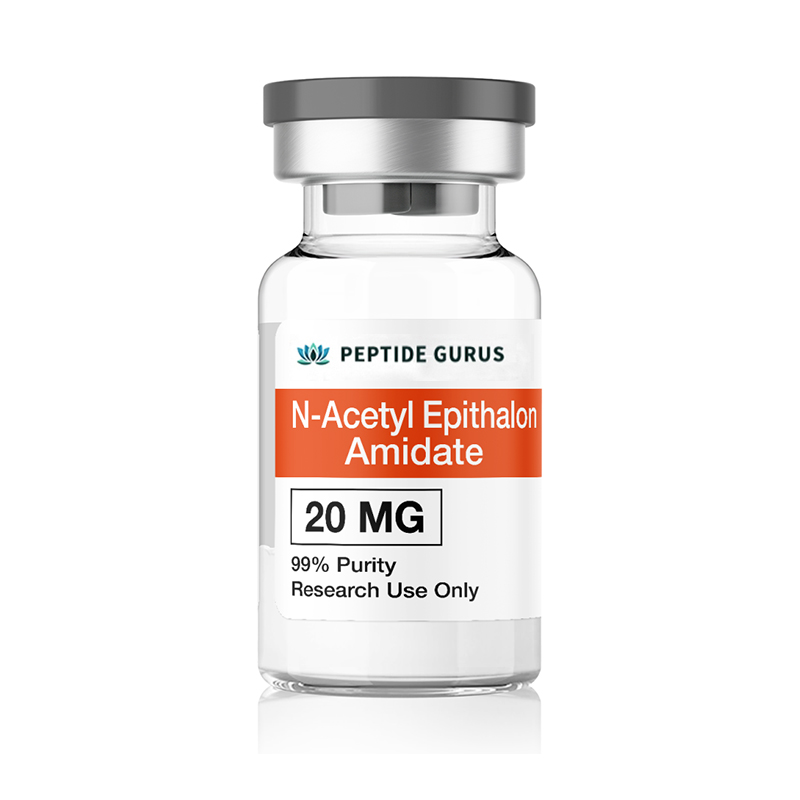
The modifications to Epithalon do not alter the peptide’s overall function, but they do alter the half-life, stability, and efficacy of Epithalon. Only two modifications are made to the native peptide: N-acetylation and amidation. Each has specific benefits that make Epithalon more potent and allow for lower dosing of the peptide.
Acetylation is a common, natural process that occurs to many proteins in the body. It is also a process used by the pharmaceutical industry to help a compound to reach the central nervous system. Acetylated molecules are much more capable of crossing the blood-brain barrier (BBB). Acetylation has been shown to increase the rate at which a compound crosses the BBB, thereby increasing the intensity of the compound’s effects and helping reduce the dosage of a compound required to achieve a specific outcome. Aspirin, for instance is the acetylated form of salicylic acid. Research shows that acetylation of salicylic acid increases the anti-inflammatory effects of the molecule.
Amidation is another natural protein modification that has been coopted by the pharmaceutical industry to improve the half-life of compounds. Amidated proteins are less sensitive to proteolytic degradation in the blood stream. They also tend to bind more strongly to their receptors, making amidation an excellent means of increasing potency and efficacy of a compound.
By altering Epithalon via acetylation and amidation, it is possible to increase the penetration of the peptide into the central nervous and protect it from degradation during the process. The result is increased potency of a given dose of Epithalon as well as increased efficacy of the compound due to improved receptor binding
Amidato de N-acetil Epithalon e o cérebro
Research in cell culture shows that Epithalon influences gene expression in neurogenetic differentiation as well as protein synthesis. Molecular modeling suggests that occurs through epigenetic modulation of a handful of genes coding for the proteins Nestin, GAP43, β Tubulin III, and Doublecortin. Epithalon increases expression of these peptides by as much as 1.8 times via binding with specific histone proteins and allowing the genes to be accessed more easily[1]. The result of easier access to the DNA in those regions is increased expression of the genes and thus increased protein production.
The proteins being affected by Epithalon are important in the growth and development of neurons as follows.
- Nestin - Esta proteína de filamento intermediário é expressa nas células nervosas e desempenha um papel importante no crescimento radial dos axônios. Também ajuda as células -tronco a se diferenciar nas células nervosas, estimulando o crescimento do tecido no sistema nervoso central (SNC).
- GAP43 - GAP43 é frequentemente chamado de proteína de “plasticidade” porque desempenha papéis importantes nos cones de crescimento neuronal durante o desenvolvimento e a regeneração axonal. Ele desempenha papéis críticos na aprendizagem. A exclusão de mesmo um alelo do gene gap43 leva à deficiência intelectual.
- β tubulina III - Este elemento de microtúbulos é encontrado em neurônios e células de testículo, onde está envolvido na formação de microtúbulos e respostas de estresse oxidativo. Pesquisas sugerem que é importante na adaptação celular ao estresse molecular e que as deficiências nessa proteína podem desempenhar um papel fundamental na agressividade do tumor.
- DoubleCortin-A duplecortina é uma proteína associada a microtúbulos encontrada em neurônios imaturos. É fundamental para o desenvolvimento de estruturas cerebrais complexas. As deficiências na duplecortina têm sido associadas à síndrome do córtex duplo, na qual a falta de migração de neurônios imaturos leva a um cérebro liso nos homens e neurônios extraviados nas fêmeas. O resultado da deficiência é uma profunda deficiência intelectual.
Ao melhorar o acesso às regiões de DNA que contêm os genes que controlam as proteínas acima, o epitalão tem sido associado a um aprendizado aprimorado, recuperação aprimorada da lesão do SNC e potencialmente a reduções nos efeitos a longo prazo do envelhecimento no cérebro. Esse último recurso é apenas uma das muitas maneiras pelas quais o Epithalon afetou positivamente o processo de envelhecimento. Em particular, o epitalão demonstrou afetar a diferenciação de células -tronco neuronais, promovendo o crescimento e o desenvolvimento de neurônios dos progenitores de células -tronco [2]. Com uma meia-vida mais longa e uma penetração aprimorada no SNC, a potência e os efeitos do amidato de N-acetil epitalão serão aprimorados em comparação com o epitalão padrão.
N-acetil epitalon amidato e saúde da pele
The ability of Epithalon to regulate gene expression patterns is hardly limited to the CNS. Research in skin stem cell cultures shows that Epithalon, even at very low concentrations increases proliferation of stems cells in rats regardless of age. In particular, fibroblast proliferation rates increase by as much as 45%[3].
It isn’t just the growth of fibroblasts that is affected, however. Research shows that Epithalon (and other short polyfunctional peptides) decrease rates of apoptosis and increase functional activity of fibroblasts[4]. This leads to “normalization” of the intracellular matrix. In other words, Epithalon restores homeostasis (biological balance) to the skin and helps to shift the balance in aging skin toward more youthful production of things like collage, elastin, and other proteins[4]. The net result is improved skin health. In fact, Epithalon has opened up a new field in research, referred to as gerontocosmetology, focused on skin health in age.
It is important to note that while cosmetology has a definite component focused on appearance, the field is much deeper than that. The visual effects of cosmetology overlay the deeper components of skin health. Aging skin appears wrinkled, for instance, because of a loss of extracellular matrix proteins like collagen and elastin. Replacement of these proteins, among others, reduces the appearance of wrinkles but also improves the strength and integrity of skin. Skin is the first line of defense against infection and is often referred to as the large organ of the immune system. Healthy skin means less infection, faster wound healing, better insulation against cold, improved response to heat, and much more. Thus, the field of gerontocosmetology is focused not just on the surface, but on the holistic health of the skin and thus the human body[3].
N-acetil epitalon amidate e saúde imunológica
Outra área em que o Epithalon desempenha um papel ativo na regulação de genes é o sistema imunológico. A pesquisa de cultura de células mostra que o epitalão altera a expressão de moléculas de sinalização imunológica como CD5, IL-2, arilalcilamina-N-acetiltransferase, interferon gama e Tram1. Cada uma dessas proteínas afeta o sistema imunológico da seguinte maneira.
- CD5 - CD5 influencia a diferenciação das células do sistema imunológico, ajudando as células -tronco a fazer a transição para células funcionais que combatem a infecção e combate a inflamação.
- IL-2-IL-2 é um potente regulador da produção de glóbulos brancos.
- Arilalcilamina-N-acetiltransferase-Essa enzima é fundamental para a produção de melatonina, o que não é apenas importante no sono, mas também desempenha um papel crítico na regulação do sistema imunológico.
- Interferon Gamma - A pesquisa em ratos mostra que o interferon gama é importante no combate à infecção por meio da ativação de macrófagos, células assassinas naturais e células T. Como desempenha um papel crítico na resposta do corpo à infecção viral em particular [5].
A deterioração da resposta imune é um dos principais marcadores e fatores de envelhecimento. A função imunológica desregulada leva à inflamação crônica e desempenha um papel no desenvolvimento de doenças cardiovasculares e demência. A capacidade do epitalão de regular o sistema imunológico é uma das maneiras pelas quais ele frustra os efeitos do envelhecimento. Mais uma vez, a capacidade do N-acetil epitalão amida de penetrar no SNC ajuda a garantir que seus efeitos de aumento imunológico sejam experimentados no cérebro, onde a regulação da inflamação pode ajudar a modelar os processos que levam à demência.
Amida e câncer de N-acetil epitilon
A pesquisa em modelos de ratos de vários tumores mostrou que a administração diária de epitalão reduz o crescimento do tumor [6]. O peptídeo está atualmente sob investigação como um potencial adjuvante do tratamento de câncer de mama positivo (hormonal positivo) HER-2/NEU, bem como leucemia e câncer testicular. Curiosamente, uma das ações primárias do epitalão no câncer parece ser através da regulação do gene Per1. O PER1, encontrado no hipotálamo, regula o ritmo circadiano e foi considerado subexpressado em pacientes com câncer [7].
N-acetil epitalon amidam e sono
As noted above, Epithalon regulates the production of the protein PER1, which plays an important role in circadian rhythm. This should come as no surprise given that Epithalon was first isolated from the pineal gland of cows and the primary role of the pineal gland is to regulate the sleep-wake cycle and the response of many animals to light. Research in rats shows that Epithalon also regulates the production and release of melatonin, which is a potent regulator of sleep.
Via action at the genes for arylalkylamine-N-acetyltransferase and pCREM, Epithalon increases melatonin production and can restore normal sleep-wake cycles[8]. Melatonin and sleep patterns often become dysregulated because of age, a phenomenon that is more than likely a result of changes in DNA expression patterns. By restoring DNA expression to a more youthful state, Epithalon helps to offset age-related changes in sleep. This, in turn, as a tremendous impact on everything from cognitive function to wound healing, the immune response, growth hormone secretion, weight gain, bone structure, and cardiovascular health.
N-acetil epitalão amida e envelhecimento
Each of the above sections has dealt with a specific feature of Epithalon function, but each has also made note of the fact that Epithalon helps to restore DNA expression patterns in aging animals to those seen in younger animals. Indeed, restoration of youthful DNA expression patterns is the overarching theme associated with Epithalon. Production of this peptide by the pineal gland appears to decline with age, resulting in many of the age-related changes that impact health and longevity. Supplementation with Epithalon in insects and rodents has shown that Epithalon can decrease mortality by more than half and prolong life by as much as 27%[9].
The above changes in DNA expression patterns, possibly through epigenetic changes that result of histone protein binding, is at least part of the reason that Epithalon has such profound effects on aging. It is not the whole story though. Research shows that Epithalon also impacts antioxidant activity and telomere health.
In rat models. Injection of Epithalon has been shown to decrease LPO production and reduce oxidative modification of proteins[10]. LPO production (lipid peroxidation products) result from lipid peroxidation, which is a normal biological process known to production free radicals. LPO is necessary for several normal biological functions, such as the destruction of invading pathogens and the recycling of damaged proteins. The production of potentially dangerous free radicals is offset by the equal production of antioxidants. With aging, however, antioxidant production wanes thus cellular and protein damage from free radical production increases. Epithalon offsets the decline in antioxidant production and thus helps to maintain the homeostatic balance that prevents damage from free radicals.
Research in human somatic cells shows that Epithalon activates an enzyme called telomerase[11]. Telomerase is important for maintain the end caps of DNA called telomeres. Telomeres are regions of the DNA that don not contain genes, but instead protect DNA during the process of replication. Replication slowly erodes DNA so having telomeres helps to prevent functional DNA from being damaged. Unfortunately, telomeres themselves degrade over time and when they get too short, cells stop functioning and eventually die. Telomerase helps to repair telomeres and thus helps to extend the lifespan of cells. By increasing activity of telomerase, Epithalon is directly impacting the health of DNA and thus how long cells live[12], [13].
Aging, in general, can be divided into several categories, but they are all interlinked. In general, DNA damage leads to protein malfunction. This, combined with direct protein damage, leads to cellular dysfunction. As cellular dysfunction accumulates, cells are either killed or become non-functional in a process known as senescence. Over time, both processes lead to tissue and organ dysfunction that eventually produces signs of aging like changes in sleep patterns, weight gain, wrinkling, greying of the hair, and increased incidence of chronic disease. The accumulation of this “macro-damage” is what eventually leads to death as the body becomes unable to sustain normal biological function. Epithalon helps to offset much of this dysfunction by regulating DNA and protein damage at a fundamental level.
Amida de N-acetil Epithalon: Resumo
Embora o Epithalon não seja a resposta única para interromper o processo de envelhecimento, ele fornece informações sobre como neutralizar alguns dos processos fundamentais que levam ao dano ao DNA e proteína podem ajudar a impedir o processo geral de envelhecimento. De acordo com o Dr. Vladimir Khavison, o padrinho do desenvolvimento do Epithalon, à medida que a pesquisa sobre epitalon continua, a ciência ganha uma compreensão mais profunda e diferenciada do que causa mamíferos, em geral, e os seres humanos envelhecem e eventualmente morrem. O Epithalon é uma chave importante para entender como os processos bioquímicos podem ser alterados para retardar ou até interromper algumas das causas fundamentais do envelhecimento. O desenvolvimento do amidato N-acetil epitalão é uma parte importante da pesquisa do epitálono, pois sua capacidade de penetrar no SNC facilitará a exploração dos pesquisadores dos efeitos do epitalão no envelhecimento no cérebro. Isso provavelmente fornecerá informações sobre como os processos bioquímicos, como o sono e o crescimento dos neurônios, afetam a aprendizagem, a memória, a resiliência cognitiva e muito mais.