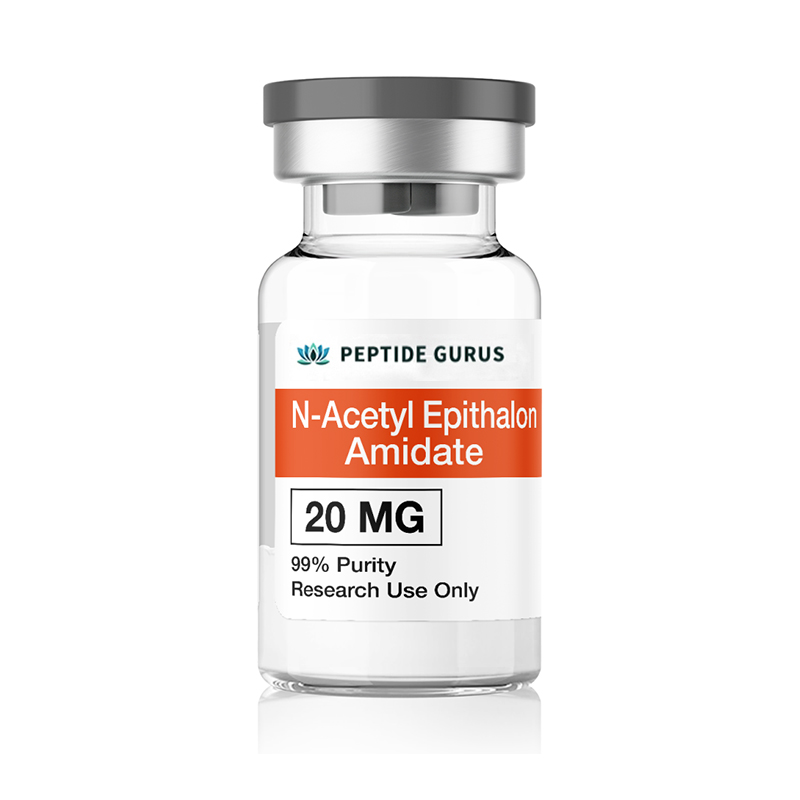
The modifications to Epithalon do not alter the peptide’s overall function, but they do alter the half-life, stability, and efficacy of Epithalon. Only two modifications are made to the native peptide: N-acetylation and amidation. Each has specific benefits that make Epithalon more potent and allow for lower dosing of the peptide.
Acetylation is a common, natural process that occurs to many proteins in the body. It is also a process used by the pharmaceutical industry to help a compound to reach the central nervous system. Acetylated molecules are much more capable of crossing the blood-brain barrier (BBB). Acetylation has been shown to increase the rate at which a compound crosses the BBB, thereby increasing the intensity of the compound’s effects and helping reduce the dosage of a compound required to achieve a specific outcome. Aspirin, for instance is the acetylated form of salicylic acid. Research shows that acetylation of salicylic acid increases the anti-inflammatory effects of the molecule.
Amidation is another natural protein modification that has been coopted by the pharmaceutical industry to improve the half-life of compounds. Amidated proteins are less sensitive to proteolytic degradation in the blood stream. They also tend to bind more strongly to their receptors, making amidation an excellent means of increasing potency and efficacy of a compound.
By altering Epithalon via acetylation and amidation, it is possible to increase the penetration of the peptide into the central nervous and protect it from degradation during the process. The result is increased potency of a given dose of Epithalon as well as increased efficacy of the compound due to improved receptor binding
Biểu mô n-acetyl amidate và não
Research in cell culture shows that Epithalon influences gene expression in neurogenetic differentiation as well as protein synthesis. Molecular modeling suggests that occurs through epigenetic modulation of a handful of genes coding for the proteins Nestin, GAP43, β Tubulin III, and Doublecortin. Epithalon increases expression of these peptides by as much as 1.8 times via binding with specific histone proteins and allowing the genes to be accessed more easily[1]. The result of easier access to the DNA in those regions is increased expression of the genes and thus increased protein production.
The proteins being affected by Epithalon are important in the growth and development of neurons as follows.
- Nestin - Protein sợi trung gian này được thể hiện trong các tế bào thần kinh và đóng một vai trò quan trọng trong sự phát triển xuyên tâm của các sợi trục. Nó cũng giúp các tế bào gốc phân biệt thành các tế bào thần kinh, do đó kích thích sự phát triển của mô trong hệ thần kinh trung ương (CNS).
- GAP43 - GAP43 thường được gọi là protein dẻo của người Hồi giáo vì đóng vai trò quan trọng trong các hình nón tăng trưởng tế bào thần kinh trong quá trình phát triển và tái tạo sợi trục. Nó đóng vai trò quan trọng trong học tập. Việc xóa thậm chí một alen của gen GAP43 dẫn đến khuyết tật trí tuệ.
- Tubulin III - Phần tử vi ống này được tìm thấy trong các tế bào thần kinh và các tế bào tinh hoàn nơi nó liên quan đến sự hình thành vi ống và phản ứng ứng suất oxy hóa. Nghiên cứu cho thấy rằng điều quan trọng trong sự thích nghi của tế bào đối với stress phân tử và sự thiếu hụt trong protein này có thể đóng vai trò chính trong sự tích cực của khối u.
- Doublecortin-Doublecortin là một protein liên quan đến vi ống được tìm thấy trong các tế bào thần kinh chưa trưởng thành. Nó là rất quan trọng đối với sự phát triển của các cấu trúc não phức tạp. Sự thiếu hụt trong doublecortin có liên quan đến hội chứng vỏ não kép, trong đó thiếu sự di chuyển của các tế bào thần kinh chưa trưởng thành dẫn đến một bộ não trơn tru ở nam giới và các tế bào thần kinh bị đặt sai ở phụ nữ. Kết quả của sự thiếu hụt là khuyết tật trí tuệ sâu sắc.
Bằng cách cải thiện khả năng tiếp cận các vùng DNA có chứa các gen kiểm soát các protein trên, biểu mô đã được liên kết với việc học tập được cải thiện, tăng cường phục hồi từ chấn thương CNS và có khả năng giảm tác động lâu dài của lão hóa trên não. Tính năng thứ hai này chỉ là một trong nhiều cách mà biểu mô đã được tìm thấy ảnh hưởng tích cực đến quá trình lão hóa. Cụ thể, biểu mô đã được chứng minh là ảnh hưởng đến sự biệt hóa tế bào gốc tế bào thần kinh bằng cách thúc đẩy sự tăng trưởng và phát triển của các tế bào thần kinh từ các tổ tiên tế bào gốc [2]. Với thời gian bán hủy dài hơn và sự thâm nhập được cải thiện trong CNS, tiềm năng và tác động của amidate biểu mô n-acetyl sẽ được tăng cường so với biểu mô tiêu chuẩn.
N-acetyl biểu mô amidate và sức khỏe da
The ability of Epithalon to regulate gene expression patterns is hardly limited to the CNS. Research in skin stem cell cultures shows that Epithalon, even at very low concentrations increases proliferation of stems cells in rats regardless of age. In particular, fibroblast proliferation rates increase by as much as 45%[3].
It isn’t just the growth of fibroblasts that is affected, however. Research shows that Epithalon (and other short polyfunctional peptides) decrease rates of apoptosis and increase functional activity of fibroblasts[4]. This leads to “normalization” of the intracellular matrix. In other words, Epithalon restores homeostasis (biological balance) to the skin and helps to shift the balance in aging skin toward more youthful production of things like collage, elastin, and other proteins[4]. The net result is improved skin health. In fact, Epithalon has opened up a new field in research, referred to as gerontocosmetology, focused on skin health in age.
It is important to note that while cosmetology has a definite component focused on appearance, the field is much deeper than that. The visual effects of cosmetology overlay the deeper components of skin health. Aging skin appears wrinkled, for instance, because of a loss of extracellular matrix proteins like collagen and elastin. Replacement of these proteins, among others, reduces the appearance of wrinkles but also improves the strength and integrity of skin. Skin is the first line of defense against infection and is often referred to as the large organ of the immune system. Healthy skin means less infection, faster wound healing, better insulation against cold, improved response to heat, and much more. Thus, the field of gerontocosmetology is focused not just on the surface, but on the holistic health of the skin and thus the human body[3].
N-acetyl biểu mô amidate và sức khỏe miễn dịch
Một lĩnh vực khác trong đó biểu mô đóng vai trò tích cực trong điều hòa gen là hệ thống miễn dịch. Nghiên cứu nuôi cấy tế bào cho thấy biểu hiện làm thay đổi sự biểu hiện của các phân tử tín hiệu miễn dịch như CD5, IL-2, arylalkylamine-N-acetyltransferase, interferon gamma và Tram1. Mỗi protein này ảnh hưởng đến hệ thống miễn dịch như sau.
- CD5 - CD5 ảnh hưởng đến sự khác biệt của các tế bào của hệ thống miễn dịch, giúp các tế bào gốc chuyển sang các tế bào chức năng chống lại nhiễm trùng và chống viêm.
- IL-2-IL-2 là một chất điều chỉnh mạnh mẽ sản xuất tế bào bạch cầu.
- Arylalkylamine-N-acetyltransferase-enzyme này rất quan trọng đối với việc sản xuất melatonin, điều này không chỉ quan trọng trong giấc ngủ mà còn đóng vai trò quan trọng trong việc điều hòa hệ thống miễn dịch.
- Interferon gamma - Nghiên cứu trên chuột cho thấy interferon gamma rất quan trọng trong việc chống lại nhiễm trùng thông qua kích hoạt các đại thực bào, tế bào giết người tự nhiên và các tế bào T. Nó giống như đóng một vai trò quan trọng trong phản ứng của cơ thể đối với nhiễm virus nói riêng [5].
Sự suy giảm của phản ứng miễn dịch là một trong những dấu hiệu chính và trình điều khiển lão hóa. Chức năng miễn dịch bị điều hòa dẫn đến viêm mãn tính và đóng vai trò trong sự phát triển của bệnh tim mạch và chứng mất trí nhớ. Khả năng của biểu mô để điều chỉnh hệ thống miễn dịch là một trong những cách mà nó cản trở các tác động của lão hóa. Một lần nữa, khả năng biểu mô N-acetyl được cải thiện để thâm nhập vào CNS giúp đảm bảo rằng các tác dụng tăng cường miễn dịch của nó được trải nghiệm trong não, trong đó việc điều chỉnh viêm có thể giúp làm dịu các quá trình dẫn đến chứng mất trí nhớ.
N-acetyl biểu mô amidate và ung thư
Nghiên cứu trong các mô hình chuột của các khối u khác nhau đã chỉ ra rằng việc sử dụng biểu mô hàng ngày làm giảm sự phát triển của khối u [6]. Peptide hiện đang được điều tra như là một chất bổ trợ tiềm năng trong điều trị ung thư vú HER-2/Neu dương tính (dương tính với hormone) cũng như bệnh bạch cầu và ung thư tinh hoàn. Thật thú vị, một trong những hành động chính của biểu mô trong ung thư dường như là thông qua quy định của gen Per1. Per1, được tìm thấy ở vùng dưới đồi, điều chỉnh nhịp sinh học và đã được tìm thấy là biểu hiện dưới mức ở bệnh nhân ung thư [7].
N-acetyl biểu mô amidate và ngủ
As noted above, Epithalon regulates the production of the protein PER1, which plays an important role in circadian rhythm. This should come as no surprise given that Epithalon was first isolated from the pineal gland of cows and the primary role of the pineal gland is to regulate the sleep-wake cycle and the response of many animals to light. Research in rats shows that Epithalon also regulates the production and release of melatonin, which is a potent regulator of sleep.
Via action at the genes for arylalkylamine-N-acetyltransferase and pCREM, Epithalon increases melatonin production and can restore normal sleep-wake cycles[8]. Melatonin and sleep patterns often become dysregulated because of age, a phenomenon that is more than likely a result of changes in DNA expression patterns. By restoring DNA expression to a more youthful state, Epithalon helps to offset age-related changes in sleep. This, in turn, as a tremendous impact on everything from cognitive function to wound healing, the immune response, growth hormone secretion, weight gain, bone structure, and cardiovascular health.
Biểu mô n-acetyl amidate và lão hóa
Each of the above sections has dealt with a specific feature of Epithalon function, but each has also made note of the fact that Epithalon helps to restore DNA expression patterns in aging animals to those seen in younger animals. Indeed, restoration of youthful DNA expression patterns is the overarching theme associated with Epithalon. Production of this peptide by the pineal gland appears to decline with age, resulting in many of the age-related changes that impact health and longevity. Supplementation with Epithalon in insects and rodents has shown that Epithalon can decrease mortality by more than half and prolong life by as much as 27%[9].
The above changes in DNA expression patterns, possibly through epigenetic changes that result of histone protein binding, is at least part of the reason that Epithalon has such profound effects on aging. It is not the whole story though. Research shows that Epithalon also impacts antioxidant activity and telomere health.
In rat models. Injection of Epithalon has been shown to decrease LPO production and reduce oxidative modification of proteins[10]. LPO production (lipid peroxidation products) result from lipid peroxidation, which is a normal biological process known to production free radicals. LPO is necessary for several normal biological functions, such as the destruction of invading pathogens and the recycling of damaged proteins. The production of potentially dangerous free radicals is offset by the equal production of antioxidants. With aging, however, antioxidant production wanes thus cellular and protein damage from free radical production increases. Epithalon offsets the decline in antioxidant production and thus helps to maintain the homeostatic balance that prevents damage from free radicals.
Research in human somatic cells shows that Epithalon activates an enzyme called telomerase[11]. Telomerase is important for maintain the end caps of DNA called telomeres. Telomeres are regions of the DNA that don not contain genes, but instead protect DNA during the process of replication. Replication slowly erodes DNA so having telomeres helps to prevent functional DNA from being damaged. Unfortunately, telomeres themselves degrade over time and when they get too short, cells stop functioning and eventually die. Telomerase helps to repair telomeres and thus helps to extend the lifespan of cells. By increasing activity of telomerase, Epithalon is directly impacting the health of DNA and thus how long cells live[12], [13].
Aging, in general, can be divided into several categories, but they are all interlinked. In general, DNA damage leads to protein malfunction. This, combined with direct protein damage, leads to cellular dysfunction. As cellular dysfunction accumulates, cells are either killed or become non-functional in a process known as senescence. Over time, both processes lead to tissue and organ dysfunction that eventually produces signs of aging like changes in sleep patterns, weight gain, wrinkling, greying of the hair, and increased incidence of chronic disease. The accumulation of this “macro-damage” is what eventually leads to death as the body becomes unable to sustain normal biological function. Epithalon helps to offset much of this dysfunction by regulating DNA and protein damage at a fundamental level.
N-acetyl Epithalon Amidate: Tóm tắt
Mặc dù biểu mô không phải là câu trả lời duy nhất để tạm dừng quá trình lão hóa, nhưng nó cung cấp cái nhìn sâu sắc về cách chống lại một số quá trình nền tảng dẫn đến tổn thương DNA và protein có thể giúp ngăn chặn quá trình lão hóa tổng thể. Theo Tiến sĩ Vladimir Khavison, cha đỡ đầu của sự phát triển Epithalon, khi nghiên cứu về biểu mô tiếp tục, khoa học có được sự hiểu biết sâu sắc hơn, nhiều sắc thái hơn về nguyên nhân gây ra động vật có vú, nói chung và con người đến tuổi và cuối cùng chết. Epithalon là một chìa khóa quan trọng để hiểu làm thế nào các quá trình sinh hóa có thể được thay đổi để làm chậm hoặc thậm chí ngăn chặn một số nguyên nhân cơ bản của lão hóa. Sự phát triển của N-acetyl Epithalon Amidate là một phần quan trọng của nghiên cứu Epithalon vì khả năng xâm nhập của CNS sẽ giúp các nhà nghiên cứu dễ dàng khám phá các tác động của biểu mô đối với lão hóa trong não. Điều này có thể sẽ cung cấp cái nhìn sâu sắc về cách các quá trình sinh hóa như giấc ngủ và tăng trưởng tế bào thần kinh ảnh hưởng đến việc học tập, trí nhớ, khả năng phục hồi nhận thức và nhiều hơn nữa.