

• فوائد وآثار ببتيد جونادوريلين الجانبية
فوائد وآثار ببتيد جونادوريلين الجانبية
X
فوائد وآثار ببتيد جونادوريلين الجانبية
الاتصال للطلب
راسلنا الآن لتقديم طلبك مع الدعم الفردي. مخزون محدود! نقبل زيل، كاش آب، فينمو، التحويلات البنكية، والعملات الرقمية.
المياه البكتيرية

مجاني (1) 30 مل من الماء البكتيري
مع أوامر مؤهلة أكثر500 دولار أمريكي. (يستبعد منتجات الكبسولة ، والببتيدات التجميلية ، ورموز الترويجي والشحن)

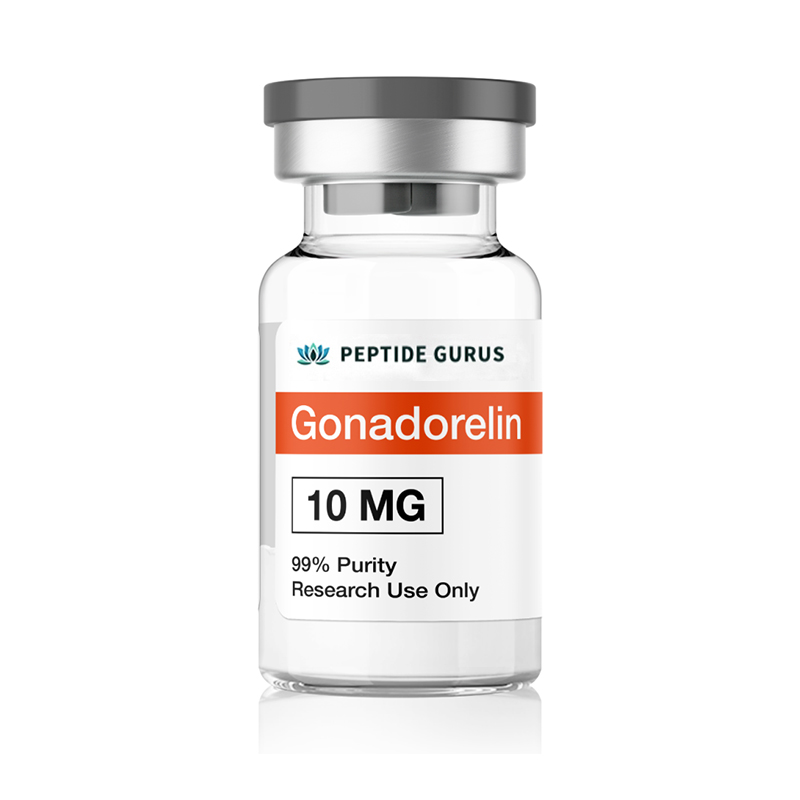
غونادوريلين هو ناهض هرمون يطلق هرمونًا والذي أظهر فائدة في علاج العقم ونقص الغموض. تشير الأبحاث الحديثة إلى أن الغونادوريلين قد يكون مفيدًا في إبطاء نمو سرطان الثدي والبروستاتا. تظهر الدراسات أيضًا وعدًا في علاج مرض الزهايمر.
استخدام المنتج:يهدف هذا المنتج إلى مادة كيميائية بحثية فقط.يسمح هذا التصنيف باستخدام المواد الكيميائية البحثية بدقة في اختبار المختبر والتجريب المختبري فقط. جميع معلومات المنتج المتاحة على هذا الموقع مخصصة للأغراض التعليمية فقط. يُمنع قانون مقدمة جسدية من أي نوع إلى البشر أو الحيوانات. يجب التعامل مع هذا المنتج فقط من قبل المهنيين المرخصين والمؤهلين. هذا المنتج ليس مخدرات أو طعامًا أو مستحضرات تجميل وقد لا يتم سوء معاملته أو إساءة استخدامه أو مضلله كدواء أو طعام أو مستحضرات تجميل.

ما هو الغونادوريلين؟

Gonadorelin (GNRH) هو هرمون هرمون الإفراج عن الغدد التناسلية. أنه يحفز تخليق وإطلاق هرمون اللوتين وهرمون تحفيز الجريب. يتم استخدامه في الطب البشري لعلاج العقم ، ومخالفات دورة الحيض ، ونقص الغموض. كما أنه يستخدم كعامل تشخيص في تقييم وظيفة الغدة النخامية. لقد وجدت الأبحاث المستمرة استخدامات محتملة للغونادوريلين في علاج سرطان الثدي والبروستاتا وكذلك مرض الزهايمر.

بنية الغونادوريلين

Gonadorelin Structureمصدر:بوبتشيم تسلسل:Pyr-His-TRP-Ser-Tyr-Gly-Leu-Arg-Pro-Glyالصيغة الجزيئية:ج55ح75ن17يا13 الوزن الجزيئي:1182.311 جم/مولPubChem CID: 638793 رقم CAS:9034-40-6المرادفات:هرمون النمو عامل إطلاق سراح ، السوماتوكرينين ، سوماتوليبرن

آثار الغونادوريلين

أبحاث الغونادوريلين والوقاية من سرطان الثدي

Research suggests that having a higher life-time exposure to estrogen may increase a woman’s chance of developing breast cancer. Women who start their period at a younger age, go through menopause at a later age, take estrogen-containing birth control, or have menopausal hormone replacement therapy all have a higher risk of developing breast cancer. Thankfully, in the case of birth control, the risk diminishes when the pills are no longer taken and eventually the increased risk returns to baseline. Of course, birth control is a double-edged sword because even though its use increases risk of breast cancer, it decreases risk of ovarian cancer. Some breast cancer cells require estrogen to grow and minimizing estrogen production or blocking estrogen receptors has long been an established method for treating certain forms of breast cancer. Research into gonadorelin shows that it can be used to suppress ovarian production of estrogen and that this may be a means of preventing breast cancer in the first place. This concept is based on the idea that some women, due to genetic and environmental factors, are at higher risk of developing breast cancer in their postmenopausal years. The use of gonadorelin in this setting is safe and cost-effective, making it an attractive means of reducing cancer burden[1]. تشير الأبحاث إلى أن استخدام الغونادوريلين لمدة 10 سنوات يمكن أن يقلل من خطر الإصابة بسرطان الثدي بنسبة تصل إلى 50 ٪ وأن استخدامه لمدة 15 عامًا قد يقلل من المخاطر بنسبة 70 ٪[2]. The benefits of gonadorelin do not stop at breast cancer prevention, however, Research indicates that adjuvant therapy with anti-estrogens reduces disease progression by as much as 50% in cases where cancer is sensitive to estrogen. Unfortunately, currently available treatments are limited in their efficacy because cancer cells tend to develop resistance to them over time. This resistance usually arises as a result of increased estrogen receptor expression, making it impossible to block every estrogen receptor without severe side effects. Gonadorelin could circumvent this problem by reducing estrogen expression in the first place. This would not only directly reduce growth of estrogen-sensitive cancer, it would boost the efficacy of receptor blocking medications and extend their useful lifespan[3]. Research in postmenopausal women with hyperandrogenism (too much estrogen) has revealed that long-term GnRH treatment reduces overall levels of estrogen and thus the risk of developing breast cancer. It does so without serious side effects and thus offers an alternative to the current therapy, which is surgical removal of the ovaries[4].

غونادوريلين اختراق في سرطان البروستاتا

على الرغم من ما يقودنا إلى الاعتقاد من قبل وسائل الإعلام الشعبية ، فإن سرطان البروستاتا هو في الواقع الأكثر حساسية من جميع أنواع السرطان. قد يبدو هذا مشكلة ، لكنه يمثل بالفعل فرصة للتدخل. باختصار ، من خلال قطع إمدادات التستوستيرون ومشتقاته إلى سرطان البروستاتا ، من الممكن إبطاء النمو بشكل كبير وحتى وقفه تمامًا. التحدي ، بالطبع ، هو قطع كل تدفق الهرمونات. أدى ذلك في البداية إلى الإزالة الجراحية للخصيتين لدى الرجال المصابين بسرطان البروستاتا العدواني ، وهو إجراء تم استبداله بسرعة بإدارة الغونادوريلين عندما تبين أنه فعال تمامًا ، وربما يمكن عكسه[5]. The use of GnRH in men suffering from prostate cancer began as far back as 1979 and was referred to as medical castration. This mode of treatment eventually led to an interesting finding, however, which is that some androgens are made locally in the prostate via a mechanism called intracrinology[6]. هذا ، بالطبع ، يعني أن الحصار GnRH فعال جزئيًا فقط في علاج سرطان البروستاتا. بمساعدة من الغونادوريلين ، تمكن العلماء من تطوير عقارين جديدين تم قبولهما من قبل إدارة الأغذية والعقاقير لعلاج سرطان البروستاتا المقاوم للمقياس (CRPC). هذه الأدوية مهمة للغاية وتوفر خطًا جديدًا من الدفاع ضد تطور سرطان البروستاتا والورم الخبيث. قد يجدون حتى في النهاية استخدامًا كوقاية لدى كبار السن من الرجال[7]. The use of both gonadorelin and newer, localized drugs in the treatment of prostate cancer is referred to as combined androgen blockage (CAB). When combined with effective screening and early detection, CAB is one of the few therapies in the realm of oncology to offer a cure – not just remission, but a cure[8]. عند استخدامها بفعالية ودمجت مع الكشف المبكر ، تتيح CAB علاج 99 ٪ من جميع سرطان البروستاتا.تأثير نظائر الجونادوريلين و GNRH على مستويات هرمون تستوستيرونThe impact of gonadorelin and GnRH analogues on testosterone levels Source:مجلات

قد يقلل الغونادوريلين من مخاطر الخرف

تشير الأبحاث إلى أن الهرمونات الجنسية ، وخاصة هرمون اللوتين (LH) ، تعمل على الدماغ بطرق خارج نطاق الشكل الجنسي أو القدرة التناسلية. في الواقع ، تم ربط الارتفاع المرتبط في LH الذي يحدث مع انقطاع الطمث بزيادة حدوث مرض الزهايمر وانخفاض أداء الذاكرة في كل من البشر والحيوانات. تكشف الأبحاث الدقيقة في الفئران أيضًا أن LH يعمل مباشرة على الحصين ، وهو مركز الذاكرة الأساسي في الدماغ. انخفضت الفئران المعطاة LH أداء الذاكرة وخلل وظيفي الحصين ، وهو عجز ينعكس عن طريق إدارة دواء حظر LH[9]. Further research on LH has revealed that higher levels of the hormone are associated with increased neuropathology. In particular, it has been revealed that LH promotes the development of plaques associated with Alzheimer’s[10]. من المنطقي إذن أن تقليل مستويات LH قد يساعد في تقليل تطور مرض الزهايمر. لقد وُلد هذا ، على الأقل جزئيًا ، في نماذج الماوس التي تبين أن التخلص من مستقبلات LH في الدماغ يحسن أمراض الأميلويد ويساعد على الحفاظ على صحة الخلايا مثل الخلايا النجمية ، التي تدعم وتحمي الخلايا العصبية[11]. As it turns out, testosterone is beneficial to brain health and actually helps to preserve cognitive function. Thus, simply blocking the entire hypothalamic-pituitary-gondal axis is not necessarily an effective means of treating Alzheimer’s disease. That is why scientists have set out to test gonadorelin derivatives to discern if selective interference in LH production is possible and can have potential benefits. This research, while ongoing, has led to the understanding that leuprolide (a common medication used to treat uterine fibroids and a GnRH receptor agonist) is effective in decreasing the risk of Alzhimer’s compared to other gonadorelin analogues[12]. يمكن أن تساعد الأبحاث المستمرة في تحديد السبب في أن هذا هو الحال ، ولكن من المهم الإشارة إلى أن الرجال الذين يتطلعون إلى استخدام علاج الكابينة الفعال للغاية ضد سرطان البروستاتا لا يحتاجون إلى الاختيار بين السرطان ومرض الزهايمر. يمكن استخدام ليوبرولايد في هذا الإعداد لتعويض مخاطر الكابينة فيما يتعلق بمرض الزهايمر. على وجه الخصوص ، فإن قدرة ليوبروليد على تنظيم مستويات الغدد التناسلية في الدم (LH على وجه الخصوص) هي عمومًا بما يكفي لتعويض تأثيرات هرمون التستوستيرون المنخفض[13]. New research is seeking to understand how gonadorelin and its analogues affect APOE and MS4A6A expression in Alzheimer’s disease. Both genetic loci are associated with late-onset Alzheimer’s disease, but research suggests that they need to operate in tandem to produce serious problems and that interfering with one gene loci or the other is enough to short-circuit the pathway to pathology. Gonadorelin affects this process of tandem interaction, but it isn’t clear how or why[14]. في الوقت الحالي ، يعمل الباحثون على فهم كيف يمكن مقاطعة تفاعل الجينات في مرض الزهايمر لعلاج الحالة ومنعها. غونادوريلين هو الببتيد مهم في هذا البحث.

أبحاث غونادوريلين

Gonadorelin is hardly a new peptide in the treatment of human and mammalian disease, but researchers are constantly uncovering new ways in which GnRH and GnRH analogues operate in both normal physiology as well as the development of disease. The discovery that gonadorelin can play a role in treating prostate cancer was a breakthrough that has allowed doctors to develop a cure so effective that fully 99% of people with prostate cancer can be cured if the disease is caught early enough. It looks like similar breakthroughs are on the horizon with the finding the gonadorelin and its down-stream hormones are substantial players in the pathways that lead to Alzheimer’s disease risk. Gonadorelin exhibits minimal side effects, low oral and excellent subcutaneous bioavailability in mice. Per kg dosage in mice does not scale to humans. Gonadorelin for sale at
معلمو الببتيديقتصر على البحث التعليمي والعلمي فقط ، وليس للاستهلاك البشري. فقط شراء Gonadorelin إذا كنت باحثًا مرخصًا.

كاتب المقال

تم البحث في الأدبيات المذكورة أعلاه وتحريرها وتنظيمها من قبل الدكتور لوغان ، د.كلية الطب بجامعة كيس ويسترن ريزيرفو B.S. في البيولوجيا الجزيئية.

مؤلف المجلة العلمية

الدكتور جورجيو سكونتوcurrently studies at the IRCCS National Cancer Institute in Italy. His accolades include, a 1963 High School degree, Maturità Classica 1969 Degree in Medicine and Surgery, University of Milan, Italy 1974 Degree Specialist in Endocrinology, University of Turin, Italy. Doctor Secreto has been working at the National Cancer Institute of Milan since 1970 up to now, after his retirement in December 2010. The role of androgens in breast cancer is his main field of study. He has been teacher at the Italian School of Senology (1989-1996), Associate Professor in Oncology, L.U.de.S. University, Lugano, Switzerland (1999-2008), and Associate Professor in Endocrinology, Nurses’ School, University of Milan (2003-2008). He is active member of the New York Academy of Sciences and the American Association for the Advancement of Sciences. He published about 100 papers, including a few that pertain to GnRH’s effects on the reduction of breast cancer via minimizing excessive androgens. Dr. Giorgio Secreto is being referenced as one of the leading scientists involved in the research and development of Gonadorelin. In no way is this doctor/scientist endorsing or advocating the purchase, sale, or use of this product for any reason. There is no affiliation or relationship, implied or otherwise, between
معلمو الببتيدوهذا الطبيب. الغرض من الاستشهاد بالطبيب هو الاعتراف والاعتراف والقيام بجهود البحث والتطوير الشامل التي أجراها العلماء الذين يدرسون هذا الببتيد. يتم سرد Doctor Secreto في [1] و [3] تحت الاستشهادات المشار إليها.

الاقتباسات المرجعية

    G. Secreto et al., “A novel approach to breast cancer prevention: reducing excessive ovarian androgen production in elderly women,” Breast Cancer Res. Treat., vol. 158, no. 3, pp. 553–561, 2016. D. V. Spicer and M. C. Pike, “Sex steroids and breast cancer prevention,” J. Natl. Cancer Inst. Monogr., no. 16, pp. 139–147, 1994. G. Secreto, P. Muti, M. Sant, E. Meneghini, and V. Krogh, “Medical ovariectomy in menopausal breast cancer patients with high testosterone levels: a further step toward tailored therapy,” Endocr. Relat. Cancer, vol. 24, no. 11, pp. C21–C29, 2017. E. S. Vollaard, A. P. van Beek, F. A. J. Verburg, A. Roos, and J. A. Land, “Gonadotropin-releasing hormone agonist treatment in postmenopausal women with hyperandrogenism of ovarian origin,” J. Clin. Endocrinol. Metab., vol. 96, no. 5, pp. 1197–1201, May 2011. F. Labrie, “Hormonal therapy of prostate cancer,” Prog. Brain Res., vol. 182, pp. 321–341, 2010. F. Labrie, “GnRH agonists and the rapidly increasing use of combined androgen blockade in prostate cancer,” Endocr. Relat. Cancer, vol. 21, no. 4, pp. R301-317, Aug. 2014. F. Labrie, “Combined blockade of testicular and locally made androgens in prostate cancer: a highly significant medical progress based upon intracrinology,” J. Steroid Biochem. Mol. Biol., vol. 145, pp. 144–156, Jan. 2015. F. Labrie, “[Keyrole of endocrinology in the victory against prostate cancer],” Bull. Cancer (Paris), vol. 93, no. 9, pp. 949–958, Sep. 2006. V. Burnham, C. Sundby, A. Laman-Maharg, and J. Thornton, “Luteinizing hormone acts at the hippocampus to dampen spatial memory,” Horm. Behav., vol. 89, pp. 55–63, 2017. C. V. Rao, “Involvement of Luteinizing Hormone in Alzheimer Disease Development in Elderly Women,” Reprod. Sci. Thousand Oaks Calif, vol. 24, no. 3, pp. 355–368, 2017. J. Lin et al., “Genetic ablation of luteinizing hormone receptor improves the amyloid pathology in a mouse model of Alzheimer disease,” J. Neuropathol. Exp. Neurol., vol. 69, no. 3, pp. 253–261, Mar. 2010. R. L. Bowen, T. Butler, and C. S. Atwood, “Not All Androgen Deprivation Therapies Are Created Equal: Leuprolide and the Decreased Risk of Developing Alzheimer’s Disease,” J. Clin. Oncol., vol. 34, no. 23, p. 2800, Aug. 2016. M. A. Smith, R. L. Bowen, R. Q. Nguyen, G. Perry, C. S. Atwood, and A. A. Rimm, “Putative Gonadotropin-Releasing Hormone Agonist Therapy and Dementia: An Application of Medicare Hospitalization Claims Data,” J. Alzheimers Dis. JAD, vol. 63, no. 4, pp. 1269–1277, 2018. A. Cáceres, J. E. Vargas, and J. R. González, “APOE and MS4A6A interact with GnRH signaling in Alzheimer’s disease: Enrichment of epistatic effects,” Alzheimers Dement. J. Alzheimers Assoc., vol. 13, no. 4, pp. 493–497, Apr. 2017.
جميع المقالات ومعلومات المنتج المقدمة على هذا الموقع مخصصة لأغراض إعلامية وتعليمية فقط.تم تزويد المنتجات المقدمة على هذا الموقع للدراسات داخل المختبر فقط. يتم إجراء الدراسات داخل المختبر (اللاتينية: في الزجاج) خارج الجسم. هذه المنتجات ليست أدوية أو أدوية ولم تتم الموافقة عليها من قبل إدارة الأغذية والعقاقير لمنع أو علاج أو علاج أي حالة طبية أو مرض أو مرض. يُمنع قانون مقدمة جسدية من أي نوع إلى البشر أو الحيوانات.

طلب استثرات

معلومات عنا

الببتيدجوروس هو المورد الرائد للببتيدات البحثيات الأمريكية الصنع ، حيث تقدم منتجات عالية الجودة بأسعار تنافسية. مع التركيز على التميز وخدمة العملاء ، فإنها تضمن عملية طلب آمنة ومريحة مع الشحن العالمي.

اطلب اقتباس

  • معلمو الببتيد
  • info@peptidegurus.com
  • جلينديل ، هو ، الولايات المتحدة الأمريكية
  • اتصال

    طلب استثرات