1. ลดน้ําตาลในเลือด
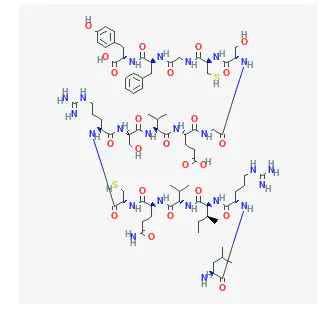
การวิจัยในสัตว์พบว่าปลายขั้ว c ของ hGH มีส่วนหลักต่อผลของโปรตีนในเลือดต่ํา (ลดน้ําตาลในเลือด) การทดสอบชิ้นส่วนที่แตกต่างกันอย่างน้อยหกชิ้นที่ได้จากส่วนนี้ของ hGH แสดงให้เห็นว่าชิ้นส่วน 176-191 เป็นอนุพันธ์สังเคราะห์ที่มีประสิทธิภาพสูงสุดของ hGH ในการลดระดับน้ําตาลในเลือด ผลกระทบนี้เป็นรองจากการเพิ่มขึ้นอย่างต่อเนื่องของระดับอินซูลินในพลาสมา
[1]. มีความสนใจในการใช้ชิ้นส่วน 176-191 เป็นการรักษาทั้งโรคเบาหวานและเบาหวานประเภท 2
2. การเผาผลาญไขมันและการลดน้ําหนัก
ชิ้นส่วน 176-191 ได้รับฉายาว่า "ชิ้นส่วนสลายไขมัน" เนื่องจากการทดสอบในหนูพบว่าเปปไทด์มีคุณสมบัติในการเผาผลาญไขมันและการลดน้ําหนักอย่างมาก เชื่อกันว่าการกระทํานี้เกิดขึ้นจากการเพิ่มขึ้นของการผลิตตัวรับ beta-3 adrenergic (β3-AR หรือ ADRB3)
[2]. การกระทําของตัวเร่งปฏิกิริยาที่ ADRB3 เป็นที่ทราบกันดีว่าช่วยเพิ่มการเผาผลาญไขมันในเนื้อเยื่อไขมันโดยตรง และยังรับผิดชอบในการสร้างความร้อนในกล้ามเนื้อโครงร่าง
[3]. หนูที่ได้รับการดัดแปลงพันธุกรรมเพื่อไม่ให้เกิด ADRB3 ไม่ตอบสนองต่อผลการสลายไขมันของ hGH หรือชิ้นส่วน 176-191
[2].
Studies show that the increased fat burning associated with fragment 176-191 directly correlates with energy expenditure and thus weight reduction, leading to a nearly 50% reduction in weight gain in obese animals over a three-week course
[4]. ที่น่าสนใจคือผลการลดน้ําหนักพบได้เฉพาะในหนูอ้วนโดยหนูไม่ติดมันจะรักษาน้ําหนักตัวให้เป็นปกติโดยเฉลี่ยแม้ว่าจะสัมผัสกับชิ้นส่วน 176-191
[2]. การค้นพบเหล่านี้บ่งชี้ว่ามีเส้นทางการกํากับดูแลทุติยภูมิสําหรับการสลายไขมันที่แทนที่การทํางานของ ADRB3 เมื่อน้ําหนักตัวอยู่ที่หรือใกล้เคียงกับอุดมคติ
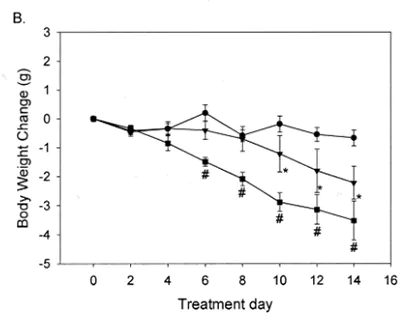
Body weight in genetically obese mice after two weeks of treatment with a single daily dose of fragment 176-191
Source:
อ็อกซ์ฟอร์ดอะคาเดมีคติ
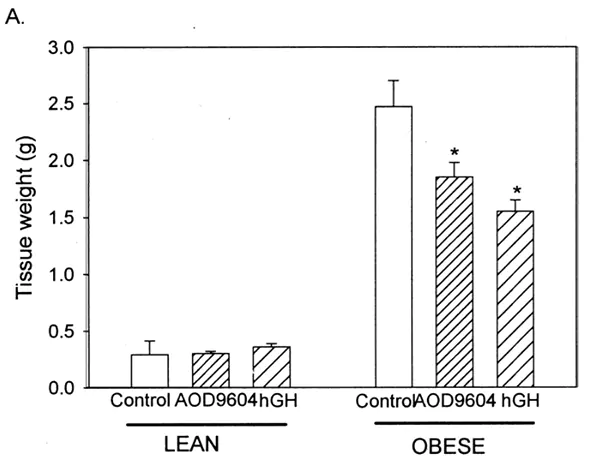
Effect of saline (control), fragment 176-191, and hGH on white adipose tissue mass in obese mice over 14 days
Source:
อ็อกซ์ฟอร์ดอะคาเดมีคติ
3. ส่งเสริมการสร้างกระดูกอ่อนใหม่
แม้ว่าชิ้นส่วน 176-191 จะเป็นที่สนใจเป็นหลักสําหรับคุณสมบัติการสลายไขมัน แต่เปปไทด์อยู่ระหว่างการตรวจสอบเพื่อประโยชน์อื่นๆ ที่เป็นไปได้ บทความปี 2015 จากเกาหลีเปิดเผยว่าชิ้นส่วน 176-191 อาจสามารถเพิ่มผลของการฉีดกรดไฮยาลูโรนิกในการส่งเสริมการสร้างกระดูกอ่อนใหม่ การศึกษาในกระต่ายระบุว่าการฉีดชิ้นส่วน 176-191 ทุกสัปดาห์จะเพิ่มการวัดการเจริญเติบโตของกระดูกอ่อนในห้องปฏิบัติการ และการให้เปปไทด์ร่วมกับกรดไฮยาลูโรนิก (HA) ทําให้เกิดผลมากยิ่งขึ้น ในทํานองเดียวกันการศึกษาพบว่าชิ้นส่วน 176-191 ทั้งแบบเดี่ยวและร่วมกับ HA ช่วยลดความพิการที่เกี่ยวข้องกับโรคข้อเข่าเสื่อม มีความหวังว่าสิ่งนี้อาจนําไปสู่การบําบัดขั้นสูงสําหรับโรคข้อเข่าเสื่อม และอาจขจัดความจําเป็นในการผ่าตัดในบางสถานที่
[7].
ส่วนที่ 176-191 การศึกษาด้านความปลอดภัย
มีความกังวลว่าการใช้ hGH หรืออนุพันธ์ในการควบคุมน้ําหนักอาจมีผลข้างเคียงที่ไม่พึงประสงค์ ความกังวลนี้เกิดขึ้นจากข้อเท็จจริงที่ว่าการศึกษา hGH แสดงให้เห็นว่าการบริหารภายนอกในระยะยาวในขณะที่เพิ่มมวลกายไม่ติดมันและลดเนื้อเยื่อไขมันอาจทําให้เกิด:
- เพิ่มความต้านทานต่ออินซูลิน
- โรคเบาหวาน,
- acromegaly,
- มะเร็ง,
- ความดันโลหิตสูง (ความดันโลหิตสูง) และ
- อาการบวมน้ํา (บวม)
ในปี 2013 การศึกษาที่ตีพิมพ์ในวารสารต่อมไร้ท่อและการเผาผลาญได้ประเมินการศึกษาหกชิ้นของชิ้นส่วน 176-191 เพื่อประเมินอัตราและความสําคัญของผลกระทบด้านลบที่เกี่ยวข้องกับเปปไทด์ การศึกษานี้รวมเฉพาะงานวิจัยที่ติดตามแบบจําลองการทดลองทางคลินิกระยะที่ IIb แบบสุ่ม อําพรางสองครั้ง และควบคุมด้วยยาหลอก เพื่อรักษามาตรฐานหลักฐานสูงสุดเท่าที่จะเป็นไปได้ พบว่าการให้ IV และการให้ Fragment 176-191 ทางปากเมื่อเปรียบเทียบกับยาหลอกทําให้ไม่มีการเปลี่ยนแปลงใน:
- การค้นพบทางกายภาพ
- พารามิเตอร์ห้องปฏิบัติการ
- ระดับกลูโคส
- ความทนทานต่อกลูโคส
- ความไวของอินซูลิน,
- ระดับ IGF-1 หรือ
- อัตราเหตุการณ์ไม่พึงประสงค์ (เช่น ปวดศีรษะ)[4], [5].
The results of this meta-analysis suggest that fragment 176-191 offers many of the benefits of hGH without the associated negative (and often serious) side effects. These findings further the argument for pursuing regulatory approval for use of fragment 176-191 in the clinical setting, but also offer insight into the regulation of human growth, fat deposition, and energy homeostasis. These findings make it clear that it is possible to target fat loss without affecting energy homeostasis in other nutrient pathways, opening the door for a deeper exploration of human energy regulation and methods of manipulating it.
It is worth noting that while hGH has anabolic effects on muscle, fragment 176-191 was specifically selected for its ability to avoid anabolism entirely. This is critical to ensuring that the peptide has targeted lipolytic effects and does not produce acromegaly or any of the other conditions associated with hGH administration. Studies in mice reveal that fragment 176-191 does not increase cell proliferation
[6].
ชิ้นส่วน 176-191 การวิจัยในอนาคต
พื้นที่หลักของการวิจัยสําหรับชิ้นส่วน 176-191 คือการลดน้ําหนักและการสลายไขมัน ซึ่งใช้ความพยายามอย่างมากเพื่อเรียนรู้ว่าเปปไทด์สามารถใช้เพื่อทําความเข้าใจการเผาผลาญไขมันและสภาวะสมดุลของพลังงานได้อย่างไร การวิจัยทุติยภูมิที่ใช้งานมากที่สุดคือการฟื้นฟูเนื้อเยื่อเกี่ยวพัน โดยเฉพาะการซ่อมแซมกระดูกอ่อน
ผู้เขียนบทความ
The above literature was researched, edited and organized by Dr. Logan, M.D. Dr. Logan holds a doctorate degree from
Case Western Reserve University School of Medicine and a B.S. in molecular biology.
บทความวารสารวิทยาศาสตร์
แฟรงค์ เอ็นจี, MD is one of the leading scientists discovering how both AOD9604 and Fragment 176-191 function. He extensively studied their effects on lipid metabolism in obese mice, fat oxidation, weight loss, oral digestion, glucose transport, and hyperglycemia. He has over 64 publications and studies at the Department of Biochemistry and Molecular Biology — Monash University, Australia.
Frank NG, M.D. is being referenced as one of the leading scientists involved in the research and development of Fragment 176-191. In no way is this doctor/scientist endorsing or advocating the purchase, sale, or use of this product for any reason. There is no affiliation or relationship, implied or otherwise, between
กูรูเปปไทด์ และหมอคนนี้ จุดประสงค์ของการอ้างถึงแพทย์คือการรับทราบ รับรู้ และให้เครดิตความพยายามในการวิจัยและพัฒนาอย่างละเอียดถี่ถ้วนที่ดําเนินการโดยนักวิทยาศาสตร์ที่ศึกษาเปปไทด์นี้ Frank NG, MD มีรายชื่ออยู่ใน [1] [2] และ [4] ภายใต้การอ้างอิงที่อ้างอิง
การอ้างอิงอ้างอิง
- F. M. Ng and J. Bornstein, “Hyperglycemic action of synthetic C-terminal fragments of human growth hormone,” Am. J. Physiol., vol. 234, no. 5, pp. E521-526, May 1978.
- M. Heffernan et al., "ผลกระทบของ GH ของมนุษย์และชิ้นส่วนสลายไขมัน (AOD9604) ต่อการเผาผลาญไขมันหลังการรักษาเรื้อรังในหนูอ้วนและหนูน็อคเอาท์ β 3-AR," ต่อมไร้ท่อ, ฉบับที่ 142, ฉบับที่ 12, หน้า 5182–5189, ธันวาคม 2001.
- R. Ferrer-Lorente, C. Cabot, J.-A. Fernández-López, and M. Alemany, “Combined effects of oleoyl-estrone and a beta3-adrenergic agonist (CL316,243) on lipid stores of diet-induced overweight male Wistar rats,” Life Sci., vol. 77, no. 16, pp. 2051–2058, Sep. 2005.
- F. M. Ng, J. Sun, L. Sharma, R. Libinaka, W. J. Jiang, and R. Gianello, “Metabolic studies of a synthetic lipolytic domain (AOD9604) of human growth hormone,” Horm. Res., vol. 53, no. 6, pp. 274–278, 2000.
- H. Stier, E. Vos, and D. Kenley, “Safety and Tolerability of the Hexadecapeptide AOD9604 in Humans,” J. Endocrinol. Metab., vol. 3, no. 1–2, pp. 7-15–15, Apr. 2013.
- M. A. Heffernan et al., “Increase of fat oxidation and weight loss in obese mice caused by chronic treatment with human growth hormone or a modified C-terminal fragment,” Int. J. Obes. Relat. Metab. Disord. J. Int. Assoc. Study Obes., vol. 25, no. 10, pp. 1442–1449, Oct. 2001.
- D. R. Kwon and G. Y. Park, “Effect of Intra-articular Injection of AOD9604 with or without Hyaluronic Acid in Rabbit Osteoarthritis Model,” Ann. Clin. Lab. Sci., vol. 45, no. 4, pp. 426–432, Jul. 2015.
ALL ARTICLES AND PRODUCT INFORMATION PROVIDED ON THIS WEBSITE ARE FOR INFORMATIONAL AND EDUCATIONAL PURPOSES ONLY.
ผลิตภัณฑ์ที่นําเสนอบนเว็บไซต์นี้ได้รับการตกแต่งสําหรับการศึกษาในหลอดทดลองเท่านั้น การศึกษาในหลอดทดลอง (ละติน: ในแก้ว) จะดําเนินการนอกร่างกาย ผลิตภัณฑ์เหล่านี้ไม่ใช่ยาหรือยาและไม่ได้รับการอนุมัติจากองค์การอาหารและยาเพื่อป้องกันรักษาหรือรักษาอาการป่วยโรคหรือโรคใด ๆ กฎหมายห้ามการนําร่างกายใด ๆ เข้าสู่มนุษย์หรือสัตว์โดยเด็ดขาด