
• hGH Fragment 176-191 peptide in cartilage regeneration
HGHフラグメント176-191 6mg
X
HGHフラグメント176-191 6mg

HGHフラグメント176-191 6mg

カテゴリ: ,

注文するには連絡先
今すぐメールでご注文をし、1対1のサポートでご注文いたします。在庫が限られています!Zelle、CashApp、Venmo、銀行振込、暗号通貨もご利用いただけます。

遊離(1)30 mlの細菌性水
with qualified orders over $500 USD. (excludes capsule products, cosmetic peptides, promo codes and shipping)
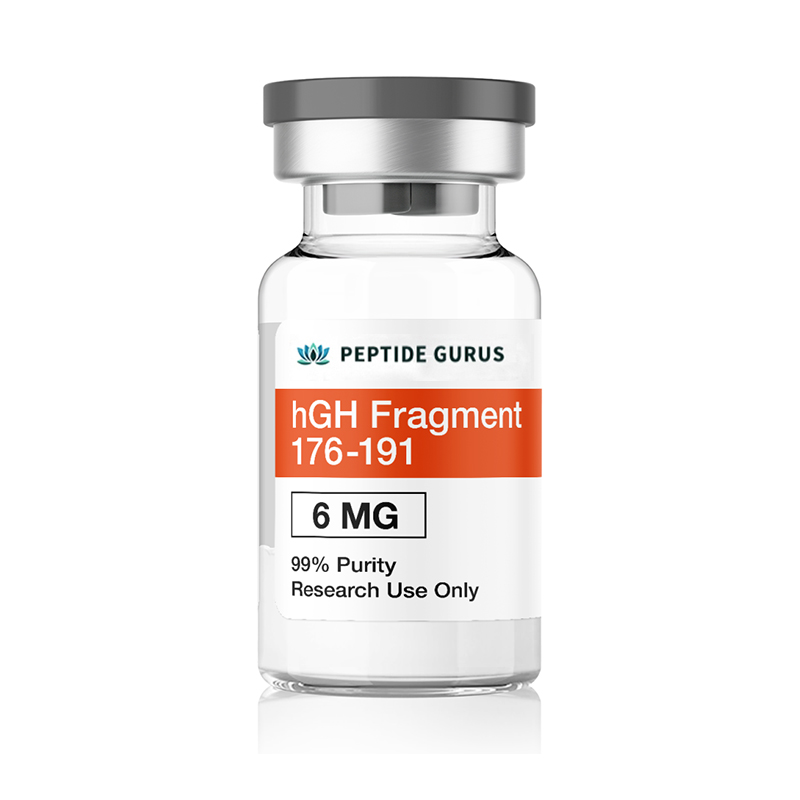
HGH Fragment 176-191 is a small, synthetic piece of natural human growth hormone (hGH). It is often referred to as the “lipolytic fragment” for its ability to boost fat loss. It has been shown to help lowers blood sugar levels and promote cartilage healing without increasing long bone growth, increasing IGF-1 levels, or altering insulin sensitivity.
Product Usage: This PRODUCT IS INTENDED AS A RESEARCH CHEMICAL ONLY. This designation allows the use of research chemicals strictly for in vitro testing and laboratory experimentation only. All product information available on this website is for educational purposes only. Bodily introduction of any kind into humans or animals is strictly forbidden by law. This product should only be handled by licensed, qualified professionals. This product is not a drug, food, or cosmetic and may not be misbranded, misused or mislabled as a drug, food or cosmetic.

フラグメント176-191とは何ですか?

Fragment 176-191 (modified version of AOD9604) is a small piece of human growth hormone (hGH) that is sometimes referred to as the “lipolytic fragment.” Fragment 176-191 earned this latter name due to the fact that laboratory research has shown it to enhance fat burning, particularly in mice genetically engineered to produce large fat stores. Fragment 176-191 has been heavily researched in animal models because even while it preserves the fat-burning effects of hGH, it avoids some other effects of its parent protein such as increasing insulin-like growth factor-1 (IGF-1) levels, negatively impacting carbohydrate metabolism, altering insulin sensitivity, increasing long bone growth, and so forth. The targeted effects of fragment 176-191 make it useful for exploring human fat metabolism and may eventually provide the basis for developing anti-obesity medications.

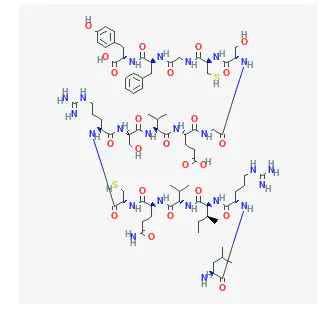
フラグメント176-191ペプチド構造

Source: PubChem Sequence: Tyr-Leu-Arg-Ile-Val-Gln-Cys-Arg-Ser-Val-Glu-Gly-Ser-Cys-Gly-Phe Molecular Formula: C78H125N23O23S2 Molecular Weight: 1817.12 g/mol CAS Number: 66004-57-7

フラグメント176-191効果

1.血糖値を下げます

動物の研究により、HGHのC末端末端は、タンパク質の低血糖(血糖低下)効果の主な原因であることが明らかになりました。 HGHのこのセクションから派生した少なくとも6つの異なる断片のテストは、フラグメント176-191が血糖値を下げるためのHGHの最も効果的な合成誘導体であることを示しています。この効果は、血漿インスリンレベルの持続的な増加に続発します[1]。前糖尿病と2型糖尿病の両方の治療としてフラグメント176-191を使用することに興味があります。

2。脂肪の燃焼と減量

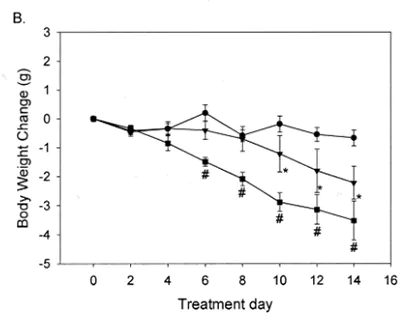
フラグメント176-191は、マウスでの試験により、ペプチドがかなりの脂肪燃焼と減量特性を持つことが明らかになったため、「脂肪分解断片」のニックネームを獲得しました。この作用は、ベータ3アドレナリン受容体(β3-ARまたはADRB3)の産生の増加によって媒介されると考えられています。[2]。 ADRB3でのアゴニスト作用は、脂肪組織の脂肪燃焼を直接増加させることが知られており、骨格筋の熱発生にも関与しています[3]。 ADRB3を産生するように遺伝的に修飾されたマウスは、HGHまたはフラグメント176-191の脂肪分解効果に反応しません[2]. Studies show that the increased fat burning associated with fragment 176-191 directly correlates with energy expenditure and thus weight reduction, leading to a nearly 50% reduction in weight gain in obese animals over a three-week course[4]。興味深いことに、減量効果は肥満マウスでのみ見られ、脂肪剤は平均して正常な体重を維持しています。[2]。これらの発見は、体重が理想またはその近くにあるときにADRB3機能を上書きする脂肪分解のための二次的な調節経路があることを示しており、エネルギー恒常性の追加研究のために領域を開きます。 Body weight in genetically obese mice after two weeks of treatment with a single daily dose of fragment 176-191 Source: オックスフォードアカデミック
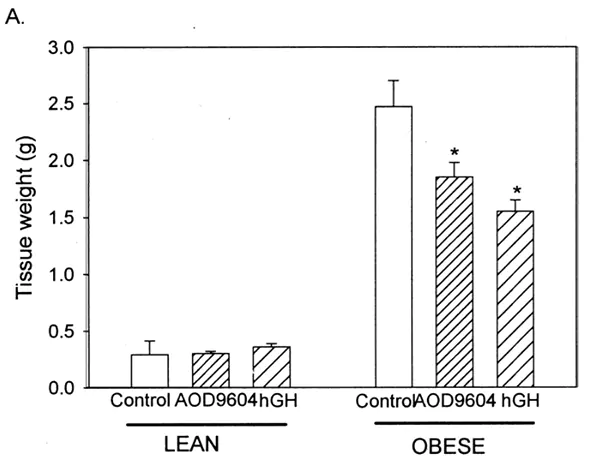
Effect of saline (control), fragment 176-191, and hGH on white adipose tissue mass in obese mice over 14 days Source: オックスフォードアカデミック

3。軟骨の再生を促進します

フラグメント176-191は主にその脂肪分解特性にとって興味深いものですが、ペプチドは他の可能な利点について調査中です。注目すべきことに、韓国からの2015年の記事では、フラグメント176-191が軟骨の再生を促進する際のヒアルロン酸注射の効果を増強できる可能性があることを明らかにしました。ウサギの研究では、フラグメント176-191の毎週の注射が軟骨の成長の実験室測定を増加させ、ヒアルロン酸(HA)とのペプチドの共投与がさらに大きな効果をもたらすことが示されました。同様に、この研究では、HAとの単独および組み合わせの両方で、フラグメント176-191が変形性関節症に関連する障害を軽減することがわかりました。これが変形性関節症の進行療法につながり、特定の環境での手術の必要性を排除する可能性さえあるという希望があります[7].

フラグメント176-191安全研究

重量制御のためにHGHまたはその誘導体を使用すると、望ましくない副作用がある可能性があるという懸念があります。この懸念は、HGHの研究が、除脂肪体重を増加させ、脂肪組織を減少させながら、長期的な外因性投与が次のことを引き起こす可能性があることを示しているという事実から生じます。
  • increased insulin resistance,
  • diabetes,
  • acromegaly,
  • cancer,
  • 高血圧(高血圧)、および
  • 浮腫(腫れ)。
2013年、Journal of Endocrinology and Metabolismに掲載された研究では、ペプチドに関連する負の影響の速度と重要性を評価するために、フラグメント176-191の6つの研究を評価しました。この研究には、可能な限り最高水準の証拠を維持するために、第IIB相の臨床試験の無作為化された二重盲検プラセボ対照モデルに従った研究のみが含まれていました。 IVおよびフラグメント176-191の経口投与は、プラセボと比較した場合、以下の変更がなかったことがわかりました。
  • physical findings,
  • laboratory parameters,
  • glucose levels,
  • glucose tolerance,
  • insulin sensitivity,
  • IGF-1レベル、または
  • 有害事象の割合(例:頭痛)[4], [5].
The results of this meta-analysis suggest that fragment 176-191 offers many of the benefits of hGH without the associated negative (and often serious) side effects. These findings further the argument for pursuing regulatory approval for use of fragment 176-191 in the clinical setting, but also offer insight into the regulation of human growth, fat deposition, and energy homeostasis. These findings make it clear that it is possible to target fat loss without affecting energy homeostasis in other nutrient pathways, opening the door for a deeper exploration of human energy regulation and methods of manipulating it. It is worth noting that while hGH has anabolic effects on muscle, fragment 176-191 was specifically selected for its ability to avoid anabolism entirely. This is critical to ensuring that the peptide has targeted lipolytic effects and does not produce acromegaly or any of the other conditions associated with hGH administration. Studies in mice reveal that fragment 176-191 does not increase cell proliferation[6].

フラグメント176-191将来の研究

フラグメント176-191の研究の主要な領域は、減量と脂肪分解であり、そこではペプチドを使用して脂肪代謝とエネルギーの恒常性を理解するためにどのように使用できるかを学ぶためにかなりの努力が費やされています。研究の最も活性のある二次分野は、結合組織の再生、特に軟骨修復です。

記事著者

The above literature was researched, edited and organized by Dr. Logan, M.D. Dr. Logan holds a doctorate degree from Case Western Reserve University School of Medicine and a B.S. in molecular biology.  

Scientific Journalの記事

フランク・オブ、M.D。 is one of the leading scientists discovering how both AOD9604 and Fragment 176-191 function. He extensively studied their effects on lipid metabolism in obese mice, fat oxidation, weight loss, oral digestion, glucose transport, and hyperglycemia. He has over 64 publications and studies at the Department of Biochemistry and Molecular Biology — Monash University, Australia. Frank NG, M.D. is being referenced as one of the leading scientists involved in the research and development of Fragment 176-191. In no way is this doctor/scientist endorsing or advocating the purchase, sale, or use of this product for any reason. There is no affiliation or relationship, implied or otherwise, between
ペプチドグル そしてこの医者。医師を引用する目的は、このペプチドを研究している科学者が実施した徹底的な研究開発努力を認め、認識し、称賛することです。 Frank Ng、M.D。は、参照された引用の下に[1] [2]および[4]にリストされています。

参照された引用

  1. F. M. Ng and J. Bornstein, “Hyperglycemic action of synthetic C-terminal fragments of human growth hormone,” Am. J. Physiol., vol. 234, no. 5, pp. E521-526, May 1978. 
  2. M. Heffernan et al。、「肥満マウスおよびβ3-ARノックアウトマウスの慢性治療後の脂質代謝に対するヒトGHおよびその脂肪分解断片(AOD9604)の効果」、Endocrinology、vol。 142、いいえ。 12、pp。5182–5189、2001年12月。
  3. R. Ferrer-Lorente, C. Cabot, J.-A. Fernández-López, and M. Alemany, “Combined effects of oleoyl-estrone and a beta3-adrenergic agonist (CL316,243) on lipid stores of diet-induced overweight male Wistar rats,” Life Sci., vol. 77, no. 16, pp. 2051–2058, Sep. 2005. 
  4. F. M. Ng, J. Sun, L. Sharma, R. Libinaka, W. J. Jiang, and R. Gianello, “Metabolic studies of a synthetic lipolytic domain (AOD9604) of human growth hormone,” Horm. Res., vol. 53, no. 6, pp. 274–278, 2000. 
  5. H. Stier, E. Vos, and D. Kenley, “Safety and Tolerability of the Hexadecapeptide AOD9604 in Humans,” J. Endocrinol. Metab., vol. 3, no. 1–2, pp. 7-15–15, Apr. 2013. 
  6. M. A. Heffernan et al., “Increase of fat oxidation and weight loss in obese mice caused by chronic treatment with human growth hormone or a modified C-terminal fragment,” Int. J. Obes. Relat. Metab. Disord. J. Int. Assoc. Study Obes., vol. 25, no. 10, pp. 1442–1449, Oct. 2001. 
  7. D. R. Kwon and G. Y. Park, “Effect of Intra-articular Injection of AOD9604 with or without Hyaluronic Acid in Rabbit Osteoarthritis Model,” Ann. Clin. Lab. Sci., vol. 45, no. 4, pp. 426–432, Jul. 2015. 
ALL ARTICLES AND PRODUCT INFORMATION PROVIDED ON THIS WEBSITE ARE FOR INFORMATIONAL AND EDUCATIONAL PURPOSES ONLY. このウェブサイトで提供される製品は、ビトロ内の研究のためにのみ提供されています。 in-vitro研究(ラテン語:ガラス)は体の外側で行われます。これらの製品は薬や薬ではなく、病状、病気、病気を予防、治療、治療するためにFDAによって承認されていません。あらゆる種類の人間や動物への身体導入は、法律によって厳密に禁じられています。
 

お問い合わせをリクエストしてください

ABOUT US

Peptidegurusは、アメリカ製の研究ペプチドの大手サプライヤーであり、競争力のある価格で最高品質の製品を提供しています。卓越性と顧客サービスに重点を置いて、彼らはグローバルな配送で安全で便利な注文プロセスを保証します。

見積もりをリクエストしてください

  • ペプチドグル
  • info@peptidegurus.com
  • グレンデール、それは、アメリカ
  • 接触

    お問い合わせをリクエストしてください