
• FOXO4-DRI peptide in aging research
Fox04-dri 10mg (Proxofim)
X
Fox04-dri 10mg (Proxofim)

Fox04-dri 10mg (Proxofim)

Kategoriler: ,

Siparişe İletişim
Siparişinizi bire bir destekle vermek için şimdi bize e-posta gönderin. Sınırlı stok! Zelle, CashApp, Venmo, banka transferi ve kripto kabul ediyoruz.

Serbest (1) 30 ml bakteriyostatik su
with qualified orders over $500 USD. (excludes capsule products, cosmetic peptides, promo codes and shipping)
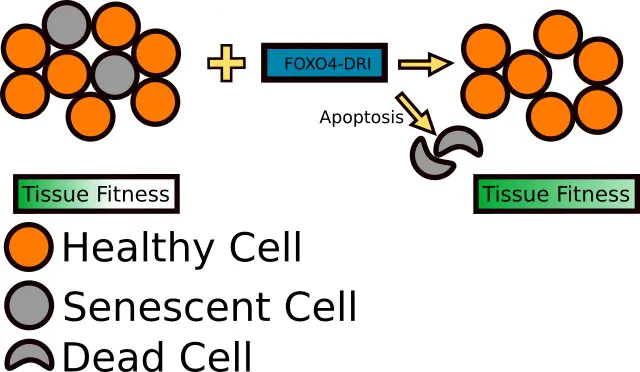
FOX04-DRI (Retro-Inverso) is a synthetic, slightly modified version of the standard FOXO4 protein. The modification prolongs half-life of the protein and allows it to interfere with normal FOXO4 function. FOXO4-DRI has been shown in research to prevent normal FOXO4 binding to p53, thereby allowing for elimination of senescent cells, improved organ function, and younger tissue “biological age.” FOXO4-DRI impacts insulin signaling, cell cycle regulation, and oxidative stress signaling pathways. FOXO4-DRI is a cell penetrating peptide shown to selectively induce apoptosis of senescent cells thereby reversing effects of aging in animal studies.
Product Usage: This PRODUCT IS INTENDED AS A RESEARCH CHEMICAL ONLY. This designation allows the use of research chemicals strictly for in vitro testing and laboratory experimentation only. All product information available on this website is for educational purposes only. Bodily introduction of any kind into humans or animals is strictly forbidden by law. This product should only be handled by licensed, qualified professionals. This product is not a drug, food, or cosmetic and may not be misbranded, misused or mislabled as a drug, food or cosmetic.

Foxo4-D-Retro-Inverso (DRI) nedir?

FOXO4 D-Retro-Inverso is identical to the protein product of the FOXO4 gene, but the normal L amino acids have been exchanged for D amino acids. The result is that FOXO4-DRI has reduced susceptibility to normal physiologic clearance mechanisms and thus remains in the body for longer periods of time. The modified protein is still capable, however, of affecting transcription and cellular pathways. In general, the FOXO4-DRI protein interferes with normal FOXO4 function. Of greatest interest in terms of aging and senescence is the ability of FOXO4-DRI to interfere with normal FOXO4 signaling in the cell cycle by preventing the binding of FOXO4 to p53. The p53 protein is an important regulator of progression through the cell cycle as well as programmed cell death (apoptosis). When FOXO4-DRI binds to p53, it prevents FOXO4 from binding and allows p53 to bind to DNA. This, in turn, allows the cell to continue through the process of apoptosis and die. Interestingly, FOXO4-DRI appears to only have this effect in senescent cells, cells that are no longer functional or are dysfunctional as a result of aging[2]. Bu işlevsiz hücreleri hedefleyerek Foxo4-DRI, ölü ağırlıktan başka bir şey olmayan hücrelerin dokusunu kurtarmaya yardımcı olur. Bu da daha iyi doku işleyişine izin verir ve daha genç, daha sağlıklı hücrelerin büyümesini ve farklılaşmasını teşvik etmeye yardımcı olur. Net sonuç daha iyi biyolojik fonksiyon ve dolayısıyla “biyolojik yaşta” bir azalmadır.

"DRI" retro inverso peptidler açıkladı

DRI-Retro Inverso Peptides Explained Retro-inverso peptides are linear peptides whose amino acid sequence is reversed and the α-center chirality of the amino acid subunits is inverted as well. Usually, these types of peptides are designed by including D-amino acids in the reverse sequence to help maintain side chain topology similar to that of the original L-amino acid peptide and make them more resistant to proteolytic degradation. Other reported synonyms for these peptides in the scientific literature are: Retro-Inverso Peptides, All-D-Retro Peptides, Retro-Enantio Peptides, Retro-Inverso Analogs, Retro-Inverso Analogues, Retro-Inverso Derivatives, and Retro-Inverso Isomers. D-amino acids represent conformational mirror images of natural L-amino acids occurring in natural proteins present in biological systems. Peptides that contain D-amino acids have advantages over peptides that just contain L-amino acids. In general, these types of peptides are less susceptible to proteolytic degradation and have a longer effective time when used as pharmaceuticals. Furthermore, the insertion of D-amino acids in selected sequence regions as sequence blocks containing only D-amino acids or in-between L-amino acids allows the design of peptide-based drugs that are bioactive and possess increased bioavailability in addition to being resistant to proteolysis. Furthermore, if properly designed, retro-inverso peptides can have binding characteristics similar to L-peptides. Retro-inverso peptides are useful candidates for the study of protein-protein interactions by designing peptidomimetics that mimic the shape of peptide epitopes, protein-protein, or protein-peptide interfases. Retro-inverso-peptides are attractive alternatives to L-peptides used as pharmaceuticals. These of peptide have been reported to elicit lower immunogenic responses compared to L-peptides.
FOXO4-DRI, p53'ü fizyolojik sekestrasyondan serbest bırakır. P53 proteini daha sonra apoptoz için yaşlanan hücreleri hedefler. Net sonuç, toplam doku zindeliğinde bir artış ve böylece doku ve organ seviyesinde gelişmiş fonksiyondur. Geliştirilmiş doku fonksiyonu biyolojik yaş azalması olarak adlandırılır.

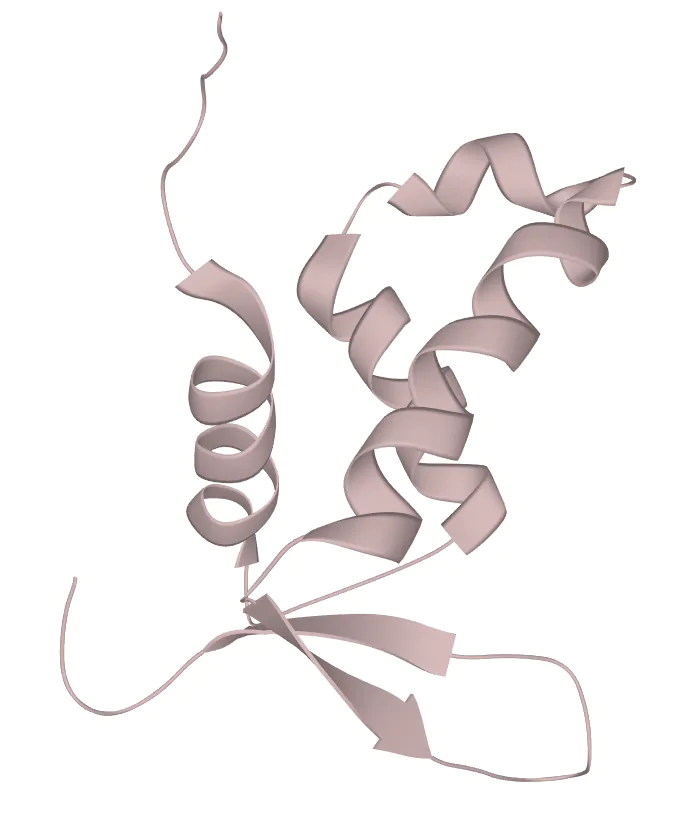
Foxo4-dri peptit yapısı

Source: Uniprot Sequence: H-D-Leu-D-Thr-D-Leu-D-Arg-D-Lys-D-Glu-D-Pro-D-Ala-D-Ser-D-Glu-D-Ile-D-Ala-D-Gln-D-Ser-D-Ile-D-Leu-D-Glu-D-Ala-D-Tyr-D-Ser-D-Gln-D-Asn-D-Gly-D-Trp-D-Ala-D-Asn-D-Arg-D-Arg-D-Ser-D-Gly-D-Gly-D-Lys-D-Arg-D-Pro-D-Pro-D-Pro-D-Arg-D-Arg-D-Arg-D-Gln-D-Arg-D-Arg-D-Lys-D-Lys-D-Arg-D-Gly-OH Molecular Formula: C228H388N86O64 Molecular Weight: 5358.05 Synonyms: Forkhead box protein O4, Proxofim, FOXO4a, AFX, AFX1, MLLT7

Foxo4-dri yaşlanma ve yaşlanma

The relationship between FOXO4 and aging is complex and still not fully understood. There is, however, good evidence that helps to elucidate the mechanisms by which the protein has its effects. Research in the well-studied nematode C. elegans shows that FOXO4 affects insulin-like growth factor receptor signaling and thus cellular lifespan control, stress resistance, and gene regulation[3]. It also appears that FOXO4 interacts with the p53 protein to regulate the cell cycle.

Natural FOXO4 actually protects senescent cells by keeping p53, a regulator of the cell cycle, sequestered and unable to induce apoptosis. FOXO4-DRI disrupts the normal FOXO4/p53 mechanism and allows the latter protein to induce apoptosis in senescent cells. The result is an amelioration of senescence-associated loss of tissue homeostasis[4][5]. Bilim adamları bunu yaşlanan hücrelerin terapötik eliminasyonu ile gençleştirme olarak adlandırıyorlar. Süreç, bir meyve ağacını budamaktan farklı değil. Ölü ve hasarlı dalları (yaşlanan hücreler) çıkararak, enerji ağacın daha sağlıklı kısımlarına ve böylece meyve üretimine ve büyümesine yönlendirilir. Aynı işlem, genel sağlıksız fonksiyona katkıda bulunan hücrelerin kaldırıldığı ve kaynakların sağlıklı hücrelere odaklanmasına izin verildiğinde organ ve doku seviyesinde gerçekleşir.
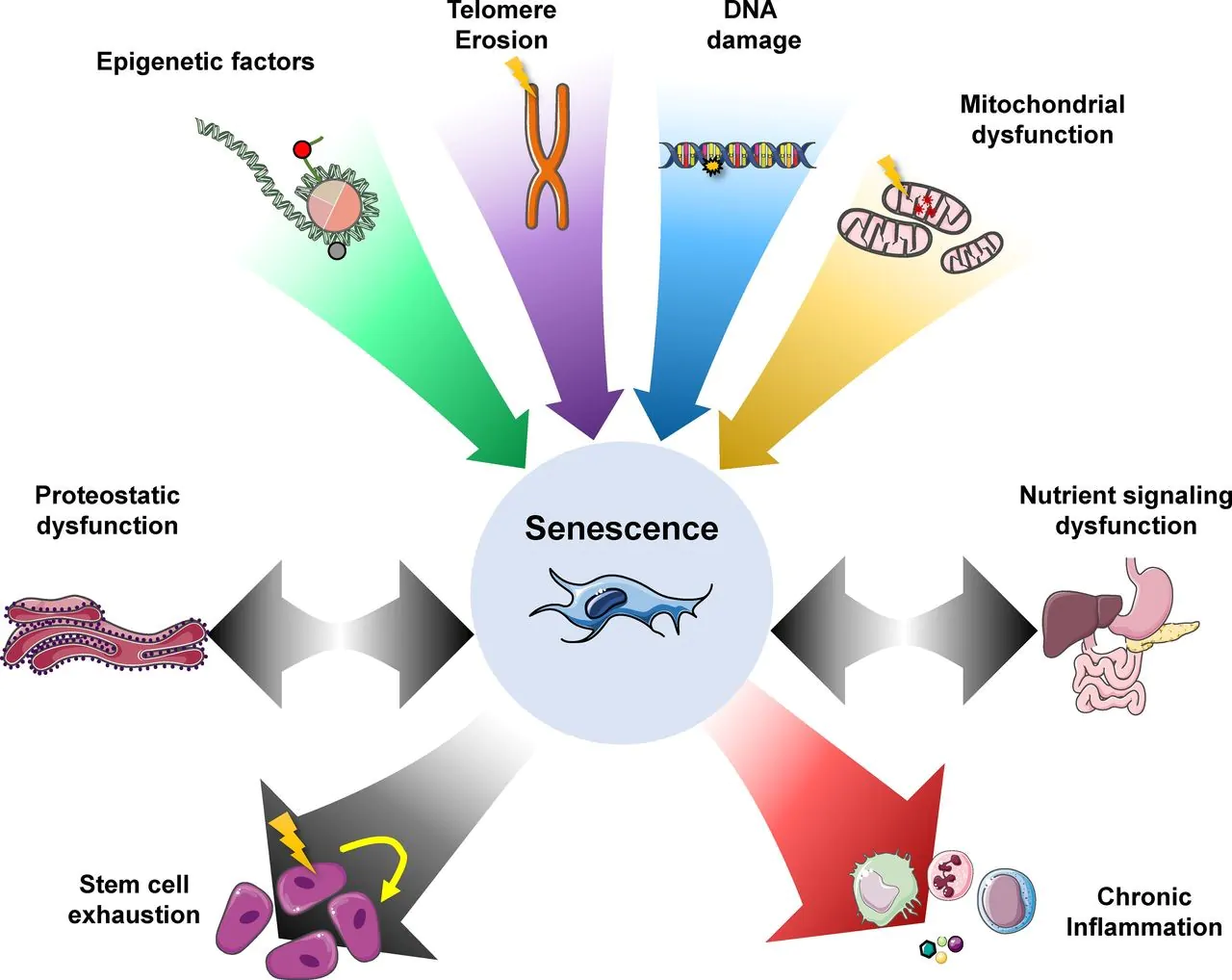
Source: Hücre Biyolojisi Dergisi

Bu görüntü, yaşlanmaya hangi faktörlerin katkıda bulunduğunu ve sonuçların yaşlandığını gösterir. Yaşlanan bir hücrenin ortadan kaldırılmasının kök hücre tükenmesini hafifletmediğini, ancak yavaşlatabileceğini unutmayın. Bununla birlikte, kalp hastalığı, inme vb. Gibi çeşitli durumların iyi kurulmuş bir sürücüsü olan kronik inflamasyonu azaltmaya yardımcı olur.

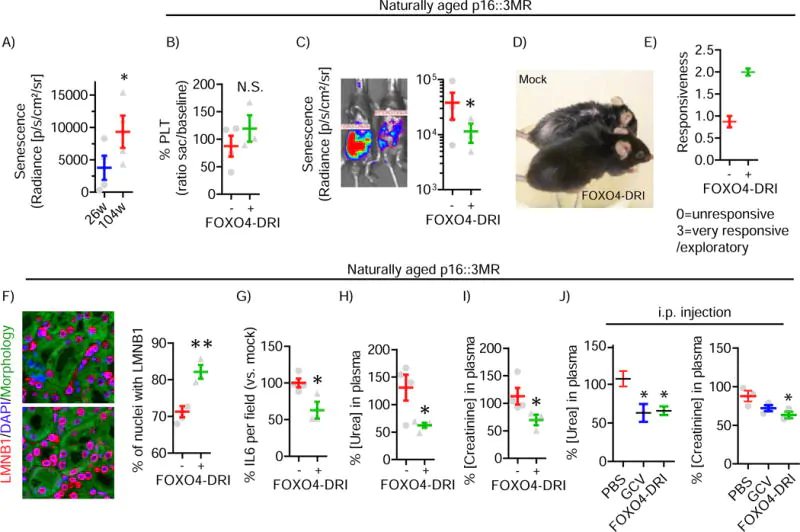
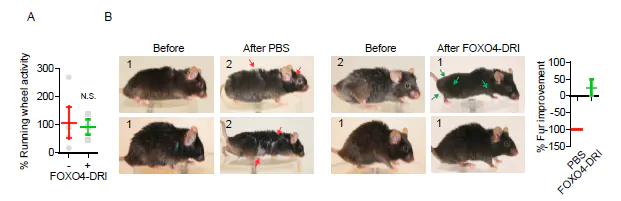
Onarılamaz hasar, yani vücudun düzeltme yeteneğinin ötesinde hücresel hasar, sağlık süresinin birincil sınırlamalarından biridir. Bir organizmanın sağlıklı kaldığı ve en iyi şekilde çalıştığı zaman olan sağlık süresi genellikle ömürden daha kısadır. Healthspan'da bir düşüş yaşlanma olarak kendini gösterir. Sağlık aralığını genişletme yeteneği, daha fazla yıl yaşanmaya neden olmayabilir, ancak bize daha fazla sağlık ve daha iyi işlevle ayrılan yılları yaşamaya neden olabilir. Fare modellerinde, FOXO4'ün yaşlı farelerde sağlık aralığını iyileştirdiği ve fitness, kürk yoğunluğu ve böbrek işlevinde bir artışa yol açtığı gösterilmiştir. Fareler mutlaka daha uzun yaşamazlar, ancak daha az sakatlığa dönüşen ve kalp hastalığı, kas-iskelet disfonksiyonu, vb.[2].
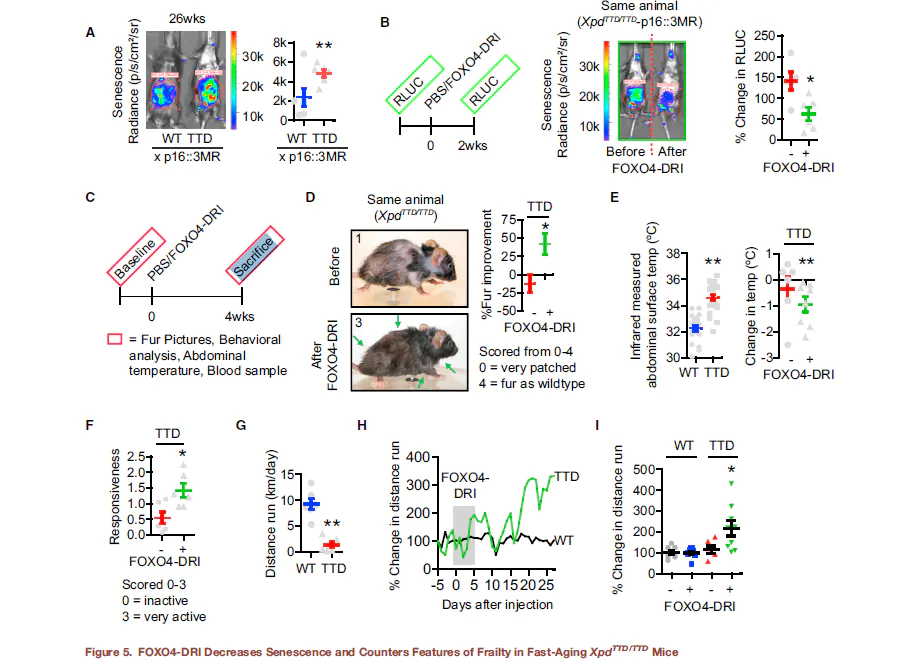
Yaşlanmayı modellemek için kullanılan kemotoksik ajanlara tabi tutulduktan sonra FoxO4-dri ile işlenmiş bir farede kürk yoğunluğu ile gösterildiği gibi gelişmiş fitness gösteren görüntüler:
Source: Pubmed.

Foxo4-Dri Araştırma

1. İnsülin sinyali

Foxo proteinlerinin insülin sinyallemesinin önemli düzenleyicileri olduğu, ancak insülinin kendisinin ve insülin benzeri büyüme faktörlerinin akış aşağısında hareket ettikleri uzun zamandır anlaşılmıştır. Hayvan modellerinde yapılan araştırmalar, FOXO'nun insülin ve insülin benzeri büyüme faktörünün hücre metabolizması, büyüme, farklılaşma, oksidatif stres ve daha fazlası üzerindeki inhibitör etkilerine aracılık ettiğini göstermektedir. Foxo'daki mutasyonlar, insülin sinyallemesindeki patolojik değişikliklere ve metabolik hastalığın ve kanserin gelişimine bağlıdır. Diyabet hastalarında, Foxo sinyallerinin değişiklikleri açlık hiperglemi ve hiperlipidemiye yol açar[6]. İkincisi, hastalığın böbrek hasarı, inme, kalp krizi, bozulmuş yara iyileşmesi ve daha fazlası gibi komplikasyonlarının çoğuna yol açtığı için diyabetin en ilgili yönlerinden biridir. Diyabette Foxo sinyalini düzenleme yeteneği, hastalığın ciddi komplikasyonlarının bazılarını önlemek için daha hedefli, daha etkili yöntemler sağlayabilir. FoxO4-Dri'nin insülin sinyalini nasıl etkilediği belirsizdir, ancak proteinin açlık kan şekeri seviyelerini azaltarak insülinin aşağı akış etkilerini iyileştirebileceği düşünülmektedir.

2. Kalp hastalığı

Yaş, kardiyovasküler hastalık için bir risk faktörüdür. Bu riske, kalpteki proteazom aktivitesindeki düşüşler aracılık ettiği görülmektedir. Proteazomlar, hücrenin “hasarlı” veya işlevsiz olarak işaretlediği oksitlenmiş proteinlerin ve diğer proteinlerin çıkarılmasından sorumludur. Sıçanlarda yapılan araştırmalar, yaşın proteazom aktivitesi ile ters ilişkili olduğunu ve dolayısıyla kalp içindeki hasarlı protein seviyelerindeki artış olduğunu göstermektedir.[7].

Foxo proteinleri otofaji ve proteazom aktivitesine aracılık eder. FoxO4 seviyelerindeki artışlar proteazom aktivitesinde artışa ve böylece spesifik doku içinde oksidasyon ve protein hasarı seviyelerinin azalmasına yol açar. Kalbin doğal temizlik fonksiyonlarını artırmak ve böylece kardiyovasküler fonksiyondaki yaşa bağlı değişiklikleri azaltmak için FoxO4-dri veya bir varyantının kullanılması mümkün olabilir.[8].

3. Nörodejeneratif hastalık

Age-related changes in cognitive function have a complex etiology. Even relatively common diseases, like Alzheimer’s disease, are not fully understood by the medical community. There is some evidence, however, to support the notion that changes in proteasome activity can lead to or exacerbate underlying neurodegenerative conditions. It isn’t clear if impaired proteasome activity is a primary cause or secondary contributor to diseases like Alzheimer’s disease, but impairment of the systems has been found in Parkinson’s, Alzheimer’s, Huntington’s, and Prion disease. There is also impairment of proteasome function in amyotrophic lateral sclerosis (ALS or Lou Gehrig’s disease) [9].

It appears that FOXO proteins are modified in the central nervous system, a finding that has led researchers to explore the idea that exogenous FOXO protein may be useful in treating or preventing neurodegenerative disorders. At the very least, there is hope that FOXO4-DRI and other modified FOXO proteins may be useful in slowing the relentless progression of neurodegenerative disorders [10].

Özet

FOXO4-DRI, yaşlıyan hücrelerde apoptozu arttırdığı ve hayvan modellerinde daha iyi doku fonksiyonuna ve daha iyi genel sağlığa yol açtığı açıkça gösterilmiştir. FoxO4-dri'nin etkilerinin ne kadar geniş olduğu görülüyor, ancak proteinin demans, kalp hastalığı ve hücre yaşlanmasının neden olduğu genel fonksiyon kaybı gibi yaşa bağlı koşullara ilişkin içgörü açabileceği umudu.

FOXO4-DRI exhibits minimal side effects, low oral and excellent subcutaneous bioavailability in mice. Per kg dosage in mice does not scale to humans. FOXO4-DRI for sale at Peptide Gurus is limited to educational and scientific research only, not for human consumption. Only buy FOXO4-DRI if you are a licensed researcher.

Makale yazarı

The above literature was researched, edited and organized by Dr. Logan, M.D. Dr. Logan holds a doctorate degree from Case Western Reserve University School of Medicine and a B.S. in molecular biology.

Scientific Journal Yazar

The aim of Dr. Peter de Keizer’s group is to unravel the molecular mechanisms that cause cells to become senescent and to identify how these cells drive aging and age-related diseases. The role of senescence in late-stage therapy-resistant cancer is a major component of this research. The research has a strong translational component and a spearpoint of the group is to develop methods to target the deleterious effects of senescent and senescent-like cancer cells, for instance by eliminating them altogether. In 2004, Peter obtained his MSc in Biomolecular Science form Utrecht University. The final part of his training was performed at Harvard Medical School / Massachusetts General Hospital in Boston, USA. Here, he focused on therapy-resistant Glioblastoma, the most lethal form of brain cancer, something which is now on of the focus areas of the group. In 2009, Peter obtained his PhD from UMC Utrecht on the regulation of FOXO proteins under conditions of stress and their role in tumor suppression. Dr. Peter de Keizer is being referenced as one of the leading scientists involved in the research and development of FOXO4-DRI. In no way is this doctor/scientist endorsing or advocating the purchase, sale, or use of this product for any reason. There is no affiliation or relationship, implied or otherwise, between Peptide Gurus and this doctor. The purpose of citing the doctor is to acknowledge, recognize, and credit the exhaustive research and development efforts conducted by the scientists studying this peptide. Dr. Peter de Keizer is listed in [2] under the referenced citations.

Referans alınan alıntılar

  1.     W. Liu, Y. Song, J. Wang, H. Xiao, Y. Zhang, and B. Luo, “Dysregulation of FOXO transcription factors in Epstein-Barr virus-associated gastric carcinoma,” Virus Res., P. 197808, Kasım 2019.
  2.     Baar, Marjolein P, et al. “Targeted Apoptosis of Senescent Cells Restores Tissue Homeostasis in Response to Chemotoxicity and Aging.” Cell, vol. 169, no. 1, 2017, pp. 132-147.e16, www.ncbi.nlm.nih.gov/pubmed/28340339, 10.1016/j.cell.2017.02.031. 
  3.     A. T.-Y. Chen et al., “Longevity Genes Revealed by Integrative Analysis of Isoform-Specific daf-16/FoxO Mutants of Caenorhabditis elegans,” Genetics, cilt. 201, hayır. 2, s. 613-629, Ekim 2015.
  4.     P. Krimpenfort and A. Berns, “Rejuvenation by Therapeutic Elimination of Senescent Cells,” Cell, cilt. 169, hayır. 1, s. 3–5, 23 2017.
  5. “Yaşlanma ve Yaşlanma: Nedenler, Sonuçlar ve Terapötik Caddeler | JCB.” [Çevrimiçi]. Mevcut: http://jcb.rupress.org/content/217/1/65. [Erişim: 17-Kasım-2019].
  6.     S. Lee and H. H. Dong, “FoxO integration of insulin signaling with glucose and lipid metabolism,” J. Endocrinol., cilt. 233, hayır. 2, s. R67 - R79, 2017.
  7.     A.-L. Bulteau, L. I. Szweda, and B. Friguet, “Age-dependent declines in proteasome activity in the heart,” Arch. Biochem. Biophys., cilt. 397, hayır. 2, s. 298-304, Ocak 2002.
  8.     G. Murtaza, A. K. Khan, R. Rashid, S. Muneer, S. M. F. Hasan, and J. Chen, “FOXO Transcriptional Factors and Long-Term Living,” Oxid. Med. Cell. Longev., cilt. 2017, 2017.
  9.     A. Ciechanover and P. Brundin, “The ubiquitin proteasome system in neurodegenerative diseases: sometimes the chicken, sometimes the egg,” Neuron, cilt. 40, hayır. 2, s. 427-446, Ekim 2003.
  10.   W. Hu et al., “Roles of forkhead box O (FoxO) transcription factors in neurodegenerative diseases: A panoramic view,” Prog. Neurobiol., cilt. 181, s. 101645, Ekim 2019.
ALL ARTICLES AND PRODUCT INFORMATION PROVIDED ON THIS WEBSITE ARE FOR INFORMATIONAL AND EDUCATIONAL PURPOSES ONLY. Bu web sitesinde sunulan ürünler sadece vitro çalışmalar için döşenmiştir. Vücudun dışında in vitro çalışmalar (Latin: camda) yapılır. Bu ürünler ilaç veya ilaç değildir ve herhangi bir tıbbi durum, rahatsızlık veya hastalığı önlemek, tedavi etmek veya iyileştirmek için FDA tarafından onaylanmamıştır. İnsanlara veya hayvanlara her türlü bedensel olarak tanıtılması, yasalarca kesinlikle yasaktır.

Soruşturma isteyin

ABOUT US

Peptidegurus, rekabetçi fiyatlarla en kaliteli ürünler sunan Amerikan yapımı araştırma peptitlerinin önde gelen bir tedarikçisidir. Mükemmellik ve müşteri hizmetlerine odaklanarak, küresel nakliye ile güvenli ve kullanışlı bir sipariş süreci sağlarlar.

Teklif isteyin

  • Peptit guruları
  • info@peptidegurus.com
  • Glendale, ABD
  • TEMAS ETMEK

    Soruşturma isteyin