
• FOXO4-DRI peptide in aging research
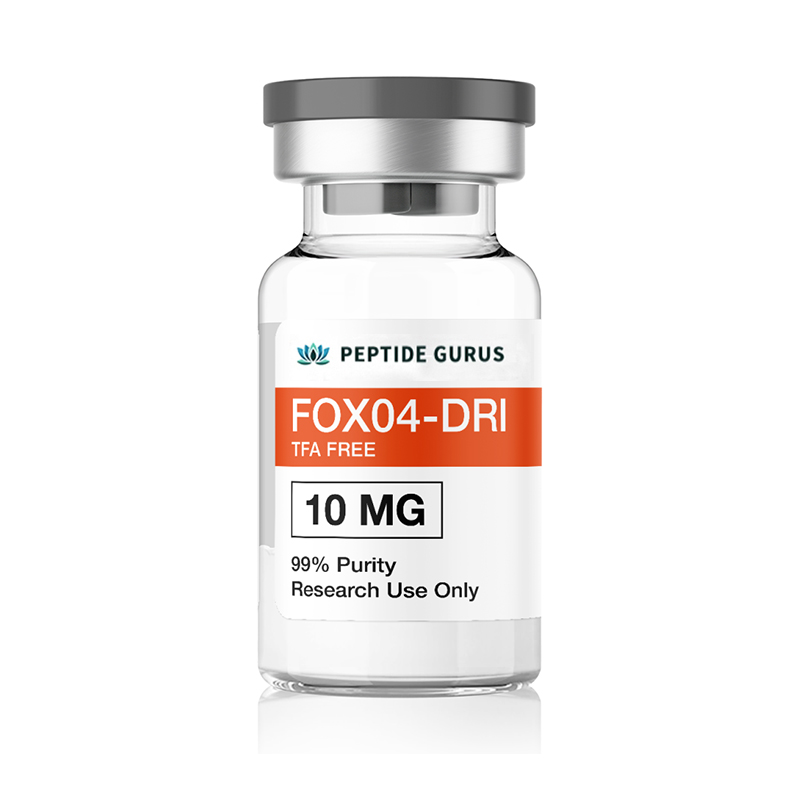
FOX04-DRI 10 mg (Proxofim)
incógnita
FOX04-DRI 10 mg (Proxofim)

FOX04-DRI 10 mg (Proxofim)

Categorías: ,

Contacto para ordenar
Envíanos un correo electrónico ahora para hacer tu pedido con soporte individual. ¡Stock limitado! Aceptamos Zelle, CashApp, Venmo, transferencias bancarias y criptomonedas.

Gratis (1) 30 ml de agua bacteriostática
con pedidos calificados sobre $500 USD. (excludes capsule products, cosmetic peptides, promo codes and shipping)
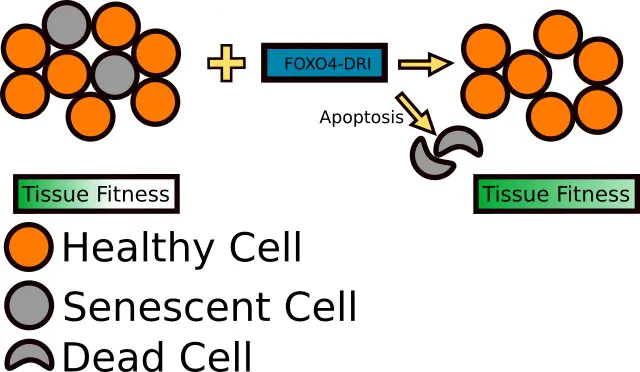
FOX04-DRI (Retro-Inverso) is a synthetic, slightly modified version of the standard FOXO4 protein. The modification prolongs half-life of the protein and allows it to interfere with normal FOXO4 function. FOXO4-DRI has been shown in research to prevent normal FOXO4 binding to p53, thereby allowing for elimination of senescent cells, improved organ function, and younger tissue “biological age.” FOXO4-DRI impacts insulin signaling, cell cycle regulation, and oxidative stress signaling pathways. FOXO4-DRI is a cell penetrating peptide shown to selectively induce apoptosis of senescent cells thereby reversing effects of aging in animal studies.
Product Usage: This PRODUCT IS INTENDED AS A RESEARCH CHEMICAL ONLY. This designation allows the use of research chemicals strictly for in vitro testing and laboratory experimentation only. All product information available on this website is for educational purposes only. Bodily introduction of any kind into humans or animals is strictly forbidden by law. This product should only be handled by licensed, qualified professionals. This product is not a drug, food, or cosmetic and may not be misbranded, misused or mislabled as a drug, food or cosmetic.

¿Qué es FOXO4-D-Retro-Inverso (DRI)?

FOXO4 D-Retro-Inverso is identical to the protein product of the FOXO4 gene, but the normal L amino acids have been exchanged for D amino acids. The result is that FOXO4-DRI has reduced susceptibility to normal physiologic clearance mechanisms and thus remains in the body for longer periods of time. The modified protein is still capable, however, of affecting transcription and cellular pathways. In general, the FOXO4-DRI protein interferes with normal FOXO4 function. Of greatest interest in terms of aging and senescence is the ability of FOXO4-DRI to interfere with normal FOXO4 signaling in the cell cycle by preventing the binding of FOXO4 to p53. The p53 protein is an important regulator of progression through the cell cycle as well as programmed cell death (apoptosis). When FOXO4-DRI binds to p53, it prevents FOXO4 from binding and allows p53 to bind to DNA. This, in turn, allows the cell to continue through the process of apoptosis and die. Interestingly, FOXO4-DRI appears to only have this effect in senescent cells, cells that are no longer functional or are dysfunctional as a result of aging[2]. Al atacar estas células disfuncionales, FOXO4-DRI ayuda a eliminar del tejido las células que no son más que peso muerto. Esto, a su vez, permite un mejor funcionamiento de los tejidos y ayuda a estimular el crecimiento y la diferenciación de células más jóvenes y sanas. El resultado neto es una mejor función biológica y, por tanto, una disminución de la "edad biológica".

Explicación de los péptidos retro inversos “DRI”

DRI-Retro Inverso Peptides Explained Retro-inverso peptides are linear peptides whose amino acid sequence is reversed and the α-center chirality of the amino acid subunits is inverted as well. Usually, these types of peptides are designed by including D-amino acids in the reverse sequence to help maintain side chain topology similar to that of the original L-amino acid peptide and make them more resistant to proteolytic degradation. Other reported synonyms for these peptides in the scientific literature are: Retro-Inverso Peptides, All-D-Retro Peptides, Retro-Enantio Peptides, Retro-Inverso Analogs, Retro-Inverso Analogues, Retro-Inverso Derivatives, and Retro-Inverso Isomers. D-amino acids represent conformational mirror images of natural L-amino acids occurring in natural proteins present in biological systems. Peptides that contain D-amino acids have advantages over peptides that just contain L-amino acids. In general, these types of peptides are less susceptible to proteolytic degradation and have a longer effective time when used as pharmaceuticals. Furthermore, the insertion of D-amino acids in selected sequence regions as sequence blocks containing only D-amino acids or in-between L-amino acids allows the design of peptide-based drugs that are bioactive and possess increased bioavailability in addition to being resistant to proteolysis. Furthermore, if properly designed, retro-inverso peptides can have binding characteristics similar to L-peptides. Retro-inverso peptides are useful candidates for the study of protein-protein interactions by designing peptidomimetics that mimic the shape of peptide epitopes, protein-protein, or protein-peptide interfases. Retro-inverso-peptides are attractive alternatives to L-peptides used as pharmaceuticals. These of peptide have been reported to elicit lower immunogenic responses compared to L-peptides.
FOXO4-DRI libera p53 del secuestro fisiológico. Luego, la proteína p53 se dirige a las células senescentes para la apoptosis. El resultado neto es un aumento en la aptitud general de los tejidos y, por lo tanto, una mejor función a nivel de tejidos y órganos. La función mejorada de los tejidos se conoce como edad biológica reducida.

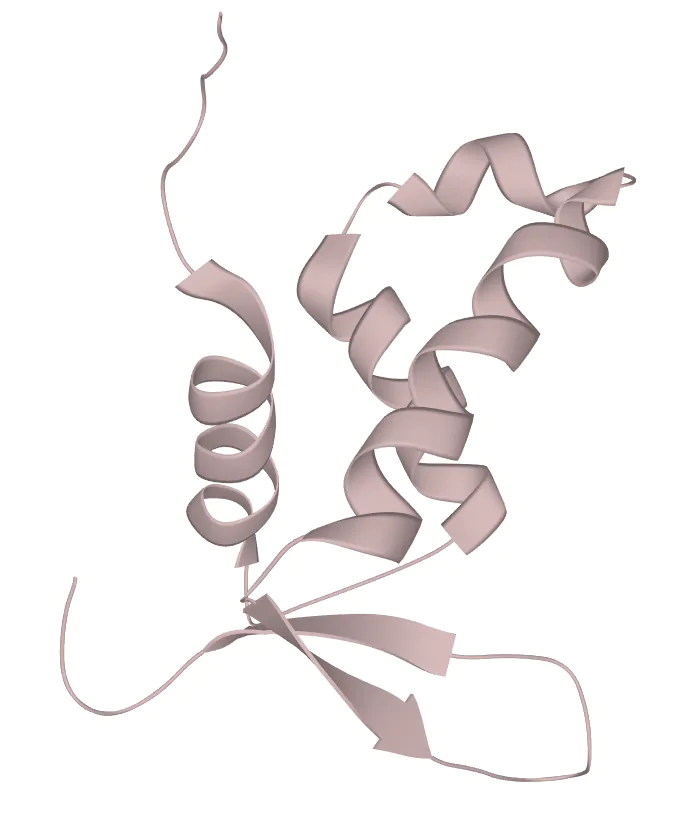
Estructura del péptido FOXO4-DRI

Source: Uniprot Sequence: H-D-Leu-D-Thr-D-Leu-D-Arg-D-Lys-D-Glu-D-Pro-D-Ala-D-Ser-D-Glu-D-Ile-D-Ala-D- Gln-D-Ser-D-Ile-D-Leu-D-Glu-D-Ala-D-Tyr-D-Ser-D-Gln-D-Asn-D-Gly-D-Trp-D-Ala- D-Asn-D-Arg-D-Arg-D-Ser-D-Gly-D-Gly-D-Lys-D-Arg-D-Pro-D-Pro-D-Pro-D-Arg-D- Arg-D-Arg-D-Gln-D-Arg-D-Arg-D-Lys-D-Lys-D-Arg-D-Gly-OH Molecular Formula: C228H388N86O64 Molecular Weight: 5358.05 Synonyms: Forkhead box protein O4, Proxofim, FOXO4a, AFX, AFX1, MLLT7

FOXO4-DRI Envejecimiento y Senescencia

The relationship between FOXO4 and aging is complex and still not fully understood. There is, however, good evidence that helps to elucidate the mechanisms by which the protein has its effects. Research in the well-studied nematode C. elegans shows that FOXO4 affects insulin-like growth factor receptor signaling and thus cellular lifespan control, stress resistance, and gene regulation[3]. It also appears that FOXO4 interacts with the p53 protein to regulate the cell cycle.

Natural FOXO4 actually protects senescent cells by keeping p53, a regulator of the cell cycle, sequestered and unable to induce apoptosis. FOXO4-DRI disrupts the normal FOXO4/p53 mechanism and allows the latter protein to induce apoptosis in senescent cells. The result is an amelioration of senescence-associated loss of tissue homeostasis[4][5]. Los científicos llaman a esto rejuvenecimiento mediante la eliminación terapéutica de células senescentes. El proceso no es tan diferente al de podar un árbol frutal. Al eliminar las ramas muertas y dañadas (células senescentes), la energía se redirige a partes más sanas del árbol y, por tanto, a la producción y el crecimiento de frutos. Este mismo proceso ocurre a nivel de órganos y tejidos cuando se eliminan las células que contribuyen al funcionamiento no saludable general, lo que permite que los recursos se concentren en las células sanas.
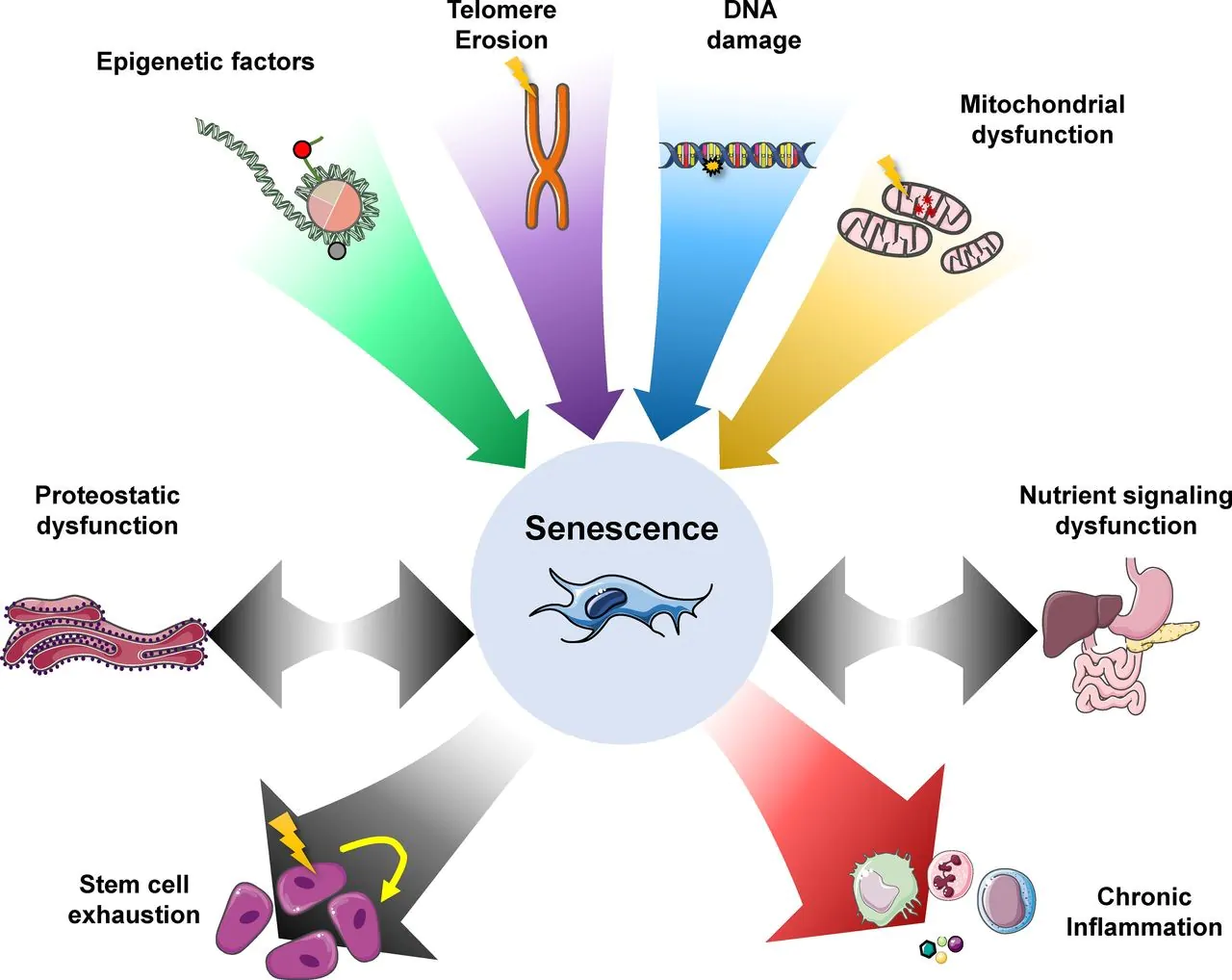
Source: Revista de biología celular

Esta imagen muestra qué factores contribuyen a la senescencia y cuáles son los resultados de la senescencia. Tenga en cuenta que la eliminación de una célula senescente no alivia el agotamiento de las células madre, pero puede ralentizarlo. Sin embargo, ayuda a reducir la inflamación crónica, un factor bien establecido de una serie de afecciones como enfermedades cardíacas, accidentes cerebrovasculares, etc.

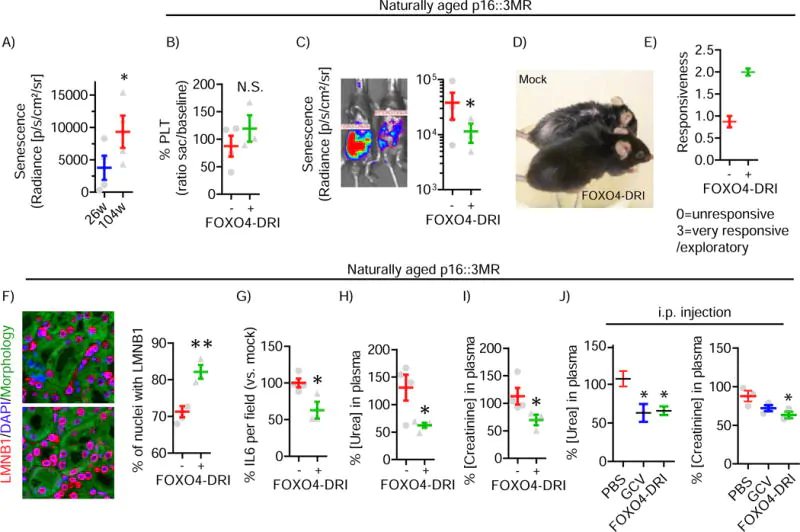
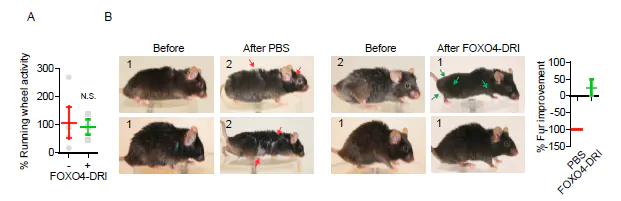
El daño irreparable, es decir, el daño celular que está más allá de la capacidad del cuerpo para repararlo, es una de las principales limitaciones de la salud. La duración de la salud, el período de tiempo durante el cual un organismo permanece sano y funcionando de manera óptima, es generalmente más corta que la esperanza de vida. Una disminución en la esperanza de vida se manifiesta como envejecimiento. La capacidad de extender la duración de la salud puede no resultar en más años vividos, pero puede resultar en vivir los años que nos han sido asignados con mayor salud y con mejor funcionamiento. En modelos de ratón, se ha demostrado que FOXO4 mejora la salud en ratones de edad avanzada, lo que lleva a un aumento de la condición física, la densidad del pelaje y el funcionamiento renal. Los ratones no necesariamente viven más, pero tienen mejor salud, incluso en la vejez, lo que se traduce en menos discapacidad y menos afecciones relacionadas con la edad como enfermedades cardíacas, disfunciones musculoesqueléticas, etc.[2].
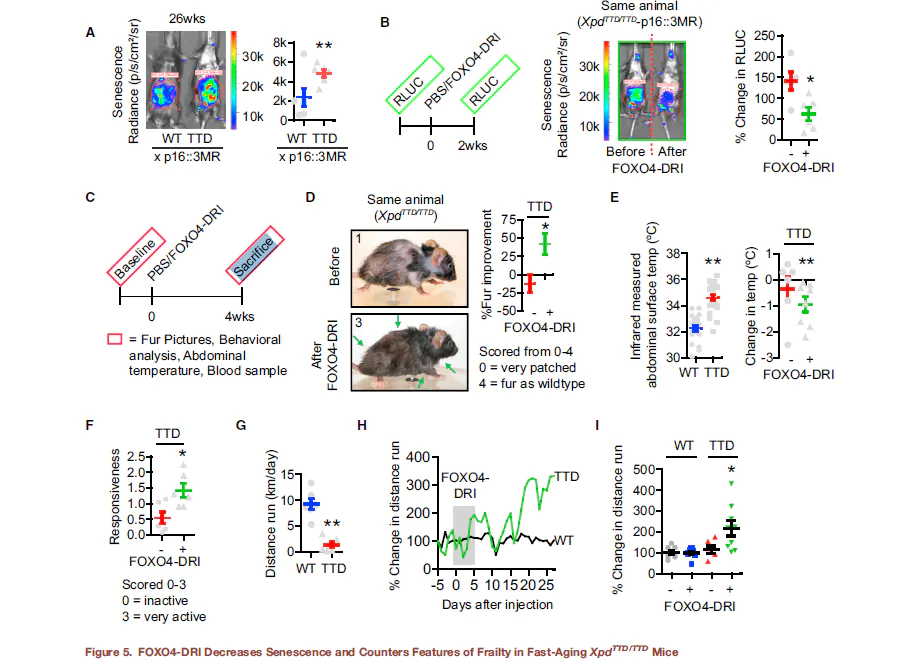
Imágenes que muestran una mejor condición física, como lo indica la densidad del pelaje, en un ratón tratado con FOXO4-DRI después de haber sido sometido a agentes quimiotóxicos utilizados para modelar el envejecimiento:
Source: Pubmed.

Investigación FOXO4-DRI

1. Señalización de insulina

Desde hace tiempo se entiende que las proteínas FOXO son importantes reguladores de la señalización de la insulina, pero que actúan en sentido descendente de la propia insulina y de los factores de crecimiento similares a la insulina. La investigación en modelos animales indica que FOXO media los efectos inhibidores de la insulina y el factor de crecimiento similar a la insulina sobre el metabolismo celular, el crecimiento, la diferenciación, el estrés oxidativo y más. Las mutaciones en FOXO están relacionadas con cambios patológicos en la señalización de la insulina y el desarrollo de enfermedades metabólicas y cáncer. En los diabéticos, las alteraciones de la señalización FOXO provocan hiperglucemia e hiperlipidemia en ayunas.[6]. Este último es uno de los aspectos más preocupantes de la diabetes, ya que conduce a muchas de las complicaciones de la enfermedad, como daño renal, accidente cerebrovascular, ataque cardíaco, problemas de cicatrización de heridas y más. La capacidad de regular la señalización FOXO en la diabetes podría proporcionar métodos más específicos y eficaces para prevenir algunas de las complicaciones graves de la enfermedad. No está claro cómo FOXO4-DRI afecta la señalización de la insulina, pero se cree que la proteína puede mejorar los efectos posteriores de la insulina al reducir los niveles de azúcar en sangre en ayunas.

2. Enfermedad cardíaca

La edad es un factor de riesgo de enfermedad cardiovascular. Este riesgo parece estar mediado por la disminución de la actividad del proteosoma en el corazón. Los proteosomas se encargan de eliminar las proteínas oxidadas y otras proteínas que la célula ha marcado como “dañadas” o disfuncionales. La investigación en ratas muestra que la edad está inversamente correlacionada con la actividad del proteasoma y, por lo tanto, aumenta los niveles de proteínas dañadas en el corazón.[7].

Las proteínas FOXO median la autofagia y la actividad del proteasoma. Los aumentos en los niveles de FOXO4 conducen a aumentos en la actividad del proteosoma y, por lo tanto, a una disminución de los niveles de oxidación y daño proteico dentro de tejidos específicos. Es posible que FOXO4-DRI o una variante del mismo pueda usarse para estimular las funciones domésticas naturales del corazón y así reducir los cambios en la función cardiovascular relacionados con la edad.[8].

3. Enfermedad neurodegenerativa

Age-related changes in cognitive function have a complex etiology. Even relatively common diseases, like Alzheimer’s disease, are not fully understood by the medical community. There is some evidence, however, to support the notion that changes in proteasome activity can lead to or exacerbate underlying neurodegenerative conditions. It isn’t clear if impaired proteasome activity is a primary cause or secondary contributor to diseases like Alzheimer’s disease, but impairment of the systems has been found in Parkinson’s, Alzheimer’s, Huntington’s, and Prion disease. There is also impairment of proteasome function in amyotrophic lateral sclerosis (ALS or Lou Gehrig’s disease) [9].

It appears that FOXO proteins are modified in the central nervous system, a finding that has led researchers to explore the idea that exogenous FOXO protein may be useful in treating or preventing neurodegenerative disorders. At the very least, there is hope that FOXO4-DRI and other modified FOXO proteins may be useful in slowing the relentless progression of neurodegenerative disorders [10].

Resumen

Se ha demostrado claramente que FOXO4-DRI estimula la apoptosis en células que se han vuelto senescentes, lo que conduce a una mejor función tisular y una mejor salud general en modelos animales. Queda por ver cuán extensos son los efectos de FOXO4-DRI, pero hay esperanzas de que la proteína pueda revelar información sobre afecciones relacionadas con la edad como la demencia, las enfermedades cardíacas y la pérdida general de función causada por la senescencia celular.

FOXO4-DRI presenta efectos secundarios mínimos, baja biodisponibilidad oral y subcutánea excelente en ratones. La dosis por kg en ratones no se ajusta a la de los humanos. FOXO4-DRI a la venta en Peptide Gurus se limita únicamente a la investigación científica y educativa, no al consumo humano. Compre FOXO4-DRI únicamente si es un investigador autorizado.

Autor del artículo

The above literature was researched, edited and organized by Dr. Logan, M.D. Dr. Logan holds a doctorate degree from Case Western Reserve University School of Medicine and a B.S. in molecular biology.

Autor de revista científica

El objetivo de Dr. Peter de Keizer’s group is to unravel the molecular mechanisms that cause cells to become senescent and to identify how these cells drive aging and age-related diseases. The role of senescence in late-stage therapy-resistant cancer is a major component of this research. The research has a strong translational component and a spearpoint of the group is to develop methods to target the deleterious effects of senescent and senescent-like cancer cells, for instance by eliminating them altogether. In 2004, Peter obtained his MSc in Biomolecular Science form Utrecht University. The final part of his training was performed at Harvard Medical School / Massachusetts General Hospital in Boston, USA. Here, he focused on therapy-resistant Glioblastoma, the most lethal form of brain cancer, something which is now on of the focus areas of the group. In 2009, Peter obtained his PhD from UMC Utrecht on the regulation of FOXO proteins under conditions of stress and their role in tumor suppression. Dr. Peter de Keizer is being referenced as one of the leading scientists involved in the research and development of FOXO4-DRI. In no way is this doctor/scientist endorsing or advocating the purchase, sale, or use of this product for any reason. There is no affiliation or relationship, implied or otherwise, between Peptide Gurus and this doctor. The purpose of citing the doctor is to acknowledge, recognize, and credit the exhaustive research and development efforts conducted by the scientists studying this peptide. Dr. Peter de Keizer is listed in [2] under the referenced citations.

Citas referenciadas

  1.     W. Liu, Y. Song, J. Wang, H. Xiao, Y. Zhang, and B. Luo, “Dysregulation of FOXO transcription factors in Epstein-Barr virus-associated gastric carcinoma,” Virus Res., pag. 197808, noviembre. 2019.
  2.     Baar, Marjolein P, et al. “Targeted Apoptosis of Senescent Cells Restores Tissue Homeostasis in Response to Chemotoxicity and Aging.” Cell, vol. 169, no. 1, 2017, pp. 132-147.e16, www.ncbi.nlm.nih.gov/pubmed/28340339, 10.1016/j.cell.2017.02.031. 
  3.     A. T.-Y. Chen et al., “Longevity Genes Revealed by Integrative Analysis of Isoform-Specific daf-16/FoxO Mutants of Caenorhabditis elegans,” Genetics, vol. 201, núm. 2, págs. 613–629, octubre de 2015.
  4.     P. Krimpenfort and A. Berns, “Rejuvenation by Therapeutic Elimination of Senescent Cells,” Cell, vol. 169, núm. 1, págs. 3 a 5, 23 2017.
  5. “Senescencia y envejecimiento: causas, consecuencias y vías terapéuticas | JCB”. [En línea]. Disponible: http://jcb.rupress.org/content/217/1/65. [Consulta: 17 de noviembre de 2019].
  6.     S. Lee and H. H. Dong, “FoxO integration of insulin signaling with glucose and lipid metabolism,” J. Endocrinol., vol. 233, núm. 2, págs. R67–R79, 2017.
  7.     A.-L. Bulteau, L. I. Szweda, and B. Friguet, “Age-dependent declines in proteasome activity in the heart,” Arch. Biochem. Biophys., vol. 397, núm. 2, págs. 298–304, enero de 2002.
  8.     G. Murtaza, A. K. Khan, R. Rashid, S. Muneer, S. M. F. Hasan, and J. Chen, “FOXO Transcriptional Factors and Long-Term Living,” Oxid. Med. Cell. Longev., vol. 2017, 2017.
  9.     A. Ciechanover and P. Brundin, “The ubiquitin proteasome system in neurodegenerative diseases: sometimes the chicken, sometimes the egg,” Neuron, vol. 40, núm. 2, págs. 427–446, octubre de 2003.
  10.   W. Hu et al., “Roles of forkhead box O (FoxO) transcription factors in neurodegenerative diseases: A panoramic view,” Prog. Neurobiol., vol. 181, pág. 101645, octubre de 2019.
ALL ARTICLES AND PRODUCT INFORMATION PROVIDED ON THIS WEBSITE ARE FOR INFORMATIONAL AND EDUCATIONAL PURPOSES ONLY. Los productos ofrecidos en este sitio web se proporcionan únicamente para estudios in vitro. Los estudios in vitro (del latín: en vidrio) se realizan fuera del cuerpo. Estos productos no son medicamentos ni fármacos y no han sido aprobados por la FDA para prevenir, tratar o curar ninguna afección médica, dolencia o enfermedad. La introducción corporal de cualquier tipo en personas o animales está estrictamente prohibida por la ley.

Solicitar consulta

ABOUT US

PeptideGurus es un proveedor líder de péptidos de investigación fabricados en Estados Unidos y ofrece productos de alta calidad a precios competitivos. Con un enfoque en la excelencia y el servicio al cliente, garantizan un proceso de pedido seguro y conveniente con envío global.

Solicitar presupuesto

  • Gurús de péptidos
  • info@peptidegurus.com
  • Glendale, Arizona, Estados Unidos
  • CONTACTO

    Solicitar consulta