
• FOXO4-DRI peptide in aging research
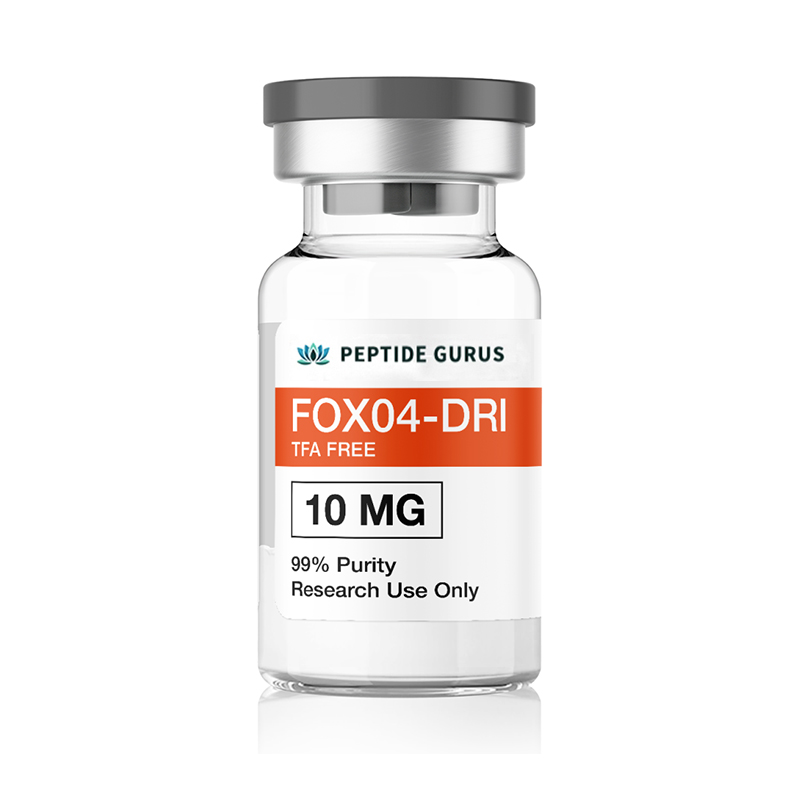
FOX04-DRI 10 mg (Proxofim)
X
FOX04-DRI 10 mg (Proxofim)

FOX04-DRI 10 mg (Proxofim)

Kategorien: ,

Kontakt zur Bestellung
Schreiben Sie uns jetzt eine E-Mail, um Ihre Bestellung mit dem 1-zu-1-Support aufzugeben. Begrenzter Bestand! Wir akzeptieren Zelle, CashApp, Venmo, Banküberweisungen und Krypto.

Freie (1) 30 ml bakteriostatisches Wasser
mit qualifizierten Bestellungen über $500 USD. (excludes capsule products, cosmetic peptides, promo codes and shipping)
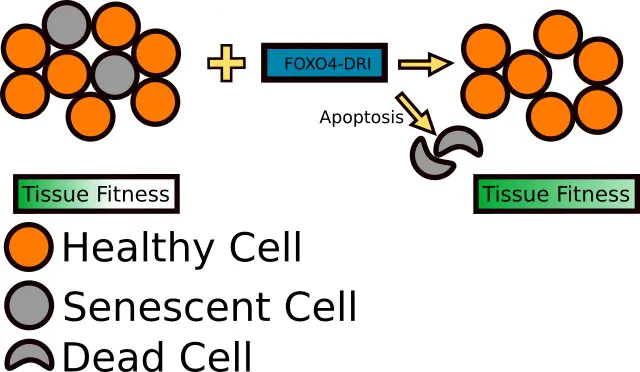
FOX04-DRI (Retro-Inverso) is a synthetic, slightly modified version of the standard FOXO4 protein. The modification prolongs half-life of the protein and allows it to interfere with normal FOXO4 function. FOXO4-DRI has been shown in research to prevent normal FOXO4 binding to p53, thereby allowing for elimination of senescent cells, improved organ function, and younger tissue “biological age.” FOXO4-DRI impacts insulin signaling, cell cycle regulation, and oxidative stress signaling pathways. FOXO4-DRI is a cell penetrating peptide shown to selectively induce apoptosis of senescent cells thereby reversing effects of aging in animal studies.
Product Usage: This PRODUCT IS INTENDED AS A RESEARCH CHEMICAL ONLY. This designation allows the use of research chemicals strictly for in vitro testing and laboratory experimentation only. All product information available on this website is for educational purposes only. Bodily introduction of any kind into humans or animals is strictly forbidden by law. This product should only be handled by licensed, qualified professionals. This product is not a drug, food, or cosmetic and may not be misbranded, misused or mislabled as a drug, food or cosmetic.

Was ist FOXO4-D-RETRO-Inverso (DRI)?

FOXO4 D-Retro-Inverso is identical to the protein product of the FOXO4 gene, but the normal L amino acids have been exchanged for D amino acids. The result is that FOXO4-DRI has reduced susceptibility to normal physiologic clearance mechanisms and thus remains in the body for longer periods of time. The modified protein is still capable, however, of affecting transcription and cellular pathways. In general, the FOXO4-DRI protein interferes with normal FOXO4 function. Of greatest interest in terms of aging and senescence is the ability of FOXO4-DRI to interfere with normal FOXO4 signaling in the cell cycle by preventing the binding of FOXO4 to p53. The p53 protein is an important regulator of progression through the cell cycle as well as programmed cell death (apoptosis). When FOXO4-DRI binds to p53, it prevents FOXO4 from binding and allows p53 to bind to DNA. This, in turn, allows the cell to continue through the process of apoptosis and die. Interestingly, FOXO4-DRI appears to only have this effect in senescent cells, cells that are no longer functional or are dysfunctional as a result of aging[2]. Durch die Ausrichtung dieser dysfunktionalen Zellen hilft FOXO4-DRI, das Gewebe von Zellen zu befreien, die nichts anderes als totes Gewicht sind. Dies ermöglicht wiederum eine bessere Gewebefunktion und hilft, das Wachstum und die Differenzierung jüngerer, gesünderer Zellen zu stimulieren. Das Nettoergebnis ist eine bessere biologische Funktion und somit eine Abnahme des „biologischen Alters“.

„DRI“-Retro-Inverso-Peptide erklärt

DRI-Retro Inverso Peptides Explained Retro-inverso peptides are linear peptides whose amino acid sequence is reversed and the α-center chirality of the amino acid subunits is inverted as well. Usually, these types of peptides are designed by including D-amino acids in the reverse sequence to help maintain side chain topology similar to that of the original L-amino acid peptide and make them more resistant to proteolytic degradation. Other reported synonyms for these peptides in the scientific literature are: Retro-Inverso Peptides, All-D-Retro Peptides, Retro-Enantio Peptides, Retro-Inverso Analogs, Retro-Inverso Analogues, Retro-Inverso Derivatives, and Retro-Inverso Isomers. D-amino acids represent conformational mirror images of natural L-amino acids occurring in natural proteins present in biological systems. Peptides that contain D-amino acids have advantages over peptides that just contain L-amino acids. In general, these types of peptides are less susceptible to proteolytic degradation and have a longer effective time when used as pharmaceuticals. Furthermore, the insertion of D-amino acids in selected sequence regions as sequence blocks containing only D-amino acids or in-between L-amino acids allows the design of peptide-based drugs that are bioactive and possess increased bioavailability in addition to being resistant to proteolysis. Furthermore, if properly designed, retro-inverso peptides can have binding characteristics similar to L-peptides. Retro-inverso peptides are useful candidates for the study of protein-protein interactions by designing peptidomimetics that mimic the shape of peptide epitopes, protein-protein, or protein-peptide interfases. Retro-inverso-peptides are attractive alternatives to L-peptides used as pharmaceuticals. These of peptide have been reported to elicit lower immunogenic responses compared to L-peptides.
FOXO4-DRI veröffentlicht p53 aus der physiologischen Sequestrierung. Das p53 -Protein zielt dann auf seneszente Zellen für Apoptose ab. Das Nettoergebnis ist eine Zunahme der Gesamtgewebe -Fitness und somit eine verbesserte Funktion auf Gewebe- und Organebene verbessert. Eine verbesserte Gewebefunktion wird als reduziertes biologisches Alter bezeichnet.

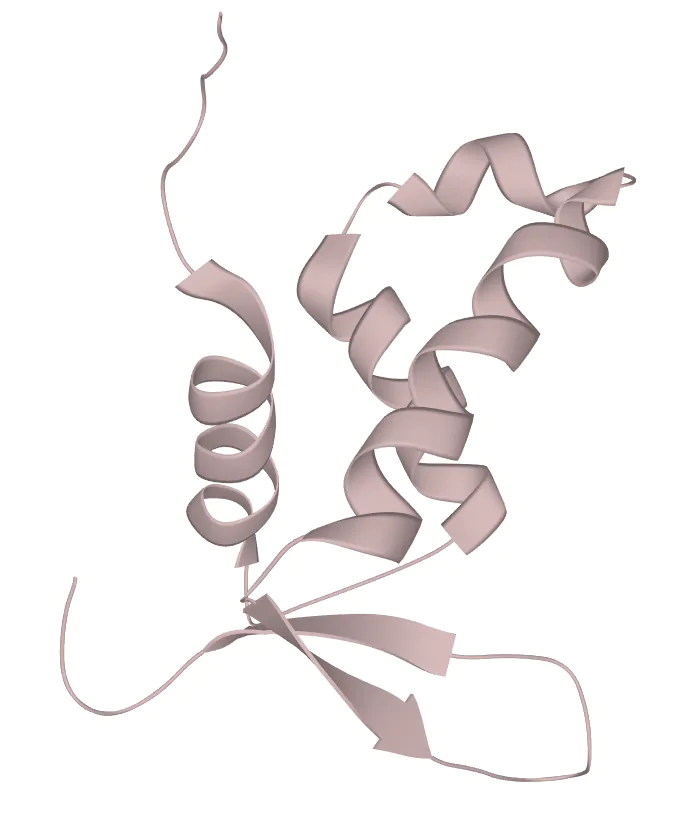
FOXO4-DRI-Peptidstruktur

Source: Uniprot Sequence: H-D-Leu-D-Thr-D-Leu-D-Arg-D-Lys-D-Glu-D-Pro-D-Ala-D-Ser-D-Glu-D-Ile-D-Ala-D- Gln-D-Ser-D-Ile-D-Leu-D-Glu-D-Ala-D-Tyr-D-Ser-D-Gln-D-Asn-D-Gly-D-Trp-D-Ala- D-Asn-D-Arg-D-Arg-D-Ser-D-Gly-D-Gly-D-Lys-D-Arg-D-Pro-D-Pro-D-Pro-D-Arg-D- Arg-D-Arg-D-Gln-D-Arg-D-Arg-D-Lys-D-Lys-D-Arg-D-Gly-OH Molecular Formula: C228H388N86O64 Molecular Weight: 5358.05 Synonyms: Forkhead box protein O4, Proxofim, FOXO4a, AFX, AFX1, MLLT7

FOXO4-DRI Alterung und Seneszenz

The relationship between FOXO4 and aging is complex and still not fully understood. There is, however, good evidence that helps to elucidate the mechanisms by which the protein has its effects. Research in the well-studied nematode C. elegans shows that FOXO4 affects insulin-like growth factor receptor signaling and thus cellular lifespan control, stress resistance, and gene regulation[3]. It also appears that FOXO4 interacts with the p53 protein to regulate the cell cycle.

Natural FOXO4 actually protects senescent cells by keeping p53, a regulator of the cell cycle, sequestered and unable to induce apoptosis. FOXO4-DRI disrupts the normal FOXO4/p53 mechanism and allows the latter protein to induce apoptosis in senescent cells. The result is an amelioration of senescence-associated loss of tissue homeostasis[4][5]. Wissenschaftler bezeichnen dies als Verjüngung durch therapeutische Eliminierung seneszierender Zellen. Der Prozess unterscheidet sich nicht so vom Beschneiden eines Obstbaums. Durch Entfernen von toten und beschädigten Zweigen (seneszente Zellen) wird Energie in gesündere Teile des Baumes und damit in die Fruchtproduktion und das Wachstum umgeleitet. Der gleiche Prozess erfolgt auf Organ- und Gewebeebene, wenn Zellen, die zur allgemeinen ungesunden Funktion beitragen, entfernt werden, sodass die Ressourcen auf gesunde Zellen fokussiert werden können.
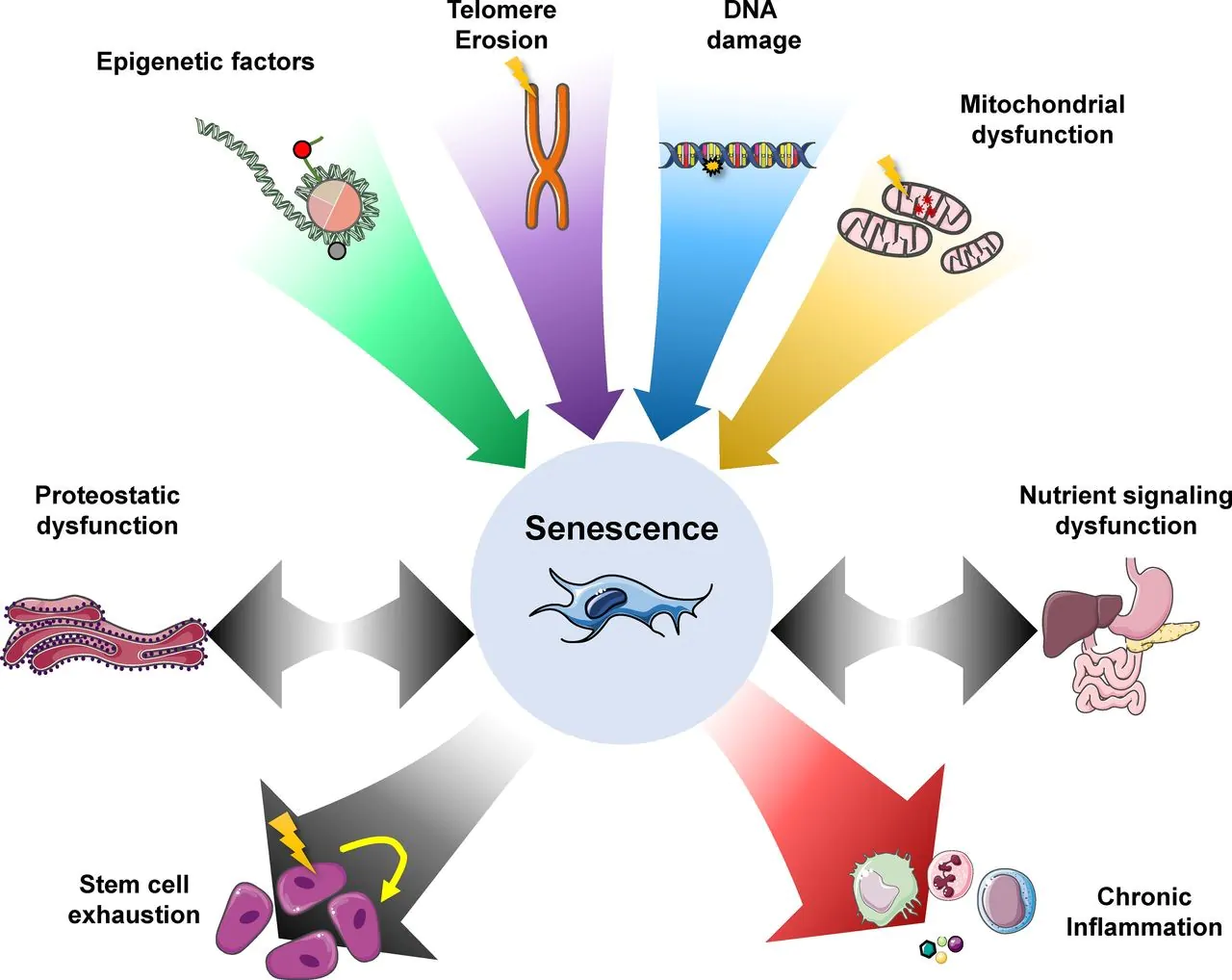
Source: Zeitschrift für Zellbiologie

Dieses Bild zeigt, welche Faktoren zur Seneszenz beitragen und welche Ergebnisse Seneszenz sind. Beachten Sie, dass die Beseitigung einer seneszenten Zelle die Erschöpfung der Stammzellen nicht lindert, sondern sie verlangsamt. Es trägt jedoch dazu bei, chronische Entzündungen, einen etablierten Treiber einer Reihe von Erkrankungen wie Herzerkrankungen, Schlaganfall usw. zu verringern.

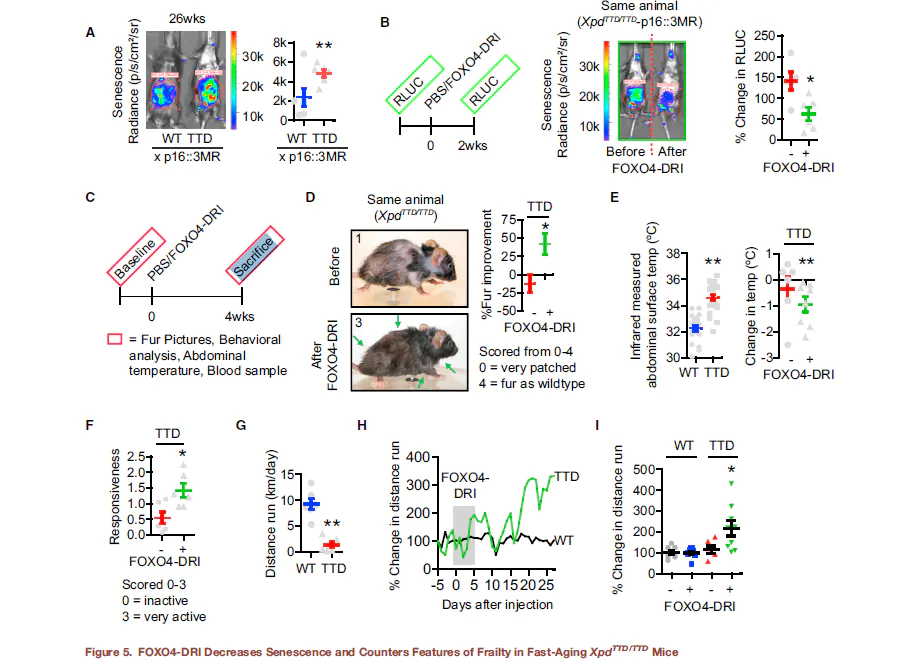
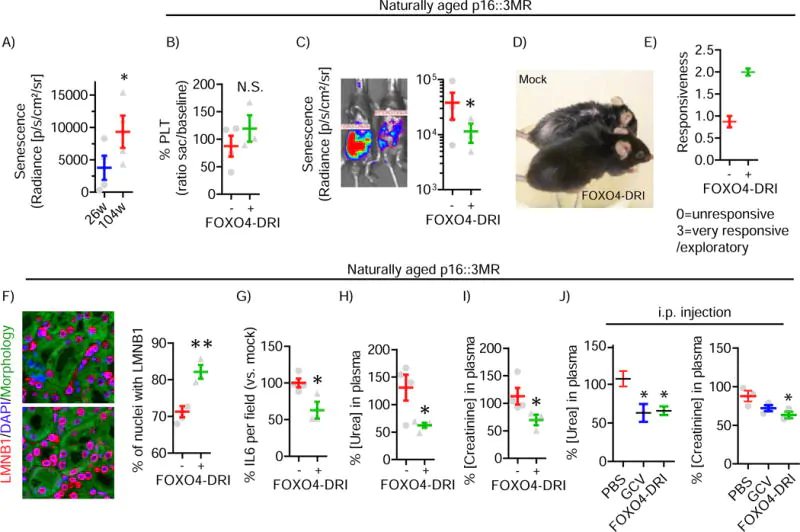
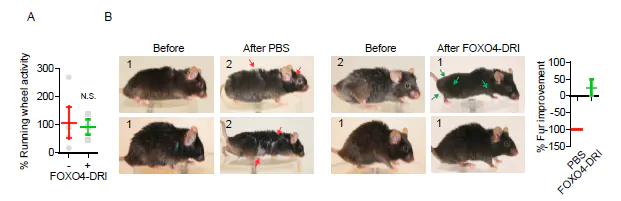
Irreparable Schäden, die zelluläre Schäden, die über die Fähigkeit des Körpers hinausgehen, zu beheben, ist eine der Hauptbeschränkungen für die Gesundheitsspanne. Die Gesundheitsspanne, die Zeitdauer, in der ein Organismus gesund bleibt und optimal funktioniert, ist im Allgemeinen kürzer als die Lebensdauer. Ein Rückgang des HealthSpan manifestiert sich als Alterung. Die Fähigkeit, die Gesundheitsspanne zu verlängern, kann nicht zu mehr Jahren führen, aber es kann dazu führen, dass die Jahre, die uns in größerer Gesundheit und mit besserer Funktionsweise zugewiesen werden, herausleben. In Mausmodellen wurde gezeigt, dass FOXO4 die Gesundheitsspanne bei älteren Mäusen verbessert, was zu einer Zunahme von Fitness, Pelzdichte und Nierenfunktion führt. Die Mäuse leben nicht unbedingt länger, aber sie haben eine größere Gesundheit, selbst in das Alter, was zu weniger Behinderungen und weniger altersbedingten Erkrankungen wie Herzerkrankungen, Muskuloskelett-Dysfunktion usw. führt[2].
Bilder, die eine verbesserte Fitness zeigen, wie durch Pelzdichte angezeigt, in einer mit foxo4-dri behandelten Maus, nachdem er chemotoxischen Wirkstoffen unterzogen wurde, die zur Modellalterung verwendet wurden:
Source: Pubmed.

FOXO4-DRI-Forschung

1. Insulinsignalisierung

Es ist seit langem verstanden, dass Foxo-Proteine ​​wichtige Regulatoren für Insulinsignale sind, aber dass sie stromabwärts des Insulins selbst sowie insulinähnliche Wachstumsfaktoren wirken. Untersuchungen in Tiermodellen zeigen, dass FOXO vermittelt, dass Inhibitoreffekte von Insulin und insulinähnlichem Wachstumsfaktor auf den Zellstoffwechsel, Wachstum, Differenzierung, oxidativen Stress und mehr. Mutationen in Foxo sind mit pathologischen Veränderungen der Insulinsignalisierung und der Entwicklung von Stoffwechselerkrankungen sowie Krebs verbunden. Bei Diabetikern führt Veränderungen der Foxo -Signalübertragung zu einer Fastenhyperglykämie und einer Hyperlipidämie[6]. Letzteres ist einer der wichtigsten Aspekte von Diabetes, da er zu vielen Komplikationen der Krankheit wie Nierenschäden, Schlaganfall, Schlaganfall, Herzinfarkt, Beeinträchtigung der Wundheilung und vielem mehr führt. Die Fähigkeit zur Regulierung der FOXO -Signalübertragung bei Diabetes könnte zielgerichteteres und wirksamere Methoden zur Verhinderung einiger schwerer Komplikationen der Krankheit liefern. Es ist unklar, wie FOXO4-DRI die Insulinsignalisierung beeinflusst, aber es wird angenommen, dass das Protein die nachgeschalteten Wirkungen von Insulin verbessern kann, indem das Nüchternblutzuckerspiegel reduziert wird.

2. Herzerkrankungen

Das Alter ist ein Risikofaktor für Herz -Kreislauf -Erkrankungen. Dieses Risiko scheint durch Rückgänge der Proteasomaktivität im Herzen vermittelt zu werden. Proteasome sind dafür verantwortlich, oxidierte Proteine ​​und andere Proteine ​​zu entfernen, die die Zelle als „beschädigt“ oder dysfunktional markiert hat. Untersuchungen bei Ratten zeigen, dass das Alter umgekehrt mit der Proteasomaktivität korreliert und somit den Spiegel von beschädigten Proteinen innerhalb des Herzens erhöht[7].

Foxo -Proteine ​​vermitteln Autophagie und Proteasomaktivität. Zunahme der FOXO4 -Spiegel führen zu einer Zunahme der Proteasomaktivität und somit eine verminderte Oxidations- und Proteinschäden innerhalb spezifischer Gewebe. Es kann möglich sein, dass FOXO4-DRI oder eine Variante davon verwendet werden können, um die natürlichen Haushaltsfunktionen des Herzens zu steigern und somit altersbedingte Veränderungen der Herz-Kreislauf-Funktion zu verringern[8].

3. Neurodegenerative Erkrankung

Age-related changes in cognitive function have a complex etiology. Even relatively common diseases, like Alzheimer’s disease, are not fully understood by the medical community. There is some evidence, however, to support the notion that changes in proteasome activity can lead to or exacerbate underlying neurodegenerative conditions. It isn’t clear if impaired proteasome activity is a primary cause or secondary contributor to diseases like Alzheimer’s disease, but impairment of the systems has been found in Parkinson’s, Alzheimer’s, Huntington’s, and Prion disease. There is also impairment of proteasome function in amyotrophic lateral sclerosis (ALS or Lou Gehrig’s disease) [9].

It appears that FOXO proteins are modified in the central nervous system, a finding that has led researchers to explore the idea that exogenous FOXO protein may be useful in treating or preventing neurodegenerative disorders. At the very least, there is hope that FOXO4-DRI and other modified FOXO proteins may be useful in slowing the relentless progression of neurodegenerative disorders [10].

Zusammenfassung

Es wurde eindeutig nachgewiesen, dass Foxo4-DRI die Apoptose in Zellen, die seneszieren, stärken und zu einer verbesserten Gewebefunktion und einer besseren allgemeinen Gesundheit in Tiermodellen führen. Es bleibt abzuwarten, wie umfangreich die Auswirkungen von FoxO4-DRI sind, aber es besteht die Hoffnung, dass das Protein Einblick in altersbedingte Erkrankungen wie Demenz, Herzerkrankungen und allgemeiner Funktionsverlust durch Zellseneszenz ergeben kann.

FOXO4-DRI exhibits minimal side effects, low oral and excellent subcutaneous bioavailability in mice. Per kg dosage in mice does not scale to humans. FOXO4-DRI for sale at Peptide Gurus is limited to educational and scientific research only, not for human consumption. Only buy FOXO4-DRI if you are a licensed researcher.

Artikelautor

The above literature was researched, edited and organized by Dr. Logan, M.D. Dr. Logan holds a doctorate degree from Case Western Reserve University School of Medicine and a B.S. in molecular biology.

Autor wissenschaftlicher Zeitschriften

Das Ziel von Dr. Peter de Keizer’s group is to unravel the molecular mechanisms that cause cells to become senescent and to identify how these cells drive aging and age-related diseases. The role of senescence in late-stage therapy-resistant cancer is a major component of this research. The research has a strong translational component and a spearpoint of the group is to develop methods to target the deleterious effects of senescent and senescent-like cancer cells, for instance by eliminating them altogether. In 2004, Peter obtained his MSc in Biomolecular Science form Utrecht University. The final part of his training was performed at Harvard Medical School / Massachusetts General Hospital in Boston, USA. Here, he focused on therapy-resistant Glioblastoma, the most lethal form of brain cancer, something which is now on of the focus areas of the group. In 2009, Peter obtained his PhD from UMC Utrecht on the regulation of FOXO proteins under conditions of stress and their role in tumor suppression. Dr. Peter de Keizer is being referenced as one of the leading scientists involved in the research and development of FOXO4-DRI. In no way is this doctor/scientist endorsing or advocating the purchase, sale, or use of this product for any reason. There is no affiliation or relationship, implied or otherwise, between Peptide Gurus and this doctor. The purpose of citing the doctor is to acknowledge, recognize, and credit the exhaustive research and development efforts conducted by the scientists studying this peptide. Dr. Peter de Keizer is listed in [2] under the referenced citations.

Referenzierte Zitate

  1.     W. Liu, Y. Song, J. Wang, H. Xiao, Y. Zhang, and B. Luo, “Dysregulation of FOXO transcription factors in Epstein-Barr virus-associated gastric carcinoma,” Virus Res., P. 197808, November 2019.
  2.     Baar, Marjolein P, et al. “Targeted Apoptosis of Senescent Cells Restores Tissue Homeostasis in Response to Chemotoxicity and Aging.” Cell, vol. 169, no. 1, 2017, pp. 132-147.e16, www.ncbi.nlm.nih.gov/pubmed/28340339, 10.1016/j.cell.2017.02.031. 
  3.     A. T.-Y. Chen et al., “Longevity Genes Revealed by Integrative Analysis of Isoform-Specific daf-16/FoxO Mutants of Caenorhabditis elegans,” Genetics, vol. 201, nein. 2, S. 613–629, Oktober 2015.
  4.     P. Krimpenfort and A. Berns, “Rejuvenation by Therapeutic Elimination of Senescent Cells,” Cell, vol. 169, Nr. 1, S. 3–5, 23 2017.
  5. "Seneszenz und Alterung: Ursachen, Konsequenzen und therapeutische Wege | JCB." [Online]. Verfügbar: http://jcb.rupress.org/content/217/1/65. [Zugriff: 17-Nov-2019].
  6.     S. Lee and H. H. Dong, “FoxO integration of insulin signaling with glucose and lipid metabolism,” J. Endocrinol., vol. 233, Nr. 2, S. R67 - R79, 2017.
  7.     A.-L. Bulteau, L. I. Szweda, and B. Friguet, “Age-dependent declines in proteasome activity in the heart,” Arch. Biochem. Biophys., vol. 397, Nr. 2, S. 298–304, Januar 2002.
  8.     G. Murtaza, A. K. Khan, R. Rashid, S. Muneer, S. M. F. Hasan, and J. Chen, “FOXO Transcriptional Factors and Long-Term Living,” Oxid. Med. Cell. Longev., vol. 2017, 2017.
  9.     A. Ciechanover and P. Brundin, “The ubiquitin proteasome system in neurodegenerative diseases: sometimes the chicken, sometimes the egg,” Neuron, vol. 40, nein. 2, S. 427–446, Oktober 2003.
  10.   W. Hu et al., “Roles of forkhead box O (FoxO) transcription factors in neurodegenerative diseases: A panoramic view,” Prog. Neurobiol., vol. 181, p. 101645, Okt. 2019.
ALL ARTICLES AND PRODUCT INFORMATION PROVIDED ON THIS WEBSITE ARE FOR INFORMATIONAL AND EDUCATIONAL PURPOSES ONLY. Die auf dieser Website angebotenen Produkte sind nur für In-Vitro-Studien bereitgestellt. In-vitro-Studien (lateinisch: in Glas) werden außerhalb des Körpers durchgeführt. Diese Produkte sind keine Arzneimittel oder Medikamente und wurden von der FDA nicht zur Verhinderung, Behandlung oder Heilung von Krankheit oder Krankheit zugelassen. Die körperliche Einführung jeglicher Art in Menschen oder Tiere ist gesetzlich streng verboten.

Anfrage anfordern

ABOUT US

Peptidegurus ist ein führender Anbieter von amerikanisch gefertigten Forschungspeptiden und bietet höchste Qualitätsprodukte zu wettbewerbsfähigen Preisen. Mit einem Fokus auf Exzellenz und Kundenservice gewährleisten sie einen sicheren und bequemen Bestellprozess mit globaler Versand.

Fordern Sie ein Angebot an

  • Peptid-Gurus
  • info@peptidegurus.com
  • Glendale ist es, USA
  • KONTAKT

    Anfrage anfordern